When it comes to dressing small companion dogs like Yorkshire Terriers and Maltese, pet owners often assume that breed-specific clothing is essential. After all, each breed has its own silhouette—slender Yorkies with long backs, compact Maltese with rounded chests. But in practice, does the breed truly dictate which clothes will fit? Or are size, build, and individual variation far more important than breed labels on a tag?
The truth is, while Yorkies and Maltese share similarities in weight and height, their body proportions can differ significantly from dog to dog. Clothing marketed as “Yorkie-specific” or “Maltese-approved” may offer tailored fits, but relying solely on breed names can mislead buyers. Understanding actual measurements, fabric flexibility, and cut design leads to better-fitting, more comfortable dog apparel.
Understanding Size vs. Breed: Why Labels Can Be Misleading
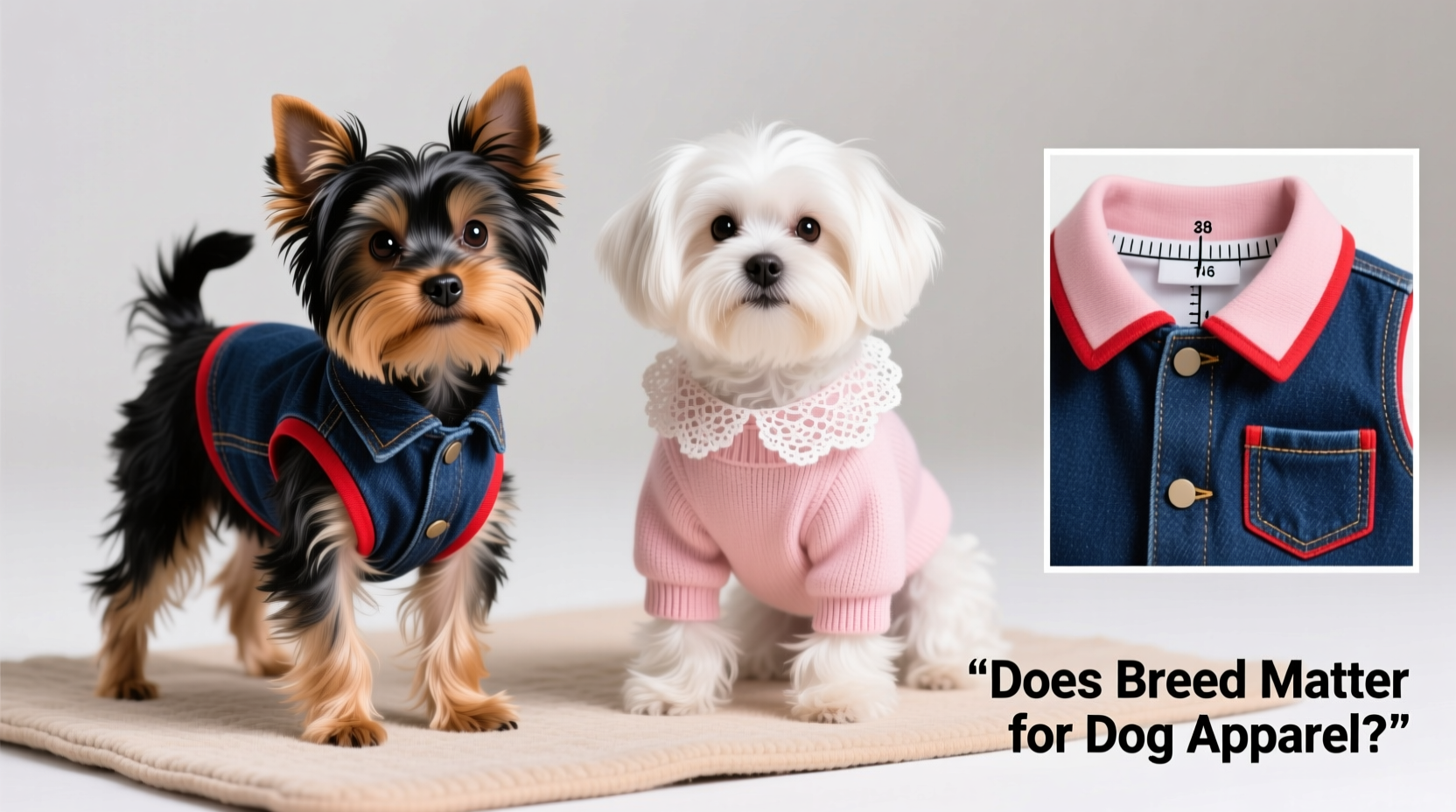
Dog clothing brands often use breed names in product titles to appeal to specific audiences. A search for “Yorkie clothes” yields hundreds of results, many labeled as ideal for “teacup” or “standard” sizes. The same goes for Maltese. But these labels rarely account for the full range of individual variation within each breed.
For example, a healthy adult Yorkie typically weighs between 4–7 pounds and stands 7–8 inches tall. A Maltese usually falls within a similar range: 4–6 pounds and 8–10 inches in height. On paper, they’re nearly identical. However, their builds diverge. Yorkies tend to have longer torsos and narrower chests, while Maltese often have broader shoulders and a more compact frame. This means a shirt designed for a Yorkie’s elongated shape might be too long and loose around the chest on a Maltese—or conversely, a Maltese-style garment could be too tight across the shoulders for a Yorkie.
Tip: Always measure your dog’s neck, chest, and back length before purchasing—regardless of breed.Key Body Measurements Every Owner Should Know
To ensure proper fit, three core measurements are critical:
- Neck girth: Measure where the collar sits. Essential for pullovers and turtlenecks.
- Chest girth: Measure around the widest part, just behind the front legs. Most important for snugness.
- Back length: From base of neck to base of tail. Determines overall garment length.
A Yorkie with a 10-inch chest might wear a size small, but if their back measures 11 inches, many “small” garments designed for compact breeds may fall short. Conversely, a Maltese with a broad chest might need a medium despite being under 6 pounds.
Comparing Apparel Cuts: Yorkie-Friendly vs. Maltese-Friendly Designs
Beyond size, the cut of the clothing plays a crucial role. Some manufacturers design patterns specifically for longer-backed breeds like Yorkies, Dachshunds, or Shih Tzus. Others optimize for rounder, sturdier frames typical of Pomeranians or Maltese.
“Fit isn’t about breed—it’s about proportion. Two Yorkies can vary more in shape than a Yorkie and a Maltese.” — Dr. Lena Torres, Veterinary Behaviorist & Pet Product Consultant
Consider these common design differences:
| Feature | Yorkie-Oriented Cut | Maltese-Oriented Cut |
|---|---|---|
| Body Length | Longer torso coverage (10–12\") | Shorter, more compact (8–10\") |
| Chest Width | Narrower, tapered sides | Broader, roomier underarms |
| Neckline | Slimmer, often higher cut | Wider, looser for fluffy coats |
| Fabric Stretch | Moderate; relies on precise fit | Higher elasticity for easier pull-on |
This doesn’t mean you can’t dress a Maltese in “Yorkie clothes” or vice versa. It simply underscores that cut compatibility matters more than the label.
Real-World Example: Fitting Luna the Maltese in a “Yorkie” Sweater
Luna, a 5.5-pound Maltese from Portland, was frequently uncomfortable in standard “small” sweaters. Her owner, Sarah, noticed chafing under the armpits and restricted movement. She tried a sweater labeled “for Yorkies, size S,” expecting a poor fit. Surprisingly, it worked better than any Maltese-specific option she’d bought.
Why? The Yorkie-cut sweater had a slightly longer body but a narrower chest and softer seams. Because Luna has a slender build despite her breed, the elongated fit accommodated her without pressure points. Meanwhile, the Maltese-branded tops were too wide at the chest and bunched under her arms.
Sarah’s experience illustrates a growing trend: individual conformation trumps breed generalizations. As she puts it, “I stopped shopping by breed and started measuring. That changed everything.”
Step-by-Step Guide: How to Choose the Right Clothes Regardless of Breed
Follow this process to find well-fitting apparel for any small dog:
- Measure your dog accurately. Use a soft tape measure and record neck, chest, and back length. Repeat monthly for puppies or dogs gaining/losing weight.
- Check brand-specific size charts. Don’t assume “small” means the same across brands. Some run narrow; others generous.
- Look at the cut description. Does it mention “long body” or “wide chest”? Prioritize descriptions over breed labels.
- Choose stretchable fabrics for first tries. Cotton blends or spandex-infused knits allow minor fitting errors.
- Inspect seam placement. Seams should lie flat and avoid high-movement areas like underarms.
- Allow a test wear. Let your dog move, sit, and walk in the garment for 5–10 minutes to check comfort.
Checklist: Buying Dog Clothes Without Relying on Breed
- ✅ Measured my dog’s neck, chest, and back length
- ✅ Reviewed the brand’s size chart (not just “small/medium”)
- ✅ Checked material composition for breathability and stretch
- ✅ Looked for flat seams and non-abrasive inner lining
- ✅ Read customer reviews mentioning fit issues or breed comparisons
- ✅ Verified return policy in case of sizing mismatch
FAQ: Common Questions About Yorkie vs. Maltese Clothing
Can I use Yorkie clothes for my Maltese?
Yes, if the measurements align. Focus on chest girth and back length. A Maltese with a narrow build may fit well into a Yorkie-style garment, especially if it has stretchy fabric. Just ensure the chest isn’t too tight and the neckline doesn’t restrict movement.
Are there clothing styles better suited for one breed over the other?
Generally, no. Both breeds benefit from lightweight, easy-to-wear designs due to their fine coats and sensitivity to cold. However, Yorkies may prefer longer jackets for full back coverage, while Maltese often do better with shorter cuts that don’t interfere with their fluffy leg hair.
Why do some brands still market by breed if it’s not reliable?
Breed-based marketing taps into consumer identity. Owners identify strongly with their dog’s breed and search using those terms. While convenient for SEO and branding, it can oversimplify fit. Savvy shoppers look past labels to specs.
Conclusion: Fit Over Label—Dress for Your Dog, Not the Breed
The distinction between “Yorkie clothes” and “Maltese clothes” is largely symbolic. While subtle differences in body shape exist between breeds, individual variation is often greater than the average difference between them. A well-fitted garment depends on accurate measurements, thoughtful cut design, and quality materials—not the breed printed on the tag.
Pet fashion should enhance comfort and protection, not compromise it. By shifting focus from breed to fit, owners empower themselves to make smarter, more compassionate choices. Whether your dog is a silky-coated Maltese or a feisty little Yorkie, the best outfit is one that moves with them, breathes with ease, and stays securely in place—without labels defining the limits.
🚀 Start today: Grab a measuring tape, check your dog’s dimensions, and shop by size—not breed. Share your experience with others who’ve found the perfect fit beyond the label.








