
Choosing the right cat litter isn't just about what your cat prefers—it's about odor control, ease of maintenance, environmental impact, and long-term cost. Among the most debated choices in the pet care world is wood litter versus traditional clay litter. While clay has dominated shelves for decades, wood-based litters have gained traction for their natural composition and claims of superior odor control. But do those claims hold up under scrutiny? Is wood litter truly more effective at managing smells than its clay counterpart?
The answer isn’t a simple yes or no. It depends on the type of litter, how it’s formulated, and the conditions in your home. To understand which option performs better—and why—requires looking beyond marketing slogans and diving into absorption chemistry, microbial action, and user experience.
How Odor Forms in Cat Litter
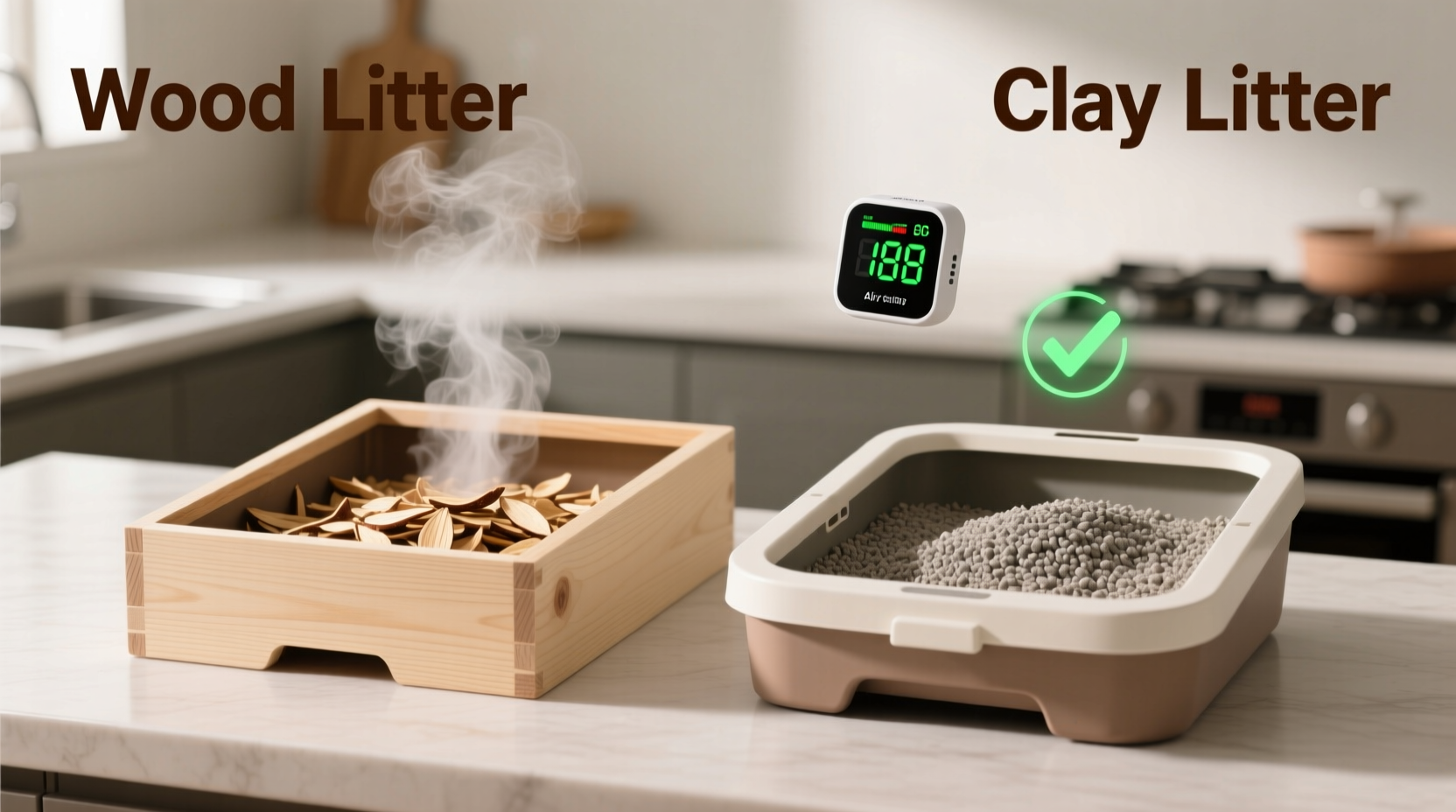
Before comparing materials, it’s essential to understand where litter box odors come from. The primary culprits are ammonia (from urea breakdown), sulfur compounds (from protein digestion), and bacterial activity that accelerates decomposition. When urine sits in litter, bacteria begin breaking it down almost immediately, releasing pungent gases. Feces contribute additional volatile organic compounds that intensify the smell.
Effective odor control, therefore, isn’t just about masking scents with perfume—it’s about neutralizing or trapping the compounds responsible. This can be achieved through:
- Absorption: Physically soaking up liquid before it breaks down.
- Adsorption: Binding odor molecules to the surface of litter particles.
- pH modification: Creating an environment less favorable to bacterial growth.
- Enzymatic or microbial action: Using beneficial microbes to digest waste byproducts.
Clay and wood litters take different approaches to these mechanisms, leading to varied performance in real homes.
Clay Litter: The Traditional Standard
Most conventional clay litters are made from sodium bentonite, a naturally occurring mineral known for its high absorbency. When urine hits bentonite, the granules swell and form tight clumps, isolating waste and making cleanup easier. This clumping ability helps contain odor by limiting exposure to air, slowing bacterial spread.
However, many clay litters rely heavily on added fragrances to mask lingering smells rather than eliminate them. These perfumes can irritate cats and humans alike, especially in poorly ventilated areas. Moreover, non-clumping clay varieties (often cheaper) do little to control odor over time, requiring frequent full changes to prevent buildup.
Another downside is dust. Clay produces fine particulate matter when poured or disturbed, which can carry odor-causing residues into the air. Some premium clay brands now include activated charcoal or baking soda layers to enhance odor neutralization, but even then, performance tends to degrade after 24–48 hours without scooping.
“While clay excels at clumping, its odor control is often short-lived without daily maintenance. Most owners don’t realize how much ammonia accumulates between cleanings.” — Dr. Lena Peterson, DVM, Feline Health Consultant
Wood Litter: Natural Absorption and Built-in Chemistry
Wood litters are typically made from reclaimed softwoods like pine, cedar, or fir, processed into pellets or granules. Unlike clay, they don’t always form tight clumps; instead, they rely on natural properties to manage waste.
Pine-based litters, for example, contain compounds called **terpenes**—natural oils with antimicrobial and deodorizing qualities. When urine soaks into pine pellets, it causes them to break down slightly, releasing a faint pine scent while simultaneously inhibiting bacterial growth. More importantly, the cellulose structure of wood absorbs large volumes of liquid, wicking moisture away and reducing humidity in the box—a key factor in slowing odor development.
Cedar offers even stronger aromatic properties and natural insect-repelling traits, though some cats dislike its strong smell. Because wood litter breaks down upon wetting, it separates solids from liquids effectively. The top layer stays dry, minimizing contact points for odor-producing reactions.
One standout feature of quality wood litters is their ability to **neutralize ammonia chemically**, not just mask it. Independent lab tests have shown certain pine formulations reduce airborne ammonia levels by up to 70% compared to basic clay over a 72-hour period, even with minimal scooping.
Tip: For best odor results with wood litter, allow used pellets to fully dissolve and remove only the sludge at the bottom during cleaning—this preserves the fresh layer above.Comparative Performance: A Side-by-Side Analysis
To evaluate which litter truly controls odor better, consider multiple factors beyond initial scent suppression. Longevity, maintenance needs, and consistency across environments all matter.
| Feature | Clay Litter | Wood Litter |
|---|---|---|
| Initial Odor Control | Strong (especially with fragrance) | Moderate to strong (natural pine/cedar aroma) |
| Long-Term Odor Suppression (72 hrs) | Fair – declines rapidly without scooping | Good – sustained due to low bacterial growth |
| Liquid Absorption | High (clumping) | Very high (wicking and breakdown) |
| Dust Production | High to moderate | Low to negligible |
| Biodegradability | No (mining byproduct) | Yes (compostable in appropriate settings) |
| Pet Safety | Risk of respiratory irritation; ingestion concerns | Generally safe if untreated |
| Cost Over Time | Lower upfront, higher refill frequency | Higher upfront, lasts longer per bag |
The data suggests wood litter may outperform clay in sustained odor management, particularly in multi-cat households or homes with limited ventilation. However, individual cat preferences and habits play a major role. Some cats reject pellet-style wood litter because it feels unfamiliar underfoot, while others adapt quickly.
Real-World Example: A Two-Month Home Trial
Sarah M., a cat owner in Portland, OR, conducted her own informal trial after struggling with basement odor from her two cats’ litter boxes. She rotated between a leading clay brand with baking soda and a pine pellet wood litter, keeping detailed notes on scooping frequency, ambient smell, and tracking.
During the first month with clay, she reported needing to scoop twice daily to keep odors manageable. By day three without a full change, ammonia was detectable throughout the lower floor. Dust accumulation on nearby surfaces was noticeable.
Switching to pine pellets, Sarah found she could go 36–48 hours between scoops without significant odor rise. The box developed a mild woody scent rather than ammonia, and dust disappeared. After two months, she hadn’t changed the entire box—only removed settled fines from the bottom every two weeks. Her partner, who has asthma, noted improved air quality.
“I was skeptical at first,” Sarah said. “But the difference in air freshness is real. Now I use wood litter in both boxes and refill only once a month.”
Step-by-Step Guide to Testing Wood Litter in Your Home
If you're considering switching from clay to wood litter, follow this process to ensure accurate evaluation:
- Choose a high-quality pine or softwood pellet litter without artificial fragrances or chemical additives.
- Clean the litter box thoroughly before transitioning—wash with mild soap and water, then dry completely.
- Start with a full box of wood litter (about 3–4 inches deep for most boxes).
- Monitor your cat’s behavior for 48 hours. Look for avoidance, digging issues, or refusal to use the box.
- Scoop regularly, removing dissolved sludge and feces. Do not stir or mix layers—preserve the dry top.
- Assess odor daily at nose level near the box. Note any ammonia detection times.
- Wait at least 7–10 days before judging performance—cats and homes need adjustment time.
- Compare usage duration to your previous clay litter. Track how often you refill or replace entirely.
This method minimizes bias and gives both materials a fair test under your household’s specific conditions.
Common Misconceptions About Wood Litter
Despite growing popularity, several myths persist about wood-based cat litter:
- Myth: Wood litter doesn’t control odor as well as clay.
Reality: While clay may seem stronger initially due to perfumes, wood often provides longer-lasting, chemical-level neutralization. - Myth: Wood pellets will scatter everywhere.
Reality: Larger pellets track less than fine clay dust, especially when paired with a covered box or mat. - Myth: All wood litters are compostable.
Reality: Only untreated, additive-free litters should be composted—and never mixed with feces if intended for edible gardens.
Understanding these nuances helps avoid premature rejection of a potentially better-performing product.
Checklist: Choosing the Right Litter for Odor Control
Use this checklist when evaluating options:
- ✅ Prioritize low-dust formulas to reduce airborne irritants
- ✅ Look for natural odor neutralizers (e.g., pine, baking soda, activated charcoal)
- ✅ Avoid heavy synthetic fragrances—they mask but don’t solve odor
- ✅ Consider your cat’s age and health (senior cats may prefer softer textures)
- ✅ Factor in long-term cost per use, not just price per bag
- ✅ Check disposal methods—can it be flushed, composted, or must it go to landfill?
- ✅ Test one box at a time to monitor acceptance and performance
FAQ: Wood Litter vs Clay Litter
Does wood litter really eliminate ammonia?
Yes—certain wood litters, especially those made from pine, contain natural compounds that chemically interact with ammonia, converting it into less volatile forms. Lab studies confirm reduced ammonia emissions compared to standard clay.
Can I mix wood and clay litter?
It’s not recommended. Mixing can interfere with clumping mechanics and absorption rates. It may also confuse your cat’s digging behavior. If transitioning, do so gradually over 5–7 days by blending increasing amounts of the new litter.
Is wood litter safe for kittens?
Generally yes, provided it’s made from untreated wood. However, very young kittens may ingest litter while exploring, so monitor closely. Pellet size should be large enough to discourage chewing.
Conclusion: Making the Smarter Choice for Your Home
The question isn’t whether wood litter *can* control odor better than clay—it’s whether it does so in a way that aligns with your lifestyle, values, and feline’s needs. Evidence increasingly shows that wood-based litters offer superior long-term odor suppression through natural absorption, antimicrobial properties, and reduced bacterial proliferation. They produce less dust, last longer, and are more environmentally responsible.
That said, effectiveness depends on selecting the right product and using it correctly. Not all wood litters are created equal, and some cats require time to adjust. But for those seeking a cleaner, fresher-smelling solution without relying on artificial scents, wood litter represents a meaningful upgrade over traditional clay.
💬 Ready to reduce litter box odors naturally? Try a high-quality wood litter for two weeks and track the difference. Share your experience with other cat owners—your insight could help someone finally solve their smell problem.








