Sometimes, even the most resilient houseplants send distress signals. The snake plant—known for its toughness, air-purifying qualities, and architectural appeal—is no exception. When its normally vibrant green leaves begin to yellow, it’s a clear indication that something in its environment has shifted. While many assume pests or disease are to blame, the root cause often lies in improper watering. Overwatering and underwatering both disrupt the plant’s internal balance, leading to stress and discoloration. Understanding the subtle differences between these two issues—and how to respond—is essential to restoring your snake plant’s health.
Understanding Snake Plant Physiology
Sansevieria trifasciata, commonly known as the snake plant, is native to arid regions of West Africa. Its evolutionary adaptations make it highly efficient at storing water in thick, succulent-like leaves. This allows it to survive extended dry periods, making it an ideal candidate for low-maintenance indoor gardening. However, this same trait also makes it vulnerable to overhydration. Unlike moisture-loving tropical plants, snake plants thrive on neglect rather than constant attention.
Their rhizomatous root system spreads horizontally just beneath the soil surface and is prone to rot when exposed to prolonged dampness. Once roots begin to decay, the plant loses its ability to absorb nutrients and transport water effectively. This manifests first in leaf discoloration—typically starting at the base and progressing upward. Yellowing may appear uniformly across a leaf or in patches, depending on the severity and duration of the issue.
“Snake plants are more likely to die from kindness than neglect. Their biggest enemy isn’t drought—it’s drowning.” — Dr. Linda Chen, Horticulturist and Indoor Plant Specialist
Overwatering: The Most Common Culprit
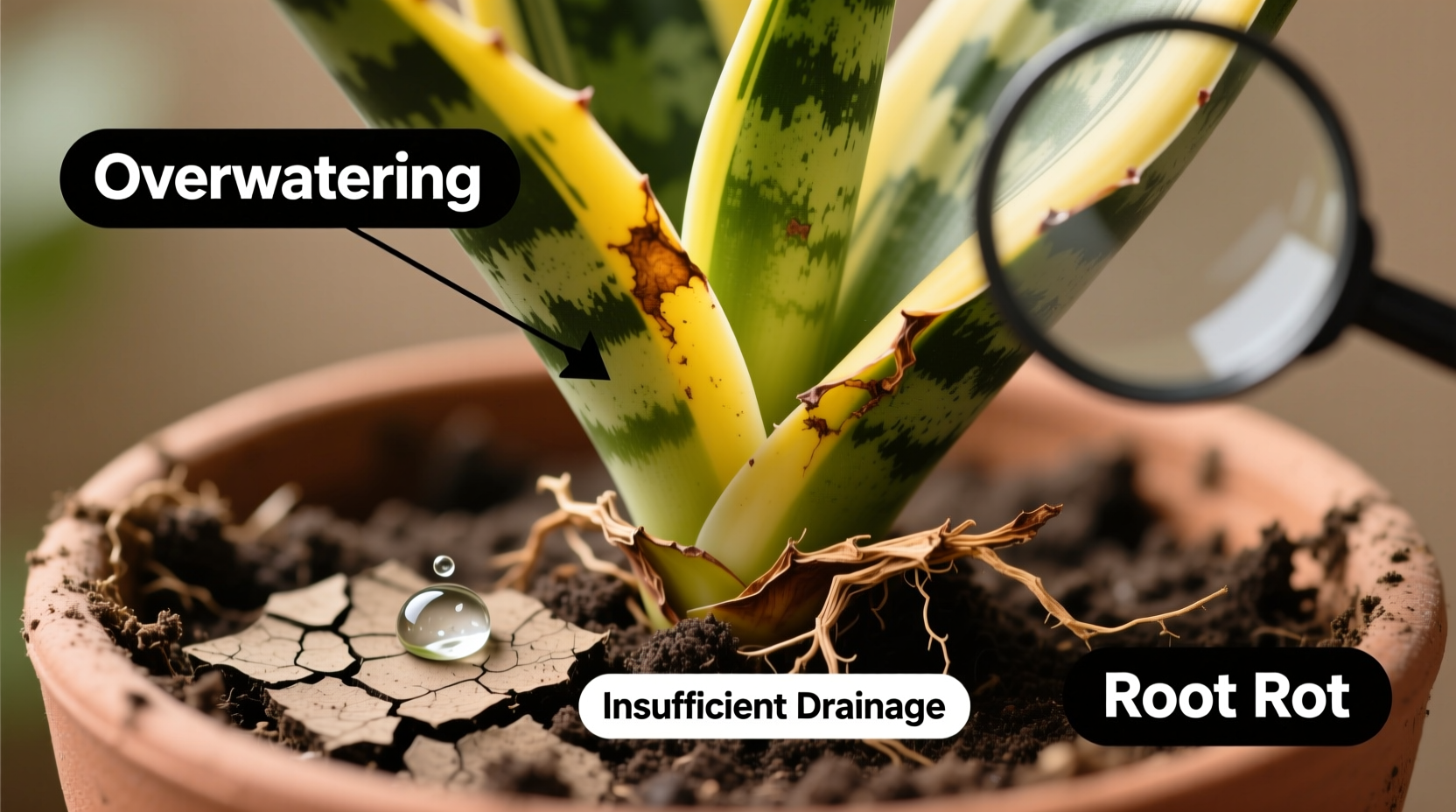
Overwatering is responsible for the majority of yellowing cases in snake plants. It's easy to fall into the trap of thinking that more water equals better health, especially if you're used to caring for thirstier species. But for snake plants, frequent watering leads to saturated soil, oxygen deprivation in the roots, and ultimately root rot.
Symptoms of overwatering include:
- Yellowing leaves that feel soft, mushy, or spongy to the touch
- Leaves collapsing at the base or leaning unnaturally
- A foul odor emanating from the soil (indicative of root decay)
- Mold or algae growth on the soil surface
- Soil that remains wet for more than 7–10 days after watering
How to Rescue an Overwatered Snake Plant
Acting quickly can save a plant on the brink of collapse. Follow this step-by-step guide to reverse damage caused by overwatering:
- Remove the plant from its pot gently and inspect the roots. Healthy roots are firm and white; rotted ones are brown, black, and slimy.
- Cut away all damaged roots using sterilized pruning shears. Also trim any severely yellowed or mushy leaves.
- Allow the plant to air-dry for 1–2 days in a warm, shaded area to prevent fungal spread.
- Repot in fresh, well-draining soil—a cactus or succulent mix works best. Use a terracotta or unglazed ceramic pot with drainage holes.
- Hold off on watering for at least a week post-repotting to let the plant recover.
Underwatering: A Less Obvious Cause
While less common, underwatering can also lead to yellowing—especially in older leaves. Snake plants are drought-tolerant, but they aren't indestructible. Prolonged dehydration causes cellular breakdown, resulting in chlorophyll loss and leaf senescence.
Signs of underwatering include:
- Yellowing that starts at the tips or edges of leaves and moves inward
- Dry, crispy texture in affected areas
- Leaves appearing thinner or slightly wrinkled
- Soil pulling away from the edges of the pot
Unlike overwatered plants, underwatered snake plants usually remain upright and firm. The yellowing is typically isolated to one or two lower leaves rather than affecting multiple stems at once.
Reviving an Underwatered Snake Plant
Recovery from drought stress is generally faster and simpler than from root rot:
- Water deeply until excess drains from the bottom. Avoid light sprinkles—they don’t penetrate the dense root zone.
- Let the plant absorb moisture for 30 minutes, then discard any standing water in the saucer.
- Monitor over the next 2–3 weeks. New growth should emerge if the plant is still viable.
- Resume a consistent schedule: Water every 3–6 weeks, depending on light, temperature, and humidity.
Environmental Factors That Exacerbate Watering Issues
Watering doesn’t happen in a vacuum. Several environmental conditions influence how quickly your snake plant uses moisture, affecting how often it needs irrigation.
- Light levels: Plants in bright indirect light use more water than those in low-light corners. A snake plant near a north-facing window may need watering only once every 6 weeks, while one in a sunlit room might require it every 3–4 weeks.
- Pot material: Terracotta pots are porous and wick away moisture, drying out faster than plastic or glazed ceramic containers.
- Humidity: In dry indoor environments (especially during winter), evaporation increases, which can accelerate soil drying.
- Seasonal changes: Growth slows in fall and winter, reducing water needs. Many owners fail to adjust their routine seasonally, leading to accidental overwatering.
| Factor | Effect on Watering Frequency | Recommendation |
|---|---|---|
| Bright Indirect Light | Increases water use | Check soil every 2–3 weeks |
| Low Light | Slows drying significantly | Water every 5–8 weeks |
| Terracotta Pot | Speeds up evaporation | May need watering 1–2 weeks earlier |
| Plastic Pot | Retains moisture longer | Wait longer between waterings |
| Winter Dormancy | Reduces metabolic activity | Cut watering frequency by half |
Real-Life Example: Maria’s Overwatered Sansevieria
Maria, a new plant owner in Chicago, noticed her tall snake plant developing yellow bases on several leaves. She had been watering it weekly, believing consistency was key. After reading about overwatering risks, she stopped irrigation and checked the soil—it was soggy three inches down. She removed the plant, found extensive root rot, and followed the rescue steps outlined above. She repotted it in a terracotta container with cactus mix and waited ten days before giving it a small amount of water. Within six weeks, new green shoots emerged from the base, signaling recovery. Her mistake? Treating her snake plant like her ferns. Her lesson: Not all houseplants share the same needs.
Prevention Checklist: Keep Your Snake Plant Green
To avoid future yellowing, follow this actionable checklist:
- ✅ Use a pot with drainage holes to prevent water accumulation
- ✅ Choose a fast-draining soil mix (e.g., 2 parts potting soil, 1 part perlite, 1 part coarse sand)
- ✅ Water only when the top 2 inches of soil are completely dry
- ✅ Reduce watering frequency in winter months
- ✅ Rotate the plant occasionally for even light exposure
- ✅ Inspect monthly for early signs of stress (yellowing, drooping, soft spots)
- ✅ Wipe leaves with a damp cloth to keep pores open and improve photosynthesis
Frequently Asked Questions
Can yellow snake plant leaves turn green again?
No. Once a leaf turns yellow due to overwatering or severe dehydration, it cannot revert to green. The plant will eventually shed it. Focus on saving healthy tissue and preventing further damage.
How often should I water my snake plant?
Most snake plants need watering every 3–6 weeks, depending on conditions. Always check the soil first. In summer and bright light, aim for every 3–4 weeks. In winter or low light, extend to 5–8 weeks.
Is misting good for snake plants?
No. Snake plants do not benefit from misting. They prefer dry foliage and are susceptible to fungal issues if leaves stay wet. Humidity should be managed through ambient conditions, not direct spraying.
Final Steps Toward a Healthier Plant
Yellowing in snake plants is rarely a death sentence—it’s a warning sign that invites correction. By identifying whether overwatering or underwatering is the cause, adjusting your care routine, and optimizing growing conditions, you can restore your plant’s vitality. Remember, the snake plant thrives on simplicity. It doesn’t demand attention; it rewards restraint. Let go of the urge to water on a fixed calendar. Instead, observe the plant, test the soil, and respond with intention.
💬 Have a snake plant that bounced back from yellowing? Share your story in the comments—your experience could help another plant lover revive theirs.








