
Sudden softness in the leaves of a snake plant can be alarming. Known for their resilience and low maintenance, Sansevieria—commonly called snake plants—are often recommended for beginners. Yet even these tough houseplants aren’t immune to problems. One of the most common issues owners face is mushy foliage, which typically points to water-related stress. While both overwatering and root rot lead to similar symptoms, they differ significantly in cause, progression, and treatment. Understanding the distinction is crucial to saving your plant before irreversible damage occurs.
Mushiness usually begins at the base of the leaf or along the lower stem and spreads upward. If left unchecked, entire leaves collapse, and the plant may emit a foul odor—a telltale sign of advanced decay. The good news? Early detection and proper intervention can reverse much of the damage. This guide breaks down the differences between overwatering and root rot, helps you assess your plant’s condition, and provides actionable steps to restore its health.
Understanding Overwatering: The First Warning Sign
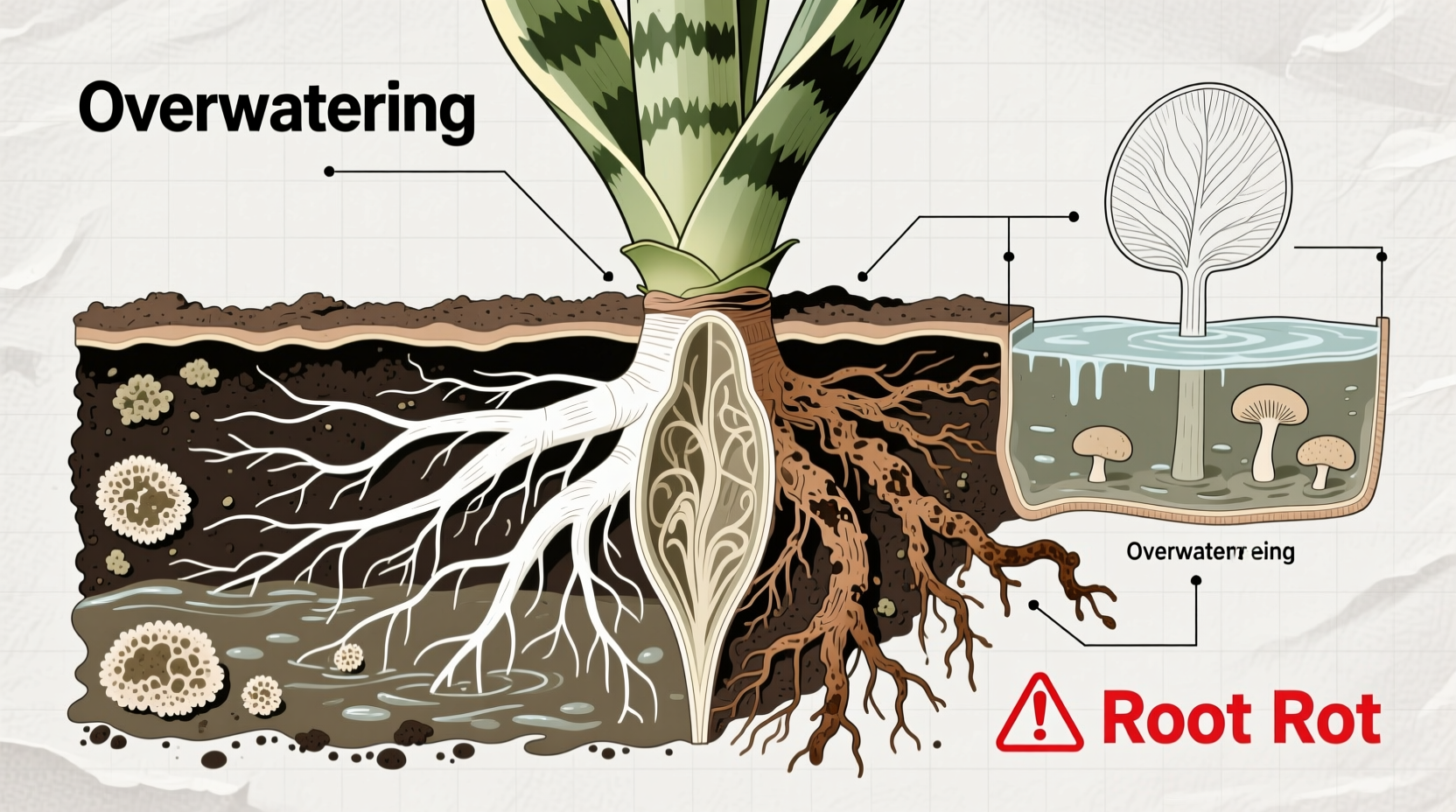
Overwatering is the leading cause of distress in snake plants. These succulent-like plants store water in their thick, upright leaves and thrive in dry conditions. Their natural habitat—arid regions of West Africa—equips them to survive long periods without moisture. When grown indoors, especially in cool or low-light environments, their water needs decrease further.
Watering on a fixed schedule rather than based on soil moisture is a common mistake. Snake plants prefer the “soak and dry” method: thoroughly saturate the soil, then allow it to dry completely before watering again. In winter, this could mean watering only once every four to six weeks.
When overwatered, the leaves absorb more water than they can handle. Cells swell beyond capacity and burst, causing the tissue to break down. This results in soft, squishy, yellowing leaves that feel damp to the touch. The damage often starts near the soil line because roots are saturated, and excess moisture moves upward into the leaf base.
Tip: Always check the top 2–3 inches of soil with your finger before watering. If it’s not dry, wait another few days.Root Rot: The Hidden Crisis Beneath the Soil
While overwatering is a cultural error, root rot is a biological consequence. It occurs when consistently wet soil creates an anaerobic environment where harmful fungi like *Pythium* and *Fusarium* thrive. These pathogens attack the roots, breaking down their structure and impairing the plant’s ability to absorb water and nutrients—even if the soil is moist.
Unlike surface-level overwatering symptoms, root rot starts underground. Affected roots turn from firm and white to dark brown or black, becoming slimy and fragile. As root mass diminishes, the plant struggles to support itself. Above-ground signs include persistent mushiness, wilting despite wet soil, stunted growth, and sometimes a sour or musty smell emanating from the pot.
The danger with root rot is that by the time visible symptoms appear, significant root loss has already occurred. Unlike simple overwatering, which may resolve with drying out, root rot requires immediate surgical intervention to save the plant.
“Many people think they’re nurturing their snake plant by watering regularly, but in reality, they’re drowning it. Root rot is almost always preventable with proper drainage and mindful watering.” — Dr. Lena Torres, Urban Horticulturist and Plant Pathologist
How to Tell the Difference: Overwatering vs Root Rot
Distinguishing between overwatering and root rot is essential for choosing the right treatment. While symptoms overlap, key indicators help pinpoint the issue:
| Symptom | Overwatering | Root Rot |
|---|---|---|
| Leaf texture | Soft, swollen, translucent at base | Mushy, collapsing, often with brown spots |
| Soil condition | Damp, possibly soggy | Wet, foul-smelling, compacted |
| Root appearance | Firm, white or light tan | Black, slimy, breaks apart easily |
| Smell | Neutral or earthy | Rotten, sulfurous, musty |
| Recovery potential | High with drying and adjusted care | Requires root trimming and repotting |
If the plant shows soft leaves but the roots remain healthy, the issue is likely overwatering. However, if roots are discolored, mushy, or smelly, root rot has set in. Immediate action is required.
Step-by-Step Rescue Plan for a Mushy Snake Plant
Whether dealing with overwatering or root rot, prompt action increases survival chances. Follow this timeline to assess and treat your plant:
- Remove the plant from its pot. Gently loosen the soil and slide the root ball out. Avoid pulling by the leaves, as they may detach if weakened.
- Inspect the roots. Healthy roots are firm and white or pale tan. Diseased roots are dark, soft, and may ooze when pressed. Use clean, sterilized scissors to cut away all affected tissue, making sure to remove at least an inch beyond visible damage.
- Trim damaged leaves. Any leaf that is more than 50% mushy should be removed at the base to prevent energy waste and bacterial spread.
- Disinfect remaining roots. Soak the root system in a solution of one part hydrogen peroxide to three parts water for 10–15 minutes to kill lingering pathogens.
- Repot in fresh, well-draining mix. Use a cactus or succulent blend with added perlite or pumice. Choose a pot with drainage holes—terracotta is ideal due to its breathability.
- Withhold water for 7–10 days. Allow the plant to heal and form calluses over cut areas. Place it in bright, indirect light during recovery.
- Resume careful watering. After the waiting period, water lightly and only when the soil is fully dry.
Prevention Checklist: Keep Your Snake Plant Firm and Healthy
Once your plant recovers—or if you’re proactively protecting a healthy one—follow this checklist to avoid recurrence:
- ✅ Water only when the top 2–3 inches of soil are dry
- ✅ Use a pot with adequate drainage holes
- ✅ Choose a fast-draining soil mix (e.g., 2 parts potting soil, 1 part perlite, 1 part coarse sand)
- ✅ Avoid saucers that retain water for more than 30 minutes
- ✅ Provide bright, indirect light (low light slows drying and weakens the plant)
- ✅ Reduce watering frequency in fall and winter
- ✅ Rotate the plant monthly for even growth and air circulation
- ✅ Inspect monthly for early signs of softness or discoloration
Real Example: A Recovered Mother-in-Law’s Tongue
Samantha, a plant enthusiast from Austin, noticed her tall snake plant developing droopy, jelly-like leaves at the base. She had been watering it every 10 days, assuming consistency was best. After reading about overwatering risks, she stopped watering immediately and checked the roots. Though some were brown and soft, others remained firm. She trimmed the damaged parts, repotted in a gritty succulent mix, and waited two weeks before giving a small amount of water.
Within a month, new, stiff leaves began emerging from the center. “I thought I’d killed it,” she said. “But once I understood that less water is actually better, it bounced back stronger than before.” Her experience highlights how timely diagnosis and correct care adjustments can rescue even severely stressed plants.
Frequently Asked Questions
Can a snake plant recover from root rot?
Yes, if enough healthy roots remain. Remove all diseased tissue, disinfect, and repot in fresh, dry medium. Avoid watering for at least a week. Survival depends on the extent of root loss—plants with only a few healthy roots may take months to stabilize.
Why are my snake plant leaves soft but not brown?
Soft, greenish-translucent leaves usually indicate early-stage overwatering before rot sets in. The cells are swollen with excess moisture but haven’t yet decayed. Stop watering, improve airflow, and monitor closely. These leaves may firm up or need removal if they don’t recover within a week.
Is bottom watering safe for snake plants?
Bottom watering can work but carries risk. Since snake plants require deep drying between waterings, bottom watering may not flush out accumulated salts or fully saturate the soil. It also makes it harder to judge how much water the plant actually absorbs. Top watering—until water drains freely from the bottom—is generally safer and more effective.
Conclusion: Act Now to Save Your Plant
A mushy snake plant isn’t necessarily a lost cause. Whether the culprit is overwatering or full-blown root rot, understanding the difference empowers you to respond appropriately. The key lies in observation, timely intervention, and a shift from routine-based to condition-based care. By adjusting your watering habits, improving soil and pot selection, and staying vigilant for early warning signs, you can restore your plant’s vitality and prevent future issues.
💬 Have a snake plant that survived root rot? Share your story in the comments—your experience could help another plant lover save theirs!








