Sometimes, the most resilient houseplants still show signs of distress. The snake plant (*Sansevieria trifasciata*), known for thriving on neglect, can still develop drooping leaves under certain conditions. While it's tough, it’s not indestructible. When those upright, sword-like leaves begin to sag, flop, or lean unnaturally, it’s a signal that something in its environment or care routine needs adjustment. Most often, the issue traces back to watering—either too much or too little—but other factors like light, pot size, temperature, and root health also play critical roles.
Understanding the specific cause behind drooping helps you take targeted action rather than guessing. This guide breaks down the primary reasons your snake plant may be drooping, with a strong focus on watering-related issues, and provides practical, science-backed solutions to revive your plant and prevent future problems.
Common Causes of Drooping in Snake Plants
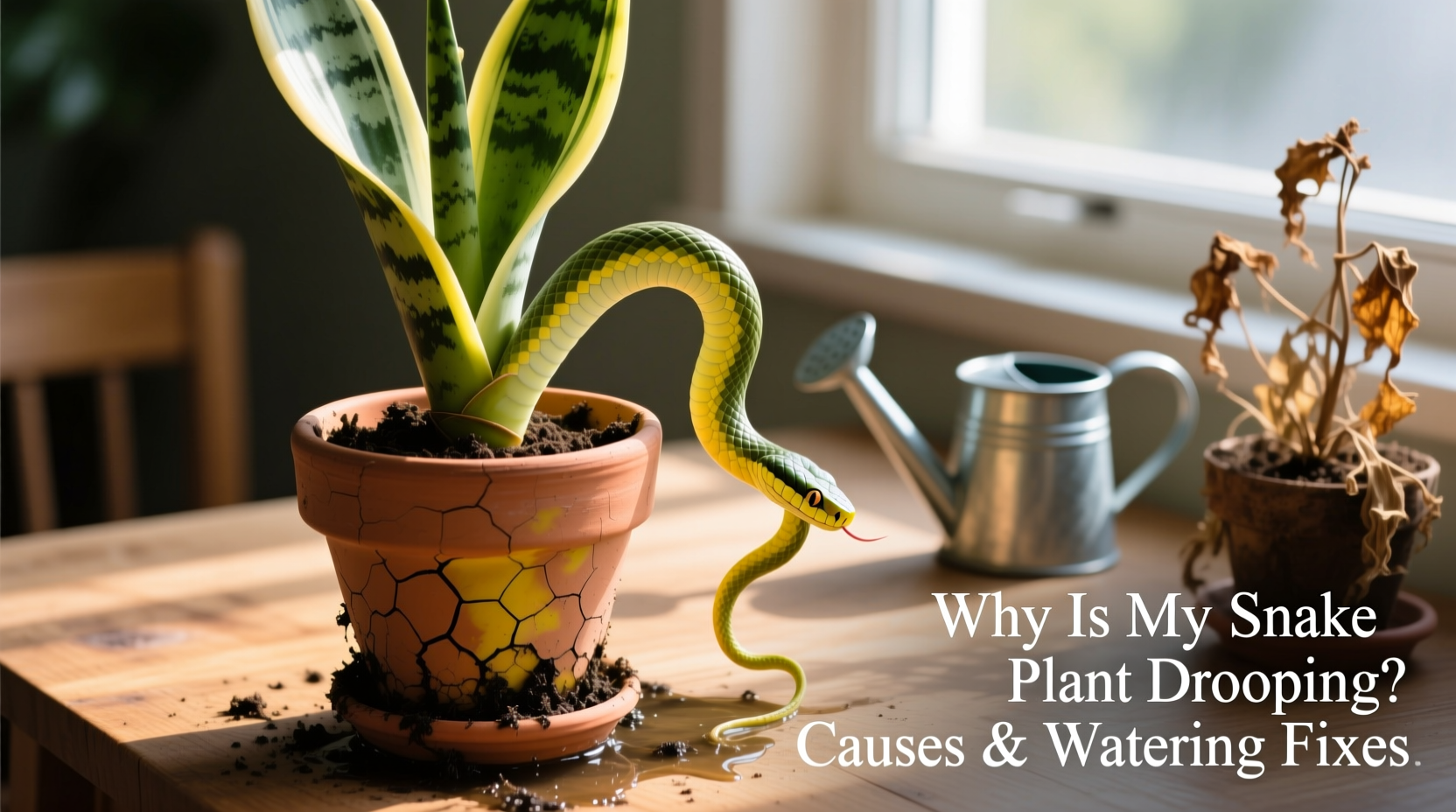
Drooping isn’t a single-issue symptom—it’s a general response to stress. Identifying the root cause requires careful observation of your plant’s condition, soil, container, and surroundings.
1. Overwatering and Root Rot
The most frequent culprit behind drooping snake plants is overwatering. These succulent-like plants store water in their thick leaves and rhizomes, making them highly susceptible to root rot when left in consistently moist soil. When roots sit in waterlogged conditions, they suffocate and decay, losing their ability to absorb nutrients and support the plant.
Signs of overwatering include:
- Leaves that feel mushy or soft at the base
- Yellowing or browning starting from the lower leaves
- A foul smell from the soil
- Soil that remains damp for more than 7–10 days after watering
“Snake plants are far more likely to die from kindness—overwatering—than from neglect.” — Dr. Linda Chalker-Scott, Horticulture Extension Specialist, Washington State University
2. Underwatering and Dehydration
While less common, underwatering can also lead to drooping. When severely dehydrated, the plant draws moisture from its leaves to survive, causing them to become thin, wrinkled, and eventually collapse. Unlike overwatering, the leaves will feel dry and papery rather than soggy.
3. Poor Drainage or Wrong Pot Type
A pot without drainage holes traps excess water, creating a swamp-like environment even if you water sparingly. Similarly, using dense soils that don’t allow airflow (like standard garden soil) increases the risk of water retention. Terracotta pots help wick away moisture, while plastic or glazed ceramic retain more water.
4. Inadequate Light Conditions
Though snake plants tolerate low light, prolonged exposure to dim environments weakens their structure. Without enough energy from photosynthesis, new growth becomes weak and floppy. On the flip side, sudden exposure to intense direct sunlight can scorch leaves, leading to tissue damage and drooping.
5. Temperature Stress and Drafts
Cold drafts from windows, air conditioners, or heaters can shock your plant. Snake plants prefer stable temperatures between 60°F and 85°F (15°C–29°C). Sudden drops below 50°F (10°C) impair metabolic processes and may cause leaves to bend or collapse.
6. Pot Too Large or Root Bound
A pot significantly larger than the root ball holds excess soil that stays wet for too long, increasing rot risk. Conversely, a severely root-bound plant struggles to absorb water efficiently, leading to dehydration and instability in the soil, which contributes to leaning or drooping.
Tip: Always check the soil moisture an inch below the surface before watering. If it’s damp, wait. Snake plants prefer to dry out completely between waterings.Watering Fixes: How to Correct and Prevent Drooping
Since improper watering is the leading cause of drooping, adjusting your routine is often the fastest path to recovery.
Step-by-Step Guide to Proper Watering
- Assess current soil moisture: Insert your finger or a wooden skewer 1–2 inches into the soil. If it comes out damp, do not water.
- Use the soak-and-dry method: When watering, drench the soil thoroughly until water runs out the drainage holes. Then, empty the saucer beneath to prevent reabsorption.
- Wait for full drying: Allow the top 1–2 inches of soil to dry completely before watering again. In winter, this could mean waiting 4–6 weeks.
- Adjust frequency by season: Water every 2–6 weeks in spring/summer; reduce to once every 6–8 weeks in fall/winter.
- Observe plant cues: Firm, upright leaves indicate proper hydration. Soft, drooping bases suggest overwatering; thin, wrinkled leaves point to underwatering.
Correcting Overwatering Damage
If you suspect root rot, immediate intervention is crucial:
- Remove the plant from its pot gently.
- Shake off old soil and inspect roots. Healthy roots are firm and white; rotted ones are brown, black, and mushy.
- Trim damaged roots with sterilized scissors.
- Let the plant air-dry for 1–2 days to callus any cuts.
- Repot in fresh, well-draining mix (see table below) and a clean pot with drainage holes.
- Do not water immediately—wait 5–7 days to allow recovery.
Reviving an Underwatered Plant
If the soil is bone dry and leaves are shriveled:
- Soak the pot in a basin of water for 20–30 minutes, allowing the soil to rehydrate from the bottom up.
- Remove and let excess water drain fully.
- Resume a regular watering schedule based on soil dryness, not calendar dates.
Optimal Soil and Potting Setup
The right growing medium is just as important as watering frequency. Snake plants need fast-draining soil to mimic their native arid habitats.
| Component | Purpose | Recommended Ratio |
|---|---|---|
| Potting Soil | Bulk base | 1 part |
| Pumice or Perlite | Drainage and aeration | 1 part |
| Coarse Sand or Turface | Prevents compaction | 1 part |
| Orchid Bark (optional) | Improves structure and airflow | ½ part |
You can also use a pre-made cactus or succulent mix, but enhance it with extra perlite (about 30%) for better drainage.
Choose a pot only 1–2 inches wider than the root ball. Ensure it has drainage holes. Unglazed terracotta is ideal because it allows moisture to evaporate through the walls.
Real-Life Example: Reviving a Drooping Mother-in-Law’s Tongue
Jamie, a plant owner in Chicago, noticed her tall *Sansevieria laurentii* suddenly leaning sideways, with several lower leaves turning yellow and feeling soft at the base. She had been watering it every 10 days, assuming consistency was key. After researching, she realized she was overwatering—especially during winter when the plant was dormant.
She removed the plant, found extensive root rot, trimmed the damaged parts, and repotted it in a terracotta pot with a gritty succulent mix. She placed it near a south-facing window and waited two weeks before watering. Within a month, new upright growth emerged, and the remaining healthy leaves regained firmness. By adjusting her watering rhythm and improving drainage, she saved a plant she thought was lost.
Checklist: Diagnose and Fix a Drooping Snake Plant
Follow this actionable checklist to assess and correct drooping:
- ✅ Check soil moisture—dry to touch at 1–2 inches deep?
- ✅ Inspect leaves—mushy (overwatered) or wrinkled (underwatered)?
- ✅ Examine roots—if accessible, look for rot (brown, slimy).
- ✅ Confirm pot has drainage holes.
- ✅ Evaluate light—near a bright window but no harsh midday sun?
- ✅ Review recent changes—cold draft? New location? Fertilizer applied?
- ✅ Adjust watering schedule—extend intervals, especially in winter.
- ✅ Repot if necessary—with fresh, well-draining mix.
Frequently Asked Questions
Can drooping snake plant leaves recover?
Once a leaf begins to droop due to structural damage, it won’t straighten again. However, removing severely affected leaves encourages new, healthy growth. Focus on correcting the underlying issue so future leaves grow strong and upright.
How often should I water a snake plant?
There’s no fixed schedule. Water only when the top 1–2 inches of soil are completely dry. In warm months, this might be every 2–6 weeks; in winter, it could be every 6–8 weeks. Always err on the side of underwatering.
Should I cut off drooping leaves?
If a leaf is severely drooping, mushy, or yellowing from the base, it’s best to remove it at the soil line with a clean blade. This prevents potential infection spread and redirects energy to healthier growth.
Conclusion: Act Now to Save Your Snake Plant
A drooping snake plant isn’t a lost cause—it’s a clear message that its needs aren’t being met. More often than not, the solution lies in reassessing how and when you water. By embracing the plant’s natural drought tolerance, improving soil and pot conditions, and providing consistent but minimal care, you can restore its vigor and enjoy years of architectural beauty.
Don’t wait for total collapse. Take a close look at your plant today. Feel the soil, examine the roots if needed, and adjust your habits accordingly. With the right approach, your snake plant can stand tall once again.
💬 Have a drooping snake plant story or recovery tip? Share your experience in the comments—your insight could help another plant lover save theirs!








