
It’s a familiar scene: you step outside on a crisp winter morning, pull on a wool hat, and within seconds, your hair springs to life like it’s charged with electricity. Strands float upward, cling to your face, or stick stubbornly to your clothes. Yet by spring, the problem vanishes as quickly as it appeared. If you’ve ever wondered why your hair turns into a personal lightning rod only during the colder months, you’re not alone — and more importantly, there’s a clear scientific explanation.
Static hair isn’t a myth or an exaggeration; it’s a real physical phenomenon rooted in environmental conditions, material interactions, and hair health. Understanding the causes empowers you to take effective action. This article breaks down the science behind winter static, identifies contributing factors, and offers actionable strategies to keep your hair smooth, grounded, and manageable — even in the driest, coldest weather.
The Science Behind Static Electricity in Hair
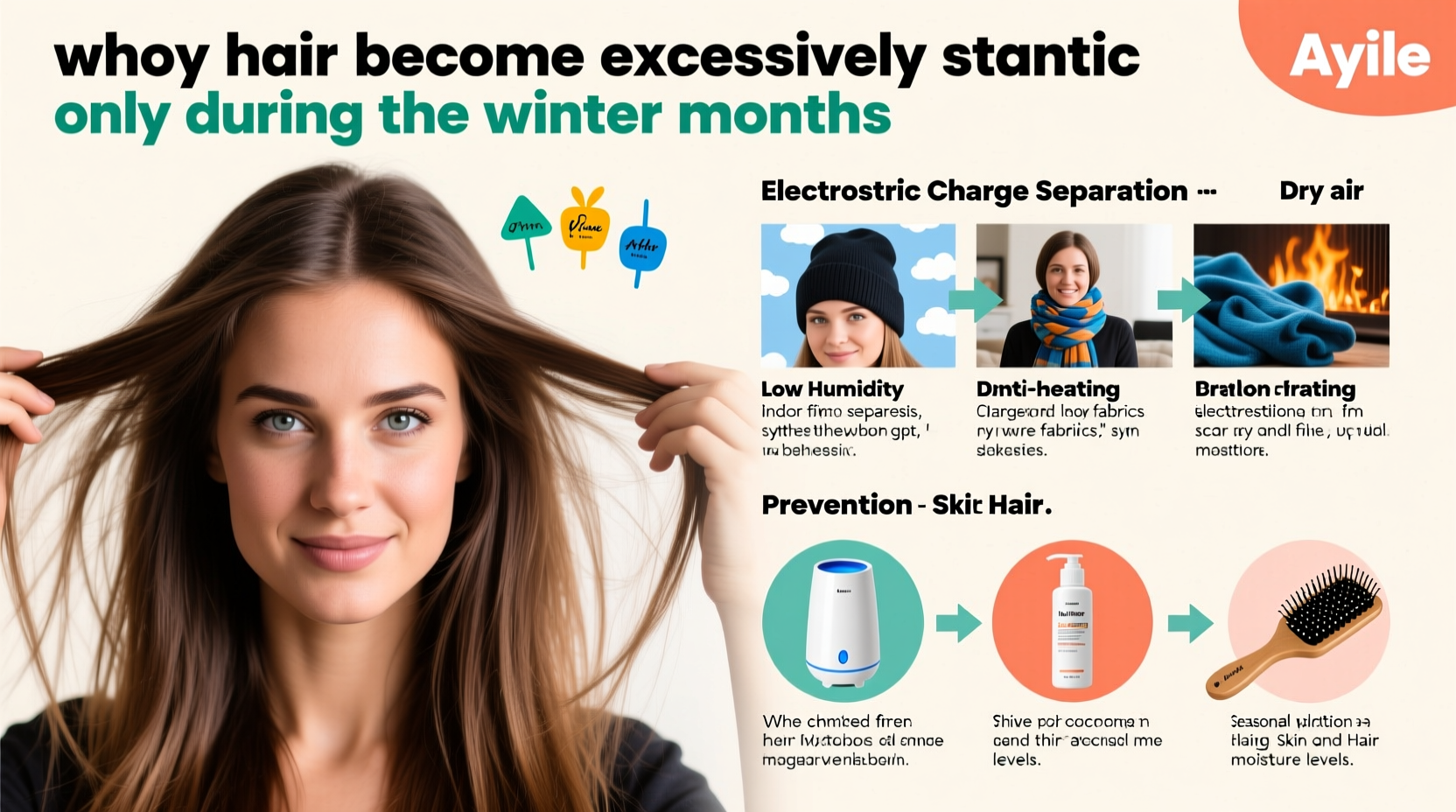
Static electricity occurs when electrons transfer between two surfaces through friction — a process known as triboelectric charging. When you brush your hair, remove a hat, or even turn your head against a sweater collar, electrons can jump from one surface to another. Hair typically loses electrons easily, becoming positively charged. Since like charges repel, each positively charged strand pushes away from its neighbors, causing that signature “flyaway” effect.
This doesn’t happen evenly across all seasons because humidity plays a critical role. In summer, moisture in the air helps dissipate electric charge almost as fast as it forms. Water molecules are conductive, allowing built-up electrons to escape into the atmosphere. But in winter, indoor heating and cold outdoor air drastically reduce relative humidity — sometimes below 20%. With little moisture to carry charges away, static builds up rapidly on dry hair and synthetic fabrics.
“Low humidity is the primary driver of static hair in winter. The drier the air, the more likely electrons will accumulate on the hair surface.” — Dr. Lena Peterson, Biophysicist & Hair Research Specialist
Why Winter Exacerbates Hair Static
Several interrelated factors make winter the perfect storm for static-prone hair:
- Dry indoor air: Central heating systems heat the air without adding moisture, dropping indoor humidity levels significantly.
- Cold outdoor air: Cold air holds less moisture than warm air, increasing evaporation from skin and hair.
- Frequent layering: Hats, scarves, and high-collared coats made of wool or synthetic fibers create constant friction with hair.
- Reduced sebum production: Cooler temperatures can slow natural oil (sebum) production, leaving hair shafts drier and more prone to charging.
- Over-washing: Many people wash their hair more frequently in winter due to increased product buildup or perceived greasiness, stripping essential oils.
Common Materials That Increase Static
Not all fabrics are created equal when it comes to static. Some materials are far more likely to generate charge when rubbed against hair. Knowing which ones to avoid — or how to neutralize their effects — can make a big difference.
| Material | Static Risk | Why It Happens |
|---|---|---|
| Polyester | High | Synthetic fiber that easily gains electrons, creating strong positive charge on hair. |
| Nylon | High | Common in hats and linings; highly insulative, preventing charge dissipation. |
| Wool | Moderate-High | Natural but rough fiber; friction with hair generates significant static, especially if dry. |
| Cotton | Low | Natural fiber with some moisture retention; less likely to cause electron transfer. |
| Silk | Very Low | Smooth surface reduces friction; naturally low-static, ideal for pillowcases and scarf linings. |
Choosing accessories lined with silk or cotton instead of nylon or polyester can dramatically reduce static. Similarly, switching to a silk-lined beanie or a cotton scarf buffer under wool hats helps minimize direct contact with high-friction materials.
Step-by-Step Guide to Reduce Winter Hair Static
Managing static isn’t about one magic fix — it’s about layering preventive habits. Follow this daily and weekly routine to keep flyaways under control:
- Hydrate your hair internally and externally. Drink plenty of water and use moisturizing shampoos and conditioners formulated for dry hair. Look for ingredients like glycerin, shea butter, or hyaluronic acid.
- Limit shampoo frequency. Washing every other day or using co-washing (conditioner-only) methods preserves natural oils that help prevent static.
- Apply leave-in conditioner or hair oil. A dime-sized amount of argan, jojoba, or marula oil smoothed over mid-lengths and ends creates a protective, conductive barrier.
- Use a boar bristle brush. Natural bristles distribute sebum evenly and reduce static compared to plastic combs or brushes.
- Carry a travel-sized hydrating mist. Mix water with a few drops of leave-in conditioner in a spray bottle. A quick spritz tames flyaways instantly.
- Ground your hair before going outside. Touch a metal object like a door handle or key before putting on your hat to discharge any built-up static.
- Switch to anti-static hair products. Some serums and sprays contain ionic compounds that neutralize charge buildup.
Mini Case Study: Sarah’s Winter Hair Transformation
Sarah, a 32-year-old graphic designer in Chicago, struggled every winter with her fine, shoulder-length hair clinging to her wool coat and flying uncontrollably in heated office environments. Despite using expensive styling products, nothing seemed to work consistently.
After consulting a trichologist, she identified three key issues: overuse of clarifying shampoo, wearing acrylic-lined beanies daily, and sleeping on a polyester pillowcase. She made simple changes: switched to a sulfate-free shampoo, invested in a silk-lined hat, and replaced her pillowcase with mulberry silk. Within two weeks, static reduced by over 80%. She now uses a light argan oil serum before bed and keeps a hydrating mist at her desk. “I didn’t realize how much my accessories were working against me,” she said. “Now my hair stays calm even in -10°F weather.”
Checklist: Prevent Winter Hair Static
Use this checklist daily or weekly to stay ahead of static buildup:
- ☑ Use a humidifier in your bedroom or workspace
- ☑ Apply a leave-in conditioner or hair oil after washing
- ☑ Replace synthetic scarves/hats with silk or cotton-lined options
- ☑ Limit shampooing to 2–3 times per week
- ☑ Use a boar bristle or wooden comb instead of plastic
- ☑ Carry a travel anti-static spray or hydrating mist
- ☑ Avoid rubber bands and metal clips that increase friction
- ☑ Ground yourself by touching metal before removing hats
Expert-Recommended Products and Alternatives
While behavior and environment matter most, certain products are specifically engineered to combat static. Experts recommend focusing on hydration and conductivity rather than heavy hold or heat protection alone.
“The best anti-static products don’t just mask the symptom — they address the root cause: dryness and charge imbalance.” — Marcus Tran, Celebrity Stylist & Formulation Consultant
Look for labels with terms like “ionic,” “moisture-sealing,” or “anti-static.” Some top-recommended ingredients include:
- Dimethicone – A silicone that coats hair, reducing friction and sealing in moisture.
- Panthenol – Penetrates the cuticle, improving elasticity and hydration.
- Quaternary ammonium compounds – Positively charged ions that neutralize static charge.
- Natural oils (jojoba, coconut, argan) – Provide lightweight conditioning without buildup.
Avoid alcohol-heavy sprays, gels, or dry shampoos, which can further dehydrate hair and worsen static over time.
FAQ: Common Questions About Winter Hair Static
Can drinking more water really reduce hair static?
Yes. While hydration doesn’t directly charge your hair, well-hydrated bodies produce better-quality sebum, and hydrated hair cuticles are less porous and less likely to lose electrons. Internal hydration supports external resilience.
Why does static happen more with fine hair?
Fine hair has less mass and density, making individual strands more susceptible to repelling each other when charged. Thicker, coarser hair resists movement due to weight and often retains more natural oils, reducing static potential.
Is there a way to fix static hair instantly?
Yes. Lightly mist hair with water or a mix of water and leave-in conditioner. Alternatively, run hands coated with a tiny amount of hand lotion over flyaways — the moisture and oils neutralize charge. Holding hair near steam (like from a kettle or shower) also works in emergencies.
Conclusion: Take Control of Winter Hair Static
Static hair in winter isn’t inevitable — it’s a predictable response to dry air, friction, and compromised hair health. By understanding the science and adjusting your routine, you can maintain smooth, grounded hair all season long. Focus on moisture, choose low-static materials, and adopt small, consistent habits that add up to big results.
💬 Have a favorite anti-static trick? Share your go-to solution in the comments and help others beat the winter frizz!








