It’s a quiet Sunday morning. You’re sipping coffee, scrolling through news alerts and unanswered emails, feeling a familiar weight on your chest. Meanwhile, your dog leaps off the couch, tail wagging furiously, ready to greet the day like it’s the best thing that’s ever happened. You can’t help but wonder: Why does my dog seem so much happier than I am?
This isn’t just whimsy. Many pet owners report that their dogs radiate a kind of effortless joy they themselves struggle to access. The answer lies not in denial or ignorance on the dog’s part, but in fundamental differences in biology, perception, and lifestyle. Understanding these distinctions doesn’t diminish human complexity—it highlights how we might reclaim some of that simple, present-moment happiness.
The Science of Canine Happiness
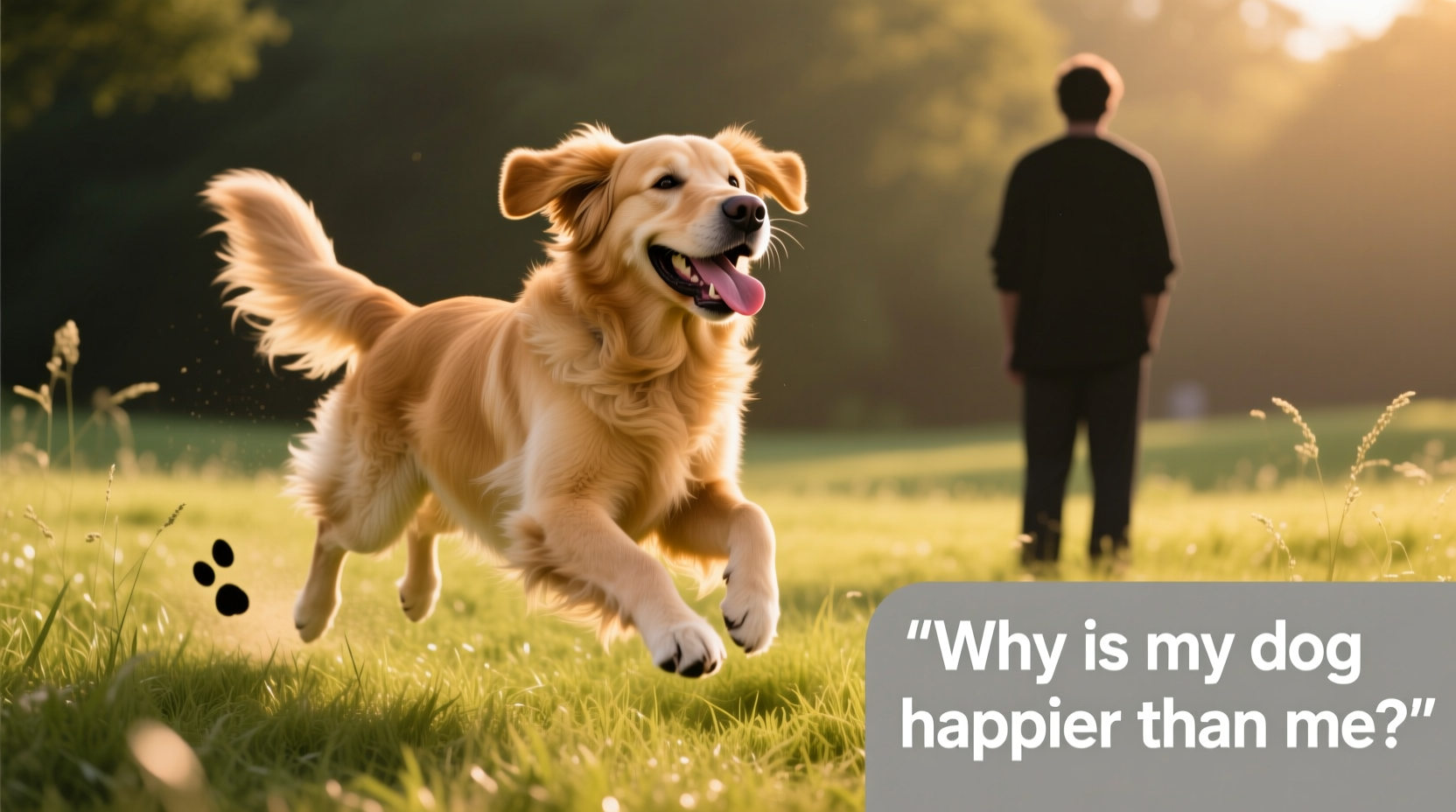
Dogs experience joy through neurochemical pathways similar to humans, but with fewer inhibitory signals. When a dog anticipates a walk, playtime, or even the rustle of a treat bag, dopamine floods their brain—much like in humans anticipating a reward. But unlike humans, dogs lack the prefrontal cortex development that allows for rumination, long-term planning, and anxiety about the future.
Oxytocin, the “bonding hormone,” also plays a significant role. Studies show that mutual gazing between dogs and their owners increases oxytocin levels in both species—a feedback loop of affection rarely seen in other animal-human relationships. This biochemical exchange reinforces attachment and contributes to sustained emotional well-being in dogs.
“Dogs live almost entirely in the present. They don’t worry about retirement plans or social media metrics. Their happiness is behaviorally driven by immediate needs and rewards.” — Dr. Karen Becker, Integrative Veterinary Specialist
What Dogs Teach Us About Joy
Canine joy isn’t based on achievement or comparison. It arises from fulfillment of basic needs: safety, movement, connection, and sensory engagement. A dog doesn’t need a promotion to feel proud. He feels pride when he retrieves the ball, greets you at the door, or finds a particularly interesting smell on a walk.
Consider the following behaviors that consistently trigger joy in dogs:
- Physical activity (walks, play, exploration)
- Social bonding (affection from owners, interaction with other dogs)
- Mental stimulation (toys, training, scent work)
- Routine and predictability (consistent feeding times, sleep schedules)
- Sensory pleasure (sunbathing, sniffing, chewing)
These are not luxuries—they are core components of a dog’s emotional ecosystem. And surprisingly, they align closely with human psychological needs as defined by self-determination theory: autonomy, competence, and relatedness.
Tip: Observe what truly excites your dog—not just treats, but moments of focus, play, or calm companionship. These cues reveal the essence of non-negotiable joy.Why Humans Struggle With Simple Happiness
Humans possess advanced cognition, which allows for creativity, empathy, and long-term planning—but also brings emotional burdens dogs never face. We dwell on past mistakes, anticipate future problems, and constantly compare ourselves to others. Social media amplifies this, creating cycles of inadequacy and disconnection.
Meanwhile, dogs operate without ego. They don’t measure worth by productivity or appearance. A dog who naps all day doesn’t feel guilty. One who barks at squirrels doesn’t question if it’s “meaningful work.” Their sense of purpose is embedded in instinct and relationship, not societal expectations.
Modern life further distances us from natural rhythms. Sedentary jobs, digital overload, and fragmented social networks erode our baseline well-being. In contrast, dogs thrive on routine, physicality, and emotional availability—all things many adults now lack.
Do’s and Don’ts of Emotional Well-Being: Human vs. Dog
| Behavior | Dog Approach (Do) | Human Trap (Don’t) |
|---|---|---|
| Responding to stress | Shake it off, move, seek comfort | Ruminate, suppress, overanalyze |
| Enjoying the moment | Lie in sun, chew toy, watch birds | Check phone, multitask, plan next task |
| Seeking connection | Nuzzle, follow, make eye contact | Text instead of call, avoid vulnerability |
| Physical activity | Walk, run, play daily | Sit for hours, exercise sporadically |
| Sleep | Follow circadian rhythm, rest deeply | Binge screens, irregular schedule |
A Real-Life Glimpse: Max and the Power of Presence
Take Max, a six-year-old rescue mutt adopted by Sarah, a software project manager in Portland. Sarah often worked late, stressed about deadlines, and struggled with insomnia. Max, though once anxious, transformed after a few months of consistent walks, training games, and evening cuddles.
One evening, overwhelmed by a failed product launch, Sarah broke down crying on the couch. Without hesitation, Max climbed up, rested his head on her lap, and stayed silent—just present. She later said, “He didn’t try to fix it. He didn’t offer advice. He just *was* there. And somehow, that made everything feel manageable.”
In the months that followed, Sarah began structuring her days more like Max’s: morning movement, scheduled breaks, tech-free evenings, and prioritizing time with loved ones. Her anxiety decreased. Her sleep improved. She didn’t become a dog—she learned from one.
Practical Steps to Cultivate More Joy (Inspired by Dogs)
You don’t need to bark or roll in grass to benefit from canine wisdom. Instead, integrate dog-like habits into your human life:
- Start your day with movement. Just as dogs stretch and shake upon waking, begin with light stretching, a short walk, or mindful breathing.
- Practice undistracted connection. Spend 10 minutes daily giving full attention to someone you love—no devices, no agenda.
- Embrace routines. Dogs flourish with predictability. Set consistent times for meals, sleep, and work to reduce decision fatigue.
- Engage your senses. Notice textures, smells, sounds. Like a dog sniffing every bush, pause to really taste your food or feel the sun on your skin.
- Let go quickly. After an argument or mistake, consciously release tension—take a walk, breathe deeply, reset like a dog shaking off water.
Checklist: Align Your Life With Canine Joy Principles
- ✅ Take a 20-minute walk outdoors today
- ✅ Turn off notifications for one hour to be fully present
- ✅ Pet your dog (or visit an animal friend) with full attention
- ✅ Eat one meal slowly, focusing only on flavor and texture
- ✅ Go to bed at the same time for three consecutive nights
- ✅ Forgive yourself for one small mistake from this week
Frequently Asked Questions
Can dogs really be happier than humans?
Dogs aren’t “happier” in a hierarchical sense—they experience joy differently. Their happiness is rooted in immediacy, safety, and connection, unclouded by existential concerns. While humans are capable of deeper meaning and complex joy, we often overlook simple pleasures that dogs embody naturally.
Do dogs get depressed like humans?
Yes, dogs can experience depression-like symptoms, especially after trauma, loss, or prolonged isolation. Signs include lethargy, loss of appetite, and withdrawal. However, recovery is often faster with environmental enrichment, routine, and social support—highlighting how foundational these elements are to emotional health.
Should I model my life entirely on my dog’s habits?
No—but selectively adopting their strengths can improve well-being. Dogs excel at being present, physically active, and emotionally honest. Integrate these traits mindfully while honoring human needs for purpose, growth, and intellectual engagement.
Final Thoughts: Learning From Our Four-Legged Teachers
Your dog isn’t happier because life is easier. He’s happier because he lives authentically—aligned with his nature. He doesn’t chase validation, ignore fatigue, or disconnect from his body. He eats when hungry, rests when tired, and loves without reservation.
There’s no shame in admitting that a creature with a brain the size of a walnut might outshine us in emotional intelligence. The invitation isn’t to become like dogs, but to remember what we’ve forgotten: that joy doesn’t require perfection, productivity, or praise. It grows in presence, connection, and care.
💬 What has your dog taught you about happiness? Share your story in the comments—let’s learn from each other, and from the animals who live joy more purely than we do.








