
Cats scratch. It’s not just a habit—it’s a deeply ingrained instinct. From marking territory to maintaining claw health, scratching serves multiple biological purposes. Yet when your feline starts attacking the living room wall like it owes them money, it’s natural to wonder: why won’t they use the expensive cardboard scratcher you bought? The answer isn’t simple disobedience. More often, it’s about unmet needs, environmental factors, or mismatched preferences. Understanding the root causes behind wall-scratching can help you guide your cat toward more appropriate outlets—without resorting to punishment or stress.
The Instinct Behind Scratching
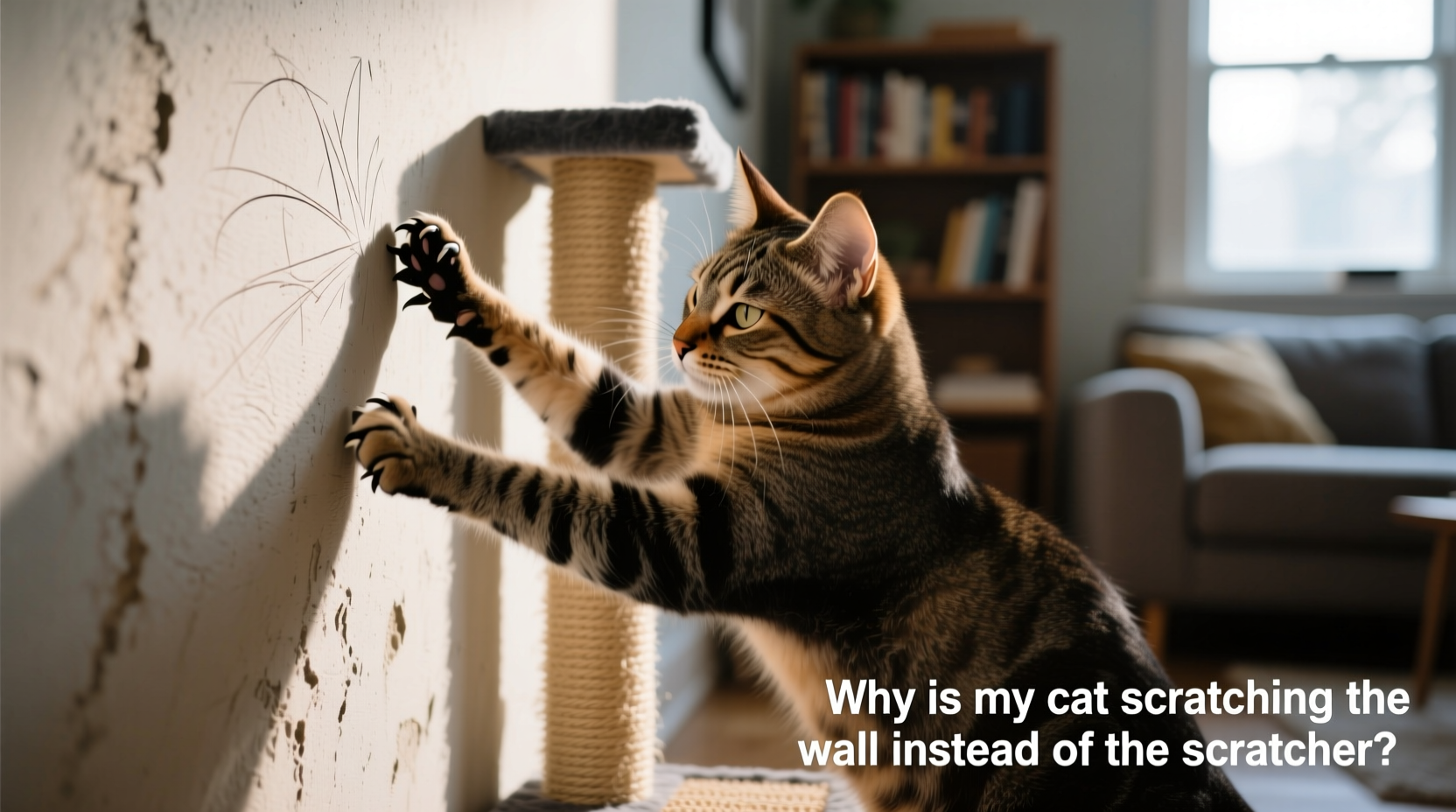
Scratching is hardwired into a cat’s behavior. Long before domestication, wild ancestors used their claws to climb, hunt, and defend themselves. Today’s housecats retain these instincts, even if they’ve never seen a mouse in the wild. When a cat scratches, they’re doing far more than sharpening claws—they’re communicating, stretching muscles, and relieving stress.
- Scent marking: Cats have scent glands between their paw pads. Each swipe deposits pheromones, signaling ownership and creating a sense of security.
- Muscle activation: The full-body stretch during scratching helps maintain flexibility and joint health.
- Claw maintenance: Scratching sheds old outer claw layers, revealing sharper, healthier ones underneath.
- Emotional regulation: Cats may scratch when anxious, excited, or territorial—acting as a release valve for emotions.
When walls become the target, it usually means your cat hasn’t found a better alternative—not that they’re being defiant.
Why Walls Are Appealing (And How to Redirect)
Walls offer vertical space, stability, and texture—all things cats look for in a scratching surface. But not all walls are scratched for the same reason. Identifying the motivation helps determine the solution.
Texture and Surface Preference
Many commercial scratchers use materials that don’t match what cats naturally seek. A flimsy cardboard pad on the floor may not compare to the firm resistance of drywall or wood trim. Cats often prefer:
- Vertical surfaces over horizontal ones
- Rough, fibrous textures like sisal or corrugated cardboard
- Sturdy structures that don’t wobble
Location, Location, Location
Cats scratch where it makes the most sense to them—not where it’s convenient for us. High-traffic zones like doorways, near sleeping areas, or beside windows are prime real estate for scent marking. If your scratcher is tucked in a quiet corner, it may be ignored simply because it’s out of the social loop.
“Cats choose scratching spots based on visibility and function, not convenience. Place scratchers where your cat already wants to mark.” — Dr. Sarah Thompson, DVM, Feline Behavior Consultant
Lack of Suitable Alternatives
If the only available scratcher is small, unstable, or worn out, your cat will opt for something more satisfying—even if it damages your walls. Many owners make the mistake of buying one low-cost scratcher and expecting lifelong use. Over time, it loses appeal, while the wall remains consistently textured and tall.
Step-by-Step Guide to Redirect Wall-Scratching
Changing scratching behavior takes patience and strategy. Follow this timeline to gradually shift your cat’s habits:
- Week 1: Observe and Map Behavior
Track when and where your cat scratches. Note the height, angle, duration, and whether it follows certain activities (e.g., waking up, after play). - Week 2: Introduce Better Options
Place multiple scratchers near problem areas. Use different types—vertical sisal posts, horizontal cardboard slabs, angled scratchboards—to test preferences. - Week 3: Discourage Wall Access (Temporarily)
Cover scratched sections with double-sided tape, aluminum foil, or plastic guards. These textures are unpleasant but harmless. - Week 4: Reinforce Positive Use
When your cat uses the scratcher, reward immediately with treats, praise, or play. Consistency strengthens association. - Week 5+: Phase Out Deterrents
Once consistent use is established, remove barriers slowly. Keep preferred scratchers in place permanently.
Checklist: Fixing the Wall-Scratching Habit
- ✅ Identify all current scratching locations
- ✅ Provide at least two types of scratchers (vertical + horizontal)
- ✅ Place scratchers in high-traffic or rest areas
- ✅ Choose sturdy, non-wobbling bases
- ✅ Rotate or replace worn scratchers every 3–6 months
- ✅ Use positive reinforcement when correct use occurs
- ✅ Block access to walls temporarily with safe deterrents
- ✅ Trim claws regularly to reduce damage potential
Do’s and Don’ts: Common Mistakes in Scratch Training
| Do | Don’t |
|---|---|
| Use pheromone sprays (like Feliway) near new scratchers to encourage investigation | Spray your cat with water as punishment—this increases anxiety and worsens marking |
| Trim your cat’s claws every 2–3 weeks to minimize wall damage | Cover entire walls with permanent materials that alter room aesthetics long-term |
| Place scratchers near furniture corners or entryways—natural marking zones | Assume one scratcher fits all—cats have individual preferences |
| Replace cardboard scratchers when frayed; freshness matters | Use strong citrus scents or vinegar sprays—these can repel cats from rooms entirely |
Real Example: Luna the Siamese
Luna, a 3-year-old Siamese, began scratching the hallway wall every morning after waking up. Her owner, Maria, had placed a small cardboard scratcher in the living room, but Luna ignored it. After tracking her behavior, Maria noticed Luna always stretched vertically against the wall after sleeping—a combination of instinct and routine.
She installed a 32-inch-tall sisal post right beside the bedroom door—the exact spot Luna targeted. Within three days, Luna began using it consistently. Maria also added a second angled cardboard scratcher near the couch, which Luna used after play sessions. By aligning the solution with Luna’s natural rhythms and location preferences, the wall damage stopped completely in under two weeks.
FAQ: Common Questions About Wall-Scratching
Is wall-scratching a sign of aggression or stress?
Not necessarily. While stress can increase scratching frequency, occasional wall-scratching is normal. However, sudden changes—like aggressive clawing or excessive marking—may indicate anxiety, especially if other behaviors change (e.g., hiding, urination). In such cases, consult your vet or a feline behaviorist.
Can I train an older cat to stop scratching walls?
Yes. Cats of any age can learn new habits, though it may take longer. Older cats may be more set in their ways, so consistency and patience are key. Focus on making the desired option more appealing than the wall, rather than trying to eliminate the behavior outright.
Should I declaw my cat to stop wall damage?
No. Declawing is a painful surgical procedure involving amputation of the last bone in each toe. It’s banned in many countries and discouraged by major veterinary associations, including the American Veterinary Medical Association (AVMA). It can lead to chronic pain, behavioral issues, and litter box avoidance. Instead, manage scratching humanely through training, trimming, and providing alternatives.
Conclusion: Meet Your Cat Where They Are
Your cat isn’t ruining your walls out of spite. They’re acting on instincts honed over thousands of years. The goal isn’t to suppress scratching—it’s to redirect it thoughtfully. Success comes not from forcing compliance, but from understanding your cat’s needs and offering better options in the right places.
Start by observing where and why the scratching happens. Then, introduce appealing, stable scratchers in those exact zones. Be patient, reinforce good choices, and avoid punitive methods. Over time, your cat will learn where scratching is welcome—and your walls will stay intact.
💬 Have a tip that worked for your cat? Share your experience in the comments—your insight could help another frustrated pet owner find peace with their purring roommate.








