A bug bite that turns purple can be alarming, especially if it wasn’t expected. While most insect bites result in redness, swelling, and itching, a shift toward purple discoloration may signal a more serious reaction or underlying condition. Understanding the causes behind this color change, how to assess severity, and when to intervene medically is essential for preventing complications.
Purple discoloration in a bug bite typically indicates bruising, blood vessel damage, or localized tissue injury. It may also point to an allergic response or infection. This article breaks down the common reasons for purple bug bites, how to differentiate between mild and dangerous cases, and practical steps for treatment and prevention.
Common Causes of Purple Bug Bites
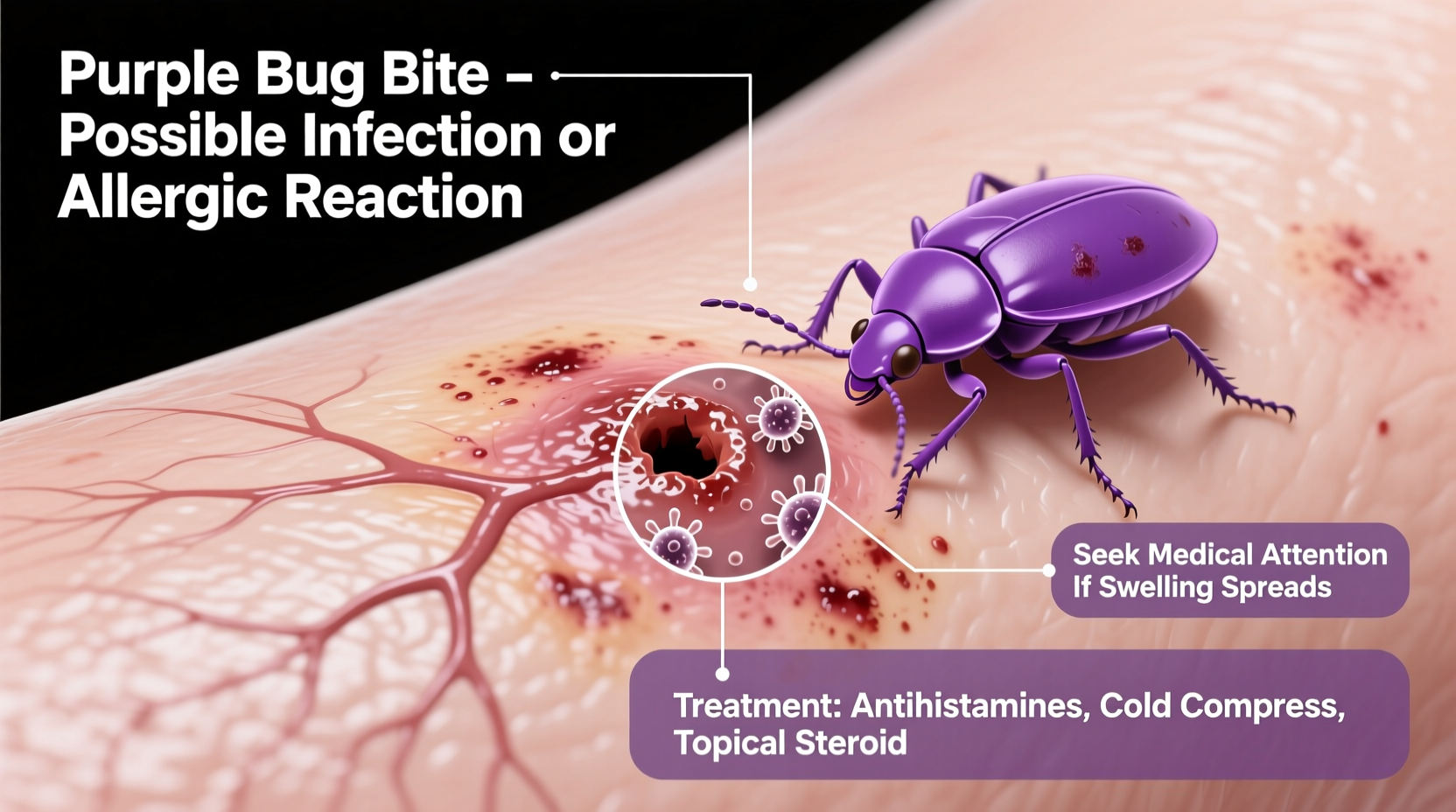
Not all bug bites are created equal. The appearance of a bite—especially its color—can provide clues about the type of insect involved and the body’s response. A purple hue often results from internal bleeding beneath the skin or inflammation severe enough to affect capillaries.
- Hemorrhagic reactions: Some bites, particularly from mosquitoes or fleas, trigger small bleeds under the skin. These appear as dark red or purple spots surrounded by swelling.
- Bite force and saliva toxicity: Insects like horseflies or deer flies use cutting mouthparts and inject anticoagulants, which can lead to bruising and purple discoloration at the site.
- Allergic responses: In sensitive individuals, the immune system overreacts to insect saliva, causing extensive inflammation and vascular leakage, resulting in bruise-like patches.
- Infection (cellulitis): Bacterial entry through broken skin can lead to spreading discoloration, including purplish tones, warmth, and pain.
- Spider bites (e.g., brown recluse): These are notorious for causing necrotic wounds. The initial bite may go unnoticed, but within hours, the area turns red, then purple or black as tissue dies.
How to Identify Serious vs. Mild Reactions
Distinguishing between a normal inflammatory response and a dangerous one is critical. Most bug bites resolve within a few days with minimal intervention. However, certain visual and symptomatic cues suggest deeper issues.
| Feature | Mild Reaction | Serious Reaction |
|---|---|---|
| Color | Red or pink | Purple, blue, black, or gray |
| Size | Less than 1 inch diameter | Expanding beyond 2 inches |
| Pain Level | Mild itching or stinging | Intense, worsening pain |
| Swelling | Localized, minor | Spreading rapidly |
| Systemic Symptoms | None | Fever, chills, nausea, dizziness |
If the bite develops a purple center with a pale ring and expanding redness, it could indicate a necrotic lesion—commonly associated with brown recluse spider bites. Similarly, bluish-purple edges combined with warmth and tenderness may signal cellulitis, a bacterial skin infection requiring antibiotics.
“Any bite that progresses from red to purple within 12–24 hours should be evaluated, especially if accompanied by fever or malaise.” — Dr. Lena Torres, Board-Certified Dermatologist
Step-by-Step Treatment Guide
Treating a purple bug bite depends on severity. Early action can prevent complications such as scarring or systemic infection.
- Clean the area: Wash gently with soap and water to reduce infection risk.
- Apply a cold compress: Use an ice pack wrapped in cloth for 10 minutes every hour during the first 6 hours to reduce swelling and slow tissue damage.
- Elevate the limb: If the bite is on an arm or leg, elevate it above heart level to minimize fluid buildup.
- Use topical treatments: Apply hydrocortisone cream for itching or calamine lotion to soothe irritation. Avoid scratching to prevent secondary infection.
- Monitor for changes: Document the bite’s size and color daily using notes or photos.
- Seek medical evaluation: If the purple area grows, becomes hard, blistered, or ulcerated, see a healthcare provider immediately.
- Prescription intervention: For confirmed spider bites or infections, doctors may prescribe antivenom, antibiotics, or corticosteroids.
Prevention and Best Practices
While not all bites can be avoided, reducing exposure lowers the risk of severe reactions. Certain environments and behaviors increase vulnerability to aggressive or venomous insects.
Tip: Wear long sleeves and pants in wooded or grassy areas, and use EPA-approved repellents containing DEET, picaridin, or oil of lemon eucalyptus.Inspect outdoor gear, camping equipment, and stored clothing before use—spiders and ticks often hide in these places. Shake out shoes left outside and seal gaps around windows and doors to keep pests out.
Checklist: What to Do After a Suspicious Bite
- ✔ Clean the bite with mild soap and water
- ✔ Take a photo for reference and tracking
- ✔ Note the time and location of the bite
- ✔ Apply a cold compress for the first few hours
- ✔ Watch for signs of spreading discoloration or fever
- ✔ Contact a doctor if symptoms worsen after 24 hours
Real-World Example: A Case of Misidentified Spider Bite
Mark, a 38-year-old hiker from Tennessee, noticed a small red bump on his thigh after returning from a trail. Within 18 hours, it darkened to deep purple with a central blister. Assuming it was a mosquito bite, he ignored it until intense pain and fever set in. He visited urgent care, where a dermatologist identified early-stage necrosis consistent with a brown recluse bite. Mark received a course of antibiotics and wound care instructions. His recovery took three weeks, and he was advised never to delay evaluation of rapidly changing bites again.
This case highlights how quickly a seemingly minor bite can escalate—and how accurate identification saves tissue and reduces complications.
Frequently Asked Questions
Can a mosquito bite turn purple?
Yes, especially in people with sensitive skin or clotting tendencies. Mosquitoes inject anticoagulants that can cause minor hemorrhaging under the skin, leading to bruise-like spots. These usually resolve within a week without treatment.
When should I go to the ER for a bug bite?
Seek emergency care if you experience difficulty breathing, facial swelling, rapid spread of purple discoloration, high fever, or confusion. These may indicate anaphylaxis, sepsis, or severe envenomation.
Will a purple bug bite leave a scar?
It depends on the depth of tissue damage. Superficial discoloration fades like a bruise. However, necrotic bites (e.g., from spiders) often scar and may require medical follow-up to promote healing and minimize long-term marks.
Conclusion: Act Early, Heal Faster
A purple bug bite isn’t always dangerous, but it should never be ignored. Color changes reflect deeper physiological events—whether it’s inflammation, infection, or tissue death. By recognizing warning signs early, applying proper first aid, and knowing when to consult a professional, you protect yourself from avoidable health risks.
💬 Have you experienced a discolored bug bite? Share your story or questions below—your insight could help others recognize danger signs sooner.








