Tinsel is a holiday staple—its shimmering strands drape over trees, mantlepieces, and stair railings, adding festive sparkle to seasonal decor. But anyone who’s ever decorated with it knows the aftermath: tinsel clings stubbornly to clothing, upholstery, pet fur, and even walls long after the ornaments have been packed away. Unlike other decorations, tinsel seems to have a magnetic pull on surfaces, making cleanup frustrating and time-consuming. Understanding why tinsel behaves this way—and knowing how to remove it quickly—is essential for stress-free holiday decorating.
The issue isn’t just aesthetic; embedded tinsel can damage delicate fabrics, snag in vacuum cleaners, or pose a choking hazard for pets and small children. Fortunately, science explains its clingy nature, and practical solutions exist to tackle even the most persistent strands. Whether you’re mid-decorating or deep into post-holiday cleanup, this guide delivers actionable insights backed by material science and cleaning expertise.
The Science Behind Tinsel’s Sticky Behavior
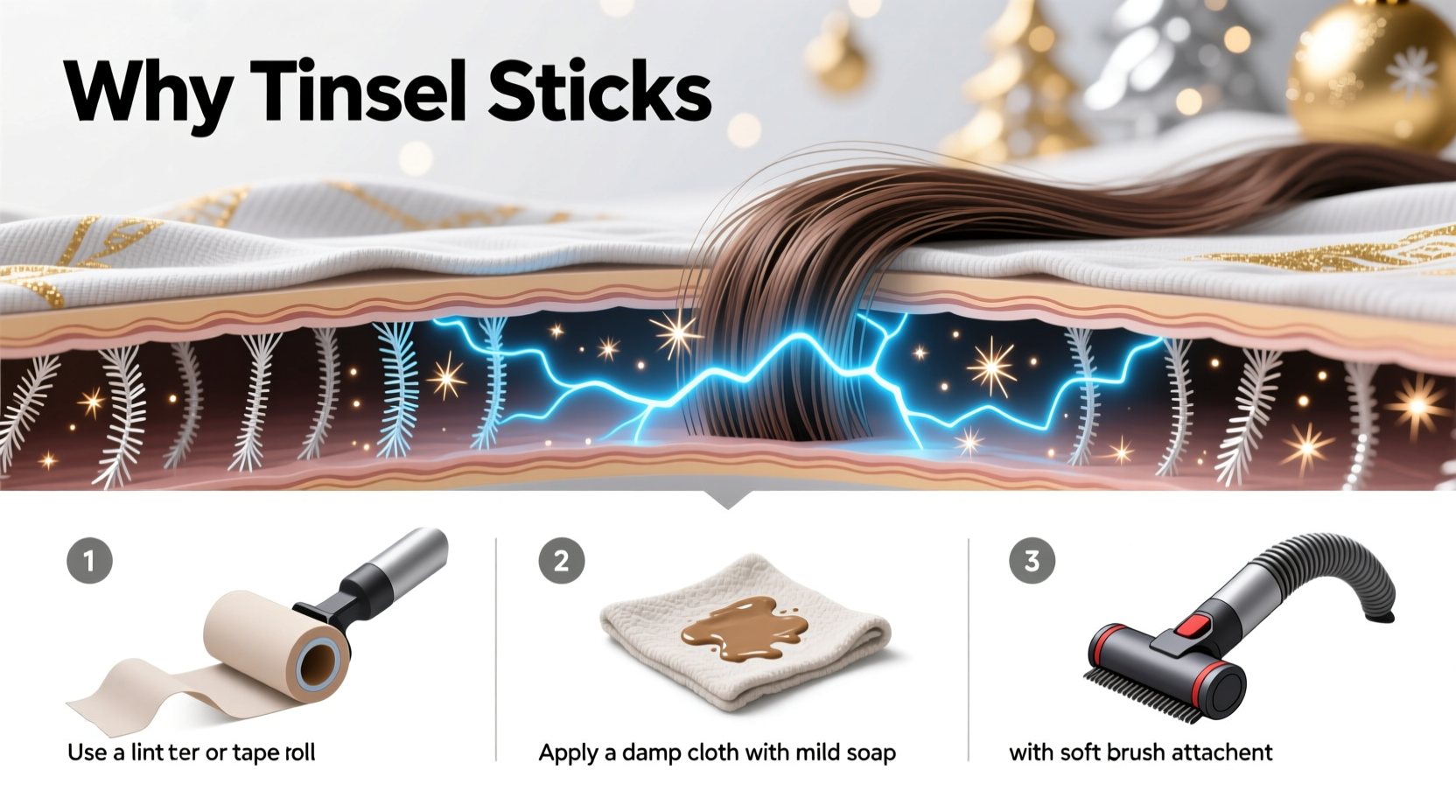
Tinsel doesn’t actually “stick” in the traditional sense—it doesn’t use adhesive or static glue. Instead, its notorious cling comes from a combination of physical structure and electrostatic charge. Most modern tinsel is made from thin strips of metallized plastic film, often polyethylene terephthalate (PET), coated with aluminum or other reflective materials. These strips are extremely lightweight and flexible, allowing them to conform tightly to any surface they contact.
When tinsel rubs against another material—such as tree branches, fabric, or your sweater—it builds up a static electric charge. This phenomenon, known as triboelectric charging, occurs when two different materials exchange electrons upon contact. Since tinsel is an excellent conductor due to its metal coating, it holds this charge longer than non-conductive materials. The charged tinsel then attracts neutral surfaces through electrostatic induction, creating what feels like \"stickiness.\"
This effect is especially pronounced in dry indoor environments, which are common during winter months when heating systems reduce humidity. Low moisture levels in the air prevent static charges from dissipating, allowing tinsel to remain charged and clinging for hours or even days.
“Static cling in decorative materials like tinsel is amplified by low humidity and synthetic fibers. It’s not magic—it’s basic physics.” — Dr. Lena Torres, Materials Scientist at the Institute of Surface Dynamics
Fast and Effective Methods to Remove Tinsel
Removing tinsel efficiently requires matching the method to the surface type. Using the wrong tool—like a wet cloth on electronics or a stiff brush on silk—can cause more harm than good. Below is a step-by-step approach tailored to common household surfaces.
From Clothing and Fabric Upholstery
Clothing, curtains, and sofa fabrics are prime targets for tinsel entanglement, especially if they’re made from synthetic fibers like polyester or nylon, which easily generate static.
- Shake Immediately: If tinsel lands on clothing while decorating, step outside or into a garage and shake the garment vigorously. Cold outdoor air often reduces static buildup, helping release strands.
- Use a Lint Roller: For smaller pieces, roll a standard adhesive lint roller over the fabric. Replace sheets frequently, as tinsel can clog the sticky surface.
- Tape Method: Wrap masking tape or packing tape around your hand, sticky side out, and dab it gently onto affected areas. This works well for delicate fabrics that can’t withstand aggressive rolling.
- Damp Cloth Wipe: Lightly dampen a microfiber cloth with water and gently wipe along the grain of the fabric. Moisture neutralizes static, loosening the tinsel’s grip. Avoid soaking; excess water can warp fabric or leave stains.
From Carpets and Rugs
Carpet fibers act like nets, trapping tinsel strands deep within their pile. Vacuuming alone may not capture all pieces, especially if they’re metallic-coated and resistant to suction.
- Begin by manually picking out large clusters with gloved hands.
- Use a rubber broom or squeegee dragged across the carpet in one direction. The rubber creates friction that lifts embedded tinsel via static reversal.
- Vacuum afterward using a nozzle attachment, moving slowly to maximize pickup.
- For high-pile rugs, go over the area multiple times and check the vacuum bag or canister for trapped strands that could re-circulate.
From Electronics and Delicate Surfaces
TV screens, keyboards, and lampshades often collect stray tinsel during decoration. Because these surfaces are sensitive to moisture and abrasion, special care is required.
- Use compressed air to blow tinsel off crevices (e.g., keyboard keys).
- For screens, gently lift tinsel with a piece of sticky tape—never rub, as this can scratch coatings.
- A soft makeup brush or clean paintbrush can dislodge strands without direct contact.
Do’s and Don’ts of Tinsel Removal
| Do | Don’t |
|---|---|
| Use tape or lint rollers for quick pickup on fabrics | Rub tinsel into surfaces, which increases static adhesion |
| Dampen cloths slightly to neutralize static | Use water on electronics or unsealed wood |
| Vacuum after manual removal to catch micro-strands | Use metal tools that could scratch surfaces |
| Store tinsel in sealed containers to prevent future shedding | Leave tinsel in reach of pets or toddlers |
Preventive Strategies for Next Season
Minimizing tinsel mess starts before the first strand is hung. Proactive choices reduce both static cling and post-holiday labor.
Choose Low-Static Alternatives
Consider switching to newer tinsel varieties labeled “anti-static” or “tangle-free.” Some manufacturers now coat tinsel with conductive polymers that dissipate charge quickly. Alternatively, opt for thicker, ribbon-style garlands, which are less prone to scattering.
Control Indoor Humidity
Maintaining indoor humidity between 40% and 60% significantly reduces static buildup. Use a humidifier during the heating season, especially in rooms where tinsel is displayed. A simple hygrometer can help monitor levels.
Apply Anti-Static Sprays Before Decorating
Spritz Christmas trees (real or artificial), nearby furniture, and drapes with anti-static spray before hanging tinsel. This creates a temporary barrier that minimizes cling. Reapply every few weeks if decorations stay up for extended periods.
Tip: Mix a DIY anti-static solution: one tablespoon of liquid fabric softener in a spray bottle filled with water. Test on a small area first to avoid discoloration.Designate a Tinsel-Free Zone
Keep bedrooms, home offices, and laundry areas free of tinsel to reduce exposure to high-traffic personal items. Limit display to living rooms or entryways where contamination risk is lower.
Real-Life Example: The Holiday Host’s Dilemma
Sarah, a frequent holiday entertainer in Denver, Colorado, used vintage silver tinsel to decorate her artificial tree each December. One year, after a dinner party, three guests complained that tinsel had transferred to their sweaters and wouldn’t come off. Despite shaking and lint rolling, tiny shards remained embedded in wool and acrylic blends.
Over the next week, Sarah noticed tinsel reappearing on cushions, pet beds, and even in her vacuum cleaner’s exhaust. Alarmed, she consulted a local cleaning specialist who explained the role of dry winter air and synthetic materials. Following advice, she invested in a humidifier, switched to cotton-blend throws in her living room, and began using a rubber broom weekly during the season. The following year, post-party cleanup took less than half the time, and no guests reported carryover.
Sarah’s experience highlights how environmental conditions and material choices compound tinsel-related issues—and how small adjustments lead to major improvements.
Step-by-Step Timeline for Post-Holiday Cleanup
To remove tinsel efficiently after the holidays, follow this structured timeline:
- Day 1 – Initial Collection: Carefully remove tinsel from trees and rails. Place directly into a sealable plastic bin to prevent shedding.
- Day 1 (Evening) – Shake and Vacuum: Shake rugs, tree skirts, and nearby blankets outdoors. Vacuum floors and furniture using attachments.
- Day 2 – Detailed Surface Check: Inspect electronics, baseboards, and upholstery with a flashlight to spot hidden strands.
- Day 3 – Fabric Treatment: Use lint rollers and tape on all washable and non-washable fabrics still in use.
- Day 4 – Final Pass: Repeat vacuuming and perform a “black light” check if possible—some tinsel reflects under UV, revealing invisible remnants.
- Day 5 – Storage Prep: Clean and dry tinsel storage container. Line with anti-static paper or tissue before sealing.
Frequently Asked Questions
Can I wash clothes with tinsel still on them?
No. Washing clothes with tinsel can cause permanent damage. Strands may melt in warm water, bond to fabric, or clog washing machine drains. Always remove tinsel manually or with a lint roller before laundering.
Is tinsel dangerous for pets?
Yes. Ingested tinsel can cause intestinal blockages or lacerations in cats and dogs. Even small amounts can lead to serious health issues requiring surgery. Keep tinsel out of reach and monitor pets closely during the holiday season.
Why does old tinsel seem to stick more than new?
Aged tinsel becomes brittle and fractures easily, creating more jagged ends that hook into fibers. Additionally, older tinsel may have degraded coatings that increase static retention. Consider retiring tinsel that sheds excessively or resists removal.
Final Checklist: Tinsel Cleanup & Prevention
- ☑ Remove tinsel carefully into a sealed container
- ☑ Shake fabrics outdoors before cleaning
- ☑ Use lint rollers, tape, or rubber brooms for residue
- ☑ Vacuum thoroughly with attachments
- ☑ Wipe electronics with dry microfiber or compressed air
- ☑ Store tinsel in anti-static packaging
- ☑ Maintain indoor humidity above 40%
- ☑ Apply anti-static spray before next use
Conclusion: Take Control of the Sparkle—Without the Stress
Tinsel brings joy, but its lingering presence shouldn’t extend beyond the holiday spirit. By understanding the science of static cling and applying targeted removal techniques, you can enjoy festive decor without the month-long cleanup. The key lies in preparation, prompt action, and smart tools—not brute force.
Next season, arm yourself with anti-static sprays, proper storage, and a realistic plan. Turn tinsel from a nuisance into a manageable tradition. Your future self—facing a clutter-free January—will thank you.
💬 Have a clever tinsel trick or horror story? Share your experience in the comments and help others master the art of shiny, stress-free holidays.








