
Tinsel, with its shimmering strands and festive sparkle, has long been a staple of holiday decor. But anyone who’s unwrapped a fresh bundle knows the frustration: before it even reaches the tree, tinsel clings to hands, clothes, furniture, and pets. It seems magnetically drawn to every surface except where you want it. The culprit? Static electricity. Understanding the science behind this sticky behavior isn’t just satisfying—it’s practical. With the right knowledge and techniques, you can enjoy tinsel’s glamour without the chaos.
The Science Behind Tinsel’s Static Cling
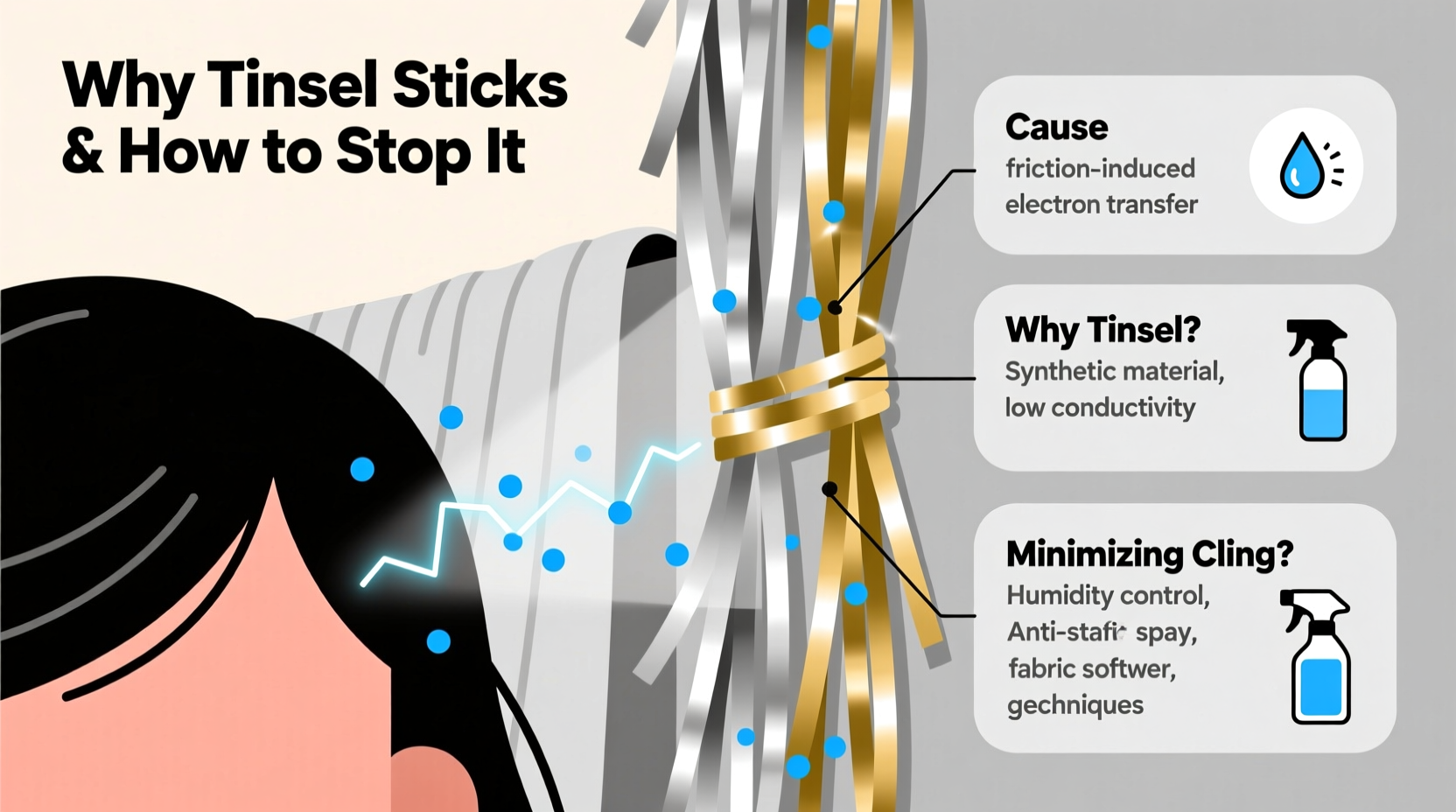
Tinsel is typically made from thin strips of metallized plastic, often polyethylene coated with aluminum. This combination creates a lightweight, reflective material perfect for catching light—but also highly prone to accumulating static charge. When tinsel is stored in a bag or rolled tightly, friction between the strands generates an imbalance of electrons, resulting in a buildup of static electricity. Once unpacked, these charged strands are attracted to neutral or oppositely charged surfaces—like your sweater, hair, or the carpet.
This phenomenon is known as electrostatic attraction. Objects with opposite charges attract each other, while like charges repel. Since most household surfaces (including skin and fabric) are neutral or slightly conductive, they readily attract the charged tinsel. Dry indoor air, especially common in winter due to heating systems, exacerbates the problem by reducing ambient humidity, which normally helps dissipate static charges.
“Static cling in holiday decor isn’t magic—it’s basic physics. Lightweight synthetic materials like tinsel become easily charged through contact, and dry winter air prevents that charge from escaping.” — Dr. Alan Prescott, Materials Physicist at the University of Michigan
How Environmental Conditions Amplify the Problem
Indoor environments during the winter months are ideal for static buildup. Heating systems pull moisture from the air, dropping relative humidity levels often below 30%. In such conditions, insulating materials like plastic, wool, and synthetic fabrics retain electric charges far longer than they would in humid settings.
Tinsel, being both ultra-light and non-conductive, holds onto its charge indefinitely unless grounded or neutralized. Even minimal movement—unfurling a strand or brushing it against a sleeve—can generate new static. This explains why tinsel seems to leap across rooms, defying gravity to land on socks or curtains.
Tip: Increase room humidity to 40–50% using a humidifier to significantly reduce static cling in tinsel and other holiday decorations.Effective Strategies to Minimize Static Cling
While you can't eliminate physics, you can outsmart it. Several practical methods help neutralize static charges in tinsel or prevent them from forming in the first place. These range from simple household tricks to smart handling techniques.
1. Pre-Treat Tinsel with Anti-Static Spray
A quick spritz of anti-static spray—designed for clothing or upholstery—can neutralize the electrical charge on tinsel strands. Hold the bottle 8–10 inches away and lightly mist the tinsel before handling. Let it dry for a few seconds before use. Avoid soaking, as excess moisture could degrade the metallic coating over time.
2. Use a Light Coat of Hairspray
Hairspray contains polymers that create a temporary conductive layer on surfaces. A fine mist over tinsel can weigh down individual strands slightly and reduce their ability to carry a charge. Test on a small section first, as some formulations may leave residue.
3. Ground Yourself Before Handling
Touch a grounded metal object—like a faucet or appliance—before touching tinsel. This equalizes your body's charge with the environment, reducing the chance of attracting stray strands. Wearing cotton clothing instead of wool or synthetics also minimizes personal static buildup.
4. Condition the Air with Humidity
Maintaining indoor humidity above 40% dramatically reduces static problems. Portable humidifiers, especially near the Christmas tree, help keep the air moist enough to allow charges to dissipate naturally. This benefits not only tinsel but also skin, wood furniture, and respiratory comfort.
5. Handle Tinsel Over Non-Carpeted Surfaces
Carpets, particularly synthetic ones, generate significant static when walked on. Unpack and handle tinsel over hardwood, tile, or a large sheet of paper to contain stray pieces and reduce airborne charging.
Step-by-Step Guide: Applying Tinsel Without the Mess
Applying tinsel gracefully requires preparation and patience. Follow this sequence to minimize frustration and maximize visual impact:
- Prepare the Environment: Turn on a humidifier 1–2 hours before decorating. Close windows to maintain stable temperature and humidity.
- Ground Yourself: Touch a metal faucet or appliance to discharge any static on your body.
- Pre-Treat the Tinsel: Lay strands on a clean towel and lightly mist with anti-static spray or diluted fabric softener (one part softener to four parts water).
- Unroll Carefully: Gently unfurl the tinsel over a hard surface or large tray to avoid sudden static bursts.
- Apply in Small Sections: Take short lengths (12–18 inches) and drape them evenly from branch to branch, starting from the top of the tree.
- Use Minimal Touch: Once placed, avoid adjusting too frequently, as repeated contact regenerates static.
- Final Settling: Allow the tree to sit undisturbed for 15 minutes; stray strands will often settle naturally.
Do’s and Don’ts of Tinsel Handling
| Do | Don’t |
|---|---|
| Use a humidifier to raise indoor moisture | Handle tinsel in dry, heated rooms with no ventilation |
| Pre-treat with anti-static or fabric softener solution | Soak tinsel in liquid, risking coating damage |
| Work over hard, non-fibrous surfaces | Unpack tinsel directly on carpet or upholstered furniture |
| Wear cotton or natural fiber clothing | Decorate in wool sweaters or nylon jackets |
| Store tinsel in anti-static bags or sealed containers | Leave tinsel exposed in dusty or dry storage areas |
Real-World Example: A Family’s Holiday Decorating Transformation
The Thompson family in Minneapolis had long dreaded putting up their Christmas tree. Every year, their three children would excitedly open the tinsel box—only to spend the next hour plucking silver strands off socks, couches, and dog fur. “It felt like we were decorating a magnet,” said Sarah Thompson, a schoolteacher and mother of two. After researching static solutions, she implemented a new routine: running a bedroom humidifier all day, pre-spraying tinsel with a diluted fabric softener mix, and having everyone change into cotton pajamas before decorating.
The difference was immediate. “The tinsel stayed on the tree. We actually finished in 20 minutes, and the kids loved seeing it sparkle without the mess,” she said. Now, it’s part of their annual tradition—complete with a “static safety checklist” taped to the ornament bin.
Storage Tips to Prevent Future Static Buildup
How you store tinsel after the holidays determines how problematic it will be next season. Poor storage invites dust, compression, and renewed static accumulation.
- Roll, don’t crush: Loosely coil tinsel around a cardboard tube or piece of foam to prevent tight friction.
- Use anti-static bags: Store tinsel in ziplock bags with a dryer sheet tucked inside. The residual softener helps suppress charge.
- Avoid heat sources: Keep storage boxes away from attics, radiators, or furnaces where temperatures fluctuate.
- Label clearly: Mark containers “Pre-treated – Handle with Cotton Gloves” if you’ve conditioned the tinsel before packing.
“Proper storage is half the battle. If tinsel sits compressed in a hot garage, you’re rebuilding static from scratch every year.” — Rebecca Lin, Home Organization Specialist and Author of *Calm Holidays, Clear Spaces*
Frequently Asked Questions
Can I use dryer sheets directly on tinsel?
Yes, but gently. Rubbing a used dryer sheet over tinsel can transfer anti-static compounds and reduce clinging. Avoid excessive pressure, as the waxy residue may dull the shine over time. A light pass is sufficient.
Is there such a thing as static-free tinsel?
Not entirely, but some modern alternatives are better. Heavier mylar tinsel or fabric-based garlands generate less static due to increased weight and reduced surface charge retention. Look for products labeled “low-static” or “holiday-safe” for easier handling.
Why does tinsel stick to my pet?
Pet fur, especially in cats and long-haired dogs, builds up static easily through movement. When charged tinsel comes near, it’s strongly attracted. To protect pets, apply tinsel high on the tree and supervise interactions. Consider safer alternatives like paper chains or felt ornaments if your pet is curious or playful.
Checklist: Static-Smart Tinsel Application
Before you start decorating, run through this quick checklist to ensure a smooth, low-static experience:
- ☑ Humidifier running for at least one hour
- ☑ Hands washed and dried (moisture helps ground minor charges)
- ☑ Wearing cotton or natural fiber clothing
- ☑ Tinsel pre-treated with anti-static spray or fabric softener solution
- ☑ Work area cleared over hard, non-carpeted surface
- ☑ Tree stand secured and ready (minimizes later adjustments)
- ☑ Storage plan ready for leftover tinsel (tube + anti-static bag)
Conclusion: Enjoy the Sparkle, Not the Struggle
Tinsel doesn’t have to be a holiday hazard. By understanding the role of static electricity and taking proactive steps, you can preserve its nostalgic charm without the frustration. From controlling indoor humidity to smart handling and storage, small changes make a big difference. The goal isn’t perfection—it’s enjoyment. With less time spent de-clumping and more time admiring the glow, your decorations can truly enhance the season’s spirit.
💬 Have a clever tinsel trick that works for your home? Share your tip in the comments and help others decorate with less static and more joy.








