Rabbits don’t bark, meow, or speak in human language—but they communicate with remarkable clarity through body language. One of the most distinctive behaviors a rabbit exhibits is foot thumping: a sudden, forceful stamp of one or both hind legs against the ground. If you’ve ever seen your rabbit do this, you’ve likely wondered: what does it mean? Is it scared? Angry? Trying to tell you something?
The truth is, foot thumping is a deeply instinctual form of communication rooted in wild rabbit behavior. Domestic rabbits retain this trait as a primary method of signaling danger, discomfort, or emotional distress. Understanding the reasons behind this action isn't just about curiosity—it's essential for responsible rabbit care. When you learn to interpret your rabbit’s thumps, you gain insight into their emotional state, environment, and unmet needs.
This article decodes the meaning behind rabbit foot thumping, explores the biological and behavioral roots of the behavior, and provides practical guidance on how to respond appropriately. Whether you're a new rabbit owner or have lived with bunnies for years, mastering this aspect of rabbit communication can deepen your bond and significantly improve their quality of life.
The Biology Behind Rabbit Thumping
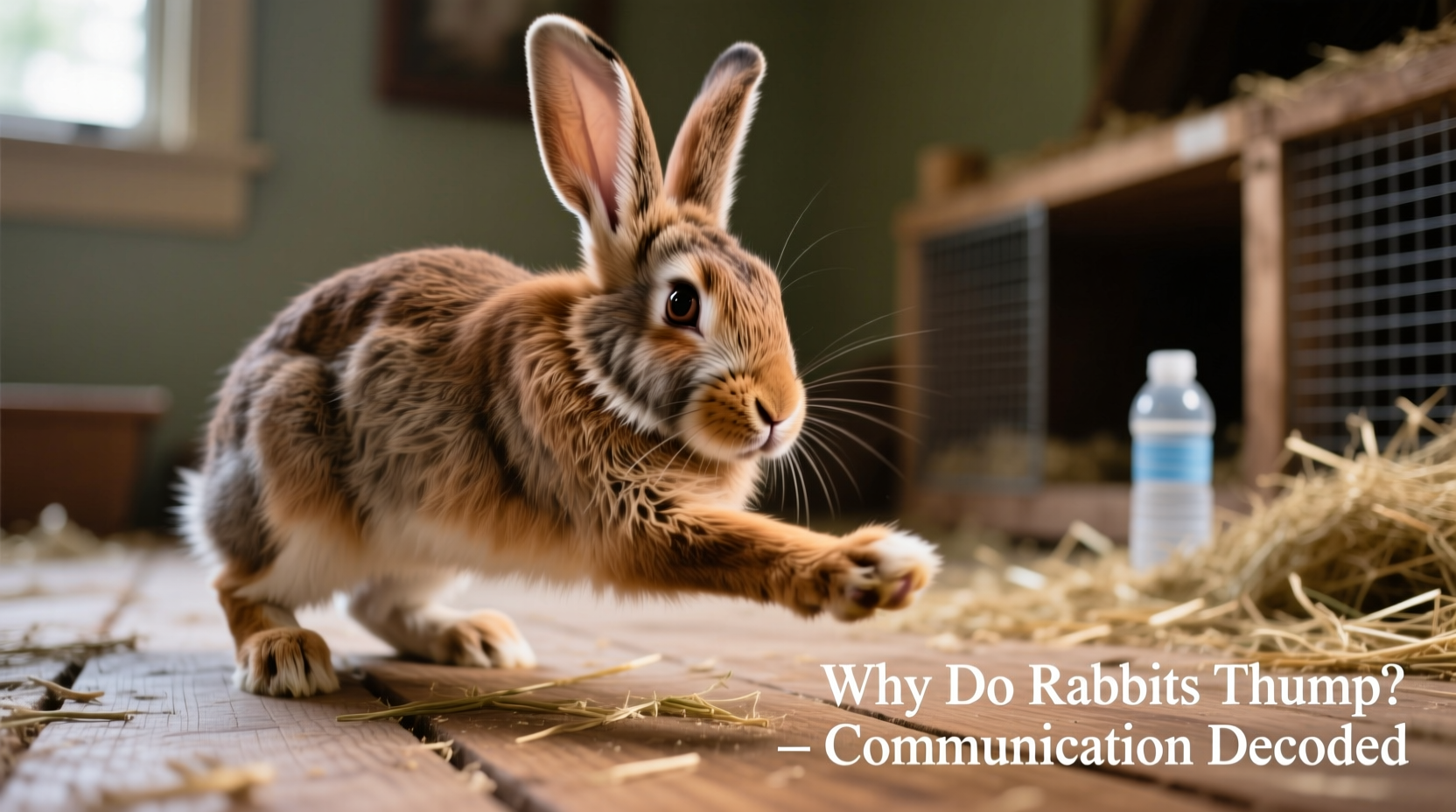
Rabbit thumping is not random. It’s a highly evolved survival mechanism. In the wild, rabbits live in social burrow systems called warrens, where group members rely on each other to detect predators. Since rabbits have poor close-up vision and are prey animals, they depend heavily on acute hearing and vibration detection to stay safe.
When a rabbit senses danger—such as the approach of a predator, unfamiliar noise, or sudden movement—it will forcefully strike the ground with its powerful hind legs. This creates a low-frequency vibration that travels through the soil, alerting other rabbits in the vicinity. The sound itself may be subtle to human ears, but underground, it acts like an alarm system.
Studies in animal ethology confirm that thumping serves as an \"all-clear\" or \"danger\" signal. According to Dr. Irene Feddersen-Petersen, a leading canine and lagomorph behavior scientist, “The thump is a multimodal signal—both auditory and seismic—that triggers immediate vigilance in nearby rabbits.” This means the response isn’t just about hearing the thump; it’s about feeling it.
In domestic settings, while the threat of foxes or hawks is minimal, the instinct remains hardwired. Your pet rabbit doesn’t distinguish between a real predator and a vacuum cleaner—their nervous system reacts the same way. That’s why understanding the trigger is crucial: the thump is a cry for attention, not misbehavior.
“Thumping is not aggression—it’s communication under stress. Ignoring it can lead to chronic anxiety in rabbits.” — Dr. Dana Krempels, Senior Lecturer in Biology and Rabbit Welfare Advocate
Common Reasons Why Rabbits Thump Their Feet
Rabbits thump for a variety of reasons, ranging from fear to frustration. While the core function is warning-related, the context determines the specific cause. Recognizing these contexts allows owners to address root issues rather than just reacting to the symptom.
Fear or Perceived Danger
The most common reason for thumping is fear. Loud noises (thunder, door slams, music), fast movements, unfamiliar people, or even shadows can trigger a thump. Rabbits process sudden stimuli as potential threats due to their evolutionary background.
Discomfort or Pain
A rabbit in pain may thump to express distress. Arthritis, gastrointestinal stasis, dental problems, or injury can manifest through increased thumping, especially when touched or moved. If thumping becomes frequent without obvious environmental triggers, a veterinary checkup is warranted.
Protective Behavior
Some rabbits thump when guarding their space, food, or bonded partner. This is more common in unneutered males or females during hormonal periods. The thump here functions as a territorial warning: “Stay back.”
Frustration or Annoyance
Believe it or not, rabbits can thump out of irritation. If you’re cleaning their cage while they’re resting, blocking their favorite path, or interrupting mealtime, a thump might be their way of saying, “I’m not happy with this.”
Social Signaling
In multi-rabbit households, thumping can serve as inter-bunny communication. One rabbit may thump to assert dominance, initiate play, or signal unease with another’s behavior. Observing group dynamics helps differentiate playful signals from genuine warnings.
Tip: Always observe what happens immediately before and after a thump. Note time, location, sounds, and your rabbit’s body posture—this helps identify patterns and triggers.Interpreting Thumping: A Behavioral Checklist
Not all thumps are equal. Frequency, intensity, accompanying body language, and environment all contribute to accurate interpretation. Use this checklist to assess your rabbit’s thumping behavior:
- Single, sharp thump followed by freezing: Likely a reaction to a sudden noise or perceived threat.
- Repeated thumping with wide eyes and flattened ears: High stress or fear. The rabbit feels unsafe.
- Thumping while facing you or a person: Could indicate annoyance, fear of handling, or protective behavior.
- Thumping near food bowl or hideout: Suggests resource guarding or discomfort with proximity.
- Thumping at the same time daily: May be linked to routine disturbances (e.g., mail delivery, appliance use).
- No visible trigger but frequent thumping: Possible pain, neurological issue, or chronic anxiety—consult a vet.
Keep a brief log for a few days. Track when thumping occurs, duration, and your rabbit’s activity before and after. You may discover patterns tied to household routines, lighting changes, or visitor presence.
How to Respond to Foot Thumping: A Step-by-Step Guide
Reacting correctly to thumping prevents escalation and builds trust. Follow these steps when your rabbit thumps:
- Stop moving and remain calm. Sudden reactions can worsen fear. Freeze for 10–15 seconds to avoid triggering flight mode.
- Scan the environment. Look for loud appliances, open doors, unfamiliar objects, or shadows that could be perceived as threats.
- Lower your body position. Crouch down slowly to appear less intimidating. Avoid direct eye contact, which rabbits interpret as dominance.
- Speak softly or remain silent. Quiet murmurs can be soothing, but silence may be better if the rabbit is hyper-vigilant.
- Offer an escape route. Ensure your rabbit has access to a hide box or quiet area. Never block their path to safety.
- Remove the trigger if possible. Turn off loud devices, close curtains, or gently guide visitors away.
- Wait for relaxation signs. Ears forward, nose twitching, grooming, or resuming eating indicate reduced stress.
- Reassess long-term. If thumping persists, modify the environment or consult a rabbit-savvy veterinarian.
Never punish or mimic the thump. Doing so increases anxiety and damages trust. Instead, reinforce calm behavior with quiet companionship and treats once the rabbit settles.
Do’s and Don’ts of Managing Thumping Behavior
| Do’s | Don’ts |
|---|---|
| Observe and record thumping episodes to identify patterns | Ignore repeated thumping as “just being dramatic” |
| Create a safe, quiet space with hiding spots | Force interaction after a thump |
| Use soft lighting and minimize sudden noises | Pick up or chase the rabbit post-thump |
| Spay or neuter your rabbit to reduce hormonal aggression | Yell, tap the floor, or thump back to “show dominance” |
| Consult a vet if thumping increases without cause | Assume all thumping is normal without investigation |
Real Example: Luna the Apartment Rabbit
Luna, a 3-year-old Holland Lop, lived in a small urban apartment with her owner, Mark. Over several weeks, Mark noticed Luna thumping every evening around 7 PM. At first, he dismissed it as quirks of personality. But when the thumping intensified and was accompanied by refusal to eat, he became concerned.
After keeping a log, Mark discovered the thumping coincided with the neighbor above starting their treadmill. The vibrations traveled through the floorboards, undetectable to Mark but clearly felt by Luna. He placed a thick rug under Luna’s enclosure and added a cardboard hide box filled with hay. Within two days, the thumping stopped, and Luna resumed normal activity.
This case illustrates how subtle environmental factors can trigger strong reactions in rabbits. What seems minor to humans can be profoundly disruptive to sensitive prey animals.
Frequently Asked Questions
Is foot thumping normal in rabbits?
Yes, occasional thumping is completely normal and instinctive. All rabbits thump at some point. However, frequent or unexplained thumping may indicate stress, pain, or environmental issues that need addressing.
Can rabbits thump in their sleep?
True thumping does not occur during deep sleep. However, rabbits may twitch or kick lightly during REM cycles. If you observe forceful, rhythmic thumping while your rabbit appears unconscious, consult a veterinarian—this could indicate seizures or neurological problems.
Should I thump back to communicate with my rabbit?
No. Mimicking a thump can confuse or frighten your rabbit. They interpret it as an escalated warning, not friendly conversation. Instead, respond with calm presence and environmental adjustments.
Building Trust Through Communication
Understanding your rabbit’s thump is about more than decoding a single action—it’s about learning their language. Rabbits are subtle communicators. They rely on ear position, body tension, teeth grinding, and movement to convey needs. Foot thumping is one of the loudest signals they have, and when respected, it becomes a bridge to deeper connection.
Every thump is an opportunity to listen. Is the room too noisy? Are they feeling exposed? Do they need space? By responding with empathy and observation, you teach your rabbit that their voice matters. Over time, well-adjusted rabbits thump less—not because the instinct fades, but because they feel safe.
Consider this: a rabbit that never thumps may not be calm; it may have learned that no one listens. A healthy relationship includes expression, response, and adjustment. Your awareness transforms simple behavior into meaningful dialogue.
“The most confident rabbits aren’t those who never thump—they’re the ones who know they’ll be heard when they do.” — Hannah Shaw, The Kitten Lady, advocate for vulnerable animals
Take Action Today
Your rabbit is speaking. Are you listening?
Start today by observing one thumping episode with full attention. Note the time, surroundings, and your rabbit’s posture. Ask yourself: what might they be trying to tell me? Then make one small change—add a hide, reduce noise, adjust handling—and watch for shifts in behavior.
Share your observations with fellow rabbit owners or online communities. Every insight contributes to better welfare. And if you’ve cracked the code behind your bunny’s thump, celebrate it—you’ve taken a vital step toward compassionate, informed care.
💬 Have a story about your rabbit’s thumping? Share your experience in the comments—your insight could help another owner understand their furry companion better.








