Parrots are among the most vocal and intelligent birds in the animal kingdom. Their ability to mimic human speech, household noises, and even melodies is both fascinating and sometimes surprising for new owners. But what drives this behavior? And more importantly, how can you guide it toward positive expression without reinforcing unwanted sounds? Understanding the biological, social, and psychological roots of mimicry allows owners to foster a healthier, more communicative relationship with their feathered companions.
The Evolutionary Roots of Vocal Mimicry
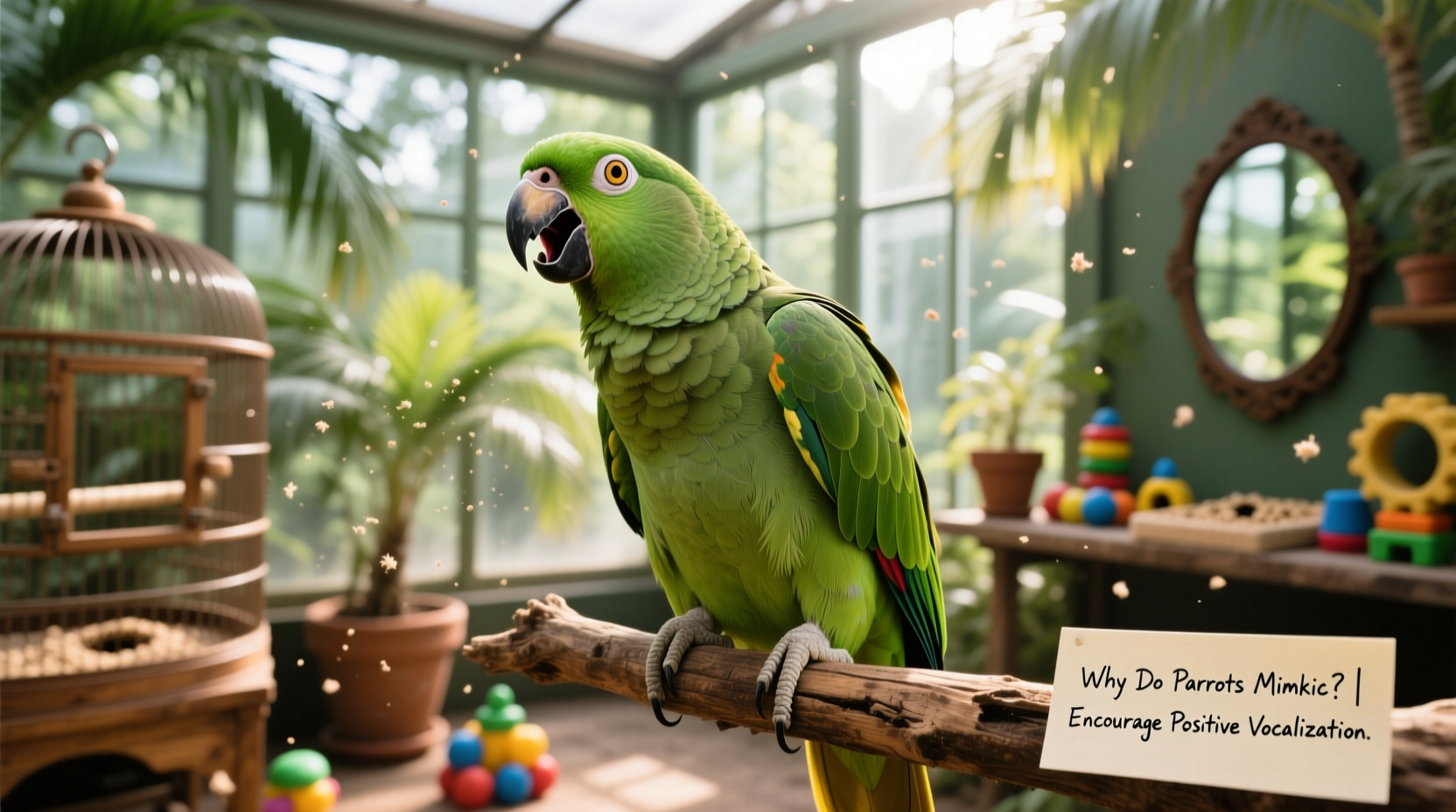
In the wild, parrots live in complex social groups where communication is essential for survival. Unlike many animals that rely on instinctual calls, parrots use learned vocalizations to identify flock members, establish territory, and strengthen social bonds. This capacity for vocal learning is rare in the animal world—shared only with humans, some songbirds, dolphins, and whales.
Mimicry isn’t just imitation; it’s a form of social integration. In the rainforest canopy, young parrots listen carefully to older flock members and gradually adopt specific contact calls. These unique “signature” calls function like names, helping individuals recognize one another across distances. When your parrot repeats your words or whistles, it’s not merely copying—it’s attempting to belong.
“Vocal mimicry in parrots is a sophisticated social tool. They’re not just repeating sounds—they’re trying to communicate and fit into their perceived flock, which includes you.” — Dr. Irene Pepperberg, Avian Cognition Researcher
This deep-seated need to bond explains why isolated or under-stimulated parrots often develop excessive screaming or repetitive vocal habits. Without proper social input, they fill the void with self-reinforced noise-making, sometimes mimicking telephones, microwaves, or even barking dogs simply because these sounds get attention.
How Parrots Learn: The Science Behind Sound Acquisition
Parrots don’t process sound like recording devices. Instead, they engage in active auditory learning. Juvenile parrots go through a critical period—typically between 3 and 12 months of age—when they are most receptive to absorbing new sounds. During this phase, consistent exposure to clear, repeated phrases increases the likelihood of accurate mimicry.
The syrinx, a specialized vocal organ located at the base of the trachea, enables parrots to produce a wide range of tones, pitches, and rhythms. Combined with exceptional hearing and memory, this anatomy allows species like African Greys, Amazons, and Cockatoos to replicate human speech with startling clarity.
However, not all sounds are learned equally. Parrots prioritize sounds associated with high emotional value: laughter, excited tones, frequent commands, or reactions. A word said in frustration may be repeated endlessly because it elicited a strong response—proof that context matters as much as content.
Tip: Speak clearly and consistently when introducing new words. Use short, two-syllable phrases like “hello,” “good bird,” or “wanna play” for best results.Encouraging Positive Vocalization: A Step-by-Step Guide
Shaping your parrot’s vocal behavior requires patience, consistency, and positive reinforcement. The goal isn’t to eliminate mimicry but to guide it toward desirable expressions. Follow this structured approach to nurture healthy vocal development.
- Observe and Identify Triggers: For one week, keep a log of when your parrot vocalizes. Note the time, preceding event (e.g., doorbell, TV commercial), and your reaction. Patterns will emerge—perhaps your bird mimics the microwave beep every afternoon when you prepare food.
- Minimize Exposure to Unwanted Sounds: If your parrot copies undesirable noises (e.g., alarms, yelling), reduce access. Turn off background TV if it triggers screeching. Replace loud appliances with quieter alternatives when possible.
- Create a Calm Vocal Environment: Avoid shouting or reacting strongly to negative vocalizations. Parrots interpret intense reactions—even negative ones—as engagement. Instead, turn away silently and wait for quiet before offering attention.
- Introduce Desired Sounds During Peak Activity: Most parrots are most vocal in the morning and late afternoon. Use these windows to repeat target words in a cheerful tone. Pair each utterance with a small reward like a sunflower seed or head scratch.
- Use Name Association: Say your parrot’s name followed by a simple phrase: “Rio, good morning!” Repeat daily. Over time, your bird may begin to associate its name with positive interaction and respond accordingly.
- Incorporate Singing and Whistling: Many parrots prefer melodic sounds over speech. Teach a short tune by whistling it daily during feeding time. Some birds will pick up notes faster than words.
- End Training Sessions on a Positive Note: Always conclude with a calm interaction, such as offering a favorite toy or saying “goodnight.” This reinforces structure and prevents frustration-based vocal outbursts.
Do’s and Don’ts of Parrot Vocal Training
| Do’s | Don’ts |
|---|---|
| Use a consistent, upbeat tone when teaching new words | Repeat words in anger or stress (your bird will too) |
| Reinforce silence with treats and praise | Punish vocalizing—it increases anxiety and mistrust |
| Limit exposure to noisy environments like talk radio | Allow unlimited access to TVs or phones with jarring sounds |
| Practice short sessions (5–10 minutes) multiple times a day | Force interaction when your bird seems stressed or tired |
| Label common actions (“step up,” “water,” “apple”) | Use complex sentences or sarcasm (“Oh great, now you talk?”) |
Real Example: Transforming Noise into Communication
Sarah adopted a 2-year-old Quaker parrot named Milo who had been rehomed twice. He screamed frequently and mimicked her old roommate’s habit of yelling “Shut up!” whenever frustrated. Concerned and embarrassed, Sarah consulted an avian behaviorist.
She began by eliminating triggers: moving Milo’s cage away from the front door (where doorbells set him off) and turning off the TV during peak vocal hours. She introduced a morning routine: greeting Milo with “Good morning, sweet boy!” while offering a sprig of parsley. When he chirped back, she rewarded him immediately.
Within six weeks, Milo stopped repeating the offensive phrase. Instead, he started saying “Hi Sarah!” in a soft voice each morning. Though he still mimicked the microwave, Sarah used it as a cue to practice “Time for snack!”—and eventually, Milo began associating the beep with the phrase.
The transformation wasn’t about stopping mimicry but redirecting it. By understanding Milo’s need for connection, Sarah turned disruptive noise into meaningful communication.
Building a Vocabulary Checklist
To ensure steady progress in encouraging positive vocalization, follow this actionable checklist:
- ✅ Choose 3–5 simple, useful phrases (e.g., “Hello,” “Wanna step up?”, “Good bird”)
- ✅ Practice each phrase at consistent times daily (e.g., greeting, mealtime, bedtime)
- ✅ Use positive reinforcement—treats, affection, or toys—immediately after correct attempts
- ✅ Record your parrot’s voice monthly to track progress
- ✅ Rotate vocal stimuli to prevent boredom (new songs, gentle nature sounds)
- ✅ Spend at least 30 minutes of direct social interaction per day
- ✅ Monitor household noise levels and adjust environment as needed
- ✅ Consult an avian trainer if vocalizations become aggressive or obsessive
When Mimicry Becomes a Problem
While mimicry is natural, it can escalate into problematic behavior. Chronic screaming, incessant repetition of distressing sounds (like crying or sirens), or self-directed vocalizing (talking to reflections or empty rooms) may indicate underlying issues such as loneliness, anxiety, or lack of stimulation.
Excessive mimicry without social reciprocity often points to an unmet need. Parrots are not entertainment machines—they’re sentient beings seeking engagement. A bird that screams for 20 minutes every evening may be expressing frustration over being caged while the family relaxes nearby.
Tip: If your parrot vocalizes excessively, assess its daily routine. Does it get enough out-of-cage time? Is its diet nutritionally balanced? Are there opportunities for mental challenges like puzzle toys?Addressing root causes—rather than suppressing symptoms—is key. Enrichment strategies such as foraging activities, interactive toys, and flight training (if safe) can dramatically reduce attention-seeking vocalizations.
Frequently Asked Questions
Can all parrots learn to talk?
No, not all parrots will speak, even with training. Species vary widely in vocal ability. African Grey Parrots and Yellow-Naped Amazons are among the most proficient, while Pionus and some conures rarely mimic speech. However, all parrots communicate through body language, calls, and behaviors—even if they never say a word.
My parrot only says inappropriate words. Can I un-teach them?
You cannot erase learned sounds, but you can reduce their frequency. Ignore the unwanted phrase completely—no eye contact, no reaction. Simultaneously, reinforce alternative behaviors. For example, if your bird says a curse word, wait for a chirp or whistle, then reward that instead. Over time, the unrewarded sound fades due to lack of reinforcement.
How long does it take for a parrot to start mimicking?
Most parrots begin experimenting with sounds between 6 months and 2 years of age, though some start earlier. Consistent exposure and interaction accelerate the process. Patience is essential—some birds remain silent for months before suddenly beginning to speak.
Cultivating Connection Through Sound
Vocal mimicry is more than a party trick—it’s a window into your parrot’s mind and heart. When your bird says your name or greets you with a practiced phrase, it’s reaching out in the only way it knows how. By responding with kindness, consistency, and purposeful guidance, you transform mimicry from random noise into genuine dialogue.
The journey isn’t about creating a perfect performer. It’s about building trust, reducing stress, and enriching your shared life. Every sound your parrot learns is a testament to its intelligence and desire to connect. Honor that effort by shaping an environment where positive vocalization thrives—not because it earns treats, but because it strengthens your bond.
💬 Have a story about how your parrot learned to speak—or surprised you with an unexpected sound? Share your experience in the comments and inspire fellow bird lovers to nurture their parrot’s voice with compassion and care.








