Winter air may carry a certain crisp charm, but for many, it brings an unwelcome companion: static electricity in the hair. Flyaways, crackling strands, and uncooperative styles plague even the most well-maintained manes during colder months. The issue isn’t just cosmetic—it’s rooted in environmental shifts, hair biology, and product chemistry. Understanding why static occurs is the first step toward taming it. More importantly, knowing which anti-frizz solutions genuinely work—and stay effective throughout the day—is essential for maintaining smooth, healthy-looking hair when humidity drops and indoor heating rises.
The Science Behind Winter Hair Static
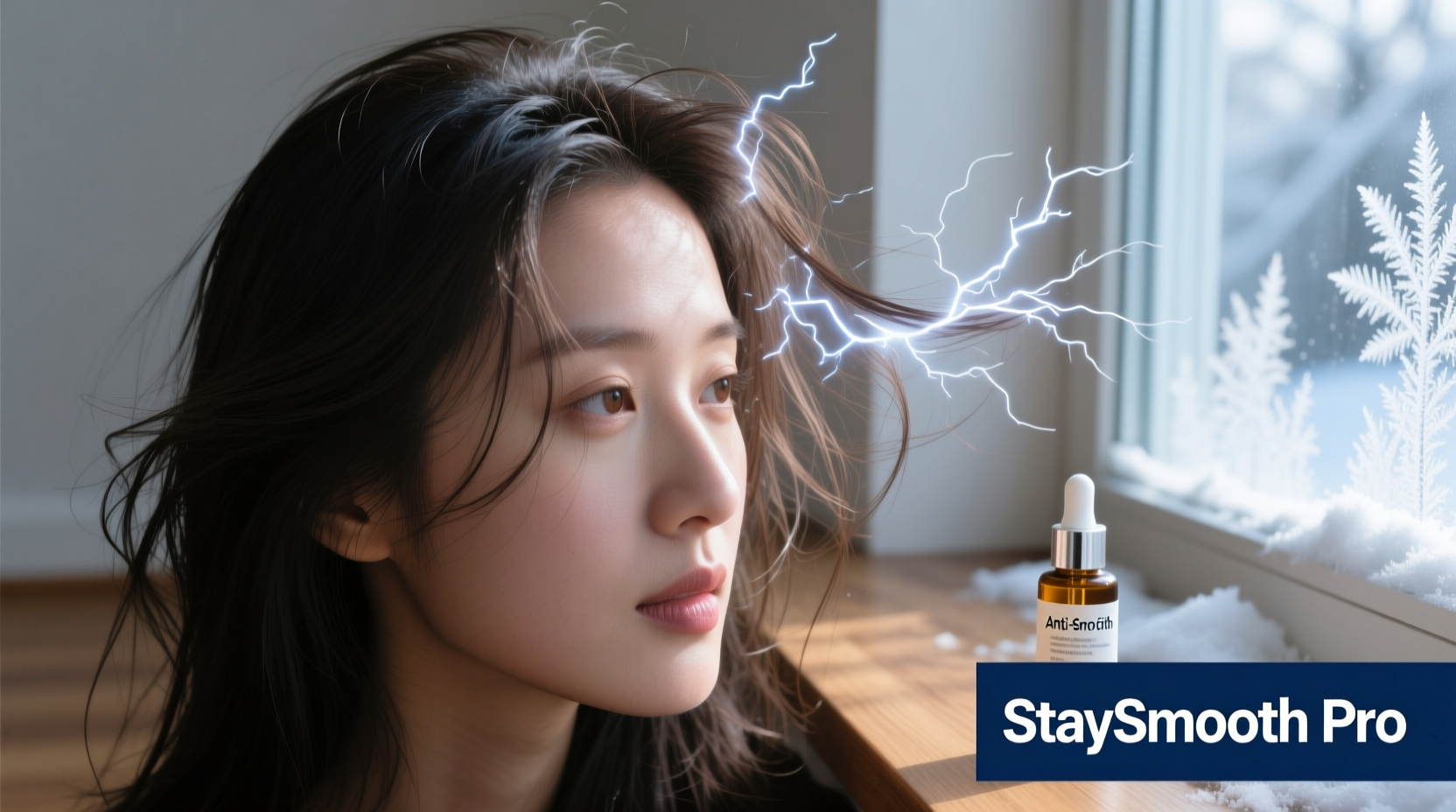
Static electricity in hair is essentially an imbalance of electrical charges. When two surfaces rub together—like your hair and a wool hat or a synthetic scarf—electrons transfer from one to the other. This creates a positive charge on the hair shaft, causing individual strands to repel each other and stand away from the head. The effect is amplified in winter due to low humidity.
Indoor heating systems further dry out the air, often reducing indoor relative humidity to below 30%. In such conditions, hair loses moisture rapidly. Dry hair is more porous and electrically conductive, making it prone to accumulating static charge. Additionally, cold temperatures slow down sebum production—the scalp’s natural oil—which normally helps distribute moisture along the hair shaft and neutralize charge buildup.
“Low humidity is the biggest culprit behind winter static. Without moisture in the air, hair can’t dissipate electrical charges effectively.” — Dr. Lena Torres, Trichologist and Hair Research Scientist
This combination of dry air, reduced sebum, and friction from winter fabrics sets the stage for persistent frizz and flyaways that resist conventional styling.
Why Most Anti-Frizz Products Fail in Winter
Many people reach for their go-to serums or leave-in conditioners only to find they don’t perform as well in winter. The reason? Not all anti-frizz products are designed for extreme dryness or static control. Some rely on humidity to activate smoothing agents, rendering them ineffective in arid environments. Others contain silicones that coat the hair but don’t address the underlying charge imbalance.
Moreover, overuse of heavy oils or waxes can weigh hair down without resolving static, especially in fine or medium textures. The key is not just hydration—but also conductivity and surface protection.
Common Pitfalls in Winter Hair Care
- Using alcohol-based sprays: These dry out hair further, increasing porosity and static risk.
- Over-washing: Strips natural oils needed to regulate moisture and static.
- Brushing dry hair with plastic brushes: Generates more static than natural bristle or wood combs.
- Wearing synthetic hats and scarves: Materials like acrylic and polyester create high friction.
Effective Anti-Frizz Solutions That Actually Work in Winter
Combatting winter static requires a multi-pronged approach: restoring moisture, neutralizing charge, and protecting against external triggers. Below are proven strategies backed by trichologists and professional stylists.
1. Hydrate from Within and Out
Maintaining internal hydration supports hair resilience. Drink plenty of water and consider omega-3 supplements, which strengthen the hair cuticle and improve oil retention. Externally, use hydrating shampoos and conditioners with ingredients like glycerin, panthenol, and hyaluronic acid. These humectants attract moisture—even in low-humidity environments.
For deeper treatment, apply a weekly mask containing shea butter or ceramides. These ingredients reinforce the lipid layer of the hair, reducing porosity and improving moisture retention.
2. Use Ionic and Conductive Tools
Ionic hair dryers and flat irons emit negative ions that neutralize the positive charge on hair, reducing static and sealing the cuticle. Similarly, metal combs (especially those with grounding properties) dissipate static better than plastic ones.
Carry a travel-sized stainless steel comb in your bag—it doubles as a static zapper when gently run through hair at the roots.
3. Apply Leave-In Treatments with Weightless Protection
Choose leave-in conditioners or creams formulated with cationic surfactants (like behentrimonium methosulfate), which adhere to negatively charged hair and provide anti-static benefits. Avoid heavy silicones if you have fine hair; opt instead for water-soluble formulas that won’t build up.
A lightweight oil—such as argan or jojoba—applied sparingly to ends can add shine and reduce flyaways without greasiness.
4. Humidify Your Environment
Since dry air fuels static, reintroducing moisture into your home makes a measurable difference. A bedroom humidifier set to 40–50% relative humidity helps maintain hair moisture and reduces electrostatic buildup overnight.
Step-by-Step Routine for Static-Free Winter Hair
Follow this daily and weekly routine to keep frizz and static under control:
- Wash every 4–7 days with a sulfate-free, moisturizing shampoo to preserve natural oils.
- Condition thoroughly, focusing on mid-lengths to ends. Rinse with cool water to seal the cuticle.
- Apply a leave-in conditioner while hair is damp. Use a wide-tooth comb to detangle gently.
- Blow-dry with an ionic dryer on low heat, using a diffuser or concentrator nozzle depending on your style.
- Finish with a pea-sized amount of anti-frizz serum rubbed between palms and smoothed over the surface.
- Once a week, deep-condition with a protein- and lipid-rich mask for 20 minutes under a warm towel.
- At night, switch to a silk pillowcase and loosely braid or tie hair in a satin scrunchie to minimize friction.
Product Comparison: What Works vs. What Doesn’t
| Product Type | Recommended Ingredients | Avoid | Winter Efficacy |
|---|---|---|---|
| Leave-in Conditioner | Panthenol, glycerin, hydrolyzed proteins | Alcohol denat., mineral oil | High – provides lasting moisture |
| Anti-Frizz Serum | Cyclopentasiloxane, dimethicone copolyol | Heavy petrolatum, pure coconut oil | High – smooths and shields |
| Hairspray | Flexible hold polymers, conditioning agents | High-alcohol formulas | Medium – use sparingly to lock style |
| Dry Shampoo | Rice starch, oat extract | Talc, fragrance-heavy blends | Low-Medium – overuse increases dryness |
| Scalp Oil | Squalane, rosemary oil | Mineral oil, lanolin (for fine hair) | High – boosts natural sebum balance |
Mini Case Study: Sarah’s Winter Hair Transformation
Sarah, a 34-year-old graphic designer in Chicago, struggled each winter with frizzy, static-charged hair that refused to stay tucked under her favorite beanie. Despite using a popular silicone serum, her hair would “explode” by mid-morning. After consulting a stylist, she overhauled her routine:
- Switched to a hydrating, low-pH shampoo with pro-vitamin B5.
- Began using a weekly keratin-infused mask.
- Replaced her plastic brush with a boar-bristle hybrid.
- Started sleeping on a silk pillowcase and wearing silk-lined hats.
- Added a small humidifier to her bedroom.
Within three weeks, Sarah reported a dramatic reduction in static and improved manageability. “My hair still has volume,” she said, “but now it’s controlled. I don’t need to re-style every time I take off my coat.”
Checklist: Your Winter-Ready Anti-Static Action Plan
Use this checklist to ensure your hair stays smooth and static-free all season:
- ✅ Install a humidifier in your bedroom or workspace
- ✅ Replace synthetic winter hats with silk-lined or natural fiber options
- ✅ Switch to an ionic hair dryer or flat iron
- ✅ Introduce a weekly deep-conditioning treatment
- ✅ Use a leave-in conditioner with humectants daily
- ✅ Carry a metal comb or static-control spray for touch-ups
- ✅ Limit shampooing to avoid stripping natural oils
- ✅ Sleep on a silk or satin pillowcase
Frequently Asked Questions
Can drinking more water really reduce hair static?
Yes. While hydration doesn’t directly eliminate static, well-hydrated bodies produce better-quality sebum and support stronger hair structure. This improves moisture retention along the hair shaft, making it less prone to dryness-related static.
Is there a quick fix for sudden static flare-ups?
Absolutely. Lightly run a dryer sheet over the affected areas—its anti-static coating neutralizes charge instantly. Alternatively, rub a tiny amount of hand lotion between your palms and smooth over flyaways. Don’t overdo it, or hair may look greasy.
Are natural hair types more prone to winter static?
Curly and coily hair types are often more porous and drier, making them more susceptible to static. However, because these textures are typically styled with richer products and protective methods (like braids or updos), they may experience less visible flyaway chaos. The key is consistent moisture and minimizing friction from fabrics.
Final Thoughts: Make Static a Thing of the Past
Winter hair static isn’t inevitable—it’s a solvable problem rooted in environment, care habits, and product choices. By understanding the science behind the crackle and adopting targeted solutions, you can maintain sleek, manageable hair all season long. The most effective strategies combine moisture restoration, charge neutralization, and physical protection. It’s not about using more products, but using smarter ones.
Small changes—like switching your hat liner or adding a humidifier—can yield dramatic results. And because healthy hair resists static better than damaged hair, prioritize long-term scalp and strand health alongside immediate fixes.
💬 Have a go-to trick for beating winter frizz? Share your tip in the comments and help others win the battle against static once and for all.








