
If you’ve ever seen your ferret suddenly leap into the air, twist sideways, arch its back, puff up its tail like a bottlebrush, and dart around the room in zigzags while making excited huffing sounds—you’ve witnessed the legendary “war dance.” Despite its dramatic name, this behavior is not aggressive. In fact, it’s one of the most endearing signs that your ferret is brimming with joy and ready to play. But what exactly triggers this spectacle? And should you be concerned when you see it? Understanding the war dance is key to building a stronger bond with your energetic little companion.
The Science Behind the Ferret War Dance
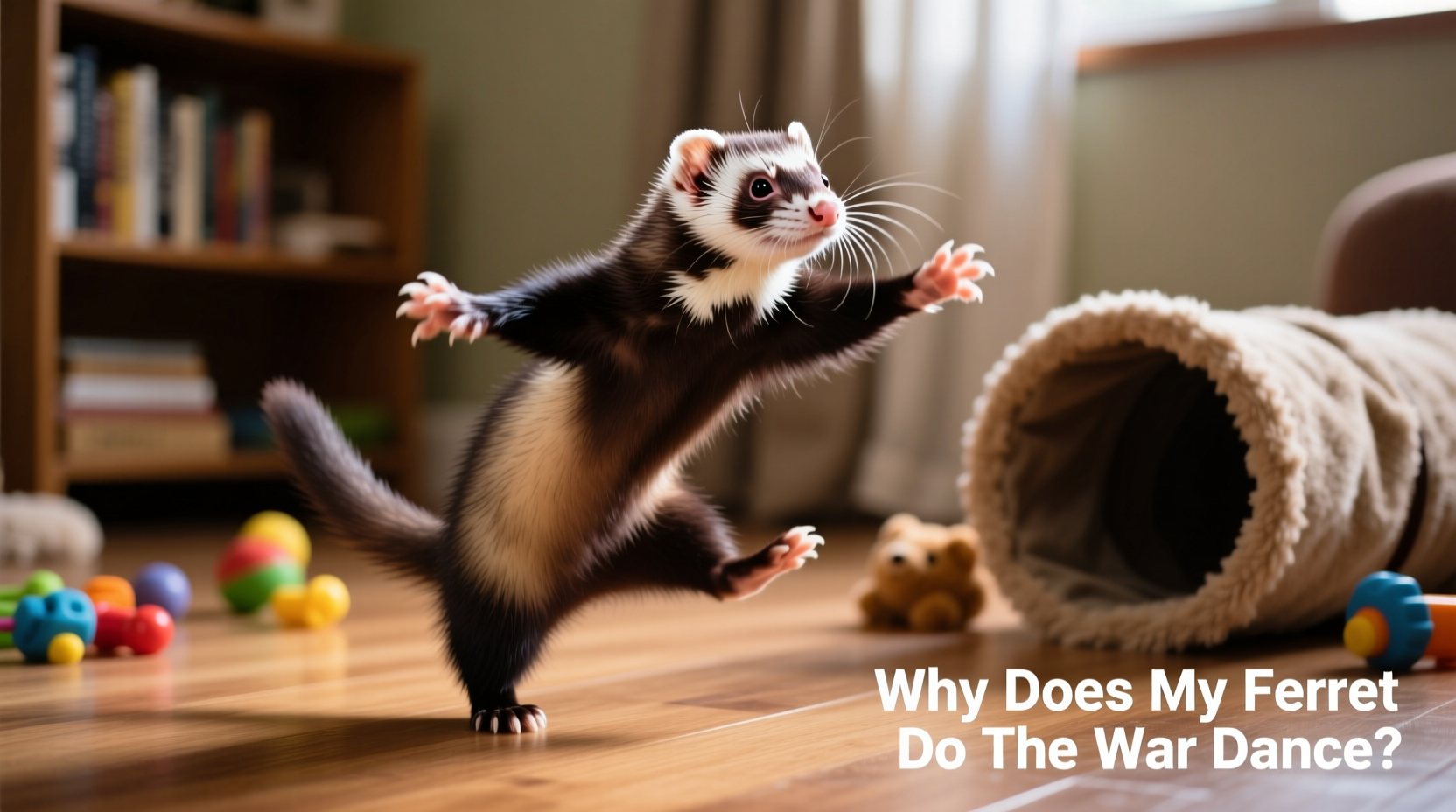
Ferrets are members of the Mustelidae family, which includes weasels, otters, and minks. Their behaviors are deeply rooted in instinct, even in domesticated pets born generations removed from the wild. The war dance—also known as the \"weasel war dance\"—originates from natural hunting sequences observed in their wild relatives. When a mustelid corners prey or experiences a sudden burst of excitement during a chase, it may perform rapid, erratic movements to disorient its target or release pent-up energy.
In domestic ferrets, however, this behavior has evolved into a purely social and playful expression. It typically occurs when a ferret is overexcited—perhaps after waking up, spotting a favorite toy, or anticipating food. Rather than signaling aggression, the war dance communicates high arousal in a positive context. Ethologists who study animal behavior classify it as a displacement activity: an outlet for surplus energy when direct action (like chasing prey) isn’t possible.
“Ferrets don’t dance because they’re angry—they dance because they’re ecstatic. The war dance is essentially a physical laugh.” — Dr. Laura Bennett, Exotic Animal Behavior Specialist
What Triggers the War Dance?
The war dance doesn’t happen at random. It’s almost always preceded by specific stimuli that spike your ferret’s excitement levels. Recognizing these triggers helps you anticipate—and safely enjoy—the performance.
- Post-nap bursts of energy: Ferrets sleep 14–18 hours a day but wake up explosively ready to play.
- Anticipation of treats or meals: Seeing you prepare food often sends them into a dancing frenzy.
- Interaction with toys: Feather wands, crinkle balls, or tunnels can set off a chain reaction of hops and twists.
- Social excitement: Greeting their human or another ferret may prompt a celebratory dance.
- Environmental novelty: A new cage setup, cardboard box, or rearranged furniture can spark investigative joy.
How to Interpret Body Language During the Dance
While the war dance itself is harmless, reading accompanying body language ensures you distinguish between playful excitement and stress. Ferrets use subtle cues to communicate their emotional state.
| Body Signal | Meaning | Action to Take |
|---|---|---|
| Arched back, puffed tail, sideways hops | Playful excitement (war dance) | Encourage safe play |
| Vocalizing with soft clucks (\"dooking\") | Contentment or invitation to play | Respond positively |
| Hissing, piloerection (full-body fluff), backing away | Defensive fear or discomfort | Give space, reassess environment |
| Biting accompanied by growling | Overstimulation or pain | End interaction, check for injury |
| Lying flat, eyes half-closed after dancing | Exhaustion or relaxation | Allow uninterrupted rest |
Crucially, the true war dance lacks aggression. There’s no biting, hissing, or defensive posturing. If those elements appear, your ferret may be overstimulated or misinterpreting your actions. Always observe the full sequence before reacting.
A Real-Life Example: Luna’s Morning Ritual
Maria, a first-time ferret owner in Portland, was alarmed when her ferret Luna began hopping wildly every morning after waking. “She’d jump sideways, puff her tail, and run into walls,” Maria recalls. Worried it was a seizure or sign of illness, she contacted her vet. After observing a video, the veterinarian confirmed it was a classic war dance triggered by post-sleep excitement. Following guidance, Maria began placing a soft tunnel near Luna’s sleeping area each night. Now, Luna dances directly into the tunnel, using it as a playful outlet. “It’s still hilarious,” Maria says, “but now I know she’s just saying good morning in ferret.”
Supporting Healthy Play: A Step-by-Step Guide
Encouraging appropriate outlets for your ferret’s energy promotes mental well-being and reduces destructive behaviors. Follow this timeline to create a stimulating environment that honors their natural instincts.
- Week 1: Observe and Record
Track when the war dance occurs. Note time of day, preceding events, and duration. This baseline helps identify patterns. - Week 2: Optimize the Environment
Add safe play zones: tunnels, dig boxes filled with rice or paper, and climbable shelves. Remove hazards like electrical cords. - Week 3: Introduce Interactive Toys
Use teaser toys on strings or noise-making balls to redirect energy. Avoid small parts that could be swallowed. - Week 4: Schedule Play Sessions
Engage your ferret in 15–20 minute supervised play sessions twice daily, ideally after naps when energy peaks. - Ongoing: Rotate Toys Weekly
Prevent boredom by rotating three to four toys every seven days. Novelty sustains interest and encourages dancing in safe contexts.
Common Misconceptions About the War Dance
Because the war dance looks so intense, many owners mistakenly believe their ferret is hurt, scared, or having a medical episode. These myths persist despite veterinary consensus on its benign nature.
- Myth: The war dance means my ferret is in pain.
Truth: Pain-related behaviors include lethargy, teeth grinding, and guarding body parts—not hyperactivity. - Myth: Only young ferrets do the war dance.
Truth: While more common in juveniles, adult ferrets continue dancing throughout life if mentally stimulated. - Myth: Ferrets dance when they’re about to bite.
Truth: Biting stems from fear, teething, or overstimulation—not the dance itself. Watch for context clues. - Myth: The war dance is a sign of neurological issues.
Truth: Seizures involve rigidity, drooling, paddling limbs, and loss of awareness—none of which occur during the dance.
“The war dance is so ingrained in ferret culture that breeders sometimes use its presence as a marker of psychological health in kits.” — Dr. Rajiv Mehta, DVM, Small Mammal Veterinarian
Frequently Asked Questions
Is the war dance dangerous for my ferret?
No, the war dance is not dangerous. Ferrets are agile and built for quick, acrobatic movements. As long as the environment is safe (no sharp edges, open water, or fall risks), the dance poses no harm. Some ferrets may bump into furniture out of sheer enthusiasm, but serious injuries are rare.
My ferret never does the war dance. Should I be worried?
Not necessarily. While common, not all ferrets display the full war dance. Personality, upbringing, and environment influence expression. Shy or poorly socialized ferrets may exhibit muted versions, such as quick hops or tail fluffing without running. Enrichment and trust-building can encourage more animated play over time.
Can I train my ferret to dance on command?
You can’t truly train the war dance, as it’s an involuntary burst of emotion. However, you can condition your ferret to associate certain cues—like a treat bag rustling or a specific word—with high-energy play. This won’t produce a “commanded” dance, but it may increase the frequency of joyful displays in controlled settings.
Checklist: Creating a Ferret-Friendly Play Zone
Ensure your home supports healthy, expressive behavior with this practical checklist:
- ✅ Remove toxic plants and accessible wires
- ✅ Install baby gates to block stairs or unsafe rooms
- ✅ Provide at least two types of tunnels (fabric and rigid plastic)
- ✅ Offer digging opportunities (cardboard boxes filled with shredded paper)
- ✅ Rotate toys weekly to maintain novelty
- ✅ Supervise all free-roam time for safety
- ✅ Keep a soft landing surface (rug or foam tiles) under elevated platforms
- ✅ Schedule regular play sessions aligned with your ferret’s natural rhythm
Conclusion: Celebrating Your Ferret’s Joy
The war dance is more than a quirky habit—it’s a window into your ferret’s vibrant inner world. When your pet leaps and twirls with wild abandon, it’s a testament to their trust, comfort, and unfiltered happiness. Far from something to suppress or fear, this behavior should be celebrated as a hallmark of a well-adjusted, emotionally fulfilled ferret.
By understanding the roots of the war dance and supporting your pet with enriching environments and responsive care, you nurture not just physical health but emotional vitality. Every hop, twist, and puffed tail is a silent “thank you” for a life full of play.
💬 Have a funny or heartwarming war dance story? Share your experience in the comments and connect with fellow ferret lovers who celebrate these joyful moments!








