Humid weather brings discomfort in more ways than one—especially when your interior or exterior doors suddenly refuse to close properly. If you’ve ever had to shove, lift, or wedge a door open just to get through, you’re not alone. This common household issue stems from the natural behavior of wood in response to moisture. But understanding why it happens is only half the battle. The real value lies in knowing how to fix it quickly and prevent it from recurring.
Wood expands when it absorbs moisture from the air. During periods of high humidity—common in spring, summer, or rainy seasons—doors, particularly solid wood ones, swell slightly. Even a fraction of an inch can be enough to cause friction between the door and its frame, especially at critical contact points like the top, side, or threshold. The result? A stubborn, sticking door that disrupts daily routines and can even damage hinges or flooring over time.
The good news is that most sticking issues can be resolved within minutes using simple, non-invasive techniques. Whether you're dealing with a bedroom door that drags on the floor or a front entry that won’t latch, the solutions are practical and often require no special tools. Let’s explore the science behind the problem and walk through proven methods to fix it fast.
The Science Behind Wood Swelling in Humidity
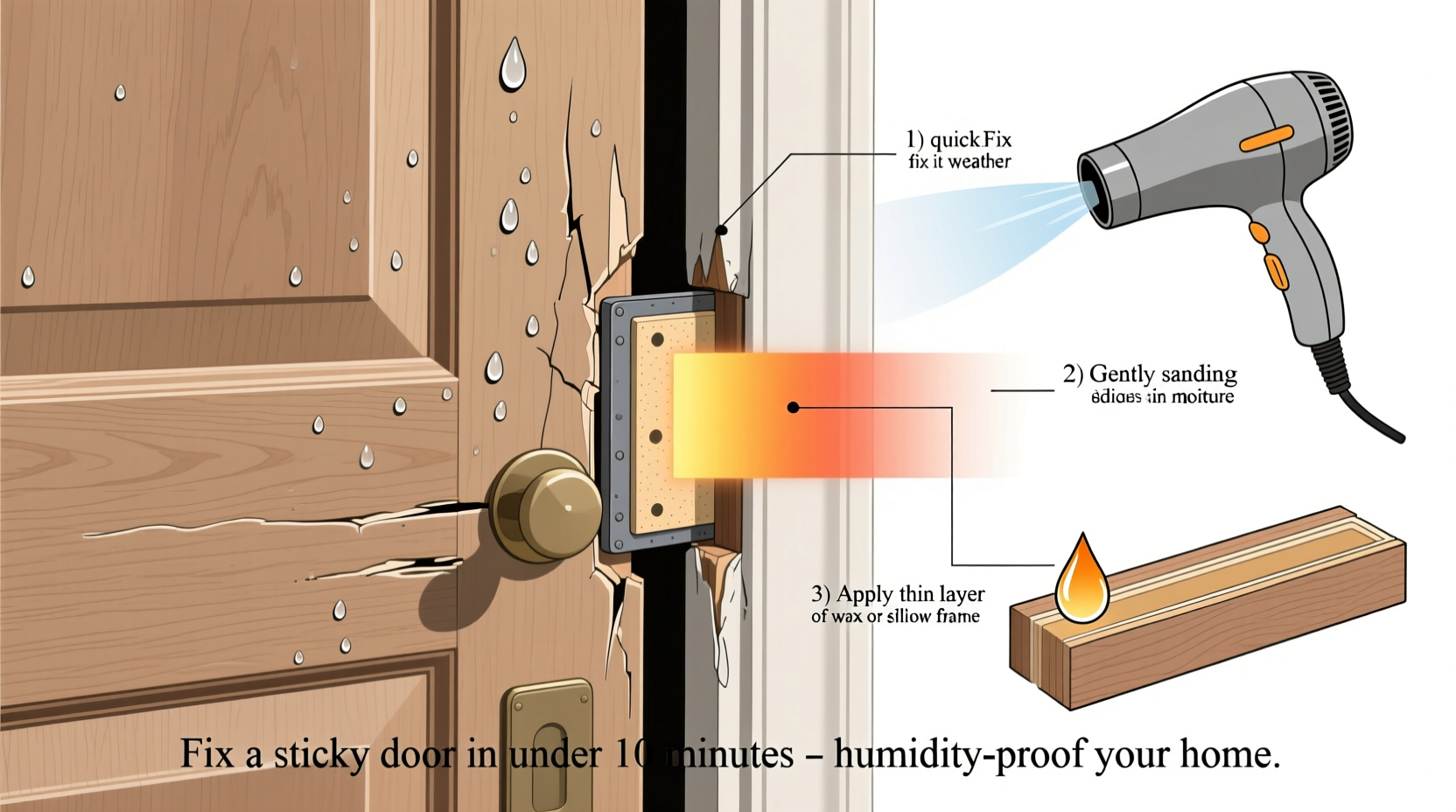
Wood is hygroscopic, meaning it naturally absorbs and releases moisture depending on the relative humidity (RH) of its environment. When RH rises above 60%, wood begins to absorb water vapor from the air, causing fibers to expand. This expansion isn’t uniform—it occurs mostly across the grain, making doors wider and thicker rather than longer.
A typical interior door may swell by as much as 1/16 to 1/8 inch during peak humidity. While this seems minor, standard door clearances are designed to be tight—usually around 1/8 inch on the sides and top, and about 3/4 inch at the bottom. Any swelling eats into these gaps, creating binding points.
“Wood movement due to humidity is predictable and natural. The key isn’t to stop it, but to accommodate it through proper design and maintenance.” — Dr. Alan Pierce, Building Materials Scientist, University of Massachusetts Amherst
This phenomenon affects all wooden doors, but solid core models are especially prone compared to hollow-core alternatives. Exterior doors face additional challenges from rain exposure and temperature swings, compounding the swelling effect.
Fast Fixes for a Sticking Door (Under 15 Minutes)
You don’t need to wait for drier weather or call a carpenter to regain access. Most sticking issues can be addressed immediately with household items. Here’s a step-by-step guide to restoring function fast:
- Identify the Point of Contact: Close the door slowly and observe where resistance occurs. Is it scraping the jamb? Catching on the threshold? Not latching due to misalignment?
- Mark the Problem Area: Use a pencil to lightly mark the spot where the door rubs. Open the door and inspect both the edge and the frame.
- Check Hinge Tightness: Loose hinges can shift the door out of alignment, mimicking swelling. Tighten all hinge screws with a screwdriver. If screws spin freely, remove them and insert toothpicks dipped in wood glue into the hole before reinserting.
- Apply Lubricant to Contact Points: Use paraffin wax (candle wax works), bar soap, or silicone spray on the rubbing area. These create a low-friction surface without attracting dust.
- Lift and Adjust: For doors dragging on the floor, lift the handle slightly while closing. If this helps, the hinges may need adjustment or shimming.
Long-Term Solutions and Preventive Measures
While quick fixes restore immediate function, long-term strategies reduce recurrence and protect your doors and frames from wear. Consider these durable solutions:
- Sanding High Spots: Once you’ve identified the rubbing area, lightly sand it with 120-grit sandpaper. Remove material gradually—test after every few strokes. Finish with 220-grit for smoothness.
- Installing Weatherstripping: On exterior doors, use compressible foam or vinyl strips to maintain seal integrity without increasing friction.
- Using a Dehumidifier: Maintain indoor humidity between 35% and 50%. Whole-house or room-specific dehumidifiers prevent excessive moisture absorption.
- Sealing Door Edges: Apply polyurethane or varnish to bare wood edges, which absorb moisture fastest. Reapply annually for best results.
- Hinge Shimming: If the door sags due to heavy use, remove the hinge, place a thin cardboard shim behind it, and reinstall. This subtly shifts the door position away from the jamb.
| Solution | Time Required | Tools Needed | Effectiveness Duration |
|---|---|---|---|
| Soap/wax lubrication | 2–5 minutes | Bar soap or candle | 1–7 days |
| Tighten hinges | 5–10 minutes | Screwdriver | Months (if done correctly) |
| Light sanding | 10–15 minutes | Sandpaper, block | Entire season (if climate stable) |
| Dehumidifier use | Ongoing | None | Continuous protection |
| Edge sealing | 30+ minutes | Brush, sealant | 6–12 months |
Real-World Example: Solving a Bathroom Door Issue
In a historic home in Charleston, South Carolina, a homeowner noticed her bathroom door began sticking every summer morning after showers. The combination of outdoor humidity and steam from hot water caused the solid pine door to swell against the oak frame. Initially, she resorted to forcing it open, which damaged the paint and loosened the top hinge.
She consulted a local carpenter who diagnosed the issue: unsealed door edges and inadequate clearance at the strike side. Instead of planing the entire door, he recommended a targeted approach. He sanded down the leading edge by about 1/16 inch, sealed it with two coats of satin polyurethane, and installed a small exhaust fan to reduce bathroom moisture.
The result? The door operated smoothly year-round with no further sticking. Annual touch-ups of the sealant maintained performance. This case illustrates how combining immediate correction with environmental control delivers lasting results.
When to Call a Professional
Most sticking doors can be managed DIY-style, but certain situations warrant expert intervention:
- The door binds along multiple points despite adjustments.
- There’s visible warping or cupping in the door panel.
- Frame alignment is compromised due to foundation settling.
- You’re preparing to refinish or repaint and want precise fitting.
Carpenters can plane or joint doors to exact tolerances, adjust jambs, or install oversized hinges for better weight distribution. In older homes, they may also address structural shifts affecting door geometry.
Tip: If you live in a coastal or tropical climate, schedule seasonal door maintenance just before the wet season begins.Frequently Asked Questions
Can I use WD-40 on a sticking door?
No. While WD-40 lubricates metal parts like hinges, it’s not ideal for wood-to-wood contact. It attracts dust and grime, which can create a gummy residue over time. Stick to dry lubricants like paraffin wax or silicone-based sprays designed for wood.
Why does only one door in my house stick?
Different doors are exposed to varying microclimates. A bathroom door faces steam, a basement door deals with damp air, and an exterior door endures direct weather. Also, construction materials vary—solid wood sticks more than engineered or hollow-core doors. Location, usage, and finish quality all influence susceptibility.
Will cutting down the door solve the problem permanently?
It can, but only if done conservatively. Removing too much material risks compromising insulation, soundproofing, or aesthetics. Always sand or plane incrementally and test frequently. Remember, humidity levels fluctuate—your fix should account for both dry and wet extremes.
Prevention Checklist
To minimize future issues, follow this actionable checklist:
- ✅ Monitor indoor humidity with a hygrometer.
- ✅ Seal all six sides of wooden doors (including top/bottom edges) with moisture-resistant finish.
- ✅ Install exhaust fans in bathrooms and laundry rooms.
- ✅ Tighten hinge screws biannually.
- ✅ Clean door tracks and thresholds monthly to prevent debris buildup.
- ✅ Use dehumidifiers in basements and ground-floor rooms.
- ✅ Inspect weatherstripping annually for wear.
Conclusion: Act Now, Avoid Bigger Issues Later
A sticking door in humid weather isn’t just an inconvenience—it’s a warning sign of environmental imbalance and potential long-term damage. Left unchecked, constant friction can wear down hinges, scrape paint, warp frames, and even strain door hardware. The fixes outlined here are not temporary hacks but part of a responsible home maintenance routine.
Start with the fastest solution: identify the contact point and apply wax or soap. Then assess whether deeper action—like sealing, sanding, or climate control—is needed. By addressing the root cause, not just the symptom, you preserve both function and finish.
💬 Have a sticking door you fixed successfully? Share your story or tip in the comments—your experience could help someone else avoid a frustrating morning!








