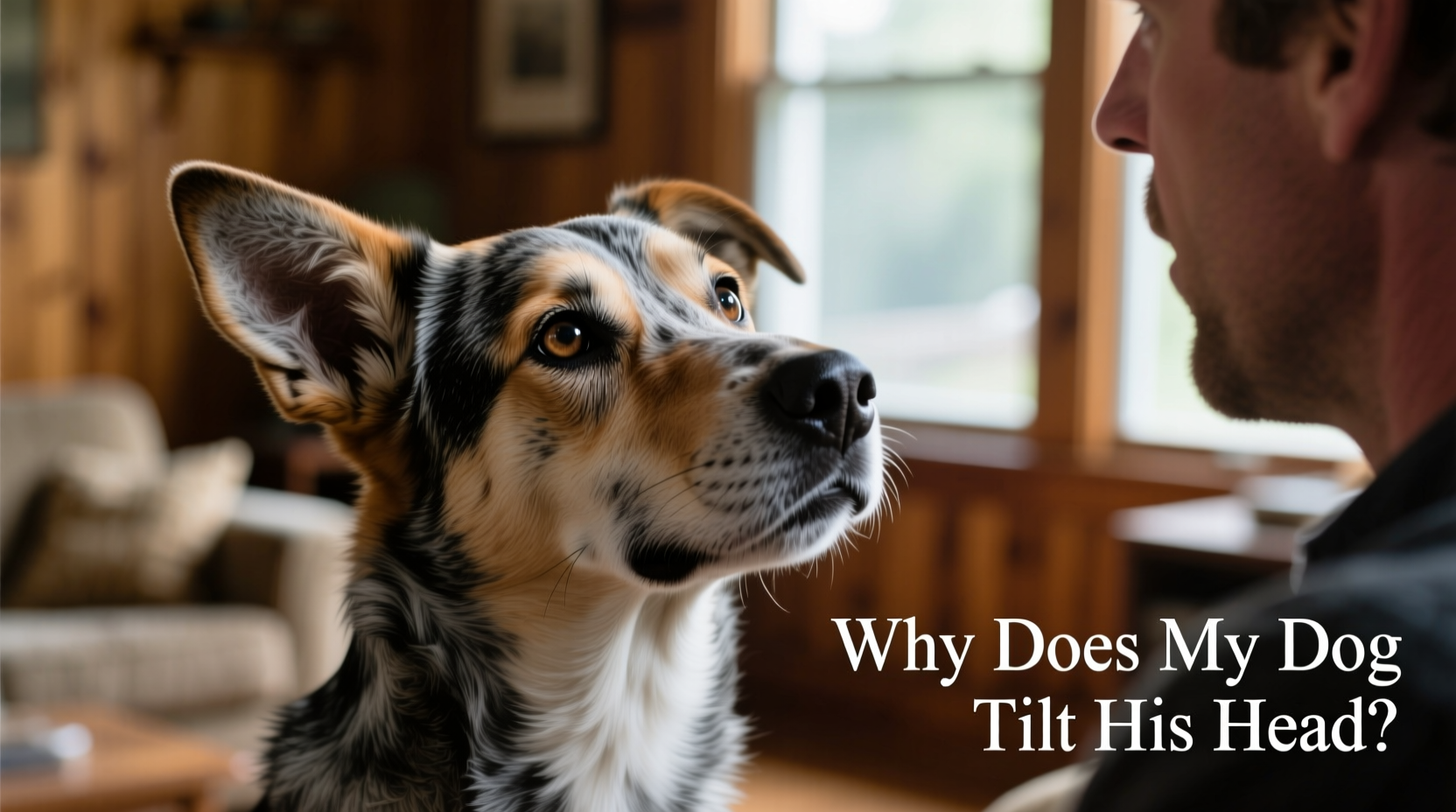
Dog owners know that moment well: you say your dog’s name, ask if they want a treat, or simply start talking, and suddenly—tilt. The head leans to one side, ears perk up, eyes widen, and you’re instantly disarmed by what feels like pure curiosity. But is this iconic gesture just an endearing reflex, or is there something deeper going on in your dog’s mind? Scientists, veterinarians, and animal behaviorists have long studied this behavior, and the answer turns out to be a blend of cognitive processing, auditory adaptation, and yes, a little bit of charm.
The head tilt isn’t random. It’s a calculated response rooted in both biology and learned behavior. While it may seem like your dog is trying to win your affection (and sometimes, they are), research suggests that the motion serves multiple functional purposes—from improving hearing to expressing emotional engagement. Understanding why dogs do this can deepen your bond and even help you interpret their needs more accurately.
The Science Behind the Tilt: How Dogs Process Human Speech
Dogs don’t understand human language the way we do, but they’re remarkably skilled at interpreting tone, pitch, and familiar words. Studies using MRI scans have shown that dogs process speech in a way that’s surprisingly similar to humans. A 2016 study conducted at Eötvös Loránd University in Budapest found that dogs use the left hemisphere of their brain to process meaningful words—just like people—and the right hemisphere to interpret emotional tone.
When your dog tilts their head while you're speaking, they may be fine-tuning their auditory focus. The shape of a dog’s ear canal and the positioning of their inner ear structures mean that slight head movements can alter how sound waves enter the ear. By tilting, they might be adjusting the angle of their ear flaps to better capture subtle nuances in your voice—especially high-pitched tones or unfamiliar words.
“Dogs are auditory specialists. Their head tilt often coincides with attempts to localize sound or decode vocal inflection.” — Dr. Alexandra Horowitz, Canine Cognition Researcher, Barnard College
This adjustment is particularly noticeable in breeds with larger, floppy ears—like Basset Hounds or Cocker Spaniels—who may need extra help funneling sound into their ear canals. Even dogs with upright ears, such as German Shepherds or Siberian Huskies, exhibit the behavior, suggesting that hearing enhancement is only part of the story.
Cognitive Engagement: Is My Dog Trying to Understand Me?
Beyond hearing mechanics, the head tilt is increasingly seen as a sign of active cognitive engagement. Dogs that have been trained to recognize specific words—such as “ball,” “walk,” or “treat”—often tilt their heads when those words are used in new contexts or with altered intonation. This suggests they’re not just reacting to sound, but analyzing meaning.
In controlled experiments, dogs were more likely to tilt their heads when presented with novel commands or inconsistent verbal cues. The behavior spiked when owners said phrases like “Do you want to go to the park?” in a questioning tone—even if the word “park” hadn’t been explicitly taught. This implies that dogs use context, tone, and body language together to interpret intent, and the head tilt may be a physical manifestation of mental effort.
Additionally, dogs are highly attuned to human facial expressions. When you speak, your mouth moves, and your eyebrows raise or lower depending on emotion. A head tilt allows your dog to get a clearer view of your face from different angles, especially if your dog is sitting slightly below eye level. This visual repositioning helps them read your emotional state more accurately—a critical skill for social animals that rely on human cues for safety and reward.
Tip: If your dog tilts their head more when you use certain words, try reinforcing those terms with actions or treats—they may be on the verge of learning a new command.Breed Differences and Physical Factors
Not all dogs tilt their heads equally. Some barely move their heads at all, while others seem to live in a permanent state of curious inclination. These differences are influenced by breed anatomy, ear structure, and even individual personality.
| Breed Type | Head Tilt Frequency | Potential Reasons |
|---|---|---|
| Spaniels (Cocker, Springer) | High | Floppy ears require repositioning for optimal hearing |
| Brachycephalic (Pugs, Bulldogs) | Moderate | Flatter faces may limit peripheral vision; tilt improves line of sight |
| Sighthounds (Greyhounds, Whippets) | Low | Less reliant on auditory cues; more visually oriented |
| Herding Breeds (Border Collies, Shetlands) | Very High | High trainability and attentiveness increase cognitive engagement |
| Northern Breeds (Huskies, Malamutes) | Moderate to High | Vocal responsiveness and strong social bonding behaviors |
Interestingly, younger dogs tend to tilt their heads more frequently than older ones. Puppies and adolescents are still building their vocabulary and decoding human communication patterns, so the behavior may diminish with age and experience—unless it’s reinforced by positive feedback.
A Learned Behavior: When Cute Gets Rewarded
Here’s where things get interesting: many experts believe the head tilt has evolved into a socially reinforced behavior. In other words, dogs have learned that tilting their heads makes humans happy—and when humans are happy, good things happen (treats, pets, playtime).
Consider this: every time your dog tilts their head, you probably smile, coo, or give them attention. That immediate positive reinforcement teaches the dog that this action leads to rewards. Over time, they may perform the tilt even when they’re not actively trying to hear or understand—simply because it works.
This doesn’t make the behavior any less genuine, but it does suggest a dual function. What begins as a physiological adjustment becomes a communicative tool—one that strengthens the human-dog bond through mutual understanding and emotional reciprocity.
“The head tilt may start as a sensory adjustment, but in domesticated dogs, it’s become part of their social repertoire—like a wink or a smile in human conversation.” — Dr. Brian Hare, Director, Duke Canine Cognition Center
Mini Case Study: Max the Border Collie Learns “Vacation”
Take the case of Max, a 3-year-old Border Collie in Colorado. His owners began using the word “vacation” whenever loading the car for weekend trips. Initially, Max showed no reaction. But after several trips—always preceded by excited tones and packing noises—he started tilting his head sharply whenever the word was spoken, even during casual conversation.
One evening, his owner mentioned “next vacation” while reading aloud from a travel magazine. Max trotted to the garage, tail wagging, and looked expectantly at his leash. The head tilt had become a bridge between a single word and a complex chain of associated events: car ride, mountains, hiking, freedom.
In this instance, the tilt wasn’t just about hearing—it signaled recognition, anticipation, and emotional connection. Max wasn’t just listening; he was remembering, predicting, and responding.
When to Be Concerned: Health Implications of Frequent Tilting
While occasional head tilting is normal, persistent or uncontrolled tilting—especially when accompanied by circling, loss of balance, or ear scratching—can indicate a medical issue. The most common cause is an ear infection, particularly in the middle or inner ear, which affects the vestibular system responsible for balance.
Other potential causes include:
- Otitis interna: Inflammation of the inner ear, often due to bacterial or fungal infections.
- Polyneuropathy: Nerve disorders affecting cranial nerves, including the vestibulocochlear nerve.
- Tumors: Rare, but possible growths in the ear canal or brainstem.
- Idiopathic vestibular disease: Sudden onset of balance issues in older dogs, usually temporary.
If your dog suddenly starts tilting their head constantly—even when not interacting with you—or seems disoriented, consult a veterinarian promptly. Early diagnosis can prevent complications and improve recovery outcomes.
Tip: Regular ear cleaning and check-ups can prevent infections that lead to abnormal head tilting. Use vet-approved solutions and avoid cotton swabs.Checklist: Is Your Dog’s Head Tilt Normal or a Red Flag?
- Does the tilt occur only during interaction? → Likely normal.
- Is it brief and followed by normal behavior? → Likely normal.
- Does your dog respond to commands and maintain balance? → Likely normal.
- Is the tilt constant, even at rest? → Consult a vet.
- Are there signs of ear discharge, odor, or scratching? → Seek medical advice.
- Has the behavior started suddenly in an older dog? → Rule out vestibular issues.
FAQ: Common Questions About the Dog Head Tilt
Do all dogs tilt their heads?
No—not all dogs do. Some breeds are less prone due to anatomy or temperament. Additionally, individual personality plays a role. Shyer dogs may show the behavior less frequently, while outgoing, attentive dogs do it more often.
Can I teach my dog to tilt their head on command?
Yes. Using positive reinforcement, you can shape the behavior. Hold a treat slightly above and to the side of their head, say a cue like “think,” and reward any head movement toward the tilt. With repetition, your dog will associate the word with the action.
Is the head tilt a sign of intelligence?
Not directly. However, dogs that tilt their heads frequently are often more attentive and responsive to human cues, traits commonly associated with trainability and social intelligence. It’s less about IQ and more about engagement.
Conclusion: More Than Just Cute—It’s Communication
The next time your dog tilts their head as you speak, remember: it’s not just a photo-worthy moment. It’s a window into their world—an intricate mix of sensory adjustment, cognitive processing, and emotional connection. Whether they’re decoding your tone, seeking a better view of your face, or simply asking for a scratch behind the ears, the head tilt is a testament to the depth of the human-canine relationship.
Understanding this behavior empowers you to respond more thoughtfully. You can nurture your dog’s learning by using consistent language, rewarding attention, and monitoring their health. At the same time, embrace the charm. After all, few species go to such lengths—literally, with a tilt—to understand us.
🚀 Start observing when and how your dog tilts their head this week. Note the words, tone, and context. You might uncover their personal “vocabulary” and strengthen your bond in the process.








