Dogs are masters of subtle communication. One of the most endearing behaviors they display is tilting their heads—especially when we speak to them. That lopsided look tugs at our hearts, but beyond its charm, it raises a real question: Why do dogs tilt their heads when we talk? While no single explanation fits every situation, research in canine cognition and behavior points to several compelling reasons. From auditory processing to social bonding, this behavior is far more than just cute—it’s a window into how dogs interpret the world around them.
1. Adjusting for Better Hearing
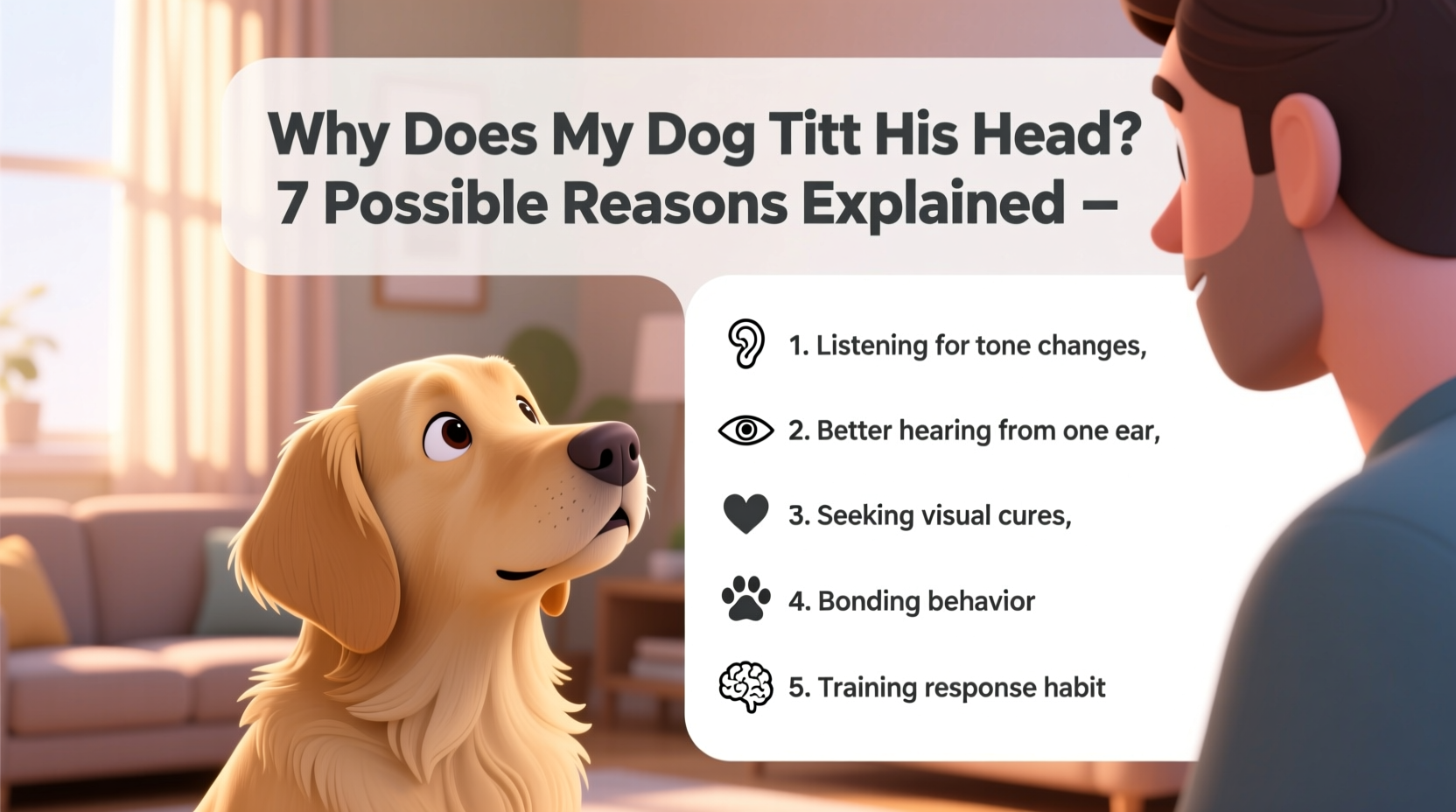
Dogs rely heavily on sound to navigate their environment. Their ears are designed to capture frequencies far beyond human range, but physical structure can sometimes interfere with clarity. When a dog tilts its head, it may be repositioning its ears to better localize sounds or improve reception.
This is especially true for breeds with floppy ears or longer muzzles, such as Basset Hounds or Cocker Spaniels. By shifting the angle of their head, they can adjust the position of their ear flaps and ear canals, allowing sound waves to travel more efficiently into the inner ear.
Tip: If your dog frequently tilts their head in quiet environments or seems unresponsive to calls, consider a veterinary hearing check—persistent tilting could signal ear infection or hearing loss.A study published in the journal Animal Cognition found that dogs were more likely to tilt their heads when presented with unfamiliar words or softer tones—suggesting an active effort to process unclear auditory input.
2. Reading Human Facial Expressions and Lip Movements
Dogs are remarkably skilled at reading human faces. Over thousands of years of domestication, they’ve evolved the ability to interpret subtle facial cues, including eye movements, mouth shapes, and eyebrow positions.
When a dog tilts its head while you’re speaking, it may be adjusting its line of sight to get a clearer view of your mouth and eyes. This helps them pick up on visual signals that complement what they hear—similar to how humans lip-read in noisy environments.
Dr. Brian Hare, cognitive scientist and founder of the Duke Canine Cognition Center, explains:
“Dogs have developed a specialized ability to read human social cues. They don’t just respond to tone—they watch our faces closely to decode meaning.” — Dr. Brian Hare, Canine Cognition Researcher
This skill is particularly strong in dogs raised around people from an early age. Puppies exposed to frequent face-to-face interaction are quicker to develop this kind of attentive behavior.
3. Associative Learning and Positive Reinforcement
Let’s face it—humans love a head tilt. We smile, coo, and often reward the behavior with treats or affection. Over time, dogs learn that tilting their head gets a positive reaction.
This is classic associative learning. A dog might initially tilt its head out of curiosity or confusion, but if the owner responds enthusiastically, the dog begins to repeat the gesture deliberately. It becomes a learned trick—a way to engage attention and earn rewards.
This doesn’t mean the behavior is “fake” or manipulative. Rather, it shows how adept dogs are at understanding cause and effect in social interactions. They adapt their natural behaviors to fit human expectations, much like children learn which expressions elicit comfort or praise.
| Behavior Trigger | Natural Cause | Learned Reinforcement |
|---|---|---|
| Hearing a new word | Head tilt to focus | Owner says “Aww!” and pets dog |
| Seeing mouth movement | Adjusting sightline | Owner gives treat for being “cute” |
| Waiting for command | Processing tone | Owner repeats cue with excitement |
The interplay between instinct and conditioning makes the head tilt both biologically functional and socially strategic.
4. Processing Language and Recognizing Familiar Words
Research suggests that some dogs can understand over 200 words, especially when trained. Border Collies like Chaser and Rico have demonstrated vocabulary skills comparable to those of young children.
When a dog hears a familiar word—like “walk,” “treat,” or “ball”—they may tilt their head as part of the cognitive process of retrieving associated memories. The tilt could indicate mental engagement, similar to how a person might cock their head when trying to recall a name.
A 2016 study conducted at Eötvös Loránd University in Hungary used fMRI scans to show that dogs process meaningful words in brain regions analogous to human language centers. When dogs heard praise in a positive tone, both the auditory cortex and reward centers lit up—indicating they distinguish not just tone, but lexical content.
In practical terms, your dog may tilt its head not because it doesn’t understand you—but because it *does*, and is mentally preparing a response.
5. Expressing Curiosity and Emotional Engagement
The head tilt is often accompanied by other signs of focused attention: perked ears, widened eyes, and a still posture. These signals together form what ethologists call “attentive immobility”—a state of heightened awareness.
Dogs use this posture when something captures their interest. It’s not limited to verbal cues; sudden noises, new objects, or changes in routine can trigger the same response. But when directed at human speech, it reflects emotional investment in the interaction.
Think of it as your dog leaning into the conversation. Just as humans nod or raise eyebrows during dialogue, dogs use body language to show they’re listening. The tilt may serve as a nonverbal “I’m paying attention” signal—one that strengthens the bond between pet and owner.
“Dogs aren’t just reacting to commands. They’re participating in social exchanges. The head tilt is part of their conversational toolkit.” — Dr. Alexandra Horowitz, Dog Behavior Scientist, Barnard College
6. Breed and Anatomy Influence Head Tilting Frequency
Not all dogs tilt their heads equally. Some breeds do it constantly; others rarely or never. This variation is partly due to skull shape, ear placement, and muzzle length.
- Long-muzzled breeds (e.g., Greyhounds, Collies): More likely to tilt to see past their snout when looking up at faces.
- Floppy-eared breeds (e.g., Beagles, Spaniels): May tilt to adjust ear positioning for better sound capture.
- Breeds with flat faces (e.g., Pugs, Bulldogs): Less prone to head tilting due to different facial anatomy and reduced ear mobility.
A 2021 survey by the Animal Behavior Society analyzed reports from over 1,000 dog owners and found that:
- Toy Poodles and Cavalier King Charles Spaniels tilted their heads most frequently.
- Over 70% of owners said their dogs tilted more when spoken to in high-pitched or emotionally expressive tones.
- Dogs with prior training responded with more targeted tilts during command-based interactions.
Anatomy sets the stage, but experience fine-tunes the performance.
7. Medical Considerations: When Tilting Isn’t Normal
While occasional head tilting is normal, persistent or uncontrolled tilting—especially when accompanied by balance issues, circling, or disorientation—can indicate a medical problem.
Potential causes include:
- Ear infections: Inflammation in the middle or inner ear disrupts balance and hearing.
- Vestibular disease: A condition affecting the balance system, common in older dogs.
- Neurological disorders: Tumors or inflammation in the brainstem can lead to abnormal posture.
- Toxin exposure: Certain medications or chemicals can damage the vestibular system.
If your dog suddenly starts tilting their head without social triggers, seems dizzy, or shows signs of discomfort, consult a veterinarian promptly. Early diagnosis improves outcomes significantly.
Tip: Monitor the context. Social, intermittent tilting = likely behavioral. Constant, one-sided tilt = potential health issue.Mini Case Study: Max the Rescue Terrier
Max, a 4-year-old mixed-breed terrier adopted from a rural shelter, rarely interacted verbally with his new family. His first few weeks were marked by timidity—he’d avoid eye contact and retreat when spoken to.
His owners began using high-pitched, cheerful tones during feeding and playtime, consistently rewarding any sign of engagement. Within six weeks, Max started responding by approaching, wagging his tail—and eventually, tilting his head during conversations.
What began as a rare gesture became a regular part of his communication. His vet confirmed he had mild hearing loss in one ear, suggesting the tilt helped him compensate. Over time, Max’s confidence grew, and the head tilt evolved into a trust signal—a bridge between fear and connection.
This case illustrates how the head tilt can reflect both sensory adaptation and emotional growth.
Checklist: Is Your Dog’s Head Tilt Normal?
Use this quick checklist to assess whether your dog’s behavior falls within typical ranges:
- ✅ Does the tilt occur mainly during social interaction or when hearing unusual sounds?
- ✅ Does your dog respond normally to verbal commands?
- ✅ Is the tilt brief and alternating between sides?
- ✅ Are there no signs of dizziness, falling, or ear scratching?
- ✅ Does your dog seem alert and comfortable?
If you answered “yes” to all, the behavior is likely normal. If two or more answers are “no,” schedule a vet visit.
FAQ
Is head tilting a sign of intelligence in dogs?
Not directly. While intelligent dogs may use the tilt more effectively in social contexts, the behavior itself is more about sensory processing and communication than IQ. However, dogs that learn to use the tilt to gain rewards demonstrate strong social cognition—a key component of canine intelligence.
Do puppies tilt their heads too?
Yes, but less frequently than adult dogs. Puppies begin exhibiting the behavior around 8–12 weeks as they develop auditory and social skills. As they grow and associate the tilt with positive responses, the frequency often increases.
Can I train my dog to tilt his head on command?
Absolutely. Using a clicker or verbal marker, wait for a natural head tilt, then immediately reward. Repeat over several sessions, adding a verbal cue like “tilt” as the behavior occurs. With consistency, many dogs learn to perform the gesture on request—turning an instinctive motion into a trained trick.
Conclusion: A Gesture Rooted in Connection
The dog’s head tilt is a beautiful fusion of biology, learning, and emotion. It emerges from a need to hear better, see clearly, and understand us—but it deepens into a shared language between species. Every tilt is a small act of attention, a silent “I’m listening” from a creature that has spent millennia tuning into human hearts.
Understanding why dogs tilt their heads doesn’t diminish the magic—it enhances it. Now, when your dog cocks their head at your voice, you’re not just seeing cuteness. You’re witnessing a complex blend of evolution, cognition, and companionship in motion.
💬 Have a story about your dog’s head tilt? Share your experiences in the comments—your insights might help fellow dog lovers understand their pets even better.








