Dogs are masters of nonverbal communication, and one of the most endearing behaviors they display is the head tilt. Whether you’ve just said “walk” or simply picked up your keys, your dog might respond with a slow, deliberate lean to one side—ears perked, eyes wide, and face full of curiosity. While it’s easy to assume they’re just being cute, the head tilt is far more than a photogenic quirk. It’s a complex signal rooted in biology, cognition, and social interaction. Understanding why dogs tilt their heads offers insight into how they interpret the world—and how deeply attuned they are to human behavior.
The Science Behind the Tilt
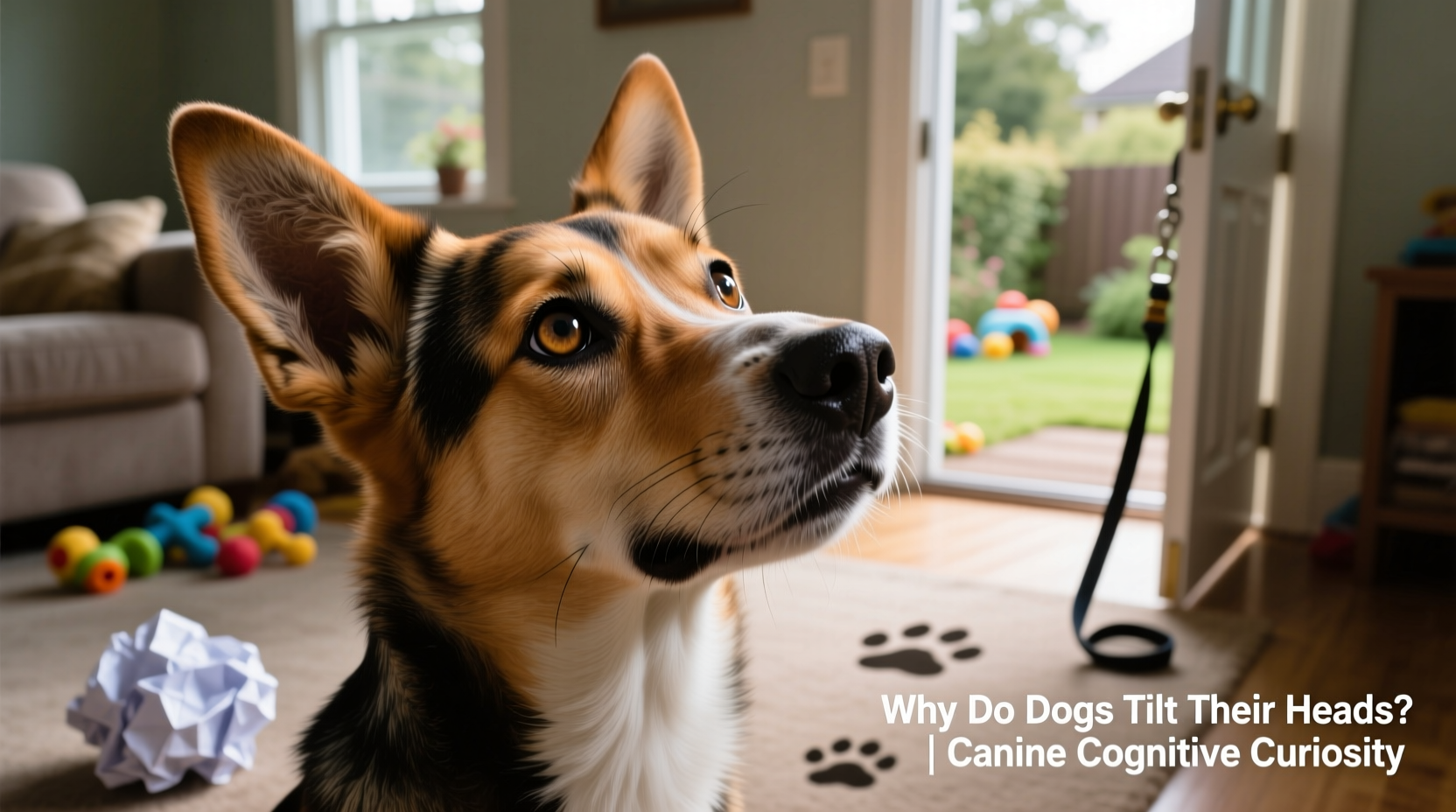
At its core, the head tilt is a functional response that helps dogs gather sensory information. Unlike humans, dogs rely heavily on both auditory and visual cues to interpret their environment, and the shape of their skulls and ears can obstruct certain inputs. When a dog tilts its head, it adjusts the position of its ears and changes the alignment of its eyes relative to the source of sound or movement.
For breeds with long muzzles or floppy ears—like Basset Hounds or Cocker Spaniels—the muzzle can physically block sound waves from reaching the ear canal. By tilting their head, dogs reposition their ears to better capture subtle sounds. This small adjustment can make a significant difference in how clearly they hear a whispered command or an unfamiliar noise.
Similarly, the tilt may improve visual perception. Dogs have a wide field of vision, but their muzzle can obstruct their direct line of sight, especially when looking up at a human face. Tilting the head allows them to see around their snout and get a clearer view of facial expressions, lip movements, or hand gestures. Since dogs are highly attuned to human body language, this visual clarity enhances their ability to understand intent.
“Dogs don’t just react to words—they read our entire communicative package: tone, expression, gesture, and context. The head tilt is often part of their effort to decode that package more accurately.” — Dr. Patricia McConnell, Certified Applied Animal Behaviorist
Is the Head Tilt a Sign of Intelligence?
While the head tilt isn’t a direct measure of intelligence, it does reflect cognitive engagement. Studies suggest that dogs who frequently tilt their heads may be more attentive listeners. A 2019 study published in *Animal Cognition* found that dogs were more likely to tilt their heads when presented with familiar object names, indicating they were actively trying to recall associations.
This behavior is particularly common in dogs trained in object retrieval or those exposed to rich verbal environments. Border Collies, for example, known for their advanced vocabulary comprehension, often exhibit pronounced head tilts when processing commands. The tilt appears to coincide with mental effort—similar to how a person might cock their head while concentrating on a difficult puzzle.
However, not all head tilts indicate deep thought. Some dogs learn that the gesture elicits positive reactions from humans—such as laughter, affection, or treats—and begin using it strategically. In these cases, the behavior becomes reinforced through social reward rather than sensory necessity.
Tip: If your dog tilts their head only when you use specific words like “treat” or “park,” they’re likely associating the word with a positive outcome and using the tilt to engage further.When to Be Concerned: Medical Causes of Head Tilting
While occasional head tilting is normal, a persistent or uncontrolled tilt—especially when accompanied by other symptoms—can signal a medical issue. The most common health-related cause is vestibular disease, which affects the balance system in the inner ear or brainstem. Signs include:
- Constant head tilt to one side
- Loss of balance or circling
- Nystagmus (involuntary eye movement)
- Vomiting or disorientation
Ear infections are another frequent culprit. Bacteria or yeast buildup in the ear canal can inflame the structures responsible for balance and hearing, prompting a dog to hold their head tilted toward the affected side. Breeds with floppy ears, such as Springer Spaniels, are especially prone to chronic ear issues.
Neurological conditions, including tumors or inflammation in the brain, can also lead to abnormal head positioning. If your dog suddenly begins tilting their head without any apparent trigger—or if the behavior becomes constant—it’s essential to consult a veterinarian.
| Symptom | Normal Curiosity Tilt | Potential Medical Issue |
|---|---|---|
| Duration | Seconds to minutes | Persistent, lasting hours or days |
| Movement | Controlled, responsive | Unsteady, wobbly gait |
| Eyes | Normal tracking | Rapid flickering (nystagmus) |
| Pain Response | None | Whining, pawing at ear |
| Trigger | Hearing a sound or word | No clear trigger |
A Case of Canine Curiosity: Max the Terrier Mix
Max, a six-year-old Jack Russell Terrier mix, began tilting his head every time his owner said the word “squirrel.” At first, it seemed like a charming coincidence. But over time, his owner noticed a pattern: Max only tilted his head when the word was spoken in a high-pitched tone, not when it appeared on TV or was said quietly.
A local animal behaviorist observed Max during a training session and noted that the tilt occurred precisely when Max was trying to confirm whether the word meant immediate action. Because “squirrel” often preceded a burst of outdoor excitement, Max had learned to associate the word with a reward. His head tilt functioned as both a focus mechanism and a social cue—a way of asking, “Did you mean it?”
After recording several interactions, the behaviorist concluded that Max’s tilt wasn’t purely instinctual; it was a learned behavior shaped by reinforcement. When he tilted his head, his owner would laugh and sometimes take him outside—even if there was no squirrel. Over time, Max used the tilt strategically to initiate play.
This case illustrates how canine behaviors often blend instinct and learning. What begins as a physiological adjustment can evolve into a sophisticated social tool.
How to Respond to Your Dog’s Head Tilt
Understanding the reason behind the head tilt empowers owners to respond appropriately. In most cases, the behavior is harmless and even beneficial, reflecting your dog’s desire to connect and comprehend. However, how you react can influence whether the behavior remains natural or becomes manipulative.
Instead of automatically rewarding every tilt with attention or treats, consider the context. Is your dog genuinely trying to understand something? Or are they using the tilt as a tactic to get what they want? Being mindful of reinforcement helps maintain balanced communication.
“Reward understanding, not just cuteness. If your dog correctly responds to a command after tilting, praise the action—not the tilt itself.” — Dr. Karen Overall, Veterinary Behavioral Medicine Specialist
Step-by-Step Guide: Assessing and Responding to Head Tilting
- Observe frequency and context: Note when and how often your dog tilts their head. Is it during conversations, when hearing noises, or only around certain people?
- Check for physical discomfort: Look for signs of ear scratching, odor, redness, or imbalance. These could indicate infection or neurological issues.
- Test auditory recognition: Say familiar words (“treat,” “leash”) and unfamiliar ones. Dogs often tilt more for meaningful words.
- Avoid over-rewarding: Don’t consistently give treats or petting just because your dog tilts their head. This may encourage performative behavior.
- Consult a vet if needed: If the tilt becomes constant or is paired with dizziness or vomiting, schedule a veterinary exam.
Do’s and Don’ts of Handling Head Tilt Behavior
| Do | Don’t |
|---|---|
| Encourage mental stimulation with training games | Ignore sudden changes in head posture |
| Use clear verbal cues and consistent commands | Reinforce the tilt with treats every time |
| Keep ears clean, especially in floppy-eared breeds | Assume all tilting is harmless without monitoring |
| Observe patterns to understand triggers | Force your dog’s head into a tilted position |
| Seek professional advice for persistent tilts | Disregard signs of pain or disorientation |
Frequently Asked Questions
Is head tilting more common in certain breeds?
Yes. Breeds with longer muzzles (e.g., Greyhounds, Collies) or floppy ears (e.g., Beagles, Spaniels) tend to tilt their heads more frequently, likely due to greater obstruction of sound or sight. However, individual personality and training history also play major roles.
Can puppies learn to tilt their heads from older dogs?
While the head tilt is largely instinctive, social learning can influence its frequency. Puppies observe adult dogs and may mimic behaviors that result in attention or rewards. However, the underlying sensory motivation remains biological.
Should I be worried if my dog never tilts their head?
Not at all. Just as humans vary in how they express curiosity, dogs differ in their behavioral tendencies. A lack of head tilting doesn’t indicate lower intelligence or poor hearing. Many healthy, attentive dogs rarely or never tilt their heads.
Conclusion: Listening Beyond the Tilt
The head tilt is one of the most expressive gestures in the canine repertoire—a fleeting moment where anatomy, instinct, and emotion intersect. It reveals a dog’s eagerness to understand us, to bridge the gap between species through attention and responsiveness. But behind the charm lies a deeper truth: dogs are constantly interpreting our world, adapting their behavior to communicate, survive, and bond.
By paying attention to when and why your dog tilts their head, you gain valuable insight into their perception, health, and emotional state. You also strengthen the foundation of trust and mutual understanding that defines a strong human-canine relationship.
💬 Have a story about your dog’s head tilt? Share your experience in the comments below—what triggers it, and what do you think it means? Let’s build a deeper understanding of our curious companions together.








