
Dogs have an uncanny ability to captivate us with their behaviors—none more charming than the head tilt. You say a word like “walk” or “treat,” and your dog instantly cocks their head to the side, ears perked, eyes wide with anticipation. It’s adorable, yes, but what’s really going on behind that tilted skull? Is your dog being clever, trying to decode human language like a furry linguist? Or is it just a reflexive reaction to sound? The truth lies somewhere between instinct, anatomy, and cognition—and science is beginning to piece it together.
The Anatomy Behind the Tilt
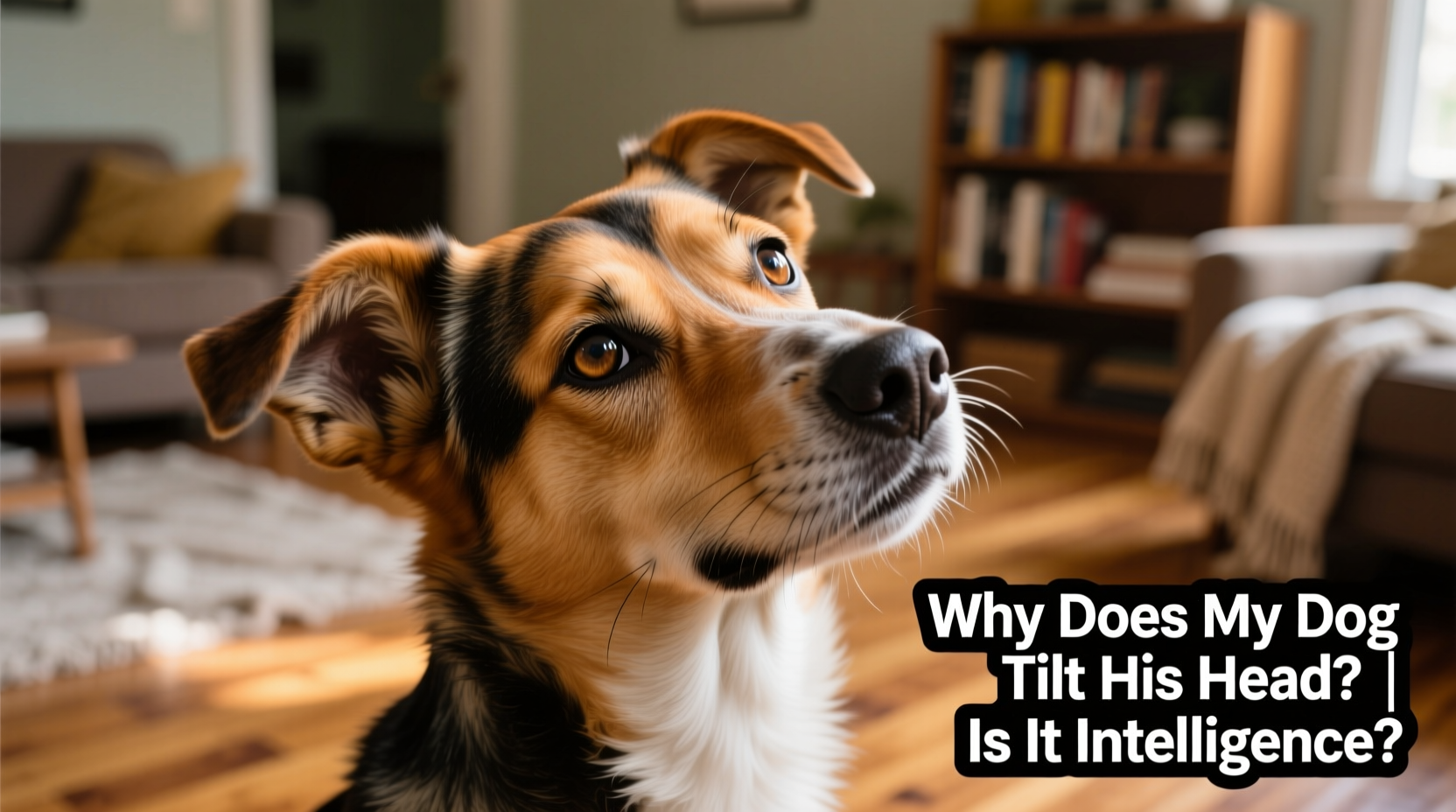
A dog’s head tilt isn’t random; it’s often rooted in physical structure. Canines rely heavily on auditory cues, and their ear shape and skull conformation can influence how they process sound. Dogs with long, floppy ears—like Basset Hounds or Cocker Spaniels—may tilt their heads to adjust the position of their ear canals, improving sound localization. Similarly, breeds with elongated muzzles (dolichocephalic), such as Collies or Greyhounds, may angle their heads to get a clearer line of sight when looking up at human faces.
This anatomical adjustment helps them pinpoint the source of a sound or see past their snout when focusing on facial expressions. Think of it as nature’s workaround for design limitations: by tilting, they compensate for obstructed vision or muffled audio.
Tip: If your dog tilts frequently and seems disoriented, consult a vet—excessive tilting can signal ear infections or neurological issues.Cognitive Curiosity: Listening for Clues
Beyond anatomy, the head tilt is increasingly viewed as a sign of active listening. Research from the Family Dog Project at Eötvös Loránd University in Budapest suggests that dogs are capable of recognizing certain words and intonations. When a familiar word—especially one linked to rewards—is spoken, dogs may tilt their heads as part of a focused attention response.
In one study, highly trained “gifted word learner” dogs demonstrated the ability to retrieve specific toys by name. During testing, many of these dogs exhibited frequent head tilts when hearing new or uncertain commands. This implies the tilt could be associated with mental processing—a pause to cross-reference sound with memory.
“Dogs don’t just react to tone—they’re parsing meaning. The head tilt often occurs when they’re working out a puzzle.” — Dr. Claudia Fugazza, Cognitive Ethologist, Eötvös Loránd University
While not every tilt signifies deep thought, consistent tilting in response to novel words or questions may reflect cognitive engagement. It’s less about intelligence in the abstract sense and more about attentiveness and associative learning.
Is Head Tilting a Sign of Intelligence?
Intelligence in dogs isn’t monolithic. Researchers categorize canine intelligence into three types: instinctive (breed-specific skills), adaptive (problem-solving), and working/obedience intelligence (learning from humans). The head tilt doesn’t directly measure any of these, but it may correlate with the latter two.
Dogs that frequently tilt their heads tend to be more attuned to human communication cues—eye contact, gestures, vocal tones. These are traits commonly seen in breeds selected for cooperation, such as Border Collies, Poodles, and German Shepherds. However, even companion breeds like Cavalier King Charles Spaniels exhibit frequent tilting, suggesting social attentiveness matters more than raw IQ.
Crucially, the behavior can also be reinforced by owners. When a dog tilts its head and receives affection or treats, it learns that the action yields positive outcomes. Over time, this operant conditioning turns a spontaneous gesture into a learned trick—one that looks intelligent but may simply be well-practiced performance.
Head Tilt vs. Genuine Problem-Solving
To distinguish between performative and cognitive tilting, consider context. A dog who tilts only when you say “Do you want a treat?” is likely responding to tone and expectation. But one who tilts while observing a new object, solving a puzzle toy, or reacting to an unfamiliar word may be genuinely processing information.
| Context | Likely Cause | Intelligence Indicator? |
|---|---|---|
| Hearing the word “vet” | Emotional association (fear) | No |
| Seeing a new person wave | Visual and auditory processing | Possibly |
| During training with unfamiliar commands | Cognitive effort | Yes |
| When owner says “Who’s a good boy?” in high pitch | Learned response for attention | No |
Behavioral Triggers That Prompt Tilting
Not all head tilts stem from curiosity or comprehension. Several stimuli can trigger the motion:
- High-pitched sounds: Squeaky noises, baby talk, or musical tones often elicit a tilt, possibly because higher frequencies are more difficult to locate.
- Familiar reward-related words: “Walk,” “car,” “ball,” and “treat” activate regions in the brain linked to positive associations.
- Facial expressions: Dogs read human faces closely. Tilting may help them see the mouth better, aiding in emotional interpretation.
- Unpredictable movements: A sudden hand gesture or rustling bag might prompt a tilt as the dog assesses potential significance.
Interestingly, dogs that live in homes with multiple languages or complex verbal environments may develop more nuanced responses. They learn to differentiate between meaningful and meaningless speech, and the head tilt becomes part of their filtering mechanism.
Mini Case Study: Max the Border Collie
Max, a six-year-old Border Collie from Portland, Oregon, knows over 150 toy names. His owner, Sarah, noticed he almost always tilts his head when she uses a new word or changes her tone during training. During a recent experiment, Sarah introduced a fake word—“zibble”—while showing Max a novel object. He tilted his head, sniffed, then looked back at her expectantly. After three repetitions, he retrieved the object when asked for the “zibble.” The head tilt preceded successful learning in 87% of trials.
Veterinarian and animal behaviorist Dr. Lena Patel, who observed the case, noted: “Max wasn’t just reacting—he was encoding. The tilt marked the moment of cognitive engagement, where he decided the word was worth remembering.”
When to Be Concerned About Head Tilting
While occasional tilting is normal, persistent or uncontrolled head tilting—especially if accompanied by other symptoms—can indicate medical problems. Common causes include:
- Otitis externa: Ear infections disrupt balance and spatial orientation.
- Canine vestibular disease: Often mistaken for stroke, this condition affects the inner ear or brainstem.
- Brain tumors or inflammation: Rare but serious, especially in older dogs.
- Pain or dental issues: Jaw discomfort can cause asymmetrical posture.
If your dog tilts their head constantly, walks in circles, loses balance, or shows signs of nausea, seek veterinary care immediately. Diagnostic tools like otoscopes, blood tests, or MRI scans may be needed to rule out pathology.
Tip: Monitor the frequency and context of head tilting. Occasional tilts during conversation are normal; constant tilting warrants a vet visit.How to Encourage Healthy Cognitive Engagement
If you’d like to foster genuine understanding—not just cute tricks—you can nurture your dog’s natural curiosity through structured interaction. Here’s a step-by-step guide to building responsive, thoughtful behavior:
- Use consistent naming: Assign unique names to toys or locations and use them regularly.
- Introduce novelty gradually: Present new words or objects in low-distraction settings.
- Observe reactions: Note when your dog pauses, stares, or tilts—these are signs of processing.
- Reinforce correct responses: Reward accurate actions with treats or praise, but avoid over-rewarding the tilt itself.
- Rotate stimuli: Change up toys, routes, and commands to prevent habituation.
This approach encourages adaptive intelligence rather than conditioned cuteness. Over time, your dog will begin to associate mental effort with rewards, leading to deeper learning.
Checklist: Signs Your Dog’s Head Tilt Reflects Intelligence
- ✅ Tilts occur during problem-solving tasks
- ✅ Happens more with unfamiliar words or sounds
- ✅ Paired with prolonged eye contact or alert posture
- ✅ Followed by appropriate behavioral responses (e.g., fetching the right toy)
- ❌ Rarely happens outside of attention-seeking contexts
FAQ
Do all dogs tilt their heads?
No. While common, not all dogs exhibit head tilting. Some breeds or individuals may show little to no inclination due to differences in anatomy, temperament, or socialization. Shy or less socially engaged dogs may also tilt less frequently.
Can I train my dog to tilt on command?
Yes, using positive reinforcement. Hold a treat near your dog’s ear and slowly move it upward and backward. As they follow the treat, their head will naturally tilt. Say a cue like “tilt” and reward. With repetition, they’ll associate the word with the action. Just remember—it’s a trick, not a measure of insight.
Are puppies more likely to tilt their heads?
Puppies often tilt more frequently than adult dogs, possibly because they’re still calibrating their sensory systems. As they grow, some retain the behavior; others outgrow it. Early exposure to varied sounds and words can enhance both auditory processing and responsiveness.
Conclusion
The head tilt is more than a photogenic quirk—it’s a window into your dog’s perceptual world. Whether driven by anatomy, attention, or learned behavior, it reveals how deeply dogs tune into human signals. While not a direct proxy for intelligence, it often accompanies moments of learning, curiosity, and connection.
Understanding the reasons behind the tilt empowers you to respond appropriately: celebrate the cognitive leaps, reinforce meaningful engagement, and stay alert to health concerns. Instead of merely adoring the gesture, you can use it as a tool to deepen your bond and support your dog’s mental well-being.
💬 Did your dog ever tilt at just the right moment—like they truly understood you? Share your story in the comments and join the conversation about what our dogs are really thinking.








