Dogs do many things that seem odd to humans—spinning before lying down, sniffing other dogs’ rear ends with intense focus, or suddenly sprinting across the yard for no apparent reason. But one of the more curious behaviors pet owners report is their dog locking eyes with them while defecating. It’s not just a fleeting glance; it’s a sustained, unblinking stare that can feel oddly intimate, even unsettling. Is your dog judging you? Waiting for approval? Or is there a deeper evolutionary explanation?
The truth is, this behavior is far more common—and more meaningful—than most people realize. While it may appear strange, staring during elimination is typically a sign of trust, awareness, and instinctual social bonding. Understanding why your dog does this sheds light on how they perceive safety, hierarchy, and connection in their daily lives.
The Vulnerability Factor: Safety in Numbers
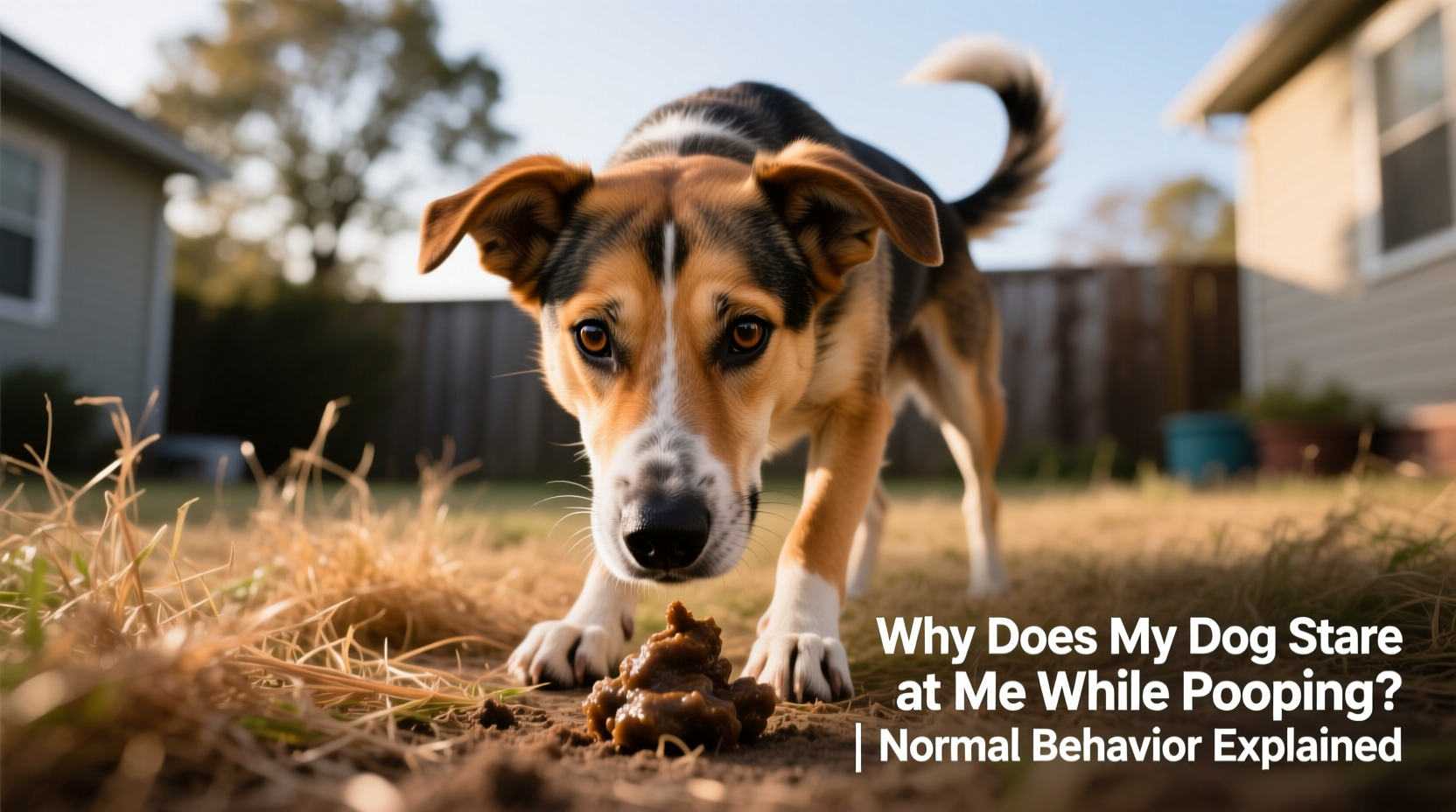
Defecation is a vulnerable act for any animal. In the wild, predators often target prey when they’re distracted or physically compromised. For dogs—descendants of pack animals like wolves—this vulnerability triggers heightened alertness. Even domesticated dogs retain these instincts, which shape how they behave during bathroom time.
When your dog stares at you while pooping, they’re not being rude or dramatic—they’re scanning for protection. That steady gaze serves as a silent signal: “I’m exposed right now. Are you watching my back?” By maintaining eye contact, your dog reassures themselves that you’re present, attentive, and ready to respond if danger arises.
“Eye contact during elimination is a form of risk delegation. The dog outsources vigilance to their human, whom they see as part of their social unit.” — Dr. Karen Bennett, Canine Behavior Researcher, University of Colorado
This behavior is especially common in dogs who are highly bonded to their owners. The stronger the attachment, the more likely a dog is to seek visual confirmation of safety during moments of physical vulnerability.
Tip: If your dog consistently stares at you during potty breaks, avoid looking away abruptly. A calm, reassuring presence—even just standing still—can reduce anxiety and reinforce their sense of security.Social Bonding and Pack Dynamics
Dogs are social creatures with deeply ingrained pack instincts. In a natural setting, pack members rely on each other for survival. Eye contact plays a crucial role in communication—not only to express dominance or submission but also to coordinate actions and maintain group cohesion.
When your dog looks at you while eliminating, they may be treating you as a fellow pack member. This isn’t about dominance; it’s about inclusion. They’re acknowledging your role in their world and subtly reinforcing the bond between you. Unlike wild canids, who might avoid eye contact during such acts to remain discreet, domestic dogs have learned that humans respond positively to engagement—even in awkward moments.
In fact, studies show that dogs who maintain eye contact with their owners release higher levels of oxytocin, the “bonding hormone,” in both themselves and their humans. This biochemical feedback loop strengthens emotional ties and encourages mutual care.
How Oxytocin Reinforces Connection
- Dog makes eye contact → oxytocin increases in both dog and owner
- Increased oxytocin promotes feelings of trust and affection
- Dog associates positive emotions with interaction during routine activities (like pooping)
- Behavior becomes reinforced over time
So when your dog stares at you mid-poop, they’re not just checking for threats—they may also be deepening the emotional connection between you.
Attention-Seeking vs. Instinctual Behavior
Not all staring is rooted in primal survival. Some dogs learn that eye contact gets results. If you’ve ever praised, smiled at, or said “Good boy!” immediately after your dog finished going, they may have associated the act of looking at you with positive reinforcement.
Over time, this can evolve into a conditioned response. Your dog learns: Look at human during poop = praise afterward. While the origin may be instinctual, the persistence of the behavior can be shaped by training—intentional or otherwise.
To distinguish between instinct-driven and reward-driven staring, observe the context:
| Factor | Instinct-Driven Staring | Reward-Driven Staring |
|---|---|---|
| Eye Contact Timing | Starts before or during defecation | Often begins just after finishing |
| Body Language | Alert, tense, ears up | Relaxed, tail wagging slightly |
| Environment | More common outdoors or in unfamiliar areas | Occurs anywhere, including familiar spaces |
| Response to Distraction | Resumes staring quickly after looking away | May break gaze if ignored |
If your dog appears anxious or scans the surroundings frequently, the behavior is likely instinct-based. If they seem proud or expectant after finishing, it may be learned behavior.
Real-Life Example: Max the Rescue Terrier
Max, a three-year-old Jack Russell terrier mix, was adopted from a rural shelter where he had limited human interaction. His new owner, Sarah, noticed early on that Max would squat, then freeze—eyes locked on her—until she made eye contact. At first, she found it unnerving. “It felt like he was waiting for permission,” she said.
After consulting a certified dog behaviorist, Sarah learned that Max’s past environment lacked consistent protection. He hadn’t developed full confidence in his safety. The staring was a coping mechanism: a way to ensure someone was monitoring for danger.
She began using quiet verbal cues (“You’re safe, Max”) and stayed nearby without hovering. Over six weeks, Max’s gaze became less intense. He still looked at her occasionally, but no longer froze mid-action. The change signaled growing trust—a milestone in their bond.
When Staring Might Signal a Problem
While occasional staring during elimination is normal, certain patterns may indicate underlying issues:
- Prolonged strain or discomfort: If your dog stares intensely while visibly struggling, they may be experiencing constipation or gastrointestinal pain.
- Avoidance of eye contact altogether: Sudden refusal to look at you could suggest fear, illness, or trauma.
- Excessive circling or hesitation: May point to anxiety, urinary tract infection, or spinal discomfort.
If your dog shows signs of distress beyond the stare—whining, pacing, or incomplete bowel movements—it’s wise to consult a veterinarian. Physical health should always be ruled out before attributing behavior solely to psychology.
Checklist: Is Your Dog’s Staring Normal?
- ✅ Does the stare happen only during or immediately after defecation?
- ✅ Is your dog otherwise relaxed and confident in daily routines?
- ✅ Do they resume normal activity right after finishing?
- ✅ Have they had recent vet clearance for digestive health?
- ✅ Is the behavior consistent rather than sudden or erratic?
If you answered yes to all, the behavior is almost certainly normal. If not, further observation or professional consultation may be needed.
How to Respond: Best Practices for Pet Owners
Your reaction matters. How you handle your dog’s bathroom stare can either ease their anxiety or inadvertently reinforce stress. Follow these steps to support healthy behavior:
- Stay Calm and Present: Don’t laugh, scold, or turn away abruptly. Simply stand quietly within sight.
- Avoid Direct Staring Back: While your dog may look at you, prolonged reciprocal eye contact can be perceived as confrontational. Glance gently, then look into the distance.
- Use Soothing Tone After Completion: Once they’re done, offer soft praise: “Good job” or “All done.” This reinforces completion, not the act of staring.
- Maintain Routine Locations: Dogs feel safer eliminating in familiar spots. Try to keep walks and potty breaks consistent.
- Don’t Rush Them: Pressuring a dog to “hurry up” increases stress. Give them time to feel secure.
Frequently Asked Questions
Is it normal for my dog to stare at me every time they poop?
Yes, especially if they’re closely bonded to you. As long as the behavior isn’t accompanied by signs of distress, it’s a typical expression of trust and environmental awareness.
Should I make eye contact back when my dog is pooping?
Brief, soft eye contact is fine, but avoid intense or prolonged staring. In canine communication, direct unblinking eye contact can signal challenge or threat. A quick glance followed by relaxed observation is ideal.
My dog never used to stare, but now they do. Should I be worried?
Sudden changes in behavior warrant attention. If the new staring coincides with environmental changes (new home, pet, or person), it may reflect temporary anxiety. However, if it’s paired with vocalization, reluctance to go, or physical discomfort, consult your vet.
Conclusion: Trust, Instinct, and the Power of Presence
Your dog’s stare during elimination isn’t weird—it’s a window into their mind. It reflects millennia of evolution, the depth of your relationship, and their reliance on you as a source of safety. What might seem like an odd quirk is actually a profound act of trust: they’re exposing their most vulnerable self and choosing to keep their eyes on you.
Understanding this behavior transforms irritation into appreciation. Instead of wondering, “Why are they looking at me right now?” you can recognize it as a silent declaration: “I know you’ve got my back.”
By responding with calm presence and consistency, you strengthen not only their confidence but also the invisible thread of connection between species. In the quiet moments of a morning walk, even something as mundane as pooping becomes a moment of mutual understanding.
💬 Have a story about your dog’s quirky potty habits? Share your experience in the comments—your insight might help another pet owner feel less alone.








