Dogs do many things that seem odd to their human companions—spinning before lying down, sniffing other dogs’ rear ends, or suddenly sprinting across the yard for no apparent reason. But one of the more puzzling behaviors is when your dog locks eyes with you while in the middle of defecating. It’s not just a fleeting glance; it’s an intense, unblinking stare that can feel oddly personal. Why would a dog choose such a vulnerable moment to make eye contact? Is it seeking approval? Protection? Or is there something deeper at play?
This behavior, while seemingly strange, is actually rooted in biology, psychology, and the deep bond between dogs and humans. Far from being random, your dog’s gaze during elimination is a complex communication signal—one that reveals trust, dependence, and even social hierarchy. Understanding why your dog stares at you while pooping offers insight into their emotional world and strengthens the connection you share.
The Vulnerability Factor: A Moment of Weakness
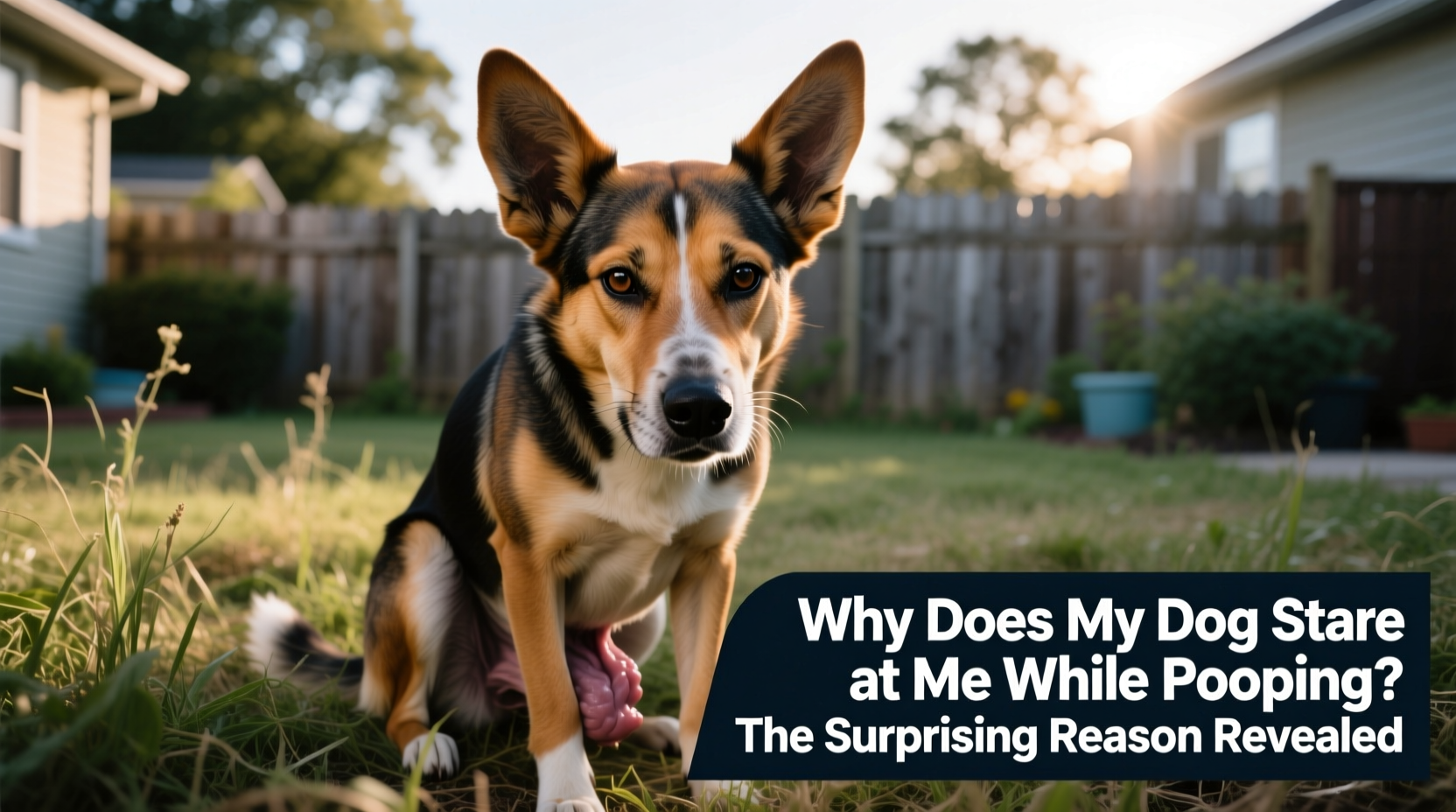
When a dog squats to defecate, they are in a physically compromised position. They’re unable to run quickly, defend themselves, or react swiftly to threats. In the wild, this makes them extremely vulnerable to predators. Even though domesticated dogs live in safe environments, their instincts remain deeply ingrained. This instinctual awareness of vulnerability triggers a survival response: seeking reassurance from their pack leader—the person they trust most.
By staring at you during this act, your dog is essentially saying, “I’m exposed right now. Watch my back.” It’s not about shame or embarrassment—it’s about safety. The eye contact serves as a silent plea for protection, a way of checking whether you’re alert and ready to respond if danger arises. This behavior is especially common in dogs who view their humans as leaders or protectors.
Tip: If your dog consistently looks at you while eliminating, avoid looking away abruptly. A calm, reassuring presence reinforces their sense of security.Eye Contact as Emotional Anchoring
Dogs use eye contact differently than humans. While prolonged staring between people can be confrontational, in canine-human relationships, mutual gaze fosters bonding. Research has shown that when dogs and humans look into each other’s eyes, both experience a surge in oxytocin—the so-called \"love hormone\"—the same chemical released during hugging or cuddling.
In the context of elimination, this eye contact becomes a form of emotional anchoring. Your dog may be using your presence and gaze to self-soothe. Just as a child might look to a parent during a stressful moment, your dog turns to you for comfort—even during something as routine as pooping. This behavior is particularly prevalent in dogs with strong attachment styles or those who have experienced anxiety in the past.
“Dogs don’t see elimination as private like humans do. Instead, they treat it as a social moment where proximity and attention matter.” — Dr. Karen Becker, Integrative Veterinarian and Canine Behavior Specialist
Social Hierarchy and Pack Dynamics
Dogs are descendants of wolves, animals that live in tightly structured social groups. Within these packs, dominance, submission, and roles are constantly communicated through body language. While modern dogs aren’t wolves, many of these hierarchical instincts persist.
When your dog stares at you while pooping, they may be subtly acknowledging your role as the pack leader. By exposing their vulnerable side and maintaining eye contact, they demonstrate trust and deference. It’s a non-verbal way of saying, “I know you’re in charge, and I rely on you.”
Conversely, some dogs may stare to assert control or test boundaries—especially if they’ve been trained to wait for permission before going. In such cases, the stare isn’t about vulnerability but about waiting for a cue. These dogs have learned that elimination is a behavior subject to human approval, and they look to you for confirmation that it’s okay to proceed.
A Learned Behavior: Reinforcement Over Time
Many dog owners unknowingly reinforce the staring habit. When a dog begins to squat and glances at you, you might say, “Go ahead,” “Good job,” or even smile and nod. Over time, your dog associates eye contact with positive reinforcement. They learn that looking at you during elimination results in praise, which increases the likelihood they’ll repeat the behavior.
This is especially true for dogs trained to eliminate on command or on specific surfaces (like pee pads or grass). They begin to treat defecation not just as a biological function but as a trained behavior requiring acknowledgment. The stare becomes part of the ritual—a way of checking in before completing the task.
How to Respond: Do’s and Don’ts
| Do | Don’t |
|---|---|
| Maintain a calm presence to reassure your dog | Stare back intensely, which may cause stress |
| Use soft verbal cues like “okay” or “good” if training | Scold or rush your dog during elimination |
| Respect their need for privacy if they turn away | Force interaction if your dog avoids eye contact |
| Stay nearby, especially in unfamiliar environments | Leave them completely alone if they seem anxious |
Mini Case Study: Max, the Anxious Rescue Dog
Max, a three-year-old mixed breed, was adopted from a rural shelter where he had limited human interaction. His new owner, Sarah, noticed that every time Max went to the bathroom in the backyard, he would crouch down, then immediately turn his head to lock eyes with her. At first, she found it amusing. But over time, she realized he wouldn’t go at all unless she was watching.
Concerned, Sarah consulted a canine behaviorist. The expert explained that Max’s early life likely lacked consistent protection, making him hyper-aware of his surroundings during vulnerable moments. By staring at Sarah, he was confirming her presence and ensuring safety. The behavior wasn’t defiance—it was dependency.
The solution? Sarah began standing quietly at a slight distance during potty breaks, offering soft reassurance without direct eye contact. Over several weeks, Max grew more confident. He still occasionally glanced her way, but the intense, anxious stare diminished. The change reflected growing trust—not just in her, but in his environment.
Step-by-Step Guide: Helping Your Dog Feel Safe While Eliminating
If your dog’s staring seems rooted in anxiety rather than habit, you can gently guide them toward greater confidence. Follow this timeline to build independence and reduce reliance on constant visual reassurance.
- Week 1: Observe and Record – Note when and where your dog stares. Is it only outside? Only when you’re close? This helps identify triggers.
- Week 2: Create a Predictable Routine – Take your dog out at the same times daily. Consistency reduces stress and builds confidence.
- Week 3: Increase Distance Gradually – Stand further away during potty breaks. Start with a few feet, then slowly increase as your dog remains relaxed.
- Week 4: Introduce Neutral Presence – Turn slightly away or look at the sky instead of directly at your dog. This teaches them they don’t need your focused attention to feel safe.
- Week 5: Reward Independent Elimination – Praise *after* they finish, not during. This shifts reinforcement from the act of staring to the successful completion of the task.
When Staring Might Signal a Problem
While staring during pooping is usually normal, it can sometimes indicate underlying issues. Pay attention if your dog exhibits any of the following:
- Prolonged straining without producing stool
- Whining, pacing, or signs of discomfort
- Suddenly refusing to eliminate unless you’re present (when they previously didn’t care)
- Excessive licking of the genital or anal area afterward
These could point to medical conditions such as constipation, urinary tract infections, or gastrointestinal distress. Behavioral changes—like sudden clinginess or fear of going outside—may also suggest trauma, environmental stress, or cognitive decline in older dogs.
If the staring coincides with other behavioral shifts or physical symptoms, consult your veterinarian. A full check-up can rule out pain or illness that might be making your dog more dependent on your presence.
FAQ: Common Questions About Dogs Staring While Pooping
Is it normal for my dog to stare at me while pooping?
Yes, it’s very common and usually indicates trust, vulnerability, or learned behavior. As long as your dog isn’t showing signs of distress, there’s no cause for concern.
Should I look away or maintain eye contact?
It’s best to remain calmly present without intense staring. Softly say “okay” or “good” if needed, but avoid direct eye contact, which can be perceived as dominant or threatening in canine communication.
Can I train my dog not to stare at me while pooping?
You can reduce the behavior through gradual desensitization. Focus on building confidence by increasing distance during potty breaks and rewarding independent elimination. However, complete elimination of the behavior isn’t necessary—or always desirable—since it often reflects a healthy bond.
Conclusion: A Sign of Trust, Not Oddity
The next time your dog fixes you with that solemn, unblinking gaze mid-squat, resist the urge to laugh or look away in awkwardness. That stare is more meaningful than it appears. It’s a quiet testament to the bond you’ve built—a silent acknowledgment that, in their mind, you’re their protector, their leader, and their safest place in the world.
Understanding this behavior transforms it from a quirky mystery into a window into your dog’s emotional life. Rather than correcting it, embrace it as a sign of deep trust. And if you notice signs of anxiety or discomfort, use the strategies outlined here to help your dog feel more secure—on and off the leash.
💬 Has your dog ever stared at you while pooping? Share your story or questions in the comments—let’s decode our dogs’ most surprising behaviors together.








