Dogs are creatures of habit, loyalty, and sometimes, baffling behavior. One moment they’re chasing their tails like tiny tornadoes; the next, they’re locking eyes with you mid-squat in the backyard. If you’ve ever caught your dog staring intently at you while defecating, you’re not alone—and you’re probably wondering: What on earth is going through their mind?
This seemingly odd behavior isn’t random. In fact, animal behaviorists and veterinarians have studied these quirks for decades. From vulnerability to trust, dominance to communication, dogs use subtle body language—including eye contact during vulnerable moments—to convey complex emotions. Understanding why your dog stares at you while pooping opens a window into their psychology, social instincts, and emotional connection with you.
The Science Behind the Stare: Vulnerability and Trust
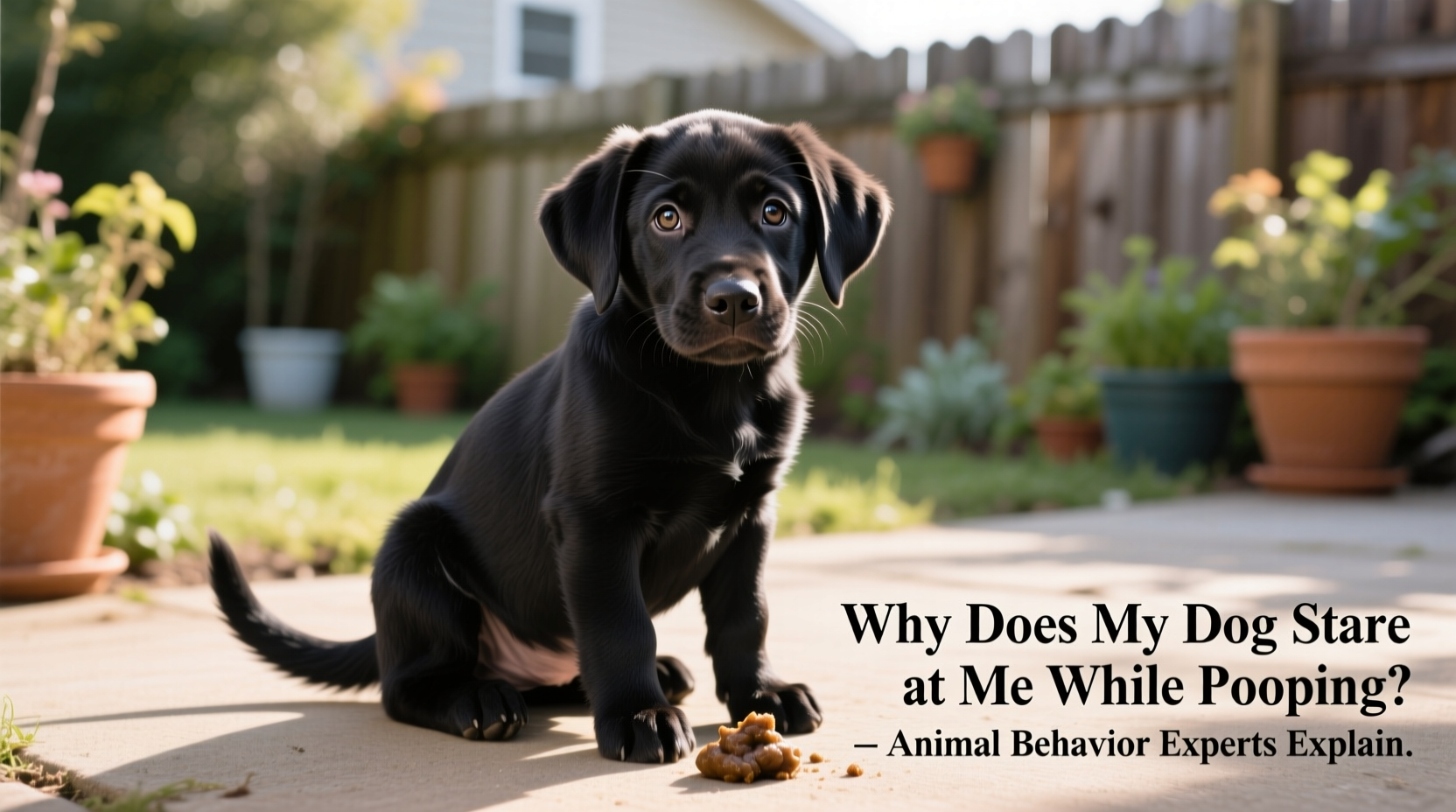
Defecation is one of the most vulnerable acts a dog performs. In the wild, animals lower themselves to the ground, exposing their backs and hindquarters—positions that leave them defenseless against predators. Even domesticated dogs retain this instinctual awareness. When your dog squats, they’re physically and mentally exposed.
So why look at you?
According to Dr. Sarah Wilson, a certified animal behaviorist with over 15 years of clinical experience, “Eye contact during elimination is a sign of deep trust. Your dog is acknowledging their vulnerability and checking in with you—their pack leader—for reassurance.”
“Dogs don’t make eye contact lightly. In canine social structure, prolonged gaze can be confrontational. But when it happens during a vulnerable act like pooping, it’s an intimate gesture of reliance.” — Dr. Sarah Wilson, DVM, Animal Behavior Specialist
In essence, your dog is saying, “I’m in a weak position right now. Are you watching my back?” This behavior is especially common in dogs with strong attachment bonds to their owners. It’s not about shame or embarrassment—it’s about survival instinct and social cohesion.
Tip: If your dog consistently stares at you while pooping, avoid looking away abruptly. A soft nod or calm verbal cue like “You’re okay” can reinforce their sense of security.Other Odd Pooping Behaviors—And What They Mean
Staring isn’t the only peculiar bathroom habit dogs exhibit. Many owners report circling, sniffing excessively, kicking dirt after, or even backing up toward their owner. Each action has evolutionary roots or social significance.
Circling Before Pooping
Dogs often spin in tight circles before settling down to eliminate. This behavior likely originated as a way to flatten grass, check for insects or snakes, and align their bodies with the Earth’s magnetic field. A 2013 study published in *Frontiers in Zoology* found that dogs prefer to orient north-south when defecating, suggesting a sensitivity to geomagnetic cues.
Kicking the Ground Afterward
After dropping waste, many dogs scrape the ground with their hind paws. This isn’t just covering up—it’s scent marking. The glands in their paw pads release pheromones, creating a secondary signal that says, “I was here.” It’s a territorial display, combining visual disturbance (kicked-up dirt) with olfactory messaging.
Sniffing Intensely Before and After
Your dog may spend more time investigating the area than actually doing the deed. Sniffing allows them to read the “pee-mail” left by other dogs—information about gender, health, mood, and reproductive status. It’s a critical part of canine social networking.
Backing Toward You During Elimination
Some dogs slowly inch backward while defecating, ending up closer to their owner. This is another vulnerability-related behavior. By reducing the distance between you, they minimize the chance of surprise from behind. It’s a subtle way of staying within protective range.
Do’s and Don’ts: How to Respond to Bathroom Stares
How you react to your dog’s bathroom habits can shape their confidence and comfort. Here’s a breakdown of best practices:
| Behavior | Do | Don’t |
|---|---|---|
| Dog stares while pooping | Maintain calm presence; offer soft verbal reassurance | Avoid direct stare-downs or loud reactions |
| Dog circles repeatedly | Give space and time; don’t rush the process | Don’t pull on the leash or interrupt |
| Dog kicks ground after | Allow natural behavior; no correction needed | Don’t scold for making a mess |
| Dog sniffs excessively | Permit short investigative periods | Don’t yank away mid-sniff without warning |
Remember: These routines are normal and serve biological, psychological, and social functions. Interfering too much can increase anxiety or suppress natural instincts.
Real Example: Luna the Rescue Dog
Luna, a 3-year-old mixed breed rescued from a rural shelter, exhibited intense staring during elimination. Her new owner, Mark, initially found it unsettling. “She’d crouch, then slowly turn her head to lock eyes with me. It felt like she was judging me,” he said.
After consulting a veterinary behaviorist, Mark learned that Luna’s past included exposure to unattended outdoor spaces where predators were present. Her stare wasn’t odd—it was a coping mechanism. By maintaining eye contact, she confirmed she wasn’t alone.
Mark adjusted his routine: instead of turning away or checking his phone, he began standing quietly nearby, offering a gentle “All good, Luna” once she finished. Over six weeks, her posture relaxed, and the intensity of the stare softened—though the glance remained. “It’s become our little ritual,” Mark shared. “Now I see it as her way of including me.”
Step-by-Step: Building Bathroom Confidence in Anxious Dogs
If your dog seems tense or hyper-vigilant during elimination, you can help them feel safer. Follow this gradual approach:
- Choose a consistent bathroom spot. Familiarity reduces stress. Use the same route and surface whenever possible.
- Walk calmly to the area. Avoid excited speech or pulling the leash. Your energy sets the tone.
- Stand slightly behind and to the side. This mimics non-threatening pack positioning and gives your dog a clear view of their surroundings.
- Remain quiet but present. Don’t talk, whistle, or move around. Let your stillness communicate safety.
- Wait patiently. Allow your dog time to sniff, circle, and settle. Rushing disrupts the process.
- Offer mild praise after completion. Use a soft voice: “Good job” or “All done.” Save high-energy rewards for later.
- Gradually increase independence. Once confident, step back a few feet to encourage self-reliance without abandonment.
This method works particularly well for rescue dogs, puppies, or pets with noise sensitivities. Consistency over 4–8 weeks typically leads to noticeable improvement.
When Odd Behavior Signals a Problem
While staring during pooping is usually normal, some bathroom behaviors warrant veterinary attention. Be alert for:
- Straining excessively without producing stool
- Frequent squatting with little output
- Whining, trembling, or refusing to eliminate around people
- Sudden changes in posture or gait during elimination
- Obsessive licking of the genital or anal area afterward
These signs could indicate pain, constipation, urinary tract infections, or anal gland issues. A dog who once stared calmly but now avoids eye contact or rushes the process may be experiencing discomfort.
Tip: Monitor your dog’s elimination patterns weekly. Note frequency, consistency, and behavior. Share this log with your vet if concerns arise.Frequently Asked Questions
Is it normal for my dog to watch me while I use the bathroom?
Yes. Dogs are highly observant and often follow their owners out of curiosity or bonding instinct. If your dog waits outside the door or watches you, it’s typically a sign of attachment, not intrusion. They may also be anticipating a walk or meal afterward.
Should I look back when my dog stares at me while pooping?
Soft, brief eye contact is fine. However, avoid intense staring, which can be perceived as threatening in canine language. A quick glance with a calm expression or a quiet verbal cue is sufficient to acknowledge them without escalating tension.
Why does my dog spin in circles before peeing but not pooping?
The difference may relate to urgency, surface type, or habit formation. Peeing is often quicker and less vulnerable, so fewer rituals occur. Some dogs develop individualized routines based on environment—e.g., spinning on grass but not concrete.
Expert Insight: The Social Dimension of Canine Elimination
Dr. Elena Torres, a zoologist specializing in animal cognition, emphasizes that we often underestimate the social complexity of elimination behaviors.
“We project human embarrassment onto dogs, but they don’t feel shame about bodily functions. To them, pooping is both a physiological necessity and a communicative act. The stare isn’t weird—it’s relational. They’re including you in a moment that, in the wild, would require full group vigilance.” — Dr. Elena Torres, PhD, Animal Cognition Research Lab
This perspective shifts the narrative from “odd” to “adaptive.” Far from being strange, your dog’s bathroom stare reflects millions of years of pack-based evolution. In a world where isolation meant danger, staying connected—even mid-squat—was essential for survival.
Conclusion: Embrace the Quirks, Deepen the Bond
Your dog’s stare during pooping isn’t a glitch in their programming—it’s a window into their emotional world. It speaks of trust, dependence, and an ancient need for companionship in vulnerable moments. Rather than dismissing it as odd, consider it a quiet testament to the bond you’ve built.
By responding with patience, understanding, and respect for their instincts, you reinforce a sense of safety that extends far beyond bathroom breaks. These small, everyday interactions accumulate into a relationship rooted in mutual trust.
💬 Have a story about your dog’s quirky bathroom habits? Share your experience in the comments—your insight might help another pet owner feel less alone.








