Dogs are masters of nonverbal communication, and one of the most common yet puzzling behaviors owners experience is their pet locking eyes with them during meals. That steady gaze—sometimes soft, sometimes intense—can feel like a mix of affection, curiosity, or outright manipulation. Is your dog trying to bond with you, or are they simply hoping for a scrap from your plate? The truth lies somewhere in between, shaped by biology, social learning, and emotional connection.
Understanding why your dog stares at you while you eat requires looking beyond surface-level assumptions. This behavior isn't just about food; it reflects deeper aspects of canine psychology, domestication history, and the unique relationship between dogs and humans. By decoding what that stare really means, you can respond in ways that strengthen your bond without encouraging unwanted habits.
The Science Behind the Stare: Oxytocin and Eye Contact
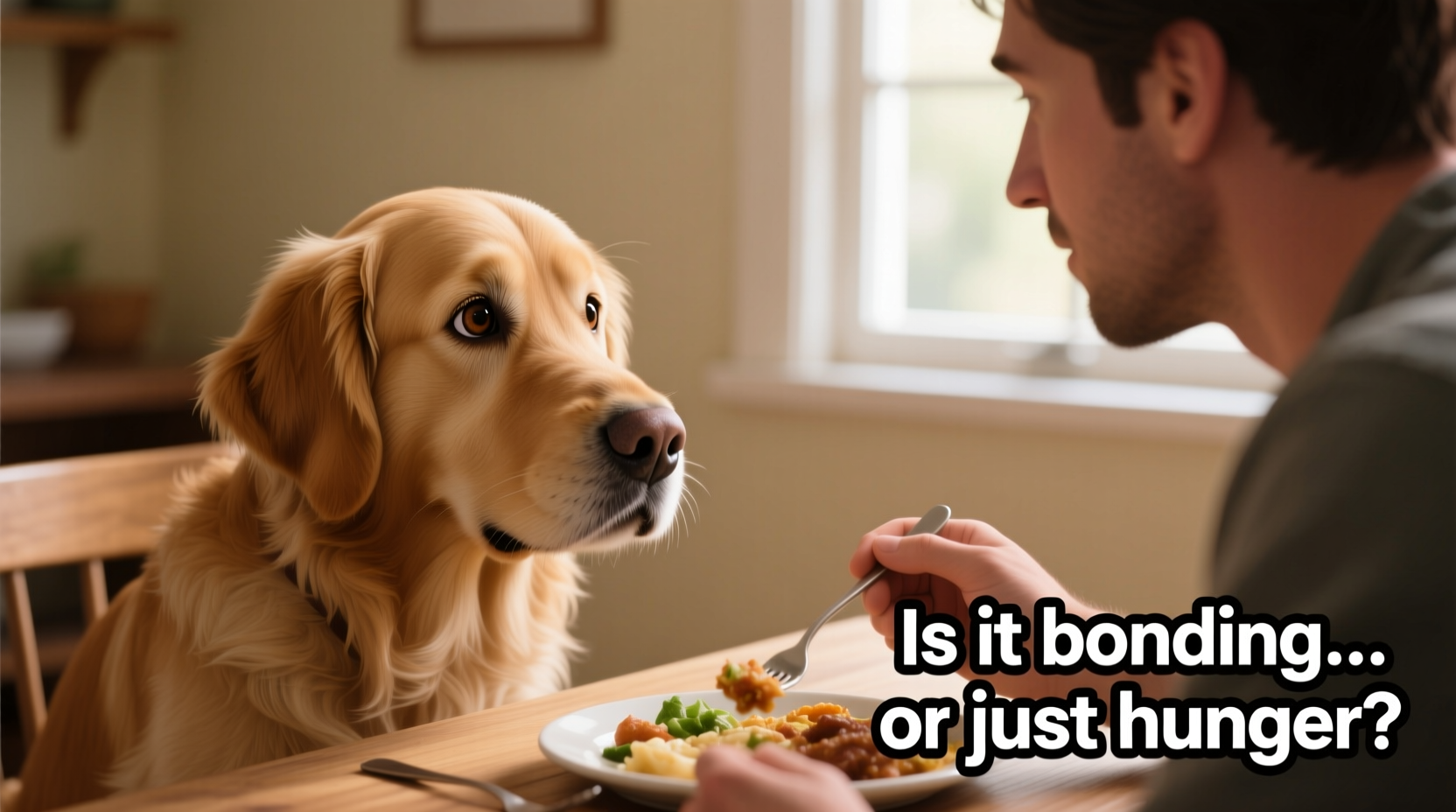
Contrary to popular belief, prolonged eye contact between dogs and humans isn’t inherently confrontational. In fact, research shows that mutual gazing triggers a neurochemical response similar to that seen between human parents and infants. A landmark 2015 study published in *Science* found that when dogs and their owners engage in extended eye contact, both parties experience a rise in oxytocin levels—the so-called “love hormone” associated with bonding, trust, and affection.
This biological feedback loop suggests that staring can be a genuine expression of attachment. Dogs have evolved over thousands of years to read human facial cues and use eye contact as a tool for emotional connection. When your dog looks at you calmly while you eat, especially without whining or pawing, they may simply be participating in this ancient ritual of interspecies bonding.
“Dogs have developed the ability to engage in eye contact with humans in ways wolves never do. It’s a key part of their social adaptation.” — Dr. Brian Hare, Canine Cognition Researcher, Duke University
However, not all stares are created equal. Context matters. If your dog’s gaze is relaxed, accompanied by slow blinks and a loose body posture, it likely signals comfort and connection. But if their stare is fixed, intense, and paired with lip licking, head tilting, or pacing, it may indicate anticipation—or even anxiety—about getting food.
Begging Behavior: How Dogs Learn to Manipulate Meals
While some staring stems from affection, much of it is reinforced through conditioning. Dogs are incredibly observant and quick learners. If your dog has ever received even a tiny morsel from your plate—even once—they now associate mealtime with potential rewards. From their perspective, staring becomes a low-effort strategy: sit quietly, maintain eye contact, and wait for the payoff.
This type of learned behavior follows the principles of operant conditioning. Positive reinforcement (getting food) increases the likelihood of repetition. Even inconsistent rewards—like giving in only occasionally—can strengthen the behavior because unpredictability makes it more compelling (a phenomenon known as a variable reward schedule).
Common signs your dog is begging rather than bonding include:
- Following you into the kitchen before you’ve even started eating
- Sitting directly in front of you with an intense, unblinking stare
- Licking lips or making soft vocalizations
- Pawing or nudging your arm
- Positioning themselves between you and your plate
Decoding the Difference: Bonding vs. Begging
Telling the difference between affectionate gazing and calculated begging comes down to reading your dog’s full body language and the situation itself. Here’s a breakdown to help distinguish the two:
| Behavior | Bonding Stare | Begging Stare |
|---|---|---|
| Eye Contact Duration | Intermittent, soft glances | Fixed, persistent focus |
| Body Posture | Relaxed, possibly lying down | Alert, leaning forward |
| Vocalizations | None or gentle sighs | Whining, grunting, barking |
| Mouth & Tongue | Jaw loose, occasional slow blink | Lip licking, yawning, drooling |
| Timing | Occurs throughout the day, not just meals | Only during food-related activities |
For example, if your dog often gazes at you while resting nearby during quiet moments—not just mealtimes—it’s likely a sign of secure attachment. But if the staring begins precisely when you open the fridge or unwrap a sandwich, and stops immediately after you finish eating, it’s almost certainly food-motivated.
A Real-Life Example: Max the Labrador and Dinner Time Drama
Consider Max, a three-year-old Labrador living with Sarah, a remote worker who eats lunch at her desk. For months, Max would sit silently beside her every time she had a meal, staring intently. At first, Sarah thought it was sweet—a sign of companionship. But over time, Max began whining if she turned away, and would nudge her hand if she didn’t offer anything.
After consulting a trainer, Sarah realized she had unintentionally reinforced the behavior. Early on, she gave Max a small piece of chicken during lunch “just once,” thinking it wouldn’t matter. That single act taught Max that patience and staring paid off. Once Sarah stopped feeding Max during meals and instead gave him a stuffed Kong toy at lunchtime, the staring decreased significantly within two weeks.
This case illustrates how easily well-meaning actions can create persistent habits. It also shows that change is possible with consistency and redirection.
How to Respond: Balancing Affection and Boundaries
Whether your dog’s stare is rooted in love or hunger, your response shapes future behavior. You don’t need to eliminate eye contact—nor should you—but guiding it appropriately ensures a healthy dynamic.
Here’s a step-by-step approach to managing mealtime interactions:
- Assess the context. Ask yourself: Is this happening only during meals? Does my dog show signs of food-seeking?
- Set clear boundaries. Decide whether you allow any human food sharing. If not, commit to never feeding from the table—even “just one bite.”
- Redirect attention. Give your dog a high-value chew toy, puzzle feeder, or treat-dispensing toy during your meals.
- Reinforce alternative behaviors. Reward your dog for lying quietly in their bed during dinner, even if they glance at you.
- Engage in bonding outside mealtimes. Schedule regular eye-contact games or calm petting sessions to satisfy their need for connection.
Consistency is crucial. Mixed signals—like ignoring your dog one day and giving them food the next—will prolong the behavior. Instead, choose a strategy and stick with it for at least three to four weeks to see meaningful change.
Checklist: Managing Your Dog’s Mealtime Staring
- ✅ Observe your dog’s body language during meals
- ✅ Eliminate accidental food rewards from the table
- ✅ Provide a distraction (toy, bone, mat) during your meals
- ✅ Train a “go to place” command for mealtime
- ✅ Reinforce calm behavior with praise or treats—after you’re done eating
- ✅ Schedule dedicated bonding time unrelated to food
When Staring Might Signal Something Else
In rare cases, excessive staring can point to underlying issues. Dogs with anxiety, cognitive dysfunction (especially in seniors), or medical discomfort may fixate on their owners as a coping mechanism. If your dog suddenly starts staring obsessively—outside of mealtimes—and shows other changes like pacing, confusion, or altered sleep patterns, consult your veterinarian.
Additionally, some breeds, such as Border Collies or German Shepherds, are naturally more intense in their focus due to their working heritage. While this doesn’t make the behavior problematic, it may require extra effort in channeling their attentiveness into structured tasks or training exercises.
Frequently Asked Questions
Is it bad to let my dog watch me eat?
Not inherently. If your dog remains calm and you don’t reinforce begging, having them nearby can be part of normal coexistence. However, if their presence leads to persistent staring, whining, or jumping, it’s better to create a separate space for them during meals.
Can I train my dog to stop staring at me while I eat?
Yes. Use positive reinforcement to teach an alternative behavior, such as lying on a mat or chewing a toy. Consistently redirect their attention and avoid rewarding the stare with food or attention. Over time, they’ll learn that mealtime means downtime for them.
Do dogs understand that we don’t want to share our food?
Dogs don’t grasp human dining etiquette, but they can learn rules through training. They may not “understand” in a moral sense, but they can associate certain environments (e.g., the dining table) with specific expectations (e.g., staying on their bed).
Conclusion: A Look Into Their Eyes, A Step Toward Better Understanding
Your dog’s stare during meals is more than just a quirky habit—it’s a window into their mind and heart. Whether driven by deep-seated affection or cleverly calculated hope for a snack, this behavior reveals how finely tuned dogs are to human routines and emotions. Rather than reacting with frustration or guilt, use this moment as an opportunity to deepen your understanding of your pet.
By setting kind but consistent boundaries, providing mental stimulation, and nurturing your bond outside of mealtimes, you can enjoy peaceful dinners while still fostering a strong, trusting relationship. Remember: every glance your dog gives you is a form of communication. Learning to interpret it accurately is one of the most rewarding parts of being a responsible, attentive owner.
💬 What does your dog do when you eat? Share your experiences or tips in the comments—your story might help another pet parent navigate the same dinner-time dilemma.








