Dogs are full of habits that seem whimsical at first glance—tail chasing, sniffing each other’s rear ends, and barking at seemingly nothing. One of the most common yet puzzling behaviors is the pre-sleep spin: your dog circles once, twice, or even three times before finally flopping down. While it may look like a quirky ritual, this action has deep roots in evolution, survival instincts, and sensory refinement. Understanding why dogs spin before lying down offers more than just a fun fact—it provides insight into how domestication has shaped but not erased ancient canine behaviors.
The Ancestral Origins of Circling Behavior
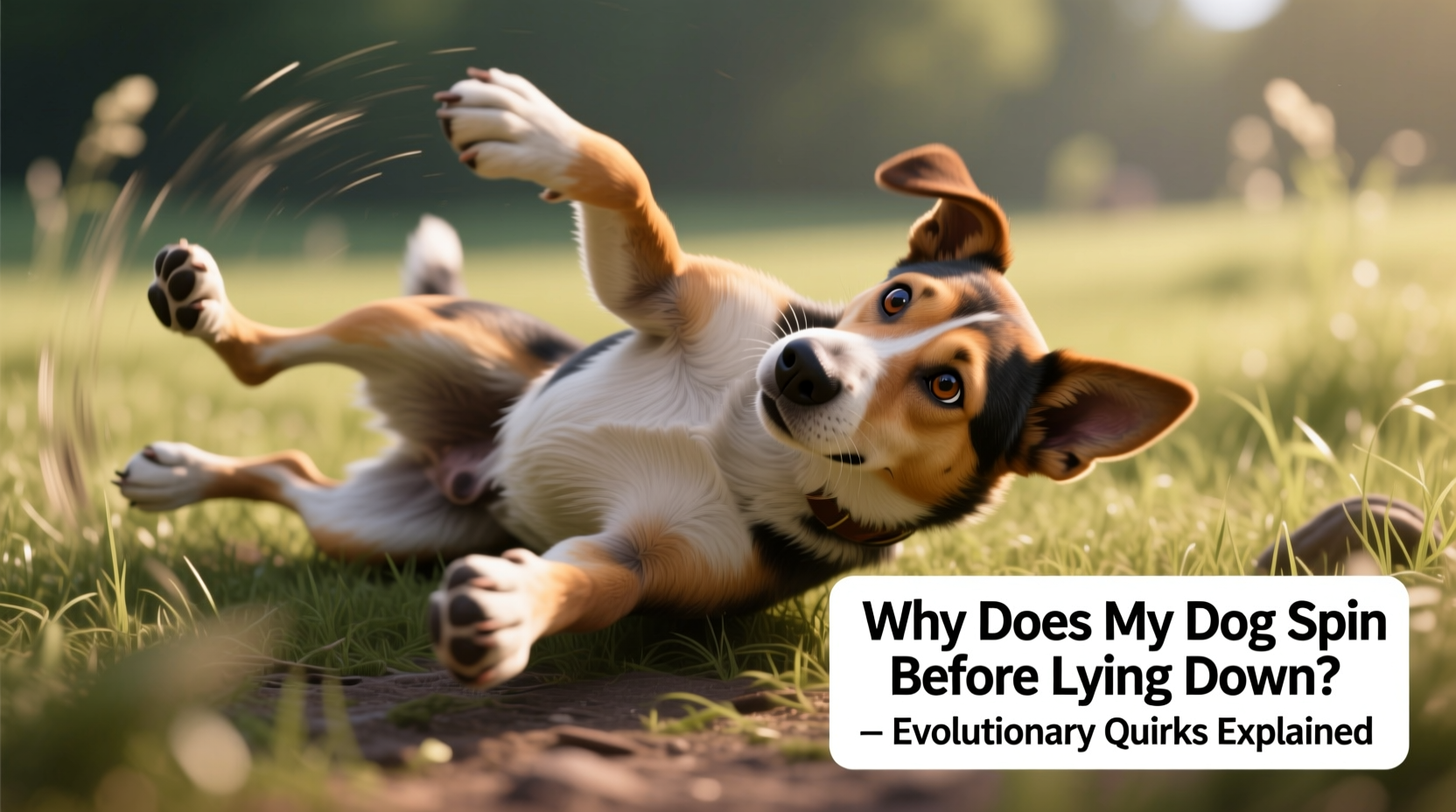
The spinning motion dogs perform before settling down traces back to their wild ancestors, including wolves, dingoes, and other canids. In the wild, survival depended on minimizing threats and maximizing comfort, even during rest. Before lying down in tall grass, snow, or uneven terrain, animals would trample the ground to create a safe, level sleeping area. This act served multiple purposes: flattening sharp vegetation, scaring away insects or snakes, and compacting loose soil or snow for better insulation.
This circling behavior was not arbitrary; it was a functional adaptation. By turning in tight circles, early canids could assess their surroundings one final time, ensuring no predators were nearby and that the chosen spot offered optimal protection. Over generations, this routine became hardwired into canine behavior—even in modern dogs who sleep on plush orthopedic beds indoors.
“Circling before lying down is a vestigial behavior from when dogs needed to prepare their resting spots in the wild. It's not about comfort as much as survival—but the instinct remains.” — Dr. Lydia Chen, Canine Ethologist, University of Edinburgh
How Spinning Enhances Safety and Comfort
Even in today’s domestic environments, dogs continue to rely on instinctual patterns to evaluate safety. The spinning motion allows them to:
- Check for threats: A quick rotation helps dogs scan their environment using both sight and scent, confirming no immediate dangers are near.
- Test surface stability: Paws sense texture and firmness. Uneven or unstable ground may prompt additional turns until the dog feels secure.
- Regulate body position: Aligning their body with wind direction or sunlight helped wild canids stay warm or avoid detection—some dogs still orient themselves according to subtle environmental cues.
- Mark territory: Paw pads contain scent glands. As dogs step in circles, they subtly deposit pheromones, marking the space as “safe” and familiar.
In essence, the spin is a multi-purpose diagnostic tool—an automatic checklist performed without conscious thought.
Tip: If your dog spins excessively (more than 5–6 rotations) or seems distressed while doing so, consult a veterinarian. It could signal neurological issues or anxiety.Domestication Didn’t Erase Evolutionary Instincts
Despite thousands of years of domestication, many ancestral behaviors persist because they are encoded in genetics, not learned through experience. Selective breeding has influenced traits like size, coat type, and temperament, but core survival mechanisms remain largely untouched. Circling before lying down is one such trait—it doesn't provide a tangible benefit for indoor pets, yet it endures because it once did.
Studies in behavioral genetics have shown that even highly bred companion dogs retain over 98% of the same DNA as gray wolves. While humans selected for loyalty, trainability, and affection, natural selection pressures from the wild left lasting imprints on canine neurology. These include denning behaviors, pack hierarchy recognition, and yes—pre-sleep circling.
A 2021 study published in Animal Cognition observed shelter dogs and household pets across breeds and found that 87% engaged in some form of pre-lie-down circling, regardless of flooring type. Interestingly, dogs allowed outdoor access showed slightly more pronounced movements, suggesting residual environmental awareness.
Evolutionary Traits That Still Influence Modern Dogs
| Trait | Wild Purpose | Modern Manifestation |
|---|---|---|
| Circling before lying down | Flatten bedding, check for predators | Spinning on carpet, tile, or bed |
| Burrowing under blankets | Seek enclosed den-like spaces | Nesting in sofas, under furniture |
| Hoarding food/toys | Store resources for scarcity | Hiding treats around the house |
| Excessive licking | Wound cleaning, social bonding | Licking owners, paws, or walls |
| Nocturnal alertness | Guard against nighttime threats | Barking at night sounds |
When Is Spinning a Cause for Concern?
While occasional spinning is normal, certain patterns may indicate underlying health or psychological issues. Repetitive, obsessive circling—especially if accompanied by panting, whining, or inability to settle—can be signs of:
- Vestibular disease: Affects balance and spatial orientation, often seen in older dogs.
- Anxiety or OCD: Compulsive behaviors may develop due to stress, trauma, or lack of stimulation.
- Pain or discomfort: Arthritis or joint pain might make positioning difficult, leading to repeated attempts to lie down comfortably.
- Cognitive dysfunction: Similar to dementia in humans, older dogs may lose awareness of their actions.
If your dog suddenly starts spinning more than usual, appears disoriented, or shows reluctance to lie down after circling, a veterinary evaluation is recommended.
Mini Case Study: Bella the Border Collie
Bella, a six-year-old Border Collie living in rural Vermont, began spinning seven to ten times before lying down—up from her usual two or three. Her owner noticed she also hesitated on stairs and seemed stiff in the mornings. After a vet visit, Bella was diagnosed with early-stage hip dysplasia. Pain management and physical therapy reduced her discomfort, and within weeks, her circling returned to normal. This case highlights how changes in instinctual behavior can serve as early warning signs of physical distress.
Practical Tips for Supporting Natural Canine Behaviors
Understanding your dog’s evolutionary background doesn’t mean you need to change their routine—but you can support their instincts in healthy ways. Here’s how:
- Provide appropriate bedding: Choose flat, supportive surfaces that mimic a naturally flattened den. Memory foam beds help older dogs find comfort faster, reducing excessive adjustment.
- Maintain a consistent layout: Frequent furniture rearrangements can confuse dogs’ spatial memory, making them recheck their environment more intensely before lying down.
- Encourage mental stimulation: Puzzle toys, scent games, and obedience training reduce anxiety-driven compulsions.
- Respect their ritual: Don’t interrupt the spin cycle. Let your dog complete their routine—it’s part of their emotional regulation process.
- Monitor changes: Keep notes on shifts in behavior, especially in senior dogs. Early detection improves treatment outcomes.
Checklist: Is Your Dog’s Spinning Normal?
- ✅ Spins 1–4 times before lying down
- ✅ Lies down calmly afterward
- ✅ No signs of pain or distress
- ✅ Consistent pattern across days
- ✅ No vocalization during the process
If any of these points don’t apply, consider scheduling a vet consultation.
Frequently Asked Questions
Do all dog breeds spin before lying down?
Most do, though frequency varies. Herding breeds like Shetland Sheepdogs and working dogs like Siberian Huskies often exhibit stronger circling tendencies, likely due to their closer genetic ties to wild ancestors. Toy breeds may show milder versions, but the behavior is widespread across species.
Can I train my dog to stop spinning?
You shouldn’t try. The behavior is instinctive and serves a calming function. Attempting to suppress it may increase anxiety. Instead, focus on creating a secure environment where your dog feels safe enough to relax naturally.
Why does my dog spin and then not lie down?
This can happen if the dog detects something amiss—like a strange smell, noise, or uncomfortable temperature. It may also occur during high-stress periods. If this becomes frequent, evaluate potential environmental stressors or consult a canine behaviorist.
Conclusion: Honoring the Wild Within
The simple act of spinning before lying down is far more than a cute quirk—it’s a window into your dog’s evolutionary past. Every twist and turn connects them to ancestors who survived by being vigilant, adaptive, and attuned to their environment. While we’ve given our dogs soft beds and central heating, we haven’t—and perhaps shouldn’t—erase the instincts that once ensured their survival.
By recognizing these behaviors for what they are—meaningful, biologically rooted actions—we deepen our understanding and empathy. The next time your dog spins in place before curling up beside you, remember: they’re not just getting comfortable. They’re following an ancient script written in their genes, a silent tribute to resilience and instinct.
💬 What does your dog do before lying down? Share your observations in the comments—let’s explore the fascinating variety of canine bedtime rituals together!








