Dogs often perform small rituals before settling down to rest—circling, pawing at the ground, or even doing a full 360-degree turn multiple times. While these behaviors may seem odd or even comical to humans, they are deeply rooted in instinct and serve both practical and psychological purposes. For most dogs, spinning before lying down is completely normal. However, in some cases, excessive or sudden changes in this behavior can point to underlying physical or neurological issues. Understanding the reasons behind this habit—and knowing when to be concerned—is essential for responsible pet ownership.
The Evolutionary Roots of Circling Behavior
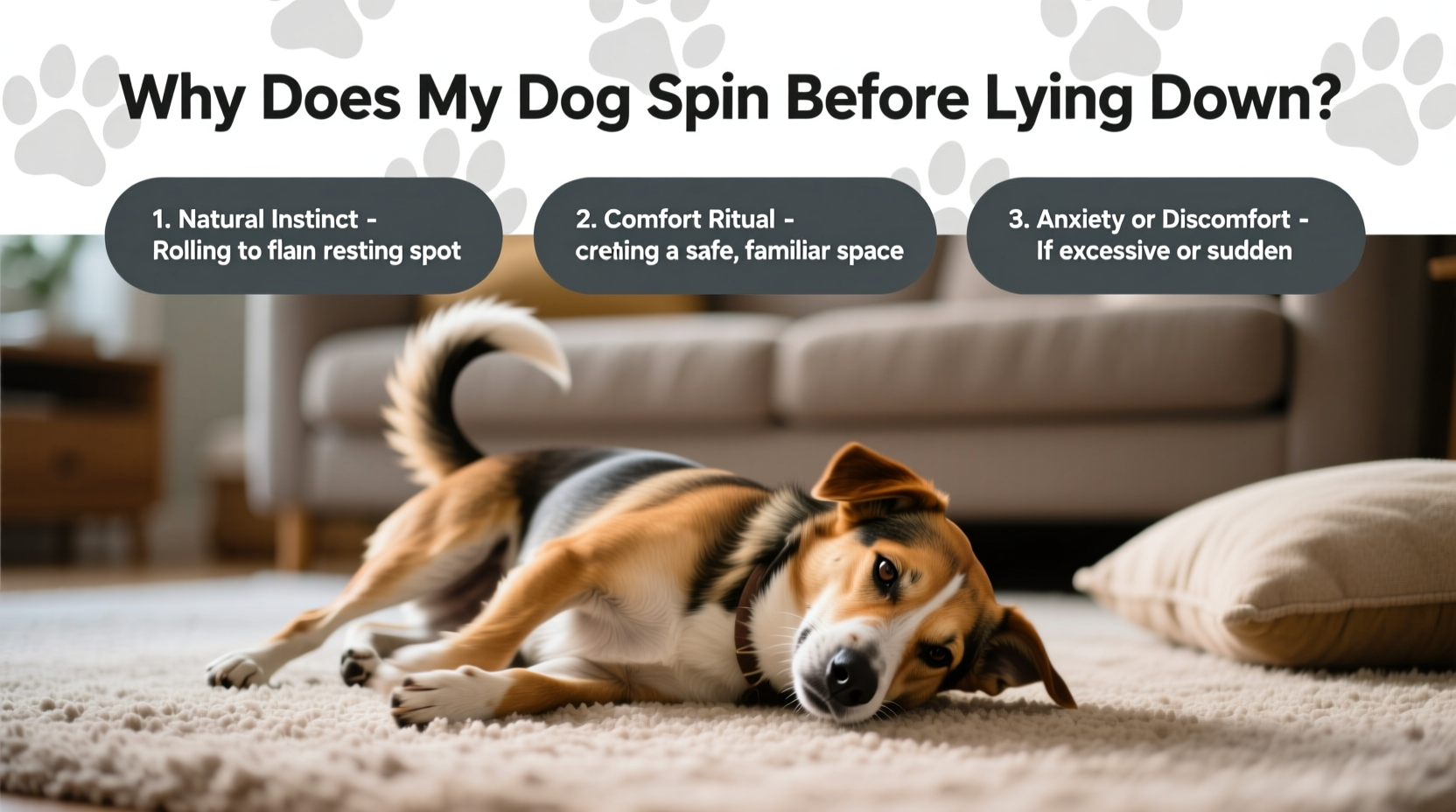
The act of circling before lying down traces back to dogs’ wild ancestors. In the wild, wolves and other canids would circle their chosen resting spot to achieve several survival-related goals. First, the motion helped flatten tall grass or snow, creating a more comfortable and concealed sleeping area. Second, it served as a way to scare off insects, snakes, or other small creatures hiding in the underbrush. Third, the circular movement allowed animals to scan their surroundings one final time for potential threats before lowering their guard during sleep.
Domestication has not erased these ingrained behaviors. Even indoor dogs with plush beds continue to circle, suggesting that the instinct remains strong across generations. This behavior is so widespread that it’s observed in nearly all dog breeds, from tiny Chihuahuas to large Great Danes. The number of spins varies—some dogs do a single turn, while others may rotate three or four times before finally lying down.
“Circling is a hardwired behavior passed down from ancestral canids. It’s not learned—it’s instinctual.” — Dr. Lena Peterson, Veterinary EthologistTip: If your dog circles once or twice before lying down, there’s no cause for concern. This is typical self-soothing behavior.
Physical Comfort and Bed Preparation
Beyond evolutionary roots, modern dogs also circle to fine-tune their comfort. Just as humans fluff pillows or adjust blankets, dogs use spinning to position themselves optimally on their bed or sleeping surface. The motion helps them align their body comfortably, relieve pressure points, and ensure they’re lying in a way that supports their spine and joints—especially important for older dogs or those with arthritis.
In outdoor settings, dogs may paw at the ground or dig slightly after spinning, further adjusting the terrain. Indoors, this action is often mimicked on carpets or dog beds, even if no actual digging occurs. The ritual provides a sense of control over their environment and contributes to mental relaxation before sleep.
This behavior is particularly noticeable in dogs who are particular about their sleeping arrangements. Breeds like German Shepherds or Border Collies, known for their intelligence and sensitivity, often exhibit more deliberate pre-sleep routines. These dogs may appear to “test” their bed by shifting positions slightly after each spin until they find the perfect posture.
When Spinning May Signal a Health Problem
While occasional circling is normal, certain patterns may indicate medical or neurological concerns. Excessive spinning—defined as more than five rotations, repeated attempts to lie down without success, or spinning without actually lying down—can be a red flag. Similarly, if a previously non-circling dog suddenly starts spinning frequently, or if the behavior is accompanied by signs of distress, veterinary evaluation is warranted.
Common health issues associated with abnormal circling include:
- Vestibular disease: A disorder affecting the inner ear and balance system, often causing dizziness, head tilting, and uncontrolled circling.
- Cognitive dysfunction syndrome (CDS): Similar to dementia in humans, CDS can lead to disorientation, confusion, and repetitive behaviors like pacing or spinning.
- Pain or discomfort: Dogs with joint pain, spinal issues, or abdominal discomfort may struggle to find a comfortable position, leading to repeated attempts and excessive turning.
- Neurological conditions: Seizures, brain tumors, or inflammation in the central nervous system can manifest as compulsive circling.
- Anxiety or obsessive-compulsive disorder (OCD): Stress-induced behaviors may include repetitive actions such as tail chasing, shadow staring, or constant spinning.
Red Flags to Watch For
| Behavior | Normal? | Action Step |
|---|---|---|
| 1–3 spins before lying down | ✅ Yes | No action needed |
| Spins but doesn’t lie down | ❌ Possibly concerning | Monitor; consult vet if persistent |
| More than 5 spins repeatedly | ❌ Potentially abnormal | Schedule veterinary checkup |
| Spinning with head tilt or imbalance | ❌ Likely medical issue | Seek immediate vet care |
| New onset in senior dog | ⚠️ Requires evaluation | Rule out cognitive or pain-related causes |
Mini Case Study: Max, the Senior Labrador
Max, a 10-year-old Labrador Retriever, had always taken two quick turns before lying down on his orthopedic bed. His owner, Sarah, never thought much of it—until Max began spinning five or six times, sometimes failing to settle at all. He started pacing at night and appeared restless. Concerned, Sarah took him to the vet.
After a physical exam and blood work, the veterinarian diagnosed Max with early-stage osteoarthritis in his hips. The pain made it difficult for him to find a comfortable position, hence the increased spinning. With a treatment plan that included anti-inflammatory medication, joint supplements, and a heated dog bed, Max’s circling decreased significantly within two weeks. His sleep improved, and he returned to his usual routine of one or two gentle turns before lying down.
This case illustrates how subtle behavioral changes can reflect underlying discomfort. Early intervention prevented further decline in Max’s quality of life.
Step-by-Step Guide: Assessing Your Dog’s Spinning Behavior
If you're unsure whether your dog’s spinning is normal or a cause for concern, follow this step-by-step approach to evaluate the situation:
- Observe frequency and duration: Count how many times your dog spins before lying down. Note whether the behavior has changed recently.
- Check for accompanying symptoms: Look for signs like whining, limping, trembling, lack of appetite, or difficulty standing.
- Assess the environment: Is the sleeping area uncomfortable? Consider temperature, noise, lighting, and bed quality.
- Review recent changes: Has there been a new pet, move, or schedule disruption that could cause stress?
- Consult your veterinarian: Share your observations, including videos if possible. They may recommend diagnostics like X-rays or neurological exams.
- Implement supportive care: Based on diagnosis, apply treatments such as pain management, environmental modifications, or behavioral therapy.
Environmental and Behavioral Influences
Not all spinning is driven by biology or illness. Environmental factors and learned behaviors also play a role. For example, dogs kept in high-stress environments—such as noisy homes or shelters—may develop repetitive habits as coping mechanisms. Similarly, dogs that are frequently interrupted during rest may become hyper-vigilant, leading to prolonged pre-sleep rituals.
Training and reinforcement can also shape this behavior. If a dog receives attention (even negative) every time they spin, they may repeat it for interaction. Conversely, rewarding calm settling with treats or praise can encourage quicker, less repetitive routines.
Providing a consistent, quiet, and comfortable sleeping space goes a long way in reducing unnecessary circling. Orthopedic beds, temperature-regulated rooms, and white noise machines can help anxious or aging dogs feel secure enough to lie down without hesitation.
FAQ: Common Questions About Dog Spinning
Is it bad if my dog spins in circles before lying down?
No, it’s not inherently bad. Most dogs spin once or twice as part of a natural settling process. It becomes problematic only if the behavior is excessive, compulsive, or accompanied by signs of distress or pain.
Why has my older dog started spinning more before lying down?
Increased spinning in senior dogs often relates to discomfort from arthritis, cognitive decline, or sensory loss. As mobility decreases, finding a comfortable position takes longer. Sudden changes should be evaluated by a veterinarian.
Can anxiety cause my dog to spin before lying down?
Yes. Anxiety—especially separation anxiety or noise phobias—can lead to repetitive behaviors. Dogs may spin as a displacement activity when stressed. Addressing the root cause of anxiety through training, medication, or environmental enrichment can reduce the behavior.
Checklist: When to Worry About Your Dog’s Spinning
- ✅ Spins 1–3 times and lies down calmly → Normal
- ❌ Spins more than 5 times without lying down → Monitor closely
- ❌ Shows signs of pain (whining, limping, reluctance to move) → See a vet
- ❌ Begins spinning suddenly with no prior history → Schedule evaluation
- ❌ Circles aimlessly without attempting to rest → Possible neurological issue
- ❌ Accompanied by head tilt, loss of balance, or vomiting → Seek emergency care
- ✅ Responds well to a comfortable bed and quiet space → Supportive care may suffice
“Behavior is communication. When a dog changes its routine, it’s telling us something—sometimes loud and clear, sometimes in whispers.” — Dr. Rajiv Mehta, Veterinary Neurologist
Conclusion: Listen to What Your Dog Is Telling You
Spinning before lying down is usually nothing to worry about—it’s a vestige of ancient instincts and a practical method for achieving comfort. But like any behavior, it exists on a spectrum. When balanced, it’s harmless. When extreme or abrupt, it can be a signal worth heeding.
As a dog owner, your attentiveness makes all the difference. By observing patterns, recognizing deviations, and responding with compassion and action, you ensure your dog’s physical and emotional well-being. Don’t dismiss unusual behavior as “just being quirky.” Sometimes, the smallest actions speak volumes.
💬 Has your dog ever changed their sleeping habits unexpectedly? Share your experience in the comments—your story could help another pet owner recognize an important sign.








