Dogs communicate in ways that often puzzle their owners. One such behavior—sneezing during moments of excitement—can appear sudden, frequent, or even dramatic. You might notice your dog erupt into a series of rapid sneezes the moment you pick up the leash, greet a visitor, or begin a play session. While this may seem odd or concerning, it’s actually quite common. In most cases, excitement-induced sneezing is completely normal. However, understanding the underlying causes, distinguishing it from medical issues, and knowing when to seek veterinary advice are essential for every dog owner.
The Science Behind Excitement Sneezing in Dogs
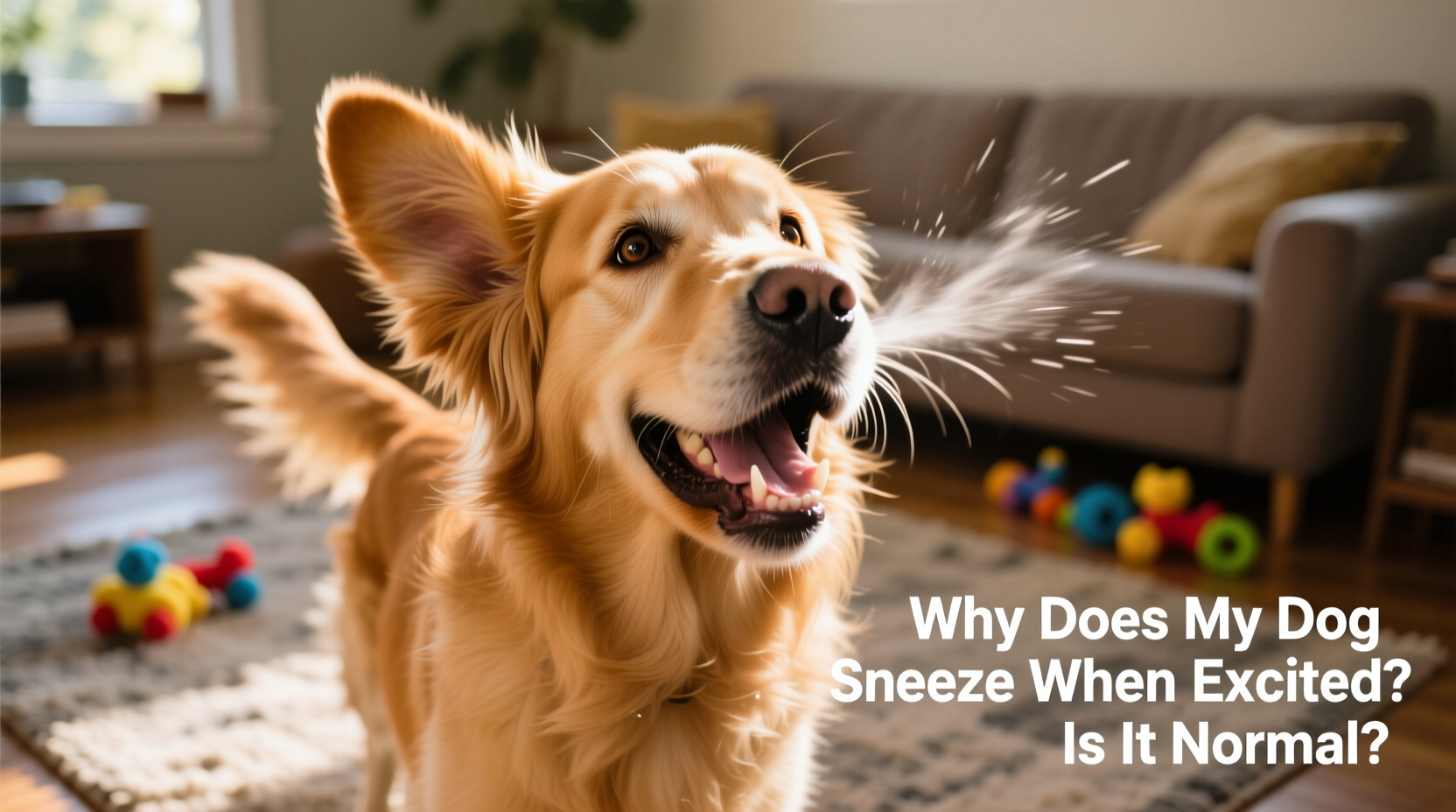
Unlike humans, who typically sneeze due to irritants like dust or allergies, dogs can sneeze as part of their emotional response. When a dog becomes highly stimulated—whether by anticipation, joy, or social interaction—their nervous system activates in complex ways. This stimulation can trigger involuntary reflexes, including sneezing.
The mechanism involves the trigeminal nerve, which runs through the dog’s face and nasal passages. During heightened arousal, signals from the brain can cross-activate this nerve, prompting a sneeze even without physical irritation. Think of it as an overflow of neural activity—similar to how some people laugh nervously or hiccup when anxious.
This type of sneezing is often referred to as \"play sneezing\" or \"social sneezing.\" It’s especially common during play between dogs or between dogs and humans. The sneezes are usually short, sharp, and repeated in quick succession, followed by an immediate return to normal behavior.
Tip: If your dog sneezes only during high-energy moments and resumes playing instantly, it’s likely just a form of communication or release of excitement.Is Excitement Sneezing Normal? Understanding Canine Communication
Yes, in the vast majority of cases, sneezing when excited is perfectly normal. In fact, many experts view it as a positive sign of engagement and emotional expression. Dogs use body language extensively, and sneezing can serve multiple communicative functions:
- Displacement behavior: When a dog feels overwhelmed by excitement, a sneeze can act as a calming signal—a way to self-regulate and reset emotionally.
- Social signaling: During play, a sneeze may indicate that the dog is still having fun and doesn’t perceive the interaction as threatening. It can help maintain a playful tone.
- Attention-seeking: Some dogs learn that sneezing gets a reaction from their owners and may exaggerate the behavior over time.
Dr. Sophia Yin, a renowned veterinarian and animal behaviorist, emphasized that “calming signals” like sneezing, blinking, or lip-licking are tools dogs use to manage stress and avoid conflict. In her research on canine body language, she noted that sneezing during play was frequently observed in well-socialized dogs and served as a peacekeeping gesture.
“Sneezing during play is not a sign of illness—it’s often a dog’s way of saying, ‘I’m still having fun!’” — Dr. Karen Overall, Veterinary Behaviorist
When Excitement Sneezing Might Signal a Problem
While occasional sneezing during excitement is normal, certain patterns should prompt further investigation. The key is context: frequency, duration, accompanying symptoms, and changes in behavior.
Here are warning signs that suggest the sneezing may not be purely behavioral:
- Sneezing occurs outside of exciting situations (e.g., while resting)
- Blood, mucus, or discharge from the nose
- Pawing at the face or nose
- Lethargy, loss of appetite, or coughing
- Sneezing accompanied by reverse sneezing episodes (a loud, snorting sound)
- Onset after exposure to new environments, cleaning products, or plants
Underlying medical conditions that could mimic or contribute to excitement-related sneezing include:
| Condition | Symptoms | Action Needed |
|---|---|---|
| Allergies (environmental or food) | Chronic sneezing, itching, ear infections | Veterinary allergy testing and management |
| Nasal mites | Frequent sneezing, nosebleeds, head shaking | Diagnosis via nasal swab; antiparasitic treatment |
| Dental disease | Bad breath, facial swelling, nasal discharge | Dental exam under anesthesia |
| Nasal tumors | One-sided discharge, facial deformity, weight loss | Imaging (CT/MRI) and biopsy |
| Foreign body (e.g., grass awn) | Sudden onset, violent sneezing, pawing | Immediate vet visit for removal |
If your dog begins sneezing more frequently—even during calm moments—or shows any of the above red flags, schedule a veterinary consultation. Early diagnosis improves outcomes, especially for conditions like nasal mites or tumors.
How to Differentiate Play Sneezing from Medical Issues
Telling the difference between harmless excitement sneezing and a health concern requires observation and pattern recognition. Follow this step-by-step guide to assess your dog’s behavior:
- Observe timing: Does sneezing occur only during or immediately after exciting events (e.g., greeting, play, walks)? If yes, it’s likely behavioral.
- Note duration: Behavioral sneezing usually lasts 1–5 seconds and stops abruptly. Persistent or prolonged episodes warrant attention.
- Check for symmetry: Is nasal discharge coming from one or both nostrils? One-sided discharge often indicates a localized issue.
- Monitor frequency: Occasional sneezes during excitement are normal. Daily or multiple-times-daily sneezing, regardless of mood, is not.
- Assess overall health: A dog that eats well, plays normally, and has bright eyes is less likely to have a serious condition than one showing lethargy or discomfort.
- Eliminate environmental triggers: Clean household sprays, air fresheners, smoke, or pollen could irritate nasal passages. Try removing potential irritants and observe changes.
Real-Life Example: Max the Border Collie
Max, a 3-year-old Border Collie, began sneezing dramatically every time his owner returned home. The sneezes were explosive and occurred in bursts of three to five, always followed by tail wagging and jumping. At first, his owner worried about allergies or infection. But after tracking the behavior, she realized Max never sneezed at other times—not during naps, walks, or meals. A video shared with the vet confirmed the pattern: only upon greeting.
The veterinarian concluded that Max was using sneezing as a displacement behavior. As a high-drive working breed, Max experienced intense excitement upon reunion. The sneezes helped him manage that surge of emotion. The recommendation? Implement a calmer greeting routine—wait 30 seconds before interacting, ask for a sit, and gradually reduce the intensity of arrivals. Over two weeks, Max’s sneezing decreased significantly, though occasional bursts remained during particularly joyful reunions.
This case illustrates how context, consistency, and professional input can clarify whether sneezing is behavioral or medical.
Practical Tips to Manage Excitement Sneezing
If your dog’s sneezing is harmless but excessive, you can help moderate their arousal levels. High excitement isn’t just linked to sneezing—it can also lead to jumping, barking, or accidental injuries.
Use the following checklist to promote calmer interactions:
- ✅ Practice controlled greetings: Avoid rushing to your dog. Wait for them to settle before petting or speaking.
- ✅ Use a “settle” command: Train your dog to sit or lie down during stimulating moments.
- ✅ Incorporate pre-play routines: A brief obedience session before play can focus energy.
- ✅ Rotate toys and activities: Novelty reduces overstimulation from repetitive excitement.
- ✅ Provide mental enrichment: Puzzle feeders and scent games channel excitement constructively.
- ✅ Avoid reinforcing the sneeze: Don’t laugh, gasp, or overly react, as this may encourage repetition.
Remember, the goal isn’t to eliminate sneezing entirely—it’s a natural behavior. Instead, aim to support emotional regulation so your dog remains happy and balanced.
Frequently Asked Questions
Can puppies sneeze more when excited than adult dogs?
Yes, puppies often sneeze more during play and excitement because their nervous systems are still developing and they’re learning to regulate emotions. As they mature, this behavior typically decreases unless reinforced by attention.
What’s the difference between regular sneezing and reverse sneezing?
Regular sneezing expels air forcefully through the nose. Reverse sneezing is a rapid inhalation through the nose, producing a loud, snorting sound. It’s usually harmless and triggered by irritation or excitement. Dogs often stand still, extend their neck, and make a honking noise. Episodes last seconds and resolve on their own.
Should I stop play if my dog starts sneezing?
Not necessarily. If the sneezing is brief and your dog continues playing happily, it’s likely part of the interaction. However, if sneezing increases, your dog appears fatigued, or play becomes too rough, pause and allow a cooldown period. This helps prevent overstimulation and promotes self-control.
Final Thoughts: Embracing Your Dog’s Unique Expressions
Dogs express joy, anticipation, and connection in ways that sometimes surprise us. Sneezing when excited is one such quirk—one that reflects their vibrant emotional lives. In nearly all cases, it’s a harmless, even endearing, trait. By observing patterns, ruling out medical concerns, and supporting healthy emotional regulation, you can ensure your dog stays both happy and healthy.
Understanding your dog’s behavior deepens your bond and empowers you to respond with confidence, not concern. So the next time your pup erupts into a flurry of sneezes at the sight of their leash, smile—you’re witnessing pure, unfiltered joy.
💬 Have a story about your dog’s quirky sneezing habits? Share your experience in the comments—your insight might help another pet parent feel reassured.








