Dog owners often notice their pets making a deep, audible sigh just as they settle into rest. It’s a sound so common that many assume it’s nothing more than a quirk. But behind that loud exhale lies a complex mix of emotional, physiological, and behavioral signals. Understanding what your dog is communicating through this simple act can deepen your bond and even alert you to underlying health concerns.
Sighing in dogs is not random. It serves as a form of nonverbal communication, much like tail wagging or ear positioning. While it's often associated with relaxation, the context in which the sigh occurs matters significantly. Is your dog sprawled on the couch after a long walk? Or does the sigh come after pacing, whining, or avoiding movement? These nuances determine whether the sigh reflects contentment or discomfort.
The Science Behind Canine Sighing
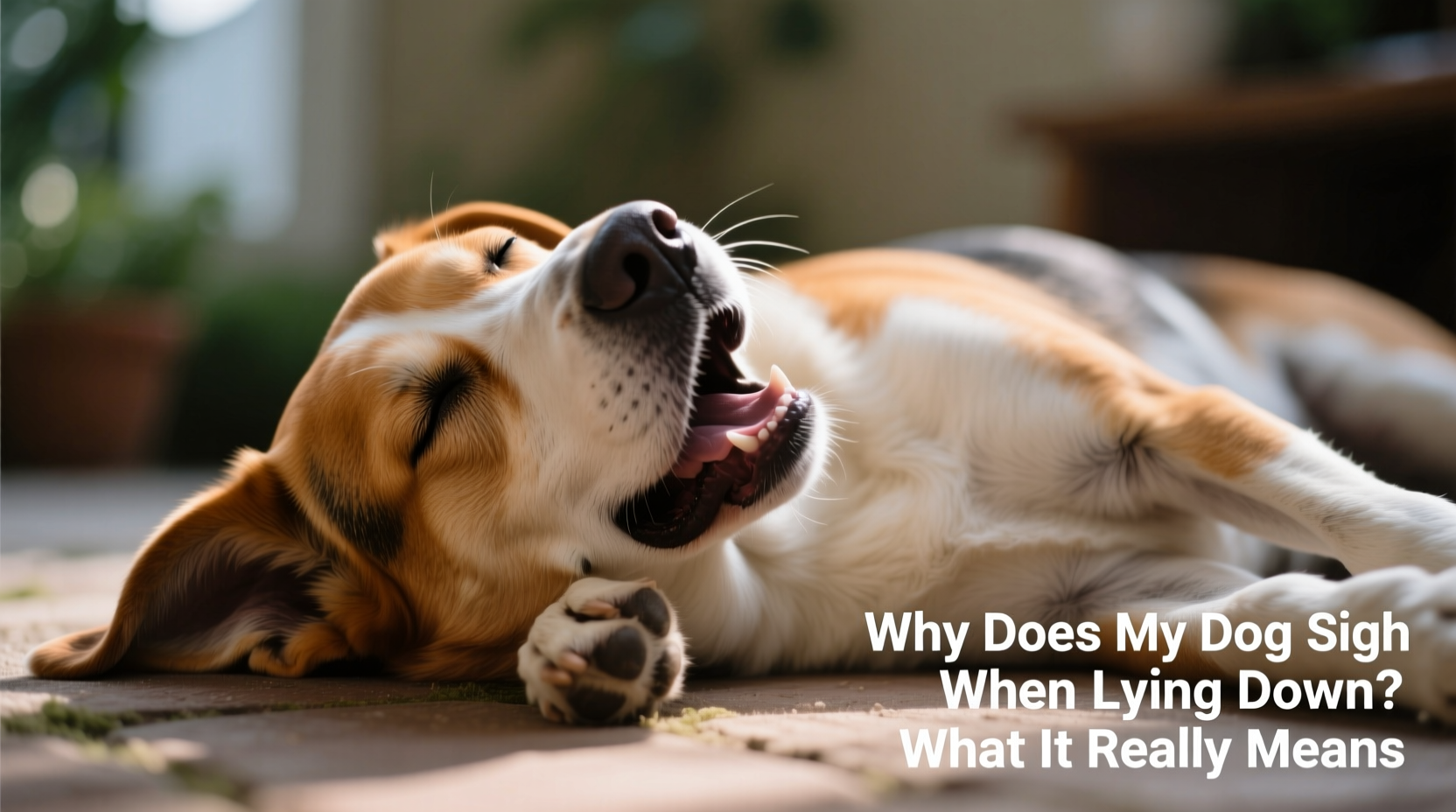
A sigh is a spontaneous, deep inhalation followed by a prolonged exhalation. In both humans and animals, sighs help maintain lung function by reinflating alveoli—the tiny air sacs in the lungs—that may collapse during shallow breathing. This biological mechanism ensures optimal oxygen exchange and respiratory efficiency.
In dogs, sighs are often twice the volume of normal breaths and are typically accompanied by visible relaxation: drooping eyelids, a soft body posture, and sometimes even a slight shift into a more comfortable position. Neurologically, sighing is regulated by the brainstem and is considered an automatic behavior. However, its frequency and timing are influenced by emotional states.
“Sighing in dogs is a multifunctional behavior—it regulates breathing, signals emotional shifts, and can even serve as social communication.” — Dr. Laura Bennett, Veterinary Ethologist
Research in canine ethology (the study of animal behavior) shows that dogs use sighs strategically. A 2020 study published in *Animal Cognition* observed that dogs were more likely to sigh in the presence of familiar humans after completing a task or receiving affection. This suggests that sighing isn’t just physiological—it’s also a communicative tool.
Common Reasons Your Dog Sighs When Lying Down
Not all sighs mean the same thing. The meaning depends on body language, timing, and environment. Here are the most frequent interpretations:
1. Contentment and Relaxation
The most common reason for a loud sigh upon lying down is pure satisfaction. After play, a walk, or receiving attention, your dog may stretch out, lower their head, and release a deep, drawn-out sigh. This is akin to a human saying “ahhh” after sinking into a warm bath.
Look for these accompanying signs:
- Half-closed or fully closed eyes
- Loose, floppy limbs
- Slow, rhythmic breathing afterward
- Remaining in place for extended rest
2. Physical Relief After Exertion
Dogs, especially working breeds or active companions, may sigh as a way to reset their nervous system after physical activity. The sigh acts as a transition from high arousal to recovery mode.
This type of sigh usually follows:
- A brisk walk or run
- Playing fetch or tug-of-war
- Training sessions
3. Emotional Release from Frustration or Disappointment
Not all sighs are positive. Dogs may sigh when they’re unable to reach a goal—like wanting to go outside but being ignored, or seeing a squirrel they can’t chase. In these cases, the sigh functions as a displacement behavior: a way to cope with mild stress or unmet desire.
Clues that the sigh reflects frustration:
- Occurs after being denied something
- Followed by turning away or lying down abruptly
- Paired with a side-eye glance or lip lick
4. Discomfort or Pain
While less common, sighing can be a subtle sign of physical distress. Older dogs with arthritis or dogs recovering from injury may sigh heavily when lowering themselves to the ground. The effort required to lie down causes discomfort, and the sigh may reflect relief—or resignation—to finally be off their feet.
Warning signs to watch for:
- Sighing only when moving from standing to lying (or vice versa)
- Hesitation or stiffness before lying down
- Whimpering, groaning, or panting along with the sigh
- Reluctance to lie on certain surfaces
How to Interpret Your Dog’s Sigh: A Practical Guide
To accurately decode your dog’s sigh, consider the full context. Use this step-by-step evaluation method:
- Observe Timing: Does the sigh happen after activity, during interaction, or randomly during rest?
- Check Body Language: Are muscles relaxed or tense? Are ears forward or pinned back?
- Note Frequency: Occasional sighs are normal. Frequent or repetitive sighing may indicate anxiety or pain.
- Assess Environment: Is the dog in a safe, quiet space? Or is there noise, chaos, or separation from family members?
- Compare Baseline Behavior: Has the sighing increased recently? Is it different in tone or depth?
Real-Life Example: Max, the Senior Labrador
Max, a 10-year-old Labrador Retriever, began sighing loudly every time he lay down on the hardwood floor. His owner initially assumed he was just getting older and tired. But when Max started avoiding his favorite sleeping spot and began panting after lying down, a vet visit revealed early-stage hip dysplasia.
After starting anti-inflammatory medication and switching to orthopedic bedding, Max’s sighs became softer and less frequent. His owner learned that while some sighing is normal, changes in pattern can signal pain needing intervention.
When to Be Concerned: Red Flags
Most sighing is harmless, but certain patterns warrant veterinary attention. Use the following checklist to assess if your dog’s sighing might indicate a problem:
Checklist: When Sighing Might Signal Trouble- ✅ Sighing accompanied by labored breathing or coughing
- ✅ Occurs only during or after movement (e.g., lying down, standing up)
- ✅ Paired with limping, trembling, or reluctance to move
- ✅ Increased vocalization (whines, groans) with the sigh
- ✅ Noticeable weight loss, lethargy, or appetite changes
- ✅ Happens more than 10–15 times per day without clear cause
If multiple items apply, schedule a vet consultation. Conditions such as osteoarthritis, respiratory issues, heart disease, or gastrointestinal discomfort can manifest through behavioral cues like excessive sighing.
Do’s and Don’ts of Responding to Your Dog’s Sigh
| Do’s | Don’ts |
|---|---|
| Do observe the full context—note what happens before and after the sigh. | Don’t assume all sighs mean relaxation—some indicate stress or pain. |
| Do provide supportive bedding, especially for older or large-breed dogs. | Don’t reinforce anxious behaviors by over-petting or soothing every sigh. |
| Do monitor changes in frequency, sound, or body language over time. | Don’t ignore persistent sighing paired with other symptoms like panting or stiffness. |
| Do consult your vet if you suspect pain or illness. | Don’t use human emotions to interpret—dogs don’t sigh out of boredom or sarcasm. |
Frequently Asked Questions
Is it normal for puppies to sigh like adult dogs?
Yes, puppies do sigh, though less frequently than adults. Puppies often sigh after nursing or falling asleep. As they grow, sighing becomes more pronounced and tied to emotional regulation. If a puppy sighs excessively or seems distressed, consult a vet to rule out digestive discomfort or anxiety.
Can dogs sigh when they’re sad or depressed?
Dogs don’t experience sadness the same way humans do, but they can feel low mood due to lack of stimulation, illness, or separation. A sigh in this context may be part of a broader set of symptoms: reduced activity, loss of appetite, or avoidance of interaction. However, a single sigh isn’t enough to diagnose depression—look for consistent behavioral shifts.
Should I respond when my dog sighs?
Only if the sigh appears linked to discomfort or anxiety. If your dog sighs and looks at you with wide eyes or moves restlessly, they may need reassurance or a change in environment. Otherwise, allow them to self-regulate. Overreacting can inadvertently reinforce the behavior.
Supporting Your Dog’s Comfort and Communication
Understanding your dog’s sighs is part of becoming fluent in their silent language. Just as humans use facial expressions and tone, dogs rely on subtle cues to express their inner state. By paying attention, you become a better caregiver and companion.
Enhance your dog’s comfort with these proactive steps:
- Provide orthopedic or memory foam beds for aging dogs
- Ensure regular vet checkups, especially for dogs over 7 years old
- Monitor joint health with supplements like glucosamine if recommended
- Create a calm, predictable routine to reduce stress
- Encourage gentle exercise to support respiratory and musculoskeletal health
“Dogs are masters of subtle communication. A sigh can be as meaningful as a bark—if we learn to listen.” — Dr. Karen Ramirez, Canine Behavior Specialist
Conclusion: Listen Beyond the Sound
Your dog’s loud sigh when lying down is rarely cause for alarm—but it’s always worth understanding. Whether it’s a sign of deep contentment, a moment of emotional release, or a quiet plea for relief, each sigh carries information. By observing closely and responding thoughtfully, you honor your dog’s needs and strengthen your connection.
💬 Have you noticed patterns in your dog’s sighing? Share your experiences in the comments—your insights could help fellow pet owners better understand their furry companions.








