Dogs communicate in ways that go far beyond barking or wagging their tails. One of the most subtle yet expressive behaviors they exhibit is sighing. You’ve likely heard your dog let out a deep, audible exhale while lounging beside you or after a long walk. While it may seem like a simple breath, this behavior often carries emotional significance. Understanding why your dog sighs loudly can deepen your bond and improve how you respond to their needs.
Unlike humans, who might sigh out of frustration, boredom, or fatigue, dogs use sighing as a multifaceted form of nonverbal communication. It can signal contentment, relief, or even mild distress. Interpreting these cues correctly requires observing context, body language, and frequency. This article explores the science and psychology behind canine sighing, helping you decode what your dog might be trying to tell you.
The Science Behind Canine Sighing
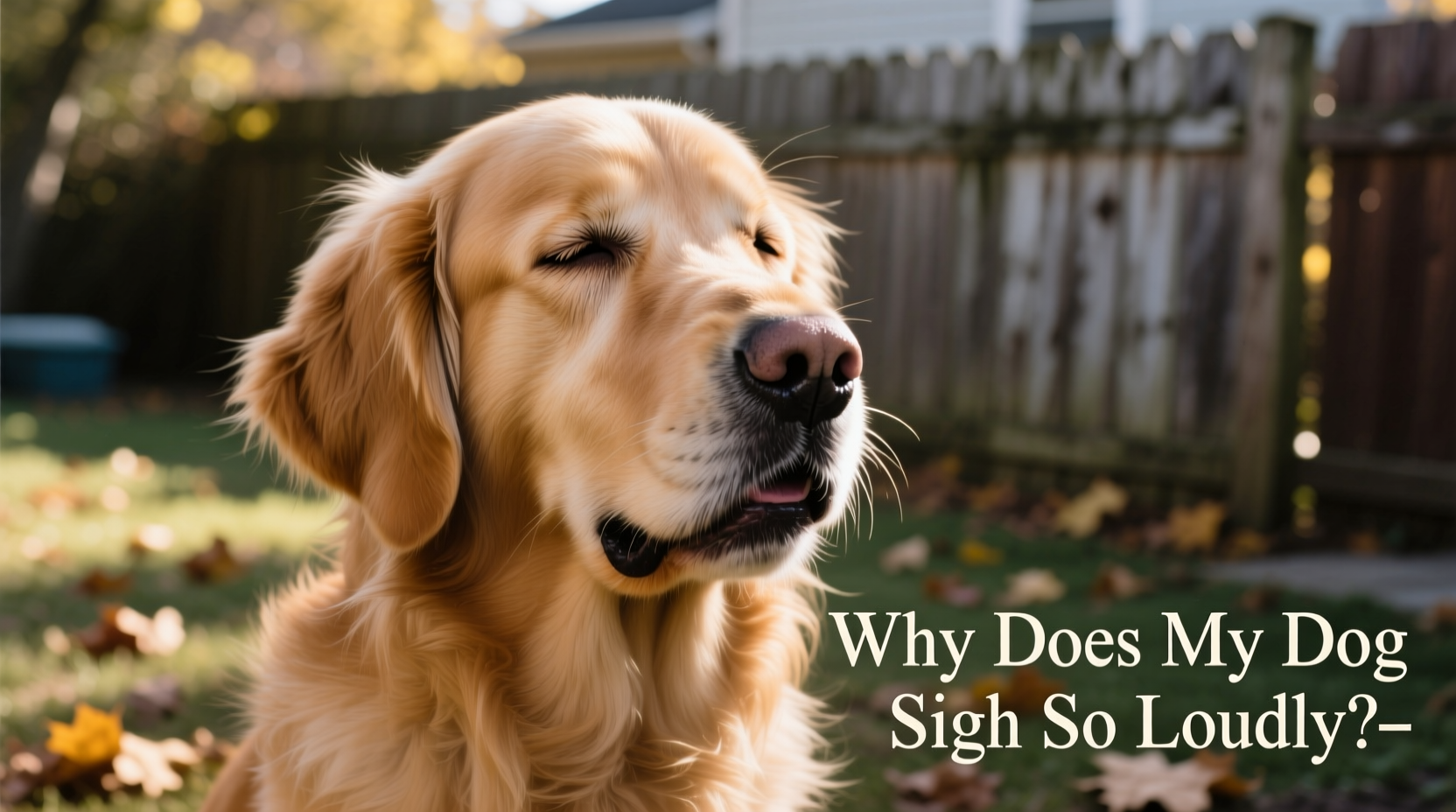
Sighing is a natural respiratory behavior observed across many species, including humans and dogs. A sigh is typically a deeper inhalation followed by a prolonged exhalation, often louder than regular breathing. In both animals and humans, sighs serve physiological functions such as reinflating collapsed alveoli in the lungs and maintaining lung elasticity.
In dogs, spontaneous sighs occur regularly during rest periods. According to research published in *Animal Cognition*, sighing in canines is linked to transitions between emotional states—particularly shifts from arousal to calmness. These sighs are not random; they are part of a broader set of vocalizations and body signals that dogs use to self-regulate and express internal states.
Neurologically, sighing activates the parasympathetic nervous system—the “rest and digest” branch—which helps reduce stress and restore equilibrium. When your dog sighs after play or during a quiet moment on the couch, it may be resetting their internal state, much like a human taking a deep breath after a stressful event.
Tip: Observe when your dog sighs—immediately after activity, during interactions, or while resting—to better understand its emotional context.Common Emotional Triggers for Loud Sighing
While sighing is normal, the volume and timing can reveal important clues about your dog’s feelings. Here are the most common emotional reasons behind loud canine sighs:
1. Contentment and Relaxation
A deep, drawn-out sigh accompanied by half-closed eyes and a relaxed posture usually indicates satisfaction. Many dogs sigh when settling into a favorite spot after being petted or receiving attention. This type of sigh is often soft but can be loud if the dog has a larger chest cavity or brachycephalic (short-nosed) features, which amplify sound.
2. Relief After Stress or Excitement
Dogs may sigh loudly after intense experiences—such as returning home from a vet visit, finishing a training session, or meeting unfamiliar people or animals. The sigh acts as a release valve for built-up tension. For example, a dog who was alert and stiff during a thunderstorm may sigh deeply once the noise stops, signaling psychological decompression.
3. Frustration or Disappointment
Not all sighs are positive. Some dogs emit a sharp, forceful sigh when denied something they want—like food, a toy, or access to the backyard. This type of sigh is often paired with turning away, lying down abruptly, or avoiding eye contact. It's akin to a human huffing in resignation.
4. Boredom or Understimulation
Dogs kept in low-stimulation environments may sigh frequently out of mental fatigue. These sighs are repetitive and often occur alongside other signs of lethargy, such as excessive sleeping or lack of interest in toys. In shelter settings, researchers have noted increased sighing in dogs awaiting adoption, suggesting it may reflect passive coping mechanisms.
“Sighing in dogs is a window into their emotional regulation. It��s not just breathing—it’s behavioral feedback.” — Dr. Karen Becker, DVM, Animal Behavior Specialist
Body Language Cues That Accompany Sighing
To accurately interpret a sigh, you must look beyond the sound itself. Contextual body language provides critical insight into whether the sigh expresses comfort, stress, or something else.
| Emotion | Sigh Type | Accompanying Body Language |
|---|---|---|
| Contentment | Long, slow exhalation | Half-closed eyes, relaxed mouth, loose limbs, leaning into touch |
| Relief | Deep sigh after tension | Muscle relaxation, lowering of head, tail drop, blinking |
| Frustration | Sharp, audible exhale | Averting gaze, turning away, paw lift, yawning |
| Boredom | Repetitive, shallow sighs | Lying down with minimal movement, lack of response to stimuli |
| Pain or Discomfort | Shallow, frequent sighs | Restlessness, panting, guarding body parts, reluctance to move |
For instance, a dog lying on their side with eyes gently closed and a soft sigh is clearly at ease. But a dog standing rigidly and letting out a forceful puff through their nose after being told “no” is expressing displeasure. Learning to distinguish these nuances enhances your ability to support your dog emotionally.
When Sighing Might Signal a Health Issue
While most sighing is emotionally driven, excessive or labored sighing can sometimes indicate physical problems. Chronic sighing—especially when combined with other symptoms—should prompt a veterinary evaluation.
Respiratory conditions such as bronchitis, tracheal collapse, or heart disease can cause difficulty breathing, leading to frequent deep breaths that resemble sighs. Brachycephalic breeds like Bulldogs or Pugs are particularly prone to airway issues, making their breathing naturally noisier. However, any sudden increase in heavy breathing or abnormal respiratory patterns warrants concern.
Pain, especially from arthritis or gastrointestinal discomfort, may also lead to altered breathing patterns. Dogs in pain often display micro-expressions such as lip licking, shallow panting, or tense postures alongside sigh-like breaths.
Red Flags: When to See a Vet
- Sighing more than usual without clear emotional triggers
- Labored breathing or wheezing accompanying sighs
- Restlessness or inability to settle despite appearing tired
- Loss of appetite, lethargy, or coughing
- Gums turning blue or pale
Mini Case Study: Bella the Rescue Beagle
Bella, a four-year-old Beagle adopted from a rural shelter, initially struggled with anxiety in her new urban home. Her owner, Maria, noticed that Bella would sigh loudly every evening around 7 PM, shortly after Maria returned from work. At first, Maria assumed the sigh meant Bella was happy to see her. But she soon realized the sigh was followed by pacing, sniffing the door, and whining.
After consulting a certified dog behaviorist, Maria learned that Bella’s sigh was not one of contentment—but of frustration. The daily routine had become predictable: excitement upon arrival, brief interaction, then being left alone again while Maria cooked dinner. The sigh marked the moment Bella realized she wouldn’t receive immediate attention.
With guidance, Maria adjusted her routine. She began spending five uninterrupted minutes greeting Bella before doing anything else—no phones, no multitasking. Within two weeks, the loud sigh diminished significantly. Instead, Bella started flopping onto her bed with a soft, relaxed sigh, eyes closing peacefully.
This case illustrates how the same behavior—sighing—can convey different emotions depending on context and reinforcement history. Observation and small environmental changes made a meaningful difference in Bella’s emotional well-being.
How to Respond to Your Dog’s Sighing: A Step-by-Step Guide
Understanding your dog’s sighs is only half the battle. Knowing how to respond appropriately strengthens trust and reduces confusion. Follow this sequence to assess and act wisely:
- Pause and Observe: When your dog sighs, stop what you’re doing for 10–15 seconds. Note the situation—what just happened? Are they resting, playing, or being denied something?
- Scan Body Language: Look at their ears, eyes, tail, and overall posture. Is their body loose or tense? Are they making eye contact or avoiding it?
- Consider Recent Events: Did they just finish a game? Were they scolded? Have they been alone for hours? Context shapes meaning.
- Respond Appropriately:
- If the sigh shows relaxation: Respect their space. Quiet companionship reinforces security.
- If it signals frustration: Acknowledge their feeling without giving in to demands. Use calm redirection (e.g., offering a chew toy).
- If it suggests boredom: Increase mental stimulation through puzzle feeders, training games, or walks with novel routes.
- Monitor Changes: Track frequency and intensity over time. Sudden shifts may indicate stressors needing intervention.
Checklist: What to Do When Your Dog Sighs Loudly
- ✅ Pause and observe the moment the sigh occurs
- ✅ Check your dog’s body language—eyes, ears, tail, posture
- ✅ Recall what happened immediately before the sigh
- ✅ Determine if the sigh reflects relaxation, frustration, or discomfort
- ✅ Respond with appropriate action—space, reassurance, or engagement
- ✅ Rule out medical causes if sighing becomes excessive or labored
- ✅ Keep a journal if behaviors are confusing or inconsistent
Frequently Asked Questions
Is it normal for my dog to sigh every time they lie down?
Yes, especially if the sigh is soft and accompanied by relaxed body language. Many dogs sigh as part of the process of settling into rest, similar to a human letting out a breath when sitting into a comfortable chair. As long as there are no signs of distress, this is considered normal and healthy.
Can dogs sigh when they’re sad?
Dogs don’t experience sadness in the same complex way humans do, but they can feel disappointment, loneliness, or anxiety. A sigh in these cases is less about “sadness” and more about emotional regulation. For example, a dog left alone for long periods may sigh out of understimulation or mild stress. Providing enrichment and consistent routines helps mitigate these feelings.
Why does my dog sigh so loudly compared to other dogs?
Vocal volume varies by breed, size, and anatomy. Larger dogs with deeper chests tend to produce louder sighs. Brachycephalic breeds (like Pugs or Shih Tzus) often make more pronounced respiratory sounds due to shortened airways. If the loudness is new or worsening, consult your vet to rule out airway obstruction or inflammation.
Conclusion: Listening Beyond the Sound
Your dog’s sigh is more than just an exhalation—it’s a nuanced expression of their inner world. Whether conveying peace after a belly rub or quiet protest at missed playtime, each sigh offers insight into their emotional landscape. By paying attention to timing, tone, and body language, you become fluent in a language spoken without words.
Building this awareness doesn’t require special training—just patience, observation, and empathy. The next time your dog lets out a long, resonant sigh, take a moment to listen closely. You might just hear gratitude, relief, or a gentle reminder that they, too, feel deeply.
💬 Have you noticed patterns in your dog’s sighing? Share your observations in the comments—your experience could help another pet parent understand their furry companion better.








