
Dog owners often find themselves wondering what their pets are trying to communicate through sounds, body language, and behaviors. One of the most common yet misunderstood vocalizations is the loud sigh. It can echo through a quiet room as your dog settles into the couch or lie down beside you, prompting curiosity: Is this a sign of deep contentment, or is it a subtle expression of annoyance or resignation? Understanding the context, body language, and frequency of your dog’s sighs is key to interpreting their emotional state accurately. This article decodes the meaning behind loud canine sighs, distinguishing between relaxation and frustration, and offers practical guidance for responding appropriately.
The Science Behind Canine Sighing
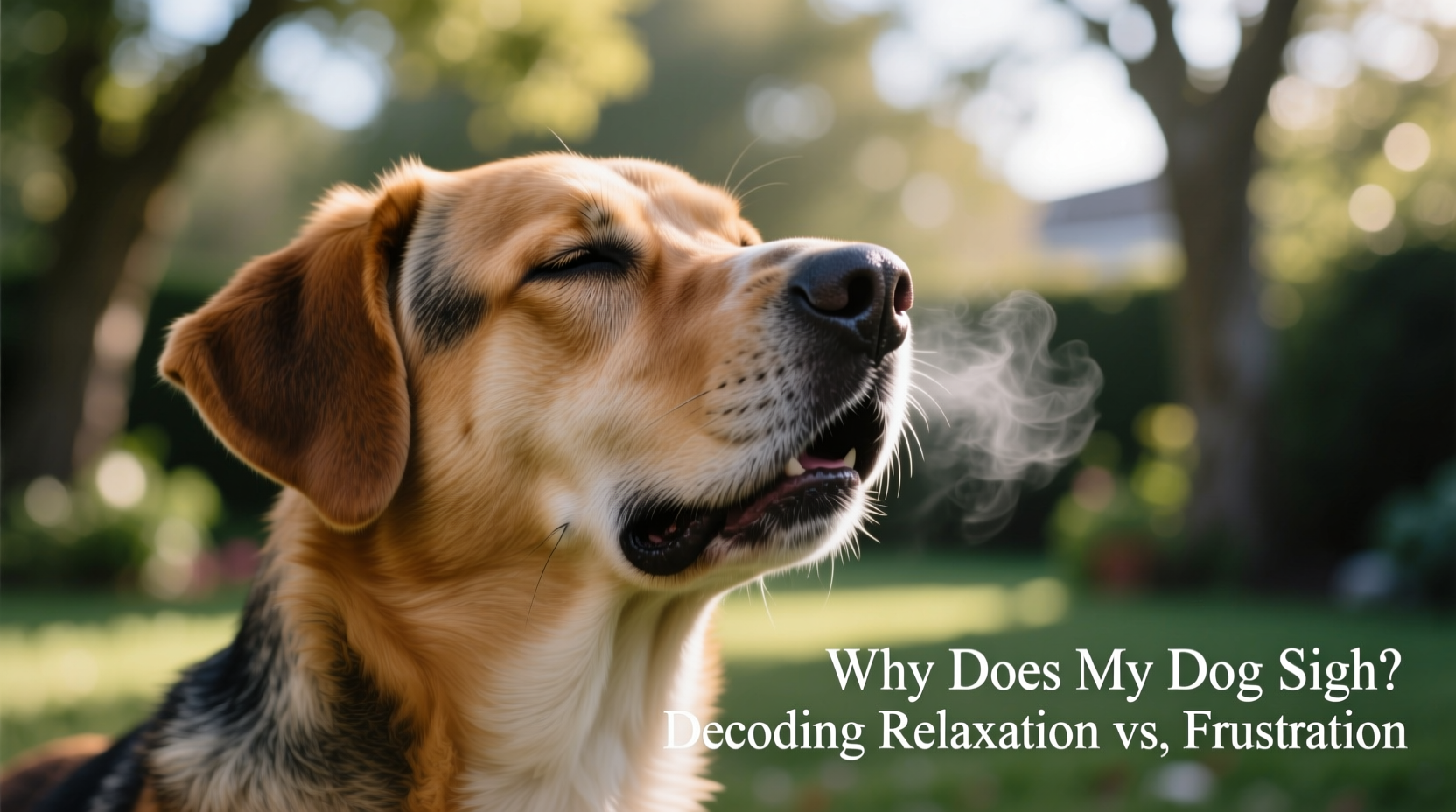
Sighing in dogs, much like in humans, is a natural respiratory behavior. A sigh typically involves a deep inhalation followed by a slow, audible exhalation. In scientific terms, sighs help reinflate alveoli in the lungs—tiny air sacs that can collapse during shallow breathing. But beyond physiology, sighs serve as communicative tools in the animal kingdom.
In domestic dogs, sighing has evolved as both an involuntary reflex and a deliberate signal. Ethologists studying canine behavior have observed that sighs often accompany shifts in emotional states. The sound itself isn’t inherently positive or negative; its meaning depends on accompanying cues such as posture, ear position, eye contact, and environmental context.
“Dogs use sighs as emotional punctuation—much like a human might exhale after finishing a task or settling into comfort.” — Dr. Karen Becker, Veterinary Behaviorist
Unlike barks or whines, which are typically attention-seeking or urgent, sighs are more nuanced. They’re often self-soothing or expressive of internal state transitions. Recognizing this distinction helps owners avoid misinterpreting calm expressions as signs of discontent.
Relaxation Sighs: Signs of Contentment
A relaxed sigh is one of the most heartwarming sounds a dog owner can hear. It usually occurs when a dog lies down after activity, curls up beside you, or settles into a favorite spot. These sighs are low-pitched, drawn-out, and accompanied by visible physical relaxation.
Tip: If your dog sighs while lying on their side with soft eyes and a loose jaw, they’re likely expressing deep comfort.Key indicators of a relaxation sigh include:
- Body lying flat or flopped onto the side
- Eyes partially closed or “soft” (not staring)
- Mouth slightly open, no tension in facial muscles
- Tail resting loosely on the ground
- Occurring after play, petting, or returning from a walk
This type of sigh functions as a reset mechanism. After periods of stimulation or excitement, dogs use deep exhalations to return to a baseline state of calm. It’s similar to how a person might stretch and sigh after a long day at work. In fact, research published in *Animal Cognition* suggests that dogs exhibit more frequent sighing in environments where they feel safe and bonded with their caregivers.
Frustration or Resignation Sighs: When Sighs Signal Discontent
Not all sighs indicate peace. Some are clear signals of frustration, impatience, or even mild protest. These sighs tend to be sharper, higher-pitched, or more abrupt than relaxation sighs. They often occur when a dog wants something but cannot have it—such as food on the counter, a toy out of reach, or being asked to stay still during grooming.
Frustration-based sighs are frequently paired with other behavioral cues:
- Head turned away or avoiding eye contact
- Paw lifting or shifting weight repeatedly
- Yawning (when not tired)
- One paw raised, tail low or tucked
- Repetitive licking of lips or nose
In these cases, the sigh acts as a displacement behavior—a way for the dog to cope with mild stress or unmet desire. For example, if you’re brushing your dog and they let out a sharp sigh while looking away, they may be signaling discomfort or impatience rather than relaxation.
“When a dog sighs while staring at the door during a rainstorm, it’s not fatigue—it’s anticipation mixed with disappointment.” — Sophia Yin, DVM, Applied Animal Behaviorist
Decoding Context: How to Tell the Difference
Interpreting a dog’s sigh requires situational awareness. The same sound can mean opposite things depending on timing and environment. Below is a comparison table outlining key differences between relaxation and frustration-related sighs.
| Feature | Relaxation Sigh | Frustration Sigh |
|---|---|---|
| Sound Quality | Low, soft, prolonged exhalation | Sharper, quicker, sometimes louder |
| Body Posture | Loose, sprawled, possibly on side | Rigid, stiff, or tense muscles |
| Eyes | Soft, half-closed, unfocused | Avoidant, darting, or intensely focused on object |
| Tail Position | Down, relaxed, maybe slight wag | Low, tucked, or motionless |
| Timing | After activity, petting, or settling in | During denied requests or waiting |
| Frequency | Occasional, isolated | Repeated, especially if ignored |
For instance, a dog who sighs once after jumping onto the couch and curling up is likely expressing satisfaction. However, a dog who sighs multiple times while watching you eat dinner from across the room is communicating desire and mild frustration.
Mini Case Study: Max the Labrador
Max, a three-year-old Labrador Retriever, began sighing loudly every evening when his owner sat down to watch TV. Initially, the owner assumed Max was content—after all, he was lying at her feet. But she noticed that Max would sigh repeatedly, lift his paw, and glance toward the back door. Concerned, she recorded a short video and consulted a canine behaviorist.
The analysis revealed that Max wasn’t relaxed—he was signaling a need to go outside. His sighs were frustration-based, compounded by holding his bladder. Once the routine was adjusted to include a pre-TV bathroom break, the excessive sighing stopped entirely. This case illustrates how easily sighs can be misread without considering the full behavioral picture.
How to Respond to Your Dog’s Sighs
Understanding the cause of a sigh allows you to respond supportively. Here’s a step-by-step guide to assessing and acting on your dog’s vocalizations:
- Pause and Observe: When your dog sighs, stop what you’re doing for 10–15 seconds. Watch their body language closely.
- Assess the Environment: What just happened? Did they finish playing? Are they waiting for food? Is there a trigger nearby?
- Note Repetition: A single sigh is likely emotional release. Repeated sighs suggest ongoing discomfort or unmet needs.
- Check for Other Stress Signals: Look for lip-licking, yawning, whale eye (visible whites), or pinned ears.
- Respond Appropriately: If relaxed, enjoy the moment. If frustrated, address the underlying cause—offer a toy, allow outdoor access, or end an uncomfortable activity.
Common Misinterpretations and Mistakes
Many well-meaning owners misread sighs due to anthropomorphism—the tendency to assign human emotions to animals. Assuming a sigh always means “I’m tired” or “I’m annoyed with you” can lead to missed cues or inappropriate responses.
Common mistakes include:
- Punishing a dog for “being dramatic” when they’re actually stressed
- Ignoring repeated sighs during training, mistaking them for laziness
- Over-petting a dog who is sighing due to overstimulation
- Assuming all sighs are signs of affection
Remember: dogs don’t sigh to manipulate. Their behaviors are honest reflections of internal states. Responding with empathy strengthens trust and improves communication.
FAQ: Frequently Asked Questions
Do all dog breeds sigh equally?
No. Brachycephalic breeds (like Bulldogs or Pugs) may produce louder or more frequent respiratory sounds due to anatomy, which can be mistaken for sighing. Meanwhile, more expressive breeds like Golden Retrievers or Border Collies may use sighs more deliberately as communication tools. Always consider breed tendencies alongside individual personality.
Can excessive sighing indicate a health problem?
Potentially. While occasional sighing is normal, constant or labored sighing—especially with coughing, wheezing, or lethargy—could point to respiratory or cardiac issues. If your dog’s breathing pattern changes suddenly or they seem distressed, consult a veterinarian promptly.
Is it okay to mimic a dog’s sigh?
Some trainers use soft sighs as calming signals, mimicking canine body language to de-escalate tension. However, doing so excessively or inappropriately may confuse your dog. Use sparingly and observe their response. If they relax, it may help. If they look away or stiffen, discontinue.
Action Checklist: Understanding Your Dog’s Sighs
To become fluent in your dog’s emotional language, follow this actionable checklist:
- ✅ Observe sighs in different contexts (post-play, during rest, when denied something).
- ✅ Note accompanying body language each time.
- ✅ Differentiate between single and repeated sighs.
- ✅ Avoid projecting human emotions onto the behavior.
- ✅ Adjust routines if sighs indicate unmet needs (e.g., potty breaks, mental stimulation).
- ✅ Consult a professional if sighs are paired with anxiety, aggression, or physical discomfort.
Conclusion: Listening Beyond the Sound
A dog’s loud sigh is more than just breath—it’s a window into their emotional world. Whether it’s a deep exhalation of relief after a game of fetch or a quiet protest when left waiting too long, each sigh carries meaning. By learning to decode these subtle cues, you deepen your bond and become a more attuned caregiver. Dogs rely on us to understand their silent language, and every sigh is an invitation to listen more closely.
💬 What does your dog’s sigh sound like? Share your observations in the comments and help other pet owners learn the unique voices of their furry companions!








