Dogs are complex creatures whose behaviors often blend biology, emotion, and learned habits. One of the most common yet puzzling actions many dog owners experience is their pet insistently licking their feet—especially right after returning from a walk. While it may seem odd or even unhygienic, this behavior is rarely random. It’s usually rooted in a mix of sensory curiosity, evolutionary instinct, and emotional connection. Understanding why your dog engages in this habit can deepen your bond and help you determine whether it’s harmless or needs gentle redirection.
The Sensory Appeal: What Your Feet Offer
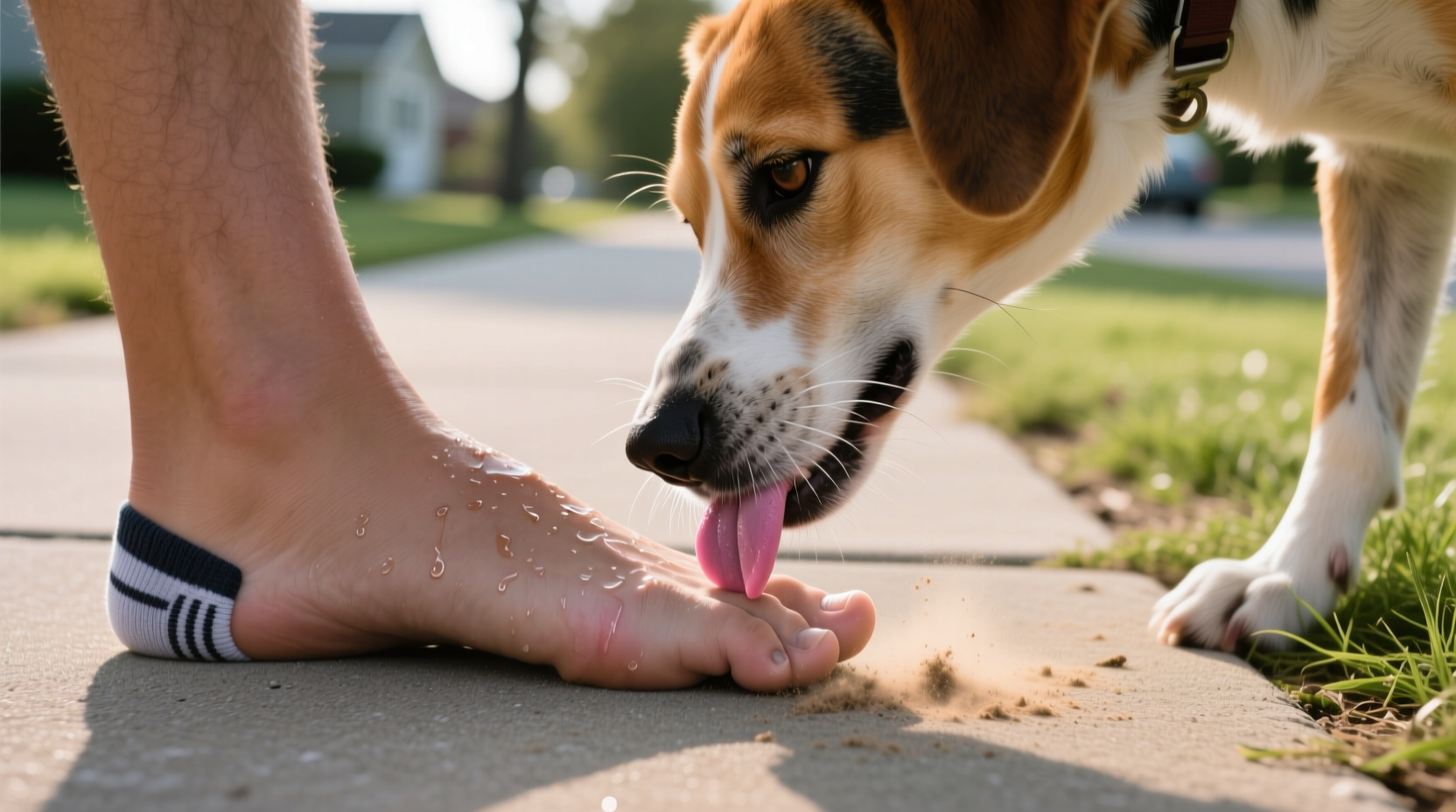
After a walk, your feet carry more than just fatigue—they’re walking scent maps. Sweat, dirt, trace chemicals from pavement or grass, and even microscopic organisms accumulate on your skin and socks. To humans, this might be unpleasant, but to dogs, it’s a rich source of information.
Dogs have up to 300 million olfactory receptors (compared to about 6 million in humans), and their sense of smell is estimated to be 10,000 to 100,000 times more acute. But smell isn’t their only tool. They also use taste—and specifically licking—as an extension of smelling. The vomeronasal organ, located in the roof of their mouth, allows them to analyze chemical signals through both scent and taste. This dual sensory input helps them interpret pheromones, stress levels, diet, and even mood.
When your dog licks your feet post-walk, they may be “reading” where you’ve been, what you’ve stepped on, and how your body responded to the environment. Salt from sweat, residues from lotions, or even faint traces of food dropped during outdoor activity can all contribute to the flavor profile that attracts your dog.
Tip: If foot licking becomes excessive, consider wiping your feet with a damp cloth immediately after walks to reduce lingering scents that may encourage the behavior.Evolutionary Roots: Why Licking Makes Sense
Licking is not a modern quirk—it’s a deeply ingrained survival mechanism passed down through generations of canine evolution. In wild canid societies like wolves and dingoes, licking serves multiple social functions: submission, bonding, and information gathering.
Puppies lick their mother’s mouth to stimulate regurgitation of pre-digested food—a vital feeding method in early development. Over time, this action becomes associated with care, safety, and nourishment. Adult dogs may extend this behavior to human caregivers as a sign of trust and attachment.
Additionally, grooming within packs strengthens social bonds. By licking your feet, your dog may be engaging in a form of reciprocal grooming, reinforcing their place in your “pack.” Even if the behavior originated from taste, it often evolves into a ritualized gesture of affection.
“Licking is one of the earliest forms of communication for dogs. It’s not just about taste—it’s about connection, reassurance, and information processing.” — Dr. Lena Reyes, Canine Behavior Specialist
Behavioral Triggers: What Happens After a Walk?
A walk is more than physical exercise—it’s a full sensory immersion. Your dog processes sights, sounds, smells, and interactions at a level far beyond human perception. When you return home, both you and your dog transition from high stimulation back to routine.
For your dog, licking your feet may serve as a calming ritual. The repetitive motion has self-soothing properties similar to human fidgeting or chewing gum. It releases endorphins, helping them decompress after mental fatigue. This is especially true for dogs prone to anxiety or overstimulation.
Alternatively, the act could be attention-seeking. If licking has previously resulted in petting, talking, or play—even if it was to stop them—it becomes reinforced. Dogs quickly learn which behaviors yield responses, and licking is often effective because it’s hard to ignore.
Common Post-Walk Triggers for Foot Licking
- Scent accumulation: Dirt, grass, sweat, and environmental residues attract curious tongues.
- Routine association: The sequence of “walk → remove shoes → foot licking” becomes predictable.
- Emotional regulation: Licking helps dogs manage excitement or anxiety after dynamic experiences.
- Reinforcement history: Past attention (positive or negative) increases likelihood of repetition.
Taste vs. Instinct: Which Is Stronger?
The answer isn’t either/or—it’s both. Taste acts as the initial trigger; instinct shapes the meaning and persistence of the behavior.
In a 2020 study published in *Animal Cognition*, researchers observed that dogs were significantly more likely to lick human skin after physical exertion (like walking) compared to resting periods. Saliva samples showed elevated sodium levels correlated with increased licking duration, suggesting salt content plays a role. However, the same dogs also exhibited signs of contentment—relaxed ears, slow blinking, soft body posture—indicating emotional comfort beyond mere gustatory interest.
This duality explains why some dogs only lick sweaty feet, while others will gently nuzzle dry ones. For some, it’s primarily about flavor. For others, it’s a comforting ritual tied to reunion and security.
| Factor | Taste-Driven Licking | Instinct-Driven Licking |
|---|---|---|
| Primary Motivation | Flavor (salt, lotions, food residue) | Bonding, submission, stress relief |
| Timing | Immediately after walks, during perspiration | After separation, during calm moments |
| Body Language | Focused, eager, persistent | Gentle, rhythmic, relaxed |
| Redirection Success | High (with hygiene changes) | Moderate (requires behavioral alternatives) |
When Licking Becomes a Problem
Occasional foot licking is normal. But when it becomes compulsive—lasting minutes, causing skin irritation, or occurring regardless of context—it may signal underlying issues.
Excessive licking can be a symptom of anxiety, obsessive-compulsive disorder (OCD), or nutritional deficiency. Some dogs develop fixation behaviors due to lack of mental stimulation or inconsistent routines. In rare cases, it may indicate gastrointestinal discomfort; dogs sometimes lick strange surfaces (including skin) when seeking minerals or soothing nausea.
Monitor for these red flags:
- Licking continues for more than 5–10 minutes without pause
- Your dog seems unable to stop, even when distracted
- You notice hair loss, redness, or calluses on their lips or tongue
- The behavior spreads to other objects (carpet, walls, furniture)
Step-by-Step Guide: Managing Post-Walk Foot Licking
If the behavior bothers you or risks becoming compulsive, follow this practical approach to gently modify it without damaging your bond.
- Observe and record: Note when licking occurs, how long it lasts, and what happens before and after. Look for patterns.
- Wipe feet post-walk: Use a warm cloth to clean your feet or put on slippers right after removing shoes to reduce scent appeal.
- Redirect early: Before licking starts, offer an alternative—like a treat-dispensing toy or a short training session.
- Reinforce calm behavior: Praise or reward your dog when they choose not to lick, especially during high-risk moments.
- Provide enrichment: Increase mental stimulation with daily puzzle games, nose work, or obedience drills to reduce compulsive tendencies.
- Consult a professional: If licking persists or escalates, seek advice from a certified veterinary behaviorist.
Mini Case Study: Bella, the Labrador Who Loved Sweaty Socks
Bella, a 3-year-old yellow Labrador, began obsessively licking her owner’s feet every evening after their 5 PM walk. At first, it seemed cute—but soon she would follow him room to room, nudging off his sandals and refusing to leave his side until she had licked each toe thoroughly. Her owner tried scolding, which only made her sneakier. Eventually, he consulted a dog trainer.
Observation revealed two key factors: Bella was highly sensitive to routine, and her walks had recently become shorter due to work demands. The licking wasn’t just about taste—it was a displacement behavior caused by unmet exercise and mental needs.
The solution combined environmental enrichment and redirection. The owner added a 10-minute backyard sniff game after walks and introduced a frozen peanut butter Kong as a post-walk ritual. Within three weeks, the foot licking decreased by 80%. By week six, it occurred only occasionally and stopped completely when he wore socks.
Bella’s case illustrates how seemingly odd behaviors often stem from mismatched needs rather than defiance or poor training.
FAQ: Common Questions About Foot Licking
Is it safe for my dog to lick my feet?
In most cases, yes—provided your skin is intact and free of open wounds, infections, or strong topical products (like antifungal creams). However, avoid allowing licking if you’ve applied lotions with xylitol, tea tree oil, or other dog-toxic ingredients.
Why does my dog only lick me and not other family members?
This typically reflects bond strength and familiarity. Your dog may associate your scent and routine more closely with care and safety. Differences in sweat composition, hygiene habits, or footwear choices can also influence preference.
Can I train my dog to stop licking my feet?
You can modify the behavior through positive reinforcement and redirection. Avoid punishment, which can increase anxiety and worsen compulsive actions. Focus on rewarding alternative behaviors and reducing access to triggers.
Checklist: Healthy Foot-Licking Habits
Use this checklist to assess whether your dog’s licking is normal or requires intervention:
- ☐ Licking occurs only briefly after walks or during relaxation
- ☐ Dog responds to redirection with toys or treats
- ☐ No signs of skin irritation or obsessive repetition
- ☐ Behavior doesn’t interfere with daily routines
- ☐ Dog exhibits other healthy coping mechanisms (chewing, resting, playing)
If all boxes are checked, the behavior is likely benign. If two or more remain unchecked, consider consulting a professional.
Conclusion: Understanding Builds Better Bonds
Your dog’s urge to lick your feet after a walk is more than a quirky habit—it’s a window into their world of scent, emotion, and instinct. Whether driven by the salty tang of sweat or the deep-rooted need to reconnect after shared adventure, this behavior speaks to the unique language dogs use to communicate with us.
Instead of suppressing it outright, take a moment to understand what your dog is trying to express. With awareness, patience, and small adjustments, you can honor their nature while maintaining comfort and hygiene for both of you.
💬 Have a story about your dog’s post-walk rituals? Share your experience in the comments—your insight could help another pet owner feel less alone.








