
Dogs are complex creatures whose behaviors often blend instinct, emotion, and learned responses. One of the most common yet puzzling actions many dog owners experience is their pet licking their face—especially right after they finish eating. While some find it endearing, others question whether it’s hygienic, appropriate, or even meaningful. Is this behavior rooted in affection, hunger, dominance, or something else entirely?
Understanding why your dog engages in post-meal face licking requires exploring canine psychology, evolutionary history, and social dynamics. Far from being a random quirk, this gesture can reveal a great deal about your dog’s perception of you, their environment, and their place within your household “pack.” This article breaks down the science and sentiment behind the act, offering insight into when it’s sweet, when it might need redirection, and how to interpret your dog’s intentions.
The Evolutionary Roots of Licking Behavior
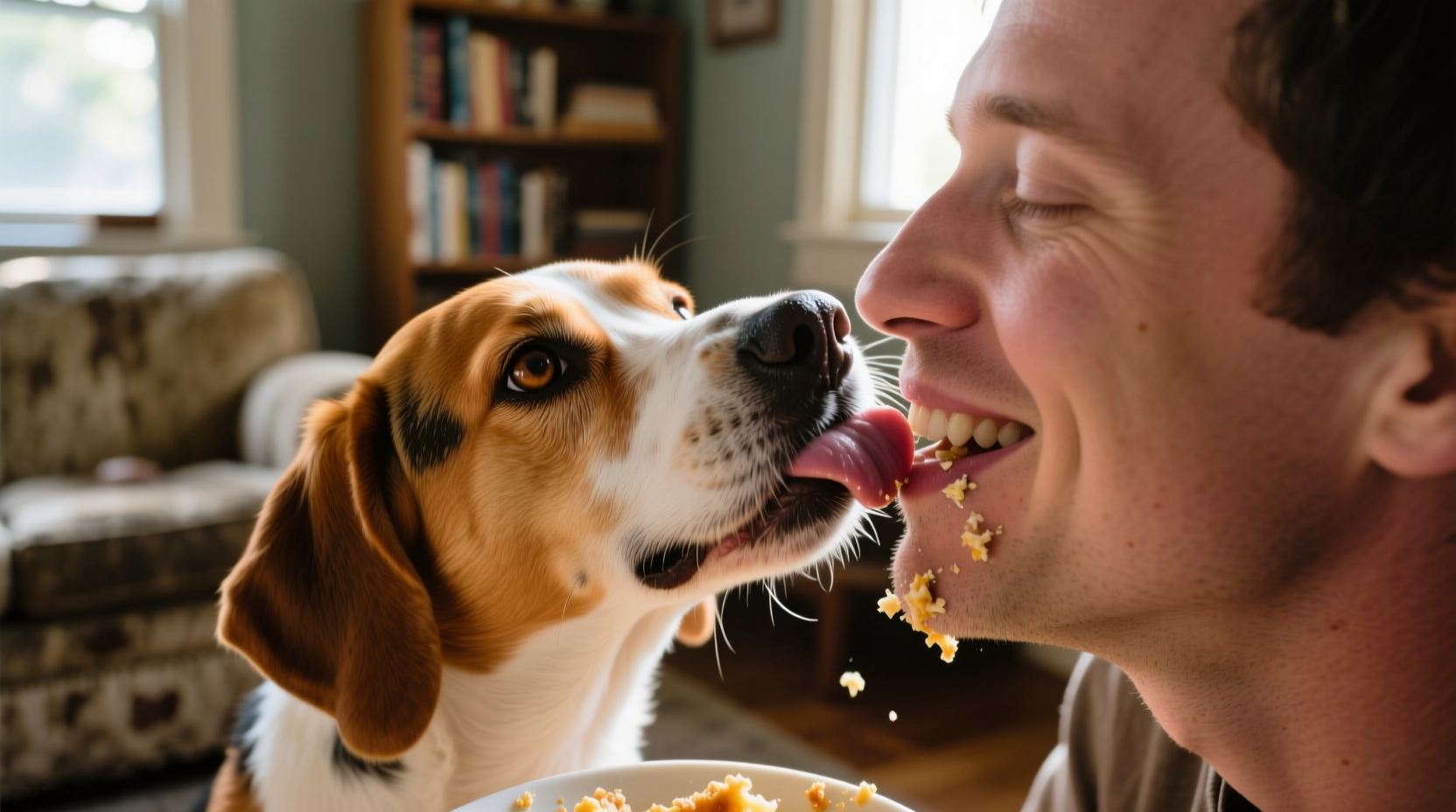
To understand modern dog behavior, we must look back to their ancestors. In the wild, wolves and other canids use licking as both a survival mechanism and a social signal. Puppies instinctively lick their mother’s mouth after she returns from hunting—a behavior known as \"licking up\"—to encourage her to regurgitate food. This ensured that young pups received pre-digested nutrition during early development stages.
Though domesticated dogs no longer rely on regurgitation for sustenance, the instinct remains encoded in their behavioral repertoire. When your dog licks your face after you eat, they may be responding to lingering food odors around your mouth, triggering an ancestral impulse to solicit nourishment. The scent of meat, cheese, or even strong spices activates sensory memory tied to feeding cycles.
This doesn’t mean your dog thinks you’re going to vomit for them (thankfully). Rather, the action reflects a deep-seated pattern: you have just eaten → you possess resources → interaction may yield benefits. It’s less about hunger and more about association—with a side of hope.
Tip: If your dog persistently licks your face after meals, try washing your face or brushing your teeth immediately afterward to reduce food residue and associated odors.Affection vs. Attention: Decoding Emotional Intent
While evolutionary triggers play a role, affection is often the dominant driver behind face licking—particularly in well-fed, securely bonded pets. Dogs use licking as a form of tactile communication, similar to how humans might hug or hold hands. For many dogs, licking their owner’s face releases endorphins, creating a calming effect and reinforcing emotional connection.
Dr. Sarah Wilson, veterinary ethologist at the Canine Behavior Institute, explains:
“Licking serves multiple functions in dog society—it’s appeasement, bonding, grooming, and information gathering all at once. When directed toward humans, especially familiar ones, it’s overwhelmingly a prosocial behavior.”
In domestic settings, licking frequently doubles as a request for attention. Your post-meal routine likely involves sitting still, making eye contact, and exhibiting relaxed body language—all cues your dog interprets as invitation to engage. If past interactions resulted in petting, talking, or treats following face licking, the behavior becomes positively reinforced through operant conditioning.
It’s also worth noting that dogs groom those they care about. Mutual grooming strengthens pair bonds in social animals, and your dog may view facial licking as a way of “cleaning” you, much like a mother dog grooms her puppies. This nurturing aspect underscores the depth of attachment many dogs feel toward their owners.
Sensory Motivation: Taste, Smell, and Curiosity
Your face carries a wealth of sensory data after a meal. Residual oils, salt from sweat, traces of sauces, and airborne food particles all contribute to an aromatic profile that’s highly stimulating for dogs, who have up to 300 million olfactory receptors (compared to about 6 million in humans).
Licking allows your dog to gather chemical information via the vomeronasal organ, located in the roof of their mouth. This secondary olfactory system helps them detect pheromones and subtle flavor compounds, giving them insight into what you ate, your emotional state, and even your health status.
Consider this scenario:
Mini Case Study: Max the Labrador and the Spicy Burrito
Max, a three-year-old yellow Labrador, began intensely licking his owner Anna’s face every time she ate Mexican food. At first, Anna assumed it was general affection. But she noticed the behavior only occurred with spicy or strongly seasoned dishes. After eliminating medical causes and testing different foods, she realized Max was drawn specifically to the capsaicin-laced aroma of hot sauce on her skin. He wasn’t seeking affection—he was investigating a novel, pungent stimulus. Once Anna wiped her face with a damp cloth post-meal, the licking decreased dramatically.
This example illustrates how sensory curiosity—not dominance or submission—can drive licking behavior. Not all face licking is emotionally charged; sometimes, your dog is simply conducting a taste test.
When Licking Crosses the Line: Boundaries and Overstimulation
While occasional face licking is generally harmless, excessive or forced contact can become problematic. Some dogs develop compulsive licking habits due to anxiety, boredom, or lack of stimulation. Others may misinterpret human reactions—such as laughing or pushing them away—as encouragement to continue.
Signs that face licking has become inappropriate include:
- Licking despite clear verbal or physical cues to stop
- Becoming agitated or persistent when denied access
- Licking accompanied by pawing, nudging, or jumping
- Targeting faces during sleep or vulnerable moments
If these patterns emerge, it’s important to set boundaries. Allowing unchecked access to your personal space can inadvertently reinforce pushy behavior, which may escalate over time. Dogs thrive on structure, and consistent limits help them feel secure.
| Appropriate Licking | Inappropriate Licking |
|---|---|
| Occasional, gentle licks when invited | Repeated, insistent licks despite refusal |
| Stops when asked | Escalates when ignored |
| Occurs in calm contexts | Happens during excitement or stress |
| Part of broader affectionate behavior | Obsessive or ritualistic |
“Just because a behavior is natural doesn’t mean it should go unmanaged. Teaching polite alternatives ensures harmony between species.” — Dr. Marcus Lee, Certified Applied Animal Behaviorist
How to Respond: A Step-by-Step Guide
Managing post-meal face licking isn’t about suppressing your dog’s instincts—it’s about guiding them toward acceptable expressions of affection and curiosity. Follow this timeline to shape healthier habits:
- Immediately after eating: Excuse yourself briefly. Go to the bathroom or another room to wipe your face and rinse your mouth. This removes the primary attractant.
- Redirect upon return: Before your dog approaches, offer an alternative activity—like a chew toy, puzzle feeder, or short training session—to shift focus.
- Teach a replacement behavior: Train your dog to “touch” your hand with their nose instead of your face. Reward generously. Gradually phase out face contact while maintaining connection.
- Reinforce calm disengagement: When your dog chooses not to lick—even if tempted—reward with praise or a treat. Positive reinforcement shapes long-term change.
- Consistency across household members: Ensure everyone responds the same way. Mixed signals confuse dogs and delay learning.
Checklist: Healthy Face-Licking Habits
Use this checklist to assess and improve your dog’s post-meal behavior:
- ✅ I wash or wipe my face soon after eating
- ✅ My dog has access to engaging toys during and after meals
- ✅ I consistently respond the same way each time
- ✅ I reward calm, non-invasive interactions
- ✅ I’ve ruled out medical issues (e.g., nausea, dental pain)
- ✅ I avoid reinforcing unwanted licking with attention
- ✅ I consult a professional if the behavior becomes obsessive
Frequently Asked Questions
Is it safe for my dog to lick my face after I eat?
Generally, yes—but with caveats. A healthy person with intact skin faces low risk, though dog saliva contains bacteria like *Pasteurella* and *Capnocytophaga*. Avoid allowing licks near open wounds, eyes, or mouth if you have a compromised immune system. Regular dental care for your dog reduces bacterial load.
Could face licking indicate a nutritional deficiency?
Rarely. While extreme licking (especially of surfaces) can signal nutrient imbalances or gastrointestinal distress, isolated post-meal face licking is typically environmental or behavioral. Consult your vet if you notice additional symptoms like pica, weight loss, or lethargy.
Should I let my dog lick my face at all?
This is a personal choice. Many cultures discourage the practice for hygiene reasons, while others accept it as normal bonding. If you allow it, do so selectively—perhaps permitting one quick lick but then redirecting. Setting boundaries preserves respect without severing affection.
Conclusion: Affection with Awareness
Your dog’s urge to lick your face after you eat sits at the intersection of biology, emotion, and learned experience. It can be a tender expression of love, a curious investigation of flavors, or a remnant of ancient survival strategies. Recognizing the motivation behind the gesture empowers you to respond thoughtfully—celebrating the bond while maintaining mutual respect.
Healthy relationships with pets aren’t built on indulgence alone, but on understanding and guidance. By observing context, applying consistency, and reinforcing positive alternatives, you can nurture closeness without compromising boundaries. Whether you welcome the occasional slobbery kiss or prefer a gentler form of greeting, the key lies in intentionality.
💬 Have a story about your dog’s post-meal rituals? Share your experiences in the comments below—your insights could help fellow pet owners navigate this messy, meaningful behavior.








