Dog owners often find themselves greeted with enthusiastic leaps when they come home. While this behavior may seem harmless—or even endearing—it can quickly become problematic, especially around children, elderly individuals, or guests who are uncomfortable with such physical contact. Understanding why your dog jumps is the first step toward addressing it effectively. More importantly, knowing how to respond consistently and humanely ensures long-term success without damaging your relationship with your pet.
The Root Causes of Jumping Behavior
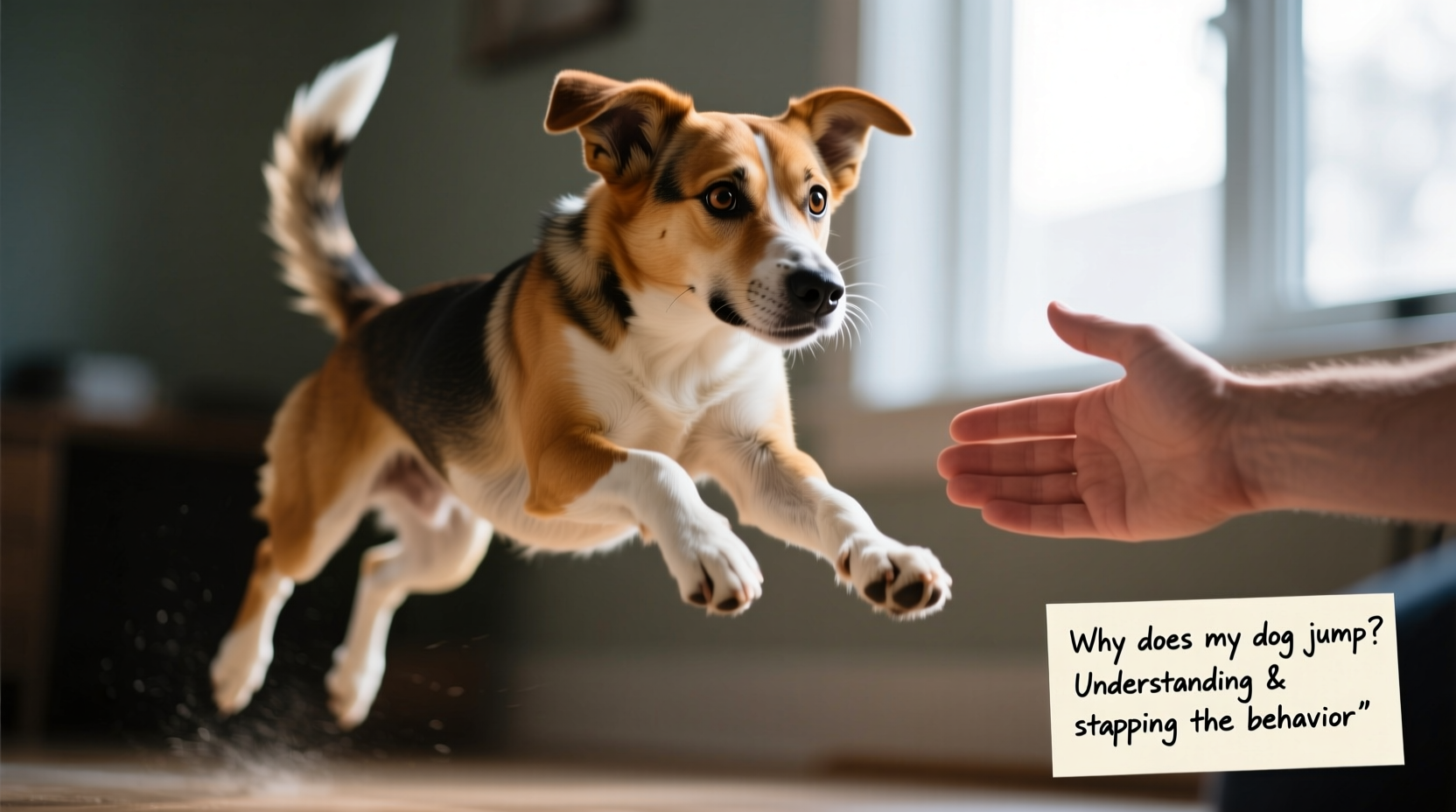
Dogs don’t jump for no reason. This behavior is typically rooted in instinct, communication, and learned reinforcement. When a dog jumps on people, it’s usually an attempt to reach face level—a natural greeting behavior among canines. In wolf packs, subordinates often lick the muzzles of dominant members as a sign of respect and social bonding. Your dog may be trying to replicate this gesture by leaping up to make contact with your face.
Additionally, jumping is frequently reinforced unintentionally. Every time a dog jumps and receives attention—even if it's scolding—the behavior is rewarded. Dogs thrive on interaction, and negative attention still counts as attention. Over time, they learn that jumping equals engagement, making the habit difficult to break without consistent intervention.
Tip: Never punish your dog for jumping—this can create fear or anxiety. Instead, focus on teaching an incompatible behavior like sitting.Common Triggers That Encourage Jumping
Several environmental and emotional factors can trigger or worsen jumping behavior:
- Excitement upon arrival: Whether you’ve been gone five minutes or five hours, your return signals high arousal.
- Greetings from visitors: New people bring novelty and stimulation, prompting impulsive reactions.
- Lack of routine training: Without clear rules, dogs default to instinctive behaviors.
- Overstimulation: Loud noises, running children, or energetic play can push dogs into hyper-arousal states where self-control breaks down.
Recognizing these triggers allows you to anticipate situations where jumping is likely and intervene proactively.
Step-by-Step Guide to Stopping Jumping Behavior
Changing your dog’s behavior requires consistency, patience, and positive reinforcement. Follow this six-step process to gradually eliminate jumping:
- Stay calm during arrivals: Avoid speaking to or looking at your dog until all four paws are on the ground. This removes the reward of attention.
- Teach an alternative behavior: Train your dog to sit automatically when greeting someone. Use treats and praise to reinforce sitting calmly.
- Use a leash indoors (if needed): During training phases, keep your dog on a short leash when guests arrive to prevent rehearsal of the unwanted behavior.
- Practice controlled greetings: Have friends or family participate in short, structured sessions where they ignore the dog until he sits.
- Reinforce calm behavior: Reward quiet standing or sitting with treats only after the dog has remained composed for several seconds.
- Generalize the behavior: Practice in different locations and with various people to ensure reliability across environments.
This method works because it replaces jumping with a desirable action—sitting—that cannot occur simultaneously. You’re not just suppressing behavior; you’re teaching a better option.
Do’s and Don’ts When Addressing Jumping
| Do’s | Don’ts |
|---|---|
| Remain consistent with all household members | Allow anyone to pet the dog while jumping |
| Use high-value treats during training | Push or knee the dog off—this can cause injury or fear |
| Practice daily in low-distraction settings first | Yell “off!” repeatedly without follow-up training |
| Gradually increase difficulty (e.g., more distractions) | Give in to jumping just once—it reinforces the behavior |
| Redirect energy with exercise before training | Use aversive tools like shock collars |
Mini Case Study: Turning Chaos into Calm
Sophie, a two-year-old Labrador Retriever, had a habit of jumping on every guest who entered her owner’s home. Despite being friendly, her size made people uneasy, and she once knocked over an elderly relative. Her owner began implementing a structured training plan: Sophie was placed on a leash during visits, and guests were instructed to turn their back and cross their arms if she jumped. Only when Sophie sat did they offer attention.
Within three weeks of daily practice, Sophie started sitting automatically at the door. By week six, she greeted guests calmly without a leash. The key was consistency—not a single exception was made, even when Sophie seemed “too excited.” This real-world example shows that with persistence, even strong habits can be reshaped.
“Dogs aren’t disobedient—they’re under-trained. Jumping isn’t defiance; it’s communication. Our job is to teach them a better language.” — Dr. Karen Becker, DVM, Canine Behavior Specialist
Checklist: How to Prevent Jumping Long-Term
- ✅ Teach your dog to sit on cue with 95% reliability
- ✅ Practice the “sit-to-greet” protocol daily for at least two weeks
- ✅ Ensure all family members and frequent visitors follow the same rules
- ✅ Provide 30–60 minutes of physical exercise before expected social interactions
- ✅ Use a crate or baby gate to manage excitement if necessary
- ✅ Reinforce calm behavior throughout the day, not just during greetings
- ✅ Reassess progress weekly and adjust training intensity as needed
Frequently Asked Questions
Is jumping a sign of dominance?
No, modern canine behavior science has largely debunked the idea that jumping is about asserting dominance. It’s more accurately understood as a socially motivated behavior driven by excitement and the desire for connection. Labeling it as dominance can lead to punitive responses that harm trust and do not solve the underlying issue.
What if my dog only jumps on certain people?
This usually indicates that those individuals have inconsistently responded in the past—perhaps giving affection when the dog jumps. Even one positive interaction can reinforce the behavior. To correct this, ensure that everyone interacts with your dog using the same rules. You may need to retrain specific people to withhold attention until the dog is calm.
Can older dogs learn not to jump?
Absolutely. While puppies are easier to shape due to their malleability, adult dogs are fully capable of learning new behaviors. The process may take longer, especially if the jumping has been reinforced for years, but with consistency and positive reinforcement, change is achievable at any age.
Conclusion: Building Better Greetings, One Sit at a Time
Jumping isn’t a flaw in your dog—it’s a mismatch between natural impulses and human expectations. By understanding the motivation behind the leap, you gain the power to guide your dog toward more appropriate actions. Success doesn’t come from suppression, but from redirection, clarity, and compassion.
The effort you invest today pays off in safer, more respectful interactions tomorrow. Whether you're welcoming friends, navigating public spaces, or simply enjoying a peaceful entry at home, a well-mannered dog enhances every moment. Start now, stay consistent, and celebrate small victories along the way.
💬 Have a jumping dog? Share your experience or ask questions in the comments below—let’s build a community of calm, confident canine companions together.








