Dogs howling at sirens is a familiar scene in neighborhoods across the world: one high-pitched wail from a passing ambulance triggers a chorus of yelps and long-drawn notes from nearby dogs. While it may seem random or even comical, this behavior is deeply rooted in canine biology and evolution. Understanding why dogs respond this way requires looking beyond simple noise sensitivity—it’s about communication, ancestry, and instinct. This article explores the science behind the howl, decodes the evolutionary reasons for this reaction, and offers practical advice for pet owners navigating this common but often misunderstood behavior.
The Canine Howl: A Communication Tool with Ancient Roots
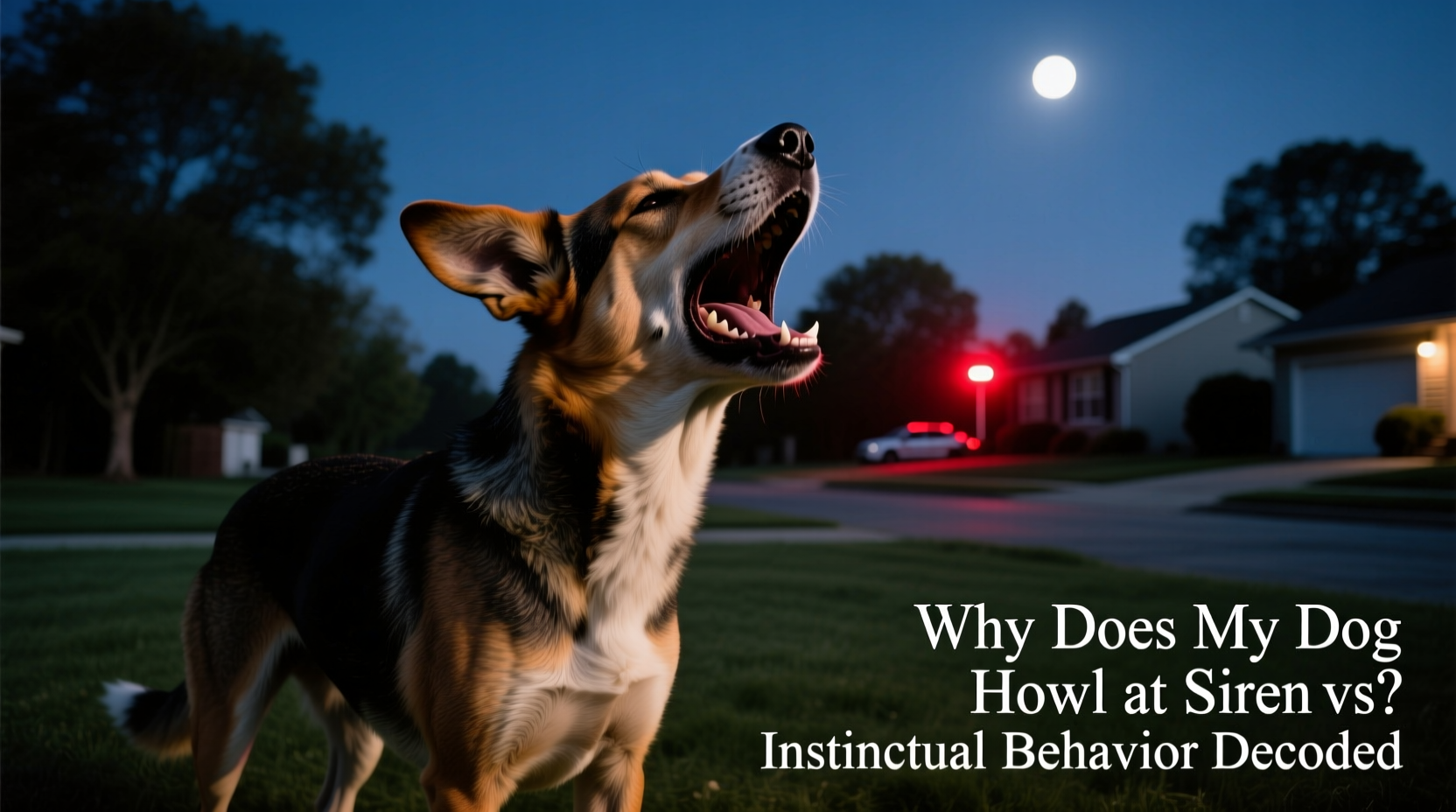
Howling is one of the oldest forms of communication in the animal kingdom, particularly among canids like wolves, coyotes, and domestic dogs. Unlike barking—which tends to be short, sharp, and situational—howling is sustained, carries over long distances, and serves specific social functions. In wild canid packs, howling helps maintain group cohesion. Wolves use it to regroup after a hunt, signal location, or warn rival packs away from territory.
Domestic dogs inherited this vocal trait from their wolf ancestors. Even though they now live in homes and respond to human cues, the instinct to howl remains embedded in their genetic makeup. When a siren sounds, its rising pitch closely mimics the tonal pattern of a wolf’s howl. To a dog, this auditory cue may resemble a call from another pack member, triggering an automatic response to “answer back.”
“Dogs don’t interpret sirens as mechanical noise—they hear them as potential social signals from other canines. The howl is their attempt to participate in what they perceive as a conversation.” — Dr. Karen Becker, Veterinary Behaviorist
Why Sirens Trigger Howling: Frequency, Pitch, and Perception
The specific characteristics of a siren make it especially effective at provoking howling. Most emergency vehicle sirens produce frequencies between 1,000 Hz and 3,000 Hz—the same range in which canine vocalizations are most prominent. Additionally, the Doppler effect causes the pitch of a siren to rise as it approaches and fall as it moves away, creating a wavering sound that closely resembles the natural modulation of a howl.
Dogs have far more sensitive hearing than humans, capable of detecting sounds up to 65,000 Hz (compared to our 20,000 Hz limit). This means they not only hear sirens more clearly but also experience them with greater intensity. For some dogs, the sound may be startling or uncomfortable, prompting a reactive howl. For others, it simply activates an ingrained behavioral loop: hear a howl-like sound → respond with a howl.
Tip: If your dog seems distressed by sirens, try playing calming music or white noise to mask sudden outdoor sounds.Evolutionary Echoes: From Wolf Packs to Backyard Patios
To fully grasp why dogs howl at sirens, we must consider their evolutionary journey. Modern dogs (Canis lupus familiaris) diverged from gray wolves approximately 15,000 to 40,000 years ago. Despite centuries of domestication, they retain many ancestral behaviors, including scent marking, digging, and vocal communication through howling.
In the wild, isolation is dangerous for pack animals. A lone wolf separated from its group will howl to reestablish contact. Similarly, when dogs howl in response to sirens, they may be expressing a subconscious desire to reconnect or signal presence—even if there’s no actual pack nearby. This behavior is especially common in breeds with strong working or hunting lineages, such as Siberian Huskies, Alaskan Malamutes, Beagles, and Coonhounds, all of which were historically bred for endurance, tracking, and long-distance communication.
Interestingly, not all dogs react to sirens. Some remain indifferent, while others bark or whine instead. This variation reflects differences in breed predisposition, individual temperament, and early socialization. Dogs raised in quieter environments or exposed to urban noise from a young age may become habituated to sirens and stop responding over time.
When Howling Becomes a Concern: Separating Normal Behavior from Distress
Occasional howling at sirens is normal and typically harmless. However, excessive or anxious howling could indicate underlying issues such as noise phobia, separation anxiety, or sensory overload. Signs that your dog’s reaction may go beyond instinct include:
- Trembling or hiding during sirens
- Panting, drooling, or pacing when hearing loud noises
- Refusing to settle after the siren has passed
- Self-injurious behavior like chewing or scratching at doors
If these symptoms occur regularly, it’s worth consulting a veterinarian or certified animal behaviorist. Noise aversion can worsen over time without intervention, affecting your dog’s overall well-being.
Checklist: Assessing Your Dog's Reaction to Sirens
- Observe whether the howling is brief and relaxed or prolonged and tense.
- Note any physical signs of stress (tucked tail, flattened ears, dilated pupils).
- Track frequency: Does it happen every time, or only under certain conditions?
- Determine if the behavior generalizes to other high-pitched sounds (e.g., vacuum cleaners, musical instruments).
- Consider environmental factors: Is your dog indoors or outdoors? Alone or with family?
Managing Siren-Induced Howling: Practical Strategies for Pet Owners
While you can’t eliminate sirens from your environment, you can reduce their impact on your dog. The goal isn’t to suppress natural behavior but to ensure your pet feels safe and secure when exposed to loud or unusual sounds.
Step-by-Step Guide: Reducing Siren Sensitivity
- Desensitization Training: Play recorded siren sounds at a very low volume while offering treats or engaging in play. Gradually increase volume over days or weeks as your dog remains calm.
- Create a Safe Space: Designate a quiet room with soft bedding, familiar toys, and background noise (like a fan or radio) where your dog can retreat when disturbed.
- Use White Noise or Calming Music: Devices like sound machines or apps designed for pets (e.g., Through a Dog’s Ear) can mask sudden outdoor noises.
- Engage Distractively: Redirect attention with commands like “sit” or “find it” games using hidden treats when a siren sounds.
- Avoid Reinforcement: Don’t scold or overly comfort your dog during episodes, as this may inadvertently reinforce the behavior. Instead, stay neutral and reward calmness afterward.
Do’s and Don’ts of Handling Siren Responses
| Do | Don’t |
|---|---|
| Stay calm and composed during siren events | Yell at or punish your dog for howling |
| Use positive reinforcement for quiet behavior | Allow prolonged exposure without breaks or distractions |
| Gradually expose your dog to siren-like sounds | Force your dog to endure loud noises without preparation |
| Consult a professional if anxiety is severe | Ignore signs of distress hoping they’ll fade on their own |
Real-Life Example: Managing a Husky’s Siren Response
Maria, a dog owner in Denver, noticed her 3-year-old Siberian Husky, Luna, began howling intensely every time an ambulance passed her apartment building. Initially amused, Maria grew concerned when Luna started pacing and refusing food after siren encounters. She consulted a veterinary behaviorist who recommended a structured desensitization plan.
Maria began playing low-volume siren recordings while giving Luna frozen peanut butter treats. Over six weeks, she slowly increased the volume, always ensuring Luna remained relaxed before progressing. She also installed blackout curtains and used a white noise machine at night. Within two months, Luna’s reactions diminished significantly—she might briefly lift her head at a distant siren but no longer launched into full howls or showed signs of anxiety.
This case illustrates that while the instinct to howl is natural, the emotional response can be managed with patience and science-based techniques.
Frequently Asked Questions
Is it bad if my dog howls at sirens?
No, occasional howling at sirens is not harmful and is considered a normal, instinct-driven behavior. As long as your dog appears relaxed and returns to normal quickly, there’s no cause for concern. However, if howling is accompanied by fear or agitation, further evaluation may be needed.
Can I train my dog not to howl at sirens?
You can’t completely eliminate the instinct, but you can reduce the frequency and intensity of the response. Desensitization training, environmental management, and distraction techniques are effective tools. Complete suppression isn’t necessary or recommended, as howling is a natural form of expression.
Are certain breeds more likely to howl at sirens?
Yes. Breeds with strong vocal traditions—such as Huskies, Malamutes, Beagles, Bloodhounds, and Dachshunds—are more prone to howling due to their genetic heritage. These dogs were often bred for tracking or working in remote areas where vocal communication was essential.
Conclusion: Embracing Instinct While Ensuring Well-Being
Dogs howl at sirens because they are responding to sounds that mimic ancient calls from their wild relatives. It’s not misbehavior—it’s a window into their evolutionary past. Recognizing this allows pet owners to approach the behavior with empathy rather than frustration. While some level of howling is expected and healthy, vigilance is important to ensure it doesn’t stem from fear or anxiety.
By applying thoughtful strategies like sound conditioning, creating safe spaces, and seeking expert guidance when needed, you can help your dog coexist peacefully with modern urban life—without silencing their voice entirely. After all, a howl is more than noise; it’s a living echo of the wild, reminding us of the deep instincts that still shape our closest animal companions.
💬 Have a dog that serenades every fire truck? Share your story or tips in the comments below—we’d love to hear how you’ve learned to live in harmony with your pup’s inner wolf!








