Dogs often surprise their owners with behaviors that seem oddly human—like cradling a stuffed animal in their mouth, pacing gently, or tucking it into their bed as if it were a newborn. One of the most endearing yet puzzling habits is when a dog carries a toy around like a baby. This isn’t just random play; it’s rooted in instinct, emotion, and development. Understanding this behavior helps deepen the bond between pet and owner and ensures the dog’s psychological well-being.
This behavior typically emerges during puppyhood but can appear or reappear at any stage of life. Whether your dog is six months old or ten years old, carrying a toy like an infant can signal comfort, attachment, or even mild anxiety. The key lies in interpreting context, frequency, and accompanying behaviors.
The Origins of Puppy-Like Behavior in Adult Dogs
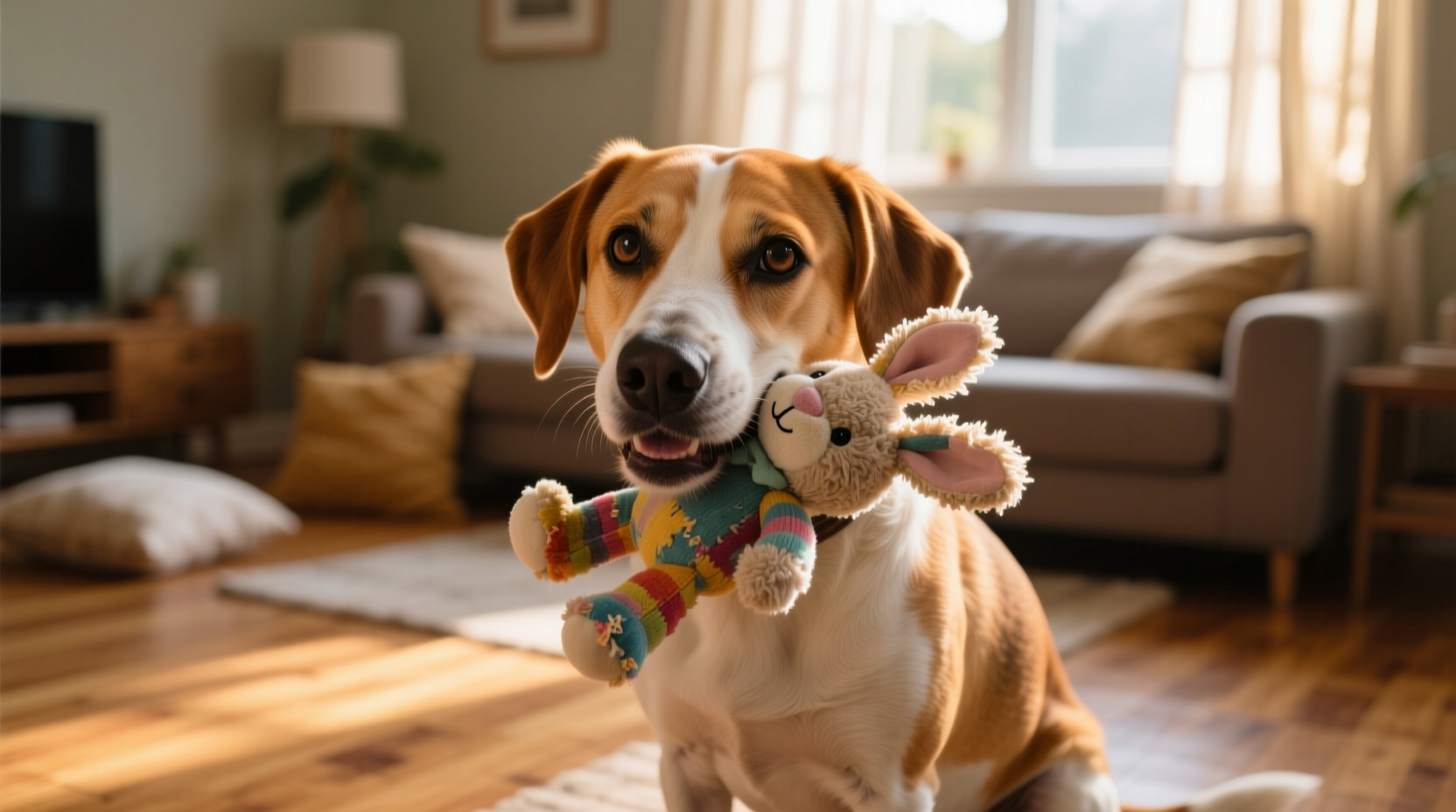
Dogs are pack animals by nature, descended from wolves with strong social and nurturing instincts. Even after thousands of years of domestication, many of these primal drives remain embedded in their behavior. Carrying a toy like a baby often stems from maternal or caregiving impulses—especially in unspayed females, though males and spayed females exhibit it too.
In wild canids, female wolves and wild dogs have been observed retrieving pups that wander from the den and carrying them gently by the scruff. Domestic dogs may transfer this instinct to soft toys, treating them as surrogate puppies. This doesn’t mean the dog believes the toy is alive, but rather that the action triggers deep-seated nurturing circuits in the brain.
Interestingly, this behavior isn't limited to reproduction-related instincts. For many dogs, especially those who lack early littermate interaction or were separated from their mother too soon, a soft toy becomes a transitional object—a source of comfort during times of stress or loneliness.
“Dogs don’t parent like humans, but they do express caregiving through retrieval, guarding, and gentle mouthing behaviors. These are natural extensions of their social intelligence.” — Dr. Karen Becker, Veterinary Behaviorist
When Does This Behavior Typically Begin?
The tendency to carry toys like a baby usually begins between 8 and 16 weeks of age—the critical socialization period. During this time, puppies explore their world through their mouths and begin forming attachments to objects that provide comfort. A plush toy with soft stuffing may mimic the warmth and texture of littermates, making it an ideal substitute for companionship.
However, the behavior can also emerge later—during adolescence (4–9 months) or even adulthood—often triggered by environmental changes such as:
- Moving to a new home
- The arrival or departure of another pet or family member
- Changes in routine (e.g., owner returning to work after vacation)
- Exposure to stressful stimuli (thunderstorms, fireworks, construction noise)
In some cases, hormonal shifts play a role. Female dogs experiencing pseudopregnancy (false pregnancy)—a condition where the body mimics pregnancy after a heat cycle—may display intensified nesting and caretaking behaviors, including carrying toys constantly, arranging blankets, and even “nursing” their chosen object.
Tip: If your dog suddenly starts carrying a toy everywhere after a life change, observe for other signs of anxiety—panting, pacing, loss of appetite—and consider consulting a veterinarian or behaviorist.Psychological and Emotional Drivers Behind the Behavior
Beyond instinct, several emotional factors influence why a dog develops a strong attachment to a specific toy. These include:
Attachment and Security
Just as children form bonds with security blankets or stuffed animals, dogs use toys as emotional anchors. The scent, texture, and familiarity of a particular toy offer reassurance, especially when the owner is absent. This is common in dogs with separation anxiety or those adopted from shelters, where early life instability increases the need for consistent comfort objects.
Stress Relief and Self-Soothing
Mouthing and carrying soft items can be self-regulating behaviors. The rhythmic jaw motion involved in gently holding a toy releases endorphins, helping calm an anxious mind. It's similar to how humans might fidget or hug a pillow when stressed.
Play Imagination and Role-Playing
Dogs are capable of complex social play that includes role assignment. Some dogs assign identities to their toys—one may be \"the baby,\" another \"the prey.\" Carrying one like an infant could be part of an elaborate play narrative, especially in intelligent breeds like Border Collies, Poodles, or Australian Shepherds.
Attention-Seeking
If a dog learns that carrying a toy elicits positive reactions—laughter, affection, playtime—they may repeat the behavior to gain attention. While not inherently problematic, it can become compulsive if over-rewarded without boundaries.
When Is Toy-Carrying a Cause for Concern?
Most of the time, carrying a toy like a baby is harmless and even healthy—it indicates the dog has found a coping mechanism. However, certain red flags suggest the behavior may be crossing into obsession or distress:
| Normal Behavior | Potentially Problematic |
|---|---|
| Carries toy occasionally, especially when tired or anxious | Constantly carries toy, refuses to put it down—even during meals or sleep |
| Plays with multiple toys interchangeably | Fixated on one toy; becomes aggressive if it’s taken away |
| Gentle mouthing and cradling | Excessive licking, chewing, or attempts to “nurse” until the toy is destroyed |
| Engages in other normal activities (play, walks, training) | Neglects food, water, or social interaction in favor of the toy |
Compulsive toy attachment can be a symptom of underlying anxiety, boredom, or lack of mental stimulation. In rare cases, it may indicate neurological issues or hormonal imbalances, particularly if accompanied by other abnormal behaviors like tail chasing, circling, or disorientation.
Step-by-Step Guide: Managing and Responding to the Behavior
If your dog’s toy-carrying is occasional and non-disruptive, no intervention is needed. But if it’s becoming obsessive or affecting quality of life, follow this structured approach:
- Assess the Environment: Identify recent changes—new pet, move, schedule shift—that might be causing stress. Restore predictability where possible.
- Provide Mental Enrichment: Introduce puzzle feeders, scent games, and interactive toys to redirect focus and reduce dependency on one object.
- Routine Exercise: Ensure your dog gets adequate physical activity. A tired dog is less likely to engage in repetitive behaviors.
- Rotate Toys: Offer a variety of textures and types (plush, rubber, squeaky) to prevent fixation. Store toys out of sight and rotate them weekly to maintain novelty.
- Set Boundaries: If attention-seeking is driving the behavior, avoid reinforcing it with laughter or touch when the toy is being carried excessively. Instead, reward calm behavior.
- Consult a Professional: If the behavior persists or escalates, seek help from a certified dog trainer or veterinary behaviorist.
Mini Case Study: Luna, the Rescue Beagle
Luna, a three-year-old Beagle rescued from a hoarding situation, was initially withdrawn and fearful. Her adoptive family noticed she began carrying a small plush duck everywhere—sleeping with it, bringing it to mealtime, even whining if it was missing.
At first, they worried it was strange. But their vet explained that Luna was using the duck as a transitional object to rebuild trust. Over time, as she gained confidence through training and bonding, her attachment softened. She still sleeps with the duck but now plays with other toys freely.
Luna’s story illustrates how toy-carrying can be a healing mechanism. With patience and support, such behaviors often evolve naturally as the dog feels safer.
Checklist: Is Your Dog’s Toy-Carrying Healthy?
Use this checklist to evaluate whether the behavior supports your dog’s well-being:
- ✅ The dog eats, drinks, and eliminates normally
- ✅ Engages in play, walks, and training sessions
- ✅ Can be distracted from the toy with treats or games
- ✅ Shows no aggression when the toy is briefly moved
- ✅ Sleeps comfortably, even if the toy isn’t in direct contact
- ✅ No signs of physical harm (chewed paws, torn toy ingestion)
If all boxes are checked, the behavior is likely benign. If several are unchecked, consider professional guidance.
Frequently Asked Questions
Can male dogs carry toys like babies too?
Yes. While more commonly seen in females—especially during pseudopregnancy—male dogs also exhibit nurturing behaviors. This is often linked to social bonding, anxiety relief, or learned attention-seeking, not gender-specific instincts.
Should I let my dog sleep with the toy?
In most cases, yes. Removing the toy at night can increase anxiety. As long as the toy is safe (no small parts to swallow), allowing access promotes emotional security. Just inspect it regularly for wear and tear.
What if my dog tries to “nurse” the toy?
Nursing behavior, especially in intact females post-heat, is common during pseudopregnancy and usually resolves within 2–3 weeks. Provide distractions and avoid scolding. If it persists beyond a month or causes skin irritation, consult your vet about hormonal evaluation.
Conclusion: Embracing Your Dog’s Unique Expressions
Dogs communicate in ways that don’t always align with human logic, yet each gesture holds meaning. Carrying a toy like a baby is more than whimsy—it’s a window into your dog’s inner world of comfort, memory, and emotional regulation. By observing without judgment and responding with empathy, you honor their individuality.
Instead of asking “Why does my dog do this?” try asking “What does this behavior give my dog?” The answer often reveals unmet needs, past experiences, or simple joy in imagination. When nurtured with understanding, these quirks become part of the beautiful, complex relationship you share.
💬 Have a story about your dog’s favorite toy or unusual habit? Share it in the comments—your experience might help another pet parent feel less alone.








