
Chameleons are among the most visually captivating reptiles, renowned for their ability to shift colors in response to mood, temperature, and environment. But one behavior often puzzles owners: why does a chameleon change color when it sees its own reflection? This seemingly strange reaction is not just random—it's deeply rooted in the animal’s biology, instincts, and social behavior. Understanding this phenomenon requires exploring how chameleons perceive their world, interpret threats, and use color as a form of communication.
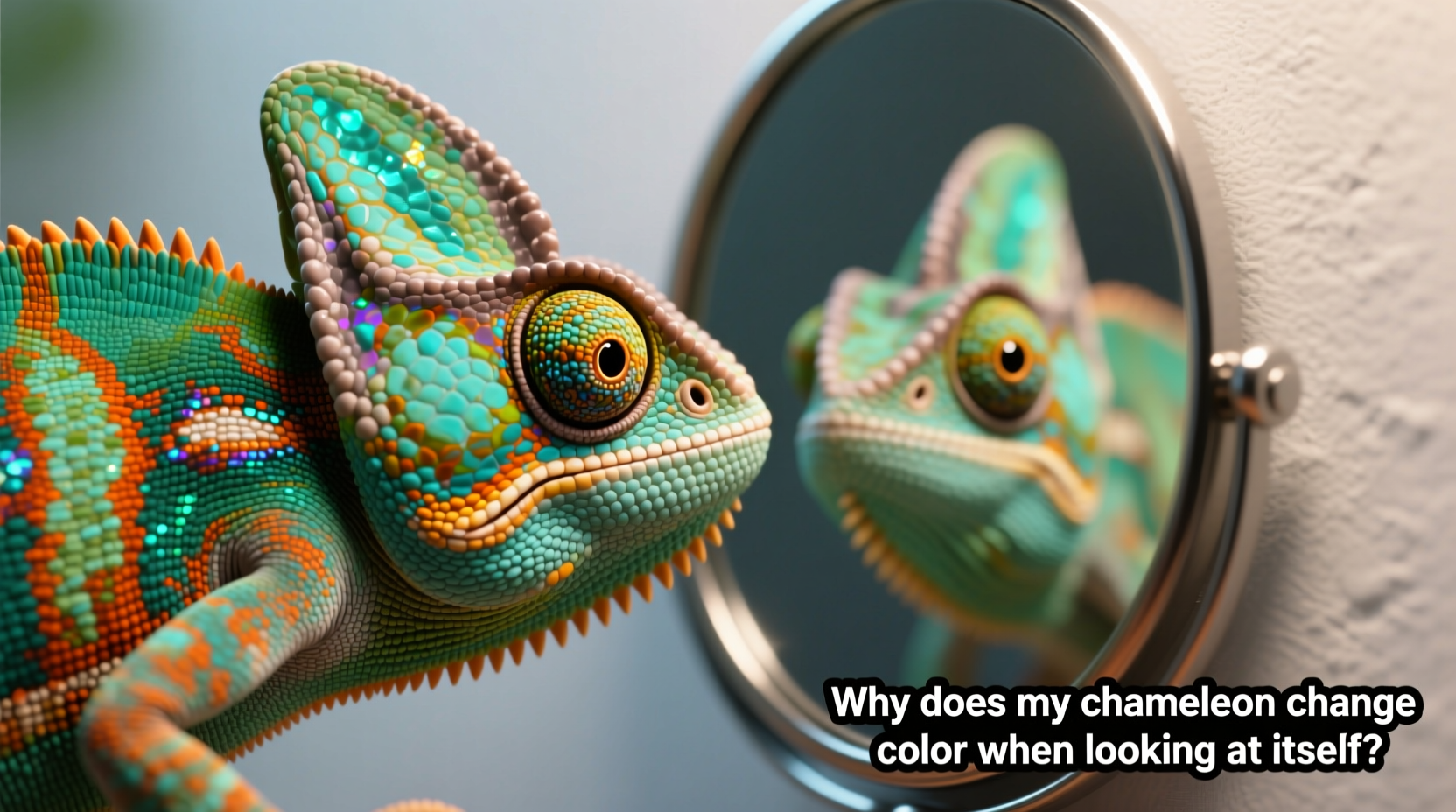
Unlike humans, chameleons do not recognize themselves in mirrors or reflective surfaces. To them, their reflection appears as another chameleon—one that doesn’t respond appropriately, doesn’t back down, and mirrors every move. This triggers instinctive territorial and defensive reactions, resulting in dramatic color shifts. These changes aren’t about camouflage in the moment but about signaling dominance, stress, or aggression.
The Science Behind Chameleon Color Change
Chameleons don’t change color using pigments alone. Instead, they possess specialized cells beneath their skin called iridophores, which contain nanocrystals that reflect light. By relaxing or exciting these cells, chameleons can alter the spacing of the nanocrystals, shifting the wavelength of reflected light and thus changing their visible color.
This mechanism allows for rapid transitions between greens, browns, yellows, blues, and even vibrant reds. However, contrary to popular belief, camouflage is only one function of this ability. More frequently, color change serves as a physiological and emotional barometer—indicating temperature regulation, health status, and, crucially, social signaling.
“Color change in chameleons is less about hiding and more about communicating. Their skin is essentially a dynamic billboard broadcasting their internal state.” — Dr. Esteban Soza, Herpetologist, University of Cape Town
Why Reflections Trigger Color Shifts
When a chameleon sees its reflection, it perceives an intruder in its territory. In the wild, male chameleons are highly territorial and will go to great lengths to defend their space from rivals. A mirror presents a unique challenge: the “other” chameleon never leaves, never retreats, and mimics every movement. This creates a feedback loop of escalating aggression.
The initial response is often a shift to darker, more intense colors—deep greens, blacks, or vivid patterns—signaling alertness or threat. If the perceived rival doesn’t yield, the chameleon may display lateral compression (flattening its body to appear larger), gape its mouth, or rock back and forth, all while intensifying its coloration. Over time, prolonged exposure to reflections can lead to chronic stress, weakened immunity, and reduced appetite.
Tip: Remove mirrors, reflective glass, or shiny surfaces from your chameleon’s enclosure. Even polished metal fixtures or windows can trigger stress responses.Common Color Changes and What They Mean
Understanding the meaning behind specific color shifts helps owners assess their chameleon’s well-being. While exact hues vary by species, general patterns hold true across most common pet varieties like the veiled, panther, and Jackson’s chameleon.
| Color | Emotional State | Possible Cause |
|---|---|---|
| Bright Green with Yellow Markings | Calm, content | Comfortable environment, optimal temperature |
| Dark Brown or Black | Stressed, cold, or threatened | Low temperatures, fear, or presence of threat (real or reflected) |
| Vibrant Blue or Turquoise | Alert, displaying dominance | Asserting territory, especially in males |
| Yellow-Orange with Black Banding | Aggressive or defensive | Responding to a perceived rival or predator |
| Pale or Whitish | Thermoregulating (cooling down) | Too warm; attempting to reflect sunlight |
When a chameleon consistently displays dark or aggressive colors upon seeing its reflection, it’s not merely reacting—it’s experiencing psychological strain. Unlike mammals, reptiles do not have the cognitive capacity for self-recognition. The reflection becomes an unresolvable conflict, leading to sustained stress.
A Real-Life Scenario: The Case of Leo the Veiled Chameleon
Leo, a two-year-old male veiled chameleon owned by Sarah in Austin, Texas, began showing signs of lethargy and reduced feeding. His usual bright green coloring had shifted to near-constant dark brown, and he spent hours facing the front glass of his enclosure, puffing up and rocking.
After consulting a reptile veterinarian, Sarah discovered that the issue wasn’t illness or improper lighting—it was the enclosure’s placement. The glass front, combined with indoor lighting at night, created a mirror effect. Leo was seeing his own reflection daily, interpreting it as a persistent rival encroaching on his space.
Once Sarah added a non-reflective mesh cover to the front and repositioned the enclosure away from direct light sources, Leo’s behavior transformed within days. His colors returned to normal, feeding resumed, and the aggressive posturing ceased. This case underscores how subtle environmental factors can profoundly impact chameleon psychology.
How to Prevent Stress from Reflections: A Step-by-Step Guide
Preventing stress caused by reflections involves both immediate action and long-term habitat planning. Follow this sequence to ensure your chameleon feels secure and unstressed.
- Inspect the enclosure setup: Walk around the vivarium at eye level and look for any reflective surfaces—glass panels, polished decor, or nearby mirrors.
- Test for reflections: Shine a flashlight at different angles. If you see a clear reflection, so will your chameleon.
- Replace solid glass fronts: Use mesh screening on at least the front and sides to eliminate mirror-like surfaces.
- Add visual barriers: Place artificial foliage or background panels on the outside of the glass to break up reflections.
- Reposition the enclosure: Avoid placing the cage opposite windows, mirrors, or glossy walls. Natural outdoor views are acceptable if not mirrored.
- Monitor behavior daily: Watch for prolonged color changes, gaping, or fixation on one area of the cage.
- Adjust lighting schedule: Ensure lights are off at night to prevent indoor reflections from room lighting.
Do’s and Don’ts of Chameleon Habitat Design
| Do’s | Don’ts |
|---|---|
| Use mesh enclosures to prevent reflections | Use fully glass terrariums without ventilation |
| Provide ample foliage for hiding and visual breaks | Place the cage in high-traffic or noisy areas |
| Position the enclosure where it gets natural ambient light (not direct sun through glass) | Allow direct reflections from lamps or windows |
| Include horizontal and vertical branches for climbing | Use shiny decor like plastic plants with glossy finishes |
| Observe your chameleon from the side, not head-on, to minimize perceived threat | Tap on the glass or encourage “interaction” via reflection play |
Frequently Asked Questions
Can chameleons recognize themselves in mirrors?
No, chameleons lack the cognitive ability for self-recognition. Mirror self-recognition is a trait observed only in certain intelligent animals like great apes, dolphins, elephants, and magpies. To a chameleon, its reflection is always another individual—typically interpreted as a threat.
Is it harmful to let my chameleon see its reflection occasionally?
Occasional brief exposure is unlikely to cause lasting harm, but repeated or prolonged exposure leads to chronic stress. This can suppress the immune system, reduce appetite, and shorten lifespan. It’s best to eliminate reflective surfaces entirely.
My chameleon turns bright colors when I approach. Is that the same as reacting to a reflection?
Not necessarily. While some color changes when you approach may indicate stress, others could be due to excitement, thermoregulation, or curiosity. Observe the context: if colors intensify only near glass or shiny surfaces, reflection is likely the trigger. If changes occur during handling or feeding, they may relate to mood or temperature.
Expert Recommendations for Long-Term Well-Being
Dr. Lila Nguyen, a reptile behavior specialist at the San Diego Zoo, emphasizes proactive habitat management:
“Owners often focus on diet and UVB lighting—which are vital—but overlook psychological stressors. A chameleon that feels constantly threatened will never thrive, regardless of perfect nutrition. Eliminating reflections is as important as providing clean water.” — Dr. Lila Nguyen, DVM, Reptile Behavior Consultant
She recommends regular behavioral audits: spend 10 minutes each week observing your chameleon without interacting. Note where it spends most of its time, whether it avoids certain areas, and if it displays repetitive behaviors like glass surfing or fixation on one spot. These can all signal unresolved stress, often tied to visual disturbances.
Conclusion: Respecting the Chameleon’s Worldview
The reason your chameleon changes color when looking at itself isn’t whimsical—it’s a survival-driven response rooted in millions of years of evolution. In the wild, every encounter with another chameleon carries risk. A reflection disrupts this natural framework by presenting an unbeatable, unyielding opponent. The resulting color change is not a trick or a display for human amusement, but a cry of distress encoded in pigment and light.
As caretakers, our responsibility extends beyond food and heat. We must also safeguard their mental and emotional health by designing environments that align with their instincts, not confuse them. Removing reflective surfaces is a small adjustment with profound benefits—reducing stress, enhancing vitality, and allowing your chameleon to live as nature intended.
🚀 Take action today: Inspect your chameleon’s enclosure for reflections and make one change to improve its visual environment. Share your experience or questions in the comments to help build a more informed reptile-keeping community.








