Cats are enigmatic creatures. One moment they’re purring on your lap, the next they’re frozen in place, eyes locked on a blank stretch of wall with an intensity that suggests they’ve spotted something from another dimension. If you’ve ever caught your cat doing this—and felt a chill run down your spine—you’re not alone. Many cat owners have witnessed this peculiar behavior and wondered: Is my cat seeing ghosts? Is there something wrong? Or is this just another quirk of feline psychology?
The truth is more grounded than supernatural theories suggest, but no less fascinating. A cat staring at a wall isn’t necessarily a sign of illness or hallucination—though it can be. More often, it’s a reflection of their heightened senses, natural instincts, or subtle environmental cues invisible to humans. Understanding why cats do this requires looking beyond appearances and into their sensory world, neurological function, and behavioral patterns.
The Science Behind Feline Vision and Perception
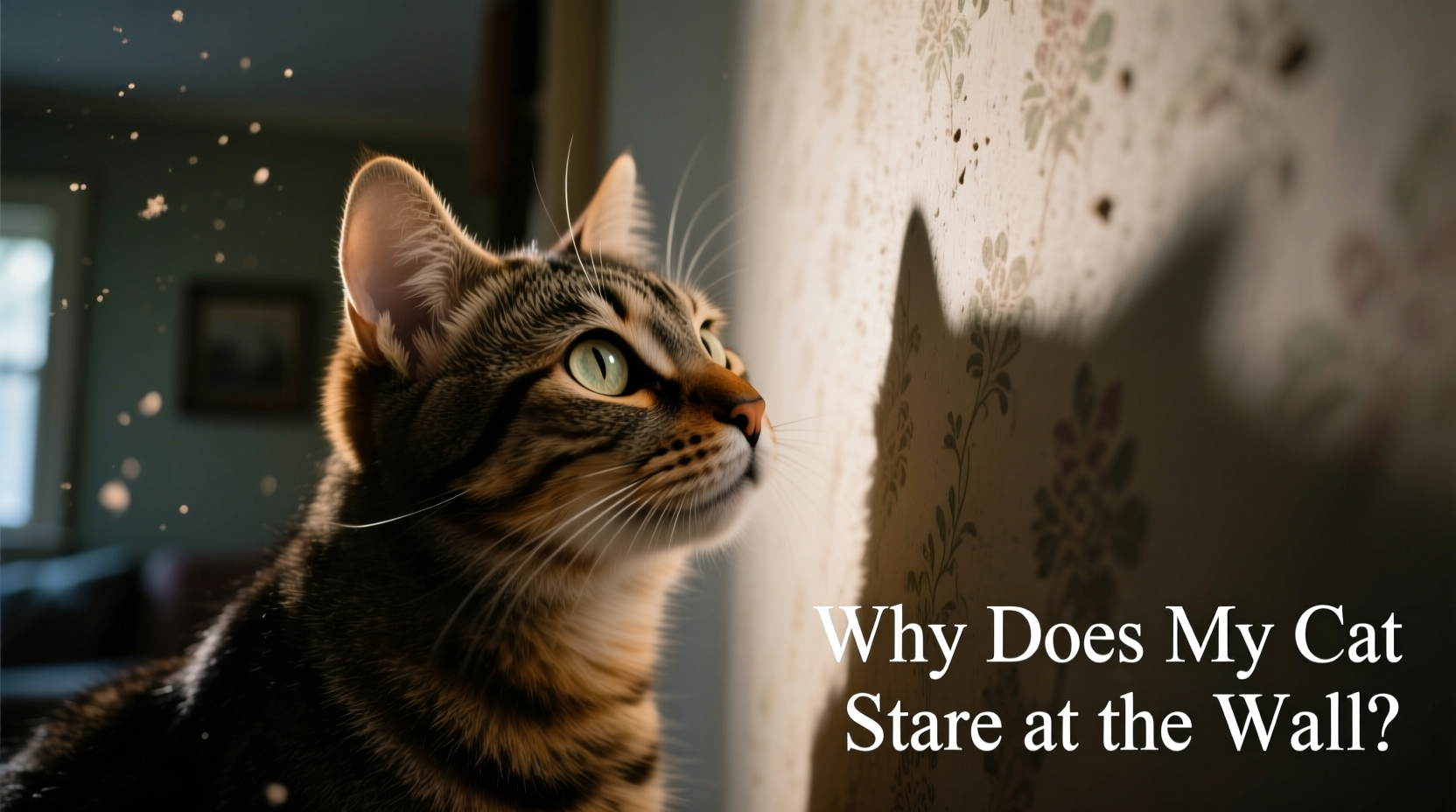
Cats perceive the world differently than humans. Their eyes are adapted for low-light hunting, giving them superior night vision but slightly less clarity in bright light. They also detect motion far more efficiently than we do. What appears to be a blank wall to you might be alive with shifting shadows, dust motes drifting in a sunbeam, or the faintest ripple of light reflecting off paint texture.
Additionally, cats have a higher flicker fusion rate—the speed at which visual stimuli appear continuous rather than blinking. This means they can detect rapid light fluctuations from fluorescent bulbs or LED screens that are imperceptible to us. A seemingly static wall may actually be pulsing with subtle strobing effects under artificial lighting, especially in older homes.
Their peripheral vision is also wider (about 200 degrees compared to our 180), making them highly sensitive to movement at the edges of their field of view. Even a slight air current moving a curtain or causing wallpaper to shift minutely could trigger a focused gaze.
Tip: Observe the lighting and airflow in the room where your cat stares. Turn off artificial lights and watch if the behavior persists—it may reveal invisible stimuli.Common Behavioral Explanations for Wall Staring
Not every instance of wall-staring indicates a problem. In many cases, it's simply a manifestation of normal feline behavior amplified by their predatory instincts.
- Hunting simulation: Cats often \"hunt\" non-existent prey during downtime. A shadow or speck on the wall may resemble an insect, triggering a stalking response.
- Boredom or lack of stimulation: Indoor cats without adequate playtime may fixate on minor stimuli as a form of mental engagement.
- Environmental exploration: Cats use visual scanning to map their territory. Repeatedly staring at one spot may help them detect changes over time, like cracks forming or paint peeling.
- Sleep transitions: Cats frequently enter light sleep states while appearing awake. During these moments, they may exhibit glazed stares as their brains cycle between alertness and drowsiness.
This kind of behavior is usually brief and intermittent. The cat snaps out of it quickly, resumes normal activity, and shows no other signs of distress. It becomes concerning only when the staring is prolonged, repetitive, or accompanied by unusual physical symptoms.
When Wall Staring Signals Health Issues
While occasional wall-gazing is normal, persistent or intense fixation can indicate underlying medical conditions. Two primary concerns are feline cognitive dysfunction and seizures.
Feline Cognitive Dysfunction (FCD)
Also known as kitty dementia, FCD affects older cats (typically 10+ years). It results from age-related brain changes and can manifest through disorientation, altered sleep cycles, litter box accidents—and yes, prolonged staring at walls.
“Cats with cognitive decline often appear ‘spaced out’ or stuck in place, gazing into space for minutes at a time. These episodes are not purposeful—they reflect neural misfires.” — Dr. Lena Reyes, Veterinary Neurologist
Epilepsy and Psychomotor Seizures
Seizures in cats don’t always involve convulsions. Some take the form of psychomotor episodes, during which a cat may suddenly freeze, stare intently, twitch whiskers, drool, or appear to react to unseen threats. These typically last 30 seconds to two minutes and may be followed by confusion or disorientation.
Other neurological disorders—such as brain tumors, infections, or stroke—can also cause abnormal staring behaviors. These are often paired with additional red flags like loss of balance, head tilting, pacing in circles, or vocalization.
Vision Problems and Hallucinations
Certain eye diseases, including retinal detachment or high blood pressure-induced vision changes, can lead to visual disturbances. A cat might respond to phantom shapes or flashes of light caused by internal ocular issues. Similarly, toxicity (e.g., from household plants or medications) can induce hallucinatory states.
Tip: If your cat stares at walls daily for more than a minute, document the frequency, duration, and any associated movements. Share this log with your vet.Step-by-Step Guide: Assessing Your Cat’s Wall-Staring Behavior
If you're concerned about your cat’s behavior, follow this timeline to determine whether intervention is needed:
- Observe and record: Note how long the episode lasts, what time of day it occurs, and whether anything triggers it (e.g., after eating, during rest).
- Eliminate environmental causes: Check for flickering lights, drafts, tiny insects, or reflective surfaces. Try turning off electronics and closing blinds to reduce stimuli.
- Test responsiveness: Gently call your cat’s name or shake a treat bag. A healthy cat should respond within a few seconds. No reaction may suggest a seizure or dissociative state.
- Monitor for secondary symptoms: Look for drooling, trembling, circling, dilated pupils, or uncoordinated walking during or after episodes.
- Schedule a veterinary evaluation: Bring your notes and request a full workup, including blood tests, blood pressure check, and possibly a neurological exam or MRI if seizures are suspected.
Mini Case Study: Bella the Siamese and the Midnight Wall Watch
Bella, a 12-year-old Siamese mix, began spending hours each night sitting upright in the living room, eyes fixed on a corner near the ceiling. Her owner, Maria, initially thought she was chasing spiders. But when Bella started ignoring food and bumping into furniture afterward, concern grew.
Maria recorded several episodes and brought the video to her veterinarian. After running diagnostics, the vet diagnosed early-stage cognitive dysfunction exacerbated by mild hypertension. Bella was prescribed medication to manage her blood pressure and given a supplement regimen including antioxidants and omega-3 fatty acids. Environmental enrichment—a nightly puzzle feeder and scheduled play sessions—was introduced to stimulate her mind.
Within six weeks, the staring episodes decreased by 70%. While occasional zoning out still occurred, Bella regained much of her awareness and re-engaged with her surroundings. The case underscores how timely intervention can significantly improve quality of life—even when the symptom seems harmless at first glance.
Do’s and Don’ts: Responding to Unusual Cat Behavior
| Action | Recommended? | Reason |
|---|---|---|
| Approach calmly during a staring spell | ✅ Yes | Avoid startling; assess responsiveness gently |
| Shine a flashlight in their eyes | ❌ No | Can worsen disorientation or stress |
| Record the episode on video | ✅ Yes | Provides valuable evidence for vets |
| Assume it’s “just being a cat” | ❌ No | Prolonged episodes warrant investigation |
| Increase interactive playtime | ✅ Yes | Reduces boredom-related fixation |
| Wait months before seeking help | ❌ No | Early diagnosis improves outcomes |
FAQ: Common Questions About Cats Staring at Walls
Is it normal for cats to stare at walls?
Occasional, short episodes—especially in young or playful cats—are generally normal and linked to curiosity or imagined prey. However, frequent or extended staring (over a minute regularly) should be evaluated by a veterinarian.
Can cats see spirits or ghosts?
There is no scientific evidence that cats can see supernatural entities. While folklore abounds with tales of cats sensing spirits, their advanced senses explain most “mysterious” behaviors. They hear higher frequencies, detect subtle air movements, and see flickering lights we cannot—all of which can create the illusion of paranormal awareness.
What should I do if my cat won’t stop staring?
First, rule out simple explanations like bugs or shadows. If the behavior continues, consult your vet. Bring detailed observations and, ideally, a video clip. Early detection of neurological or cognitive issues leads to better management and improved well-being.
Checklist: When to Worry About Your Cat’s Staring Habits
- ✅ Staring lasts longer than one minute
- ✅ Episodes happen multiple times per week
- ✅ Cat doesn’t respond to voice or touch during the episode
- ✅ Followed by confusion, wobbling, or excessive grooming
- ✅ Accompanied by changes in appetite, sleep, or litter box use
- ✅ Occurs in senior cats (age 10+)
- ✅ Begins suddenly without prior history
If three or more apply, schedule a vet visit promptly.
How to Support Your Cat’s Mental and Sensory Health
Prevention and enrichment go hand-in-hand. Even if your cat isn’t currently showing odd behaviors, proactive care supports long-term neurological resilience.
Provide daily mental stimulation through puzzle feeders, rotating toys, and supervised outdoor access (via harness or catio). Maintain a consistent routine—cats thrive on predictability, which reduces anxiety-driven behaviors.
Nutrition plays a key role too. Diets rich in taurine, antioxidants (vitamin E, beta-carotene), and omega-3 fatty acids support brain health. For senior cats, consider vet-recommended cognitive support formulas like those containing SAM-e or medium-chain triglycerides (MCTs).
Finally, minimize household stressors. Loud noises, new pets, or rearranged furniture can overwhelm sensitive cats, leading to displacement behaviors—including vacant staring.
“The best way to understand your cat is to observe without judgment. Their actions aren’t random—they’re communicating in a language we’re still learning.” — Dr. Amir Patel, Feline Behavior Specialist
Conclusion: From Weird to Wise – Taking Action With Confidence
Your cat staring at the wall may never make complete sense—but now you have the tools to distinguish between quirky instinct and genuine concern. Most episodes are harmless expressions of a predator’s finely tuned mind. Others, however, are quiet warnings worth heeding.
By combining careful observation with informed action, you protect not just your cat’s physical health but their emotional well-being. Don’t dismiss strange behavior because “cats are weird.” Respect their complexity. Advocate for their needs. And when in doubt, trust your instincts as much as theirs.
💬 Has your cat ever stared at nothing for no clear reason? Share your story, questions, or insights below—your experience could help another pet parent find answers.








