
Cats are naturally curious creatures. Their behaviors often reflect a blend of instinct, environment, and internal health. One of the more unsettling habits some owners report is their cat sitting motionless, eyes locked on an empty patch of wall. At first glance, it might seem harmless—perhaps even amusing. But when this behavior becomes frequent or intense, it raises concern: why does my cat stare at the wall?
While occasional fixation on subtle movements or shadows is normal, prolonged staring without an obvious trigger can signal underlying physical, neurological, or psychological conditions. Understanding the root causes—from sensory perception to serious illness—is essential for responsible pet ownership. This article explores the hidden reasons behind wall-staring in cats, backed by veterinary insight and behavioral science.
Understanding Feline Perception: What Cats See That We Don’t
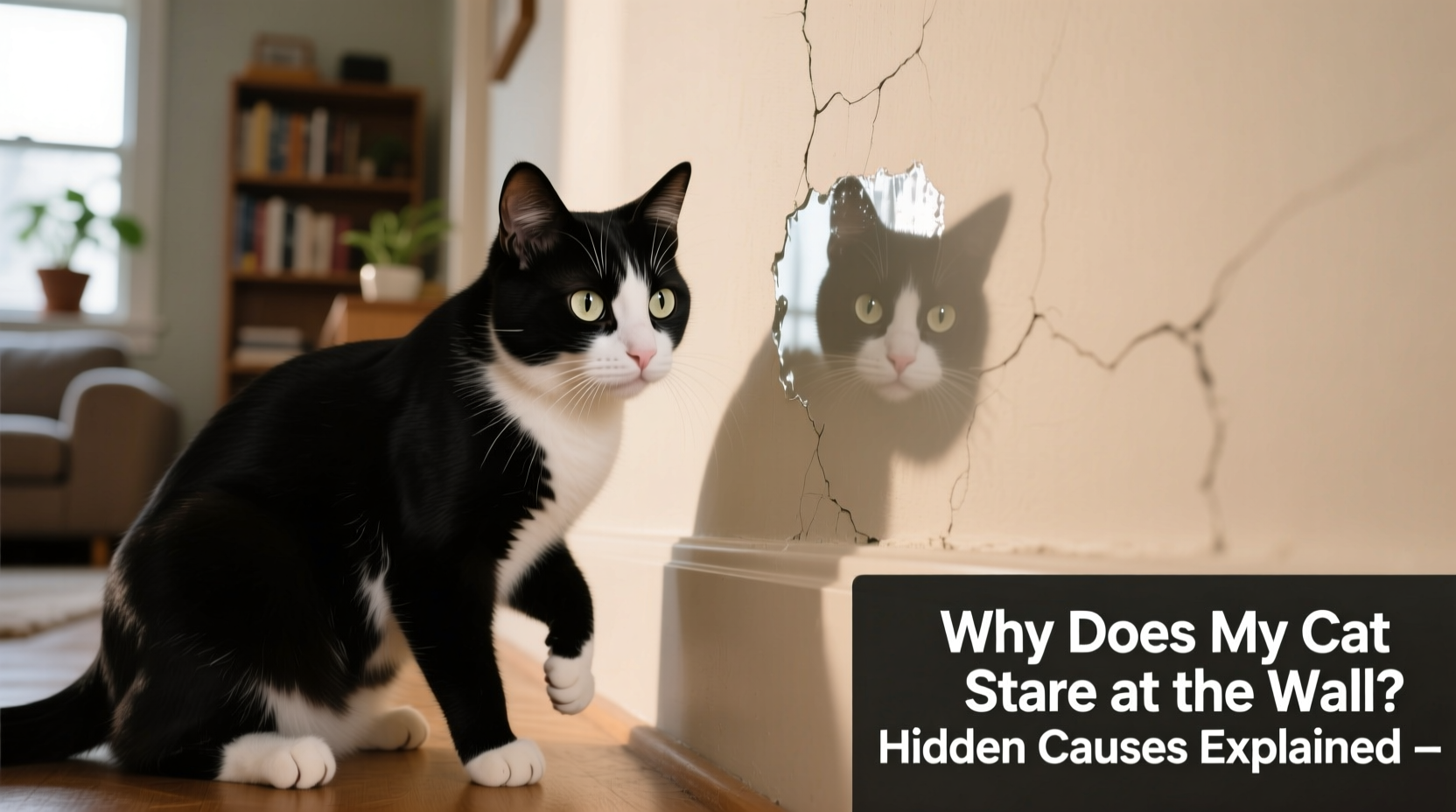
Cats perceive the world differently than humans. Their vision is adapted for low-light hunting, with heightened sensitivity to motion and contrast. While they don’t see colors as vividly as we do, their peripheral vision spans about 200 degrees (compared to our 180), and their eyes contain a reflective layer called the *tapetum lucidum*, which enhances night vision but can also amplify faint light reflections.
This means that what appears to be a blank wall to you may contain flickering shadows, dust particles dancing in sunlight, or slight vibrations from plumbing or electrical wiring—stimuli invisible to human eyes but highly noticeable to a cat. In many cases, your cat isn’t staring at nothing; it’s reacting to micro-movements or light patterns imperceptible to us.
Tip: Observe the time of day and lighting conditions when your cat stares. Natural light shifts or artificial glare may create visual stimuli triggering focus.The Role of Hearing and Whiskers
In addition to vision, cats rely heavily on hearing and tactile input. Their ears can rotate up to 180 degrees, allowing them to pinpoint sounds behind walls—such as rodents, insects, or HVAC systems cycling on and off. Similarly, whiskers detect minute air currents, helping cats sense movement nearby. A cat may appear to stare at a wall while actually responding to auditory or atmospheric cues originating within the structure.
“Cats live in a multisensory world far beyond our awareness. What looks like vacant staring could be intense sensory processing.” — Dr. Lena Torres, Veterinary Ethologist
Medical Causes Behind Prolonged Wall Staring
When wall-staring occurs frequently, lasts several minutes, or is accompanied by other abnormal behaviors, it may indicate a medical issue. The most concerning conditions involve the brain, nervous system, or sensory organs.
Epilepsy and Partial Seizures
Feline epilepsy can manifest not through convulsions, but as “absence seizures” or focal episodes. During these events, a cat may freeze, adopt a rigid posture, blink repetitively, drool, or fixate on one spot—often a wall—for up to several minutes. These episodes are caused by abnormal electrical activity in the brain and may go unnoticed if brief.
Post-seizure, cats might appear disoriented, vocalize excessively, or hide. Because symptoms vary widely, epilepsy is often misdiagnosed as behavioral quirks unless observed closely over time.
Vision Problems and Hallucinations
Cats suffering from retinal disease, glaucoma, or sudden acquired retinal degeneration syndrome (SARDS) may experience visual disturbances. As their sight deteriorates, they can begin seeing phantom shapes or lights—a form of hallucination. These illusions may appear on flat surfaces like walls, prompting sustained staring.
Older cats with cognitive dysfunction syndrome (CDS)—similar to dementia in humans—are also prone to hallucinatory behaviors. They may react to non-existent flies, shadows, or figures, often focusing on corners or blank walls.
Pain or Neurological Disorders
Chronic pain, especially from dental disease, arthritis, or nerve compression, can alter a cat’s behavior. Some cats respond to discomfort by zoning out and fixating on a single point. Similarly, tumors, strokes, or infections affecting the brainstem or visual cortex can lead to compulsive staring.
| Medical Condition | Signs Beyond Wall Staring | Action Required |
|---|---|---|
| Epilepsy | Twitching, drooling, confusion after episode | Veterinary neurology consult + EEG |
| Cognitive Dysfunction | Night vocalization, litter box accidents, pacing | Blood work, mental enrichment plan |
| Retinal Disease | Bumping into objects, dilated pupils | Ophthalmology exam |
| Brain Tumor | Head tilt, circling, appetite loss | Imaging (MRI/CT scan) |
Behavioral and Environmental Triggers
Not all wall-staring stems from illness. Sometimes, the cause lies in the cat’s surroundings or emotional state. Boredom, stress, or hyper-vigilance due to environmental changes can manifest in repetitive or obsessive behaviors.
Stress and Anxiety
Cats are sensitive to disruptions in routine—new pets, moving homes, loud noises, or even redecorating can induce anxiety. A stressed cat may retreat into a trance-like state, fixating on a neutral surface as a coping mechanism. This behavior serves as a form of dissociation, allowing the cat to mentally withdraw from overwhelming stimuli.
Indoor-only cats are particularly vulnerable to under-stimulation. Without adequate outlets for hunting, climbing, or exploration, they may develop stereotypic behaviors such as excessive licking, tail chasing, or wall gazing.
Attention-Seeking Behavior
In some cases, wall staring begins accidentally—perhaps during a moment of curiosity—and is reinforced when the owner reacts. If you consistently respond by talking to, petting, or photographing your cat during these episodes, it may learn that staring gets attention. Over time, this can become a learned habit, even in the absence of external triggers.
Tip: Avoid reinforcing unusual behaviors with attention. Instead, redirect your cat gently with play or treats only when it engages positively.Step-by-Step Guide: Assessing and Responding to Wall Staring
If your cat exhibits persistent wall fixation, follow this structured approach to determine whether intervention is needed:
- Document the Behavior: Note frequency, duration, time of day, and any accompanying actions (e.g., twitching, vocalizing).
- Check the Environment: Look for drafts, insect activity, flickering lights, or sounds near the wall. Use a flashlight to inspect baseboards or outlets.
- Observe Overall Health: Monitor appetite, grooming, litter box use, and mobility. Sudden changes warrant immediate vet consultation.
- Reduce Stressors: Provide hiding spots, consistent routines, and interactive toys. Consider pheromone diffusers like Feliway.
- Schedule a Veterinary Exam: Request a full physical, neurological assessment, blood panel, and eye evaluation if no environmental cause is found.
- Follow Up with Specialists: If initial tests are inconclusive, seek referrals to a veterinary neurologist or behaviorist.
When to Seek Urgent Care
Seek emergency veterinary help if wall staring is accompanied by any of the following:
- Loss of consciousness
- Uncontrolled muscle jerking
- Drooling or foaming at the mouth
- Sudden aggression or disorientation
- Collapsing or inability to stand
Mini Case Study: Bella the Siamese Cat
Bella, a 10-year-old Siamese, began spending hours each evening staring at the same corner of her living room wall. Her owner initially dismissed it as quirky behavior until Bella started vocalizing loudly at night and forgetting her litter box location. Concerned, the owner recorded a video of one episode and brought it to the vet.
After a thorough examination, including blood work and a referral to a veterinary ophthalmologist, Bella was diagnosed with early-stage cognitive dysfunction and mild hypertension affecting her vision. Her staring was linked to both visual distortions and confusion. With medication, a specialized diet, and environmental enrichment—including scheduled play sessions and nightlights—Bella’s symptoms improved significantly within six weeks.
This case highlights how seemingly odd behaviors can be early indicators of complex health issues, especially in senior cats.
Checklist: Is Your Cat’s Wall Staring Cause for Concern?
Use this checklist to evaluate whether your cat needs professional evaluation:
- ✅ Does the staring last longer than 2–3 minutes?
- ✅ Does your cat seem unresponsive during the episode?
- ✅ Are there repetitive facial twitches or blinking?
- ✅ Has there been a change in sleep patterns or activity level?
- ✅ Is your cat older than 8 years?
- ✅ Have you noticed accidents outside the litter box?
- ✅ Does the behavior occur multiple times per week?
If three or more apply, schedule a vet visit promptly.
Frequently Asked Questions
Can cats see spirits or ghosts on walls?
There is no scientific evidence that cats see supernatural entities. However, their superior senses allow them to detect subtle environmental changes—like electromagnetic fields, infrasound, or air movement—that humans cannot. These stimuli may explain behaviors mistaken for ghost sightings.
Is it normal for kittens to stare at walls?
Occasional staring in kittens is usually harmless and part of sensory development. Young cats are learning to interpret visual and auditory input. However, repeated or prolonged fixation should still be monitored, especially if paired with developmental delays.
How can I prevent my cat from staring at walls?
Prevention focuses on enrichment and health maintenance. Offer daily interactive play, rotate toys, provide window perches, and maintain regular vet checkups. For anxious cats, consider puzzle feeders and safe outdoor enclosures (“catios”) to reduce indoor monotony.
Conclusion: Listen to What Your Cat Is Trying to Tell You
A cat staring at a wall isn't just being strange—it's communicating. Whether driven by acute senses, medical distress, or emotional strain, this behavior demands thoughtful attention rather than dismissal. By observing patterns, ruling out environmental factors, and partnering with your veterinarian, you can uncover the true cause and ensure your cat remains healthy and mentally stimulated.
Never assume odd behavior is \"just how they are.\" Early detection of conditions like seizures, vision loss, or cognitive decline can dramatically improve quality of life. Stay vigilant, stay informed, and give your feline companion the care they silently depend on.
💬 Has your cat ever stared at a wall for no apparent reason? Share your story or questions below—we’d love to hear from fellow cat lovers navigating this mysterious behavior!








