Cats are naturally observant, and their behaviors often leave owners puzzled. One of the most common yet unsettling habits is when a cat stares intently at a blank wall for several minutes—sometimes longer. While this can appear eerie or even concerning, it’s not always a sign of trouble. In many cases, your cat is simply doing what cats do best: observing subtle movements, reacting to sounds beyond human perception, or indulging in a moment of deep focus. However, prolonged or frequent staring episodes can occasionally signal underlying medical or behavioral issues that warrant attention.
Understanding why your cat engages in this behavior requires a balanced look at both instinctual traits and potential red flags. From tracking tiny insects to neurological conditions, the reasons vary widely. This article explores the science behind feline perception, identifies common causes, and provides actionable guidance on when to intervene.
The Science of Feline Vision and Hearing
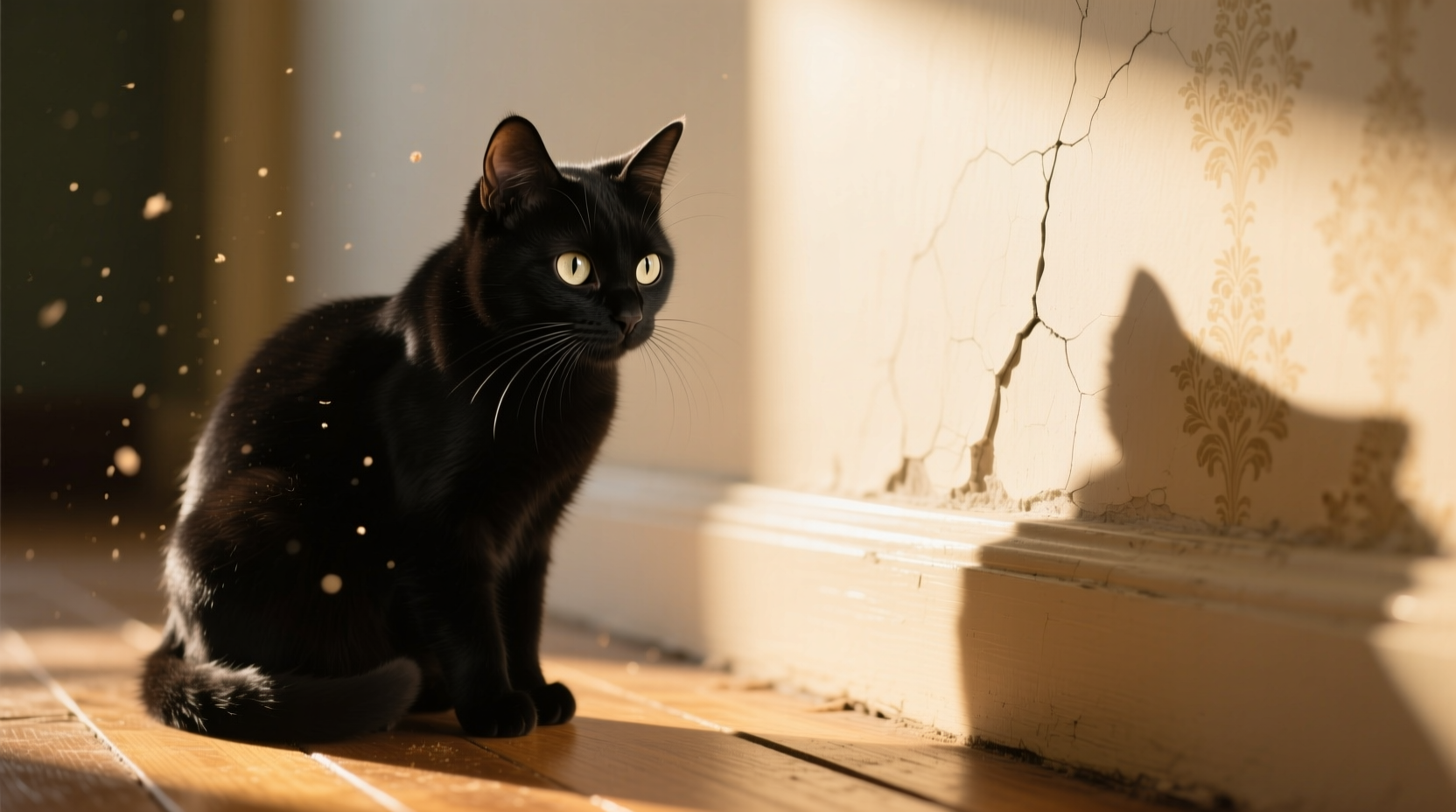
Cats perceive the world differently than humans. Their senses are finely tuned for hunting, allowing them to detect movement, light changes, and high-frequency sounds that we can't. This sensory advantage explains many seemingly odd behaviors, including wall-staring.
A cat’s vision excels in low-light conditions thanks to a higher concentration of rod cells in the retina. These rods enhance motion detection, making even the tiniest flicker—like a shadow shifting due to sunlight or a draft—appear significant. Additionally, cats have a wider field of view (about 200 degrees compared to our 180), which increases their peripheral awareness. What looks like a blank wall to you might be alive with visual stimuli to your cat.
Their hearing is equally impressive. Cats can detect frequencies up to 64 kHz, far beyond the human range of 20 kHz. This means they may hear rodents scurrying inside walls, electrical buzzing from outlets, or even ultrasonic devices operating nearby. A sudden tilt of the head or fixed gaze could mean your cat is zeroing in on an inaudible sound source.
“Cats live in a sensory world we can’t fully access. What seems like vacant staring may actually be intense environmental monitoring.” — Dr. Lydia Ryan, Veterinary BehavioristTip: Observe your cat’s body language during these episodes. Relaxed ears and blinking eyes suggest curiosity; flattened ears or dilated pupils may indicate stress or discomfort.
Common Non-Medical Reasons for Wall-Staring
In most cases, wall-staring is completely normal. Here are the most likely explanations:
- Motion Detection: Tiny movements—dust particles, shadows from passing cars, or insects crawling behind baseboards—can capture a cat’s attention for extended periods.
- Sound Tracking: Mice, plumbing noises, or HVAC systems may produce faint sounds imperceptible to humans but highly stimulating to cats.
- Boredom or Lack of Stimulation: Indoor cats without sufficient enrichment may fixate on minor environmental changes out of mental restlessness.
- Dreaming or Trance-Like States: Some cats enter meditative states where their gaze appears unfocused, similar to daydreaming in humans.
- Reflections or Light Patterns: Sunlight reflecting off mirrors, glass, or metallic surfaces can create moving patterns on walls that fascinate cats.
These behaviors are typically brief, occur sporadically, and don’t interfere with normal routines. If your cat resumes regular activity afterward—eating, grooming, playing—there’s usually no cause for concern.
When Wall-Staring Signals a Health Problem
While occasional staring is normal, persistent or repetitive episodes may point to medical conditions. The following signs should prompt a veterinary consultation:
- Staring for more than 10–15 minutes without response to stimuli
- Accompanying symptoms like drooling, tremors, or disorientation
- Loss of balance or uncoordinated movements after the episode
- Changes in appetite, litter box use, or social interaction
- Repetitive behaviors such as circling or vocalizing while staring
One of the most serious possibilities is feline cognitive dysfunction (FCD), particularly in senior cats. Similar to dementia in humans, FCD can cause confusion, aimless wandering, and vacant staring. Seizures are another critical concern. Cats experiencing partial (focal) seizures may appear frozen, with a fixed gaze, rapid eye movement, or facial twitching—all while remaining conscious.
| Symptom | Possible Cause | Action Required |
|---|---|---|
| Occasional 1–2 minute stare, no other signs | Normal sensory focus | Monitor; no action needed |
| Staring + lip-smacking or twitching | Focal seizure | Veterinary neurology consult |
| Confusion, night yowling, accidents | Feline Cognitive Dysfunction | Vet evaluation, possible medication |
| Head pressing, circling | Neurological disorder or toxin exposure | Immediate emergency care |
| Obsessive repetition near same spot | Anxiety or compulsive disorder | Behavioral assessment |
“Any change in behavior lasting more than a few days, especially in cats over 10 years old, deserves a vet check. Early diagnosis improves outcomes significantly.” — Dr. Alan Pierce, Feline Internal Medicine Specialist
Mini Case Study: Bella, the 13-Year-Old Tabby
Bella, a 13-year-old domestic shorthair, began spending increasing amounts of time staring at the corner of her owner’s bedroom wall. Her owner, Maria, initially dismissed it as harmless quirkiness. But over six weeks, the episodes grew longer—up to 20 minutes—and were accompanied by nighttime vocalizations and occasional soiling outside the litter box.
Concerned, Maria took Bella to her veterinarian. Blood work ruled out kidney or thyroid issues, but a neurological exam suggested early-stage feline cognitive dysfunction. The vet prescribed a therapeutic diet rich in antioxidants and recommended environmental modifications: nightlights to reduce disorientation, consistent feeding times, and daily interactive play to stimulate cognition.
Within two months, Bella’s staring episodes decreased in frequency and duration. Her nighttime restlessness improved, and she resumed using the litter box consistently. While not cured, Bella’s quality of life was significantly enhanced through early intervention.
Step-by-Step Guide: Assessing and Responding to Wall-Staring
If your cat frequently stares at walls, follow this structured approach to determine whether it’s benign or concerning:
- Observe and Document: Note the time, duration, location, and any accompanying behaviors (e.g., vocalization, twitching).
- Check the Environment: Look for drafts, reflections, insect activity, or appliance noises that might explain the fixation.
- Test Responsiveness: Gently call your cat’s name or shake a treat bag. A normal cat will eventually respond; one having a seizure may not react at all.
- Review Recent Changes: Consider stressors like new pets, home renovations, or schedule shifts that could trigger anxiety.
- Schedule a Veterinary Visit: If episodes last longer than a few minutes, increase in frequency, or involve physical symptoms, book an appointment promptly.
- Implement Enrichment: Regardless of cause, improve mental stimulation with puzzle feeders, window perches, rotating toys, and scheduled play sessions.
- Monitor Progress: Keep a log for 2–4 weeks post-evaluation to track improvements or identify recurring patterns.
Prevention and Environmental Enrichment Checklist
Even if your cat’s wall-staring is harmless, enriching their environment reduces fixation behaviors and supports overall well-being. Use this checklist to optimize your cat’s living space:
- ✅ Provide vertical spaces (cat trees, shelves) for elevated observation
- ✅ Install window perches with bird feeders or safe outdoor views
- ✅ Rotate toys weekly to prevent habituation
- ✅ Use food puzzles or treat-dispensing balls for mental engagement
- ✅ Maintain a consistent daily routine for feeding and play
- ✅ Introduce calming pheromone diffusers (e.g., Feliway) if anxiety is suspected
- ✅ Limit exposure to loud appliances or erratic lighting
- ✅ Schedule annual vet exams, especially for cats over age 7
Frequently Asked Questions
Is it normal for cats to stare at nothing?
Yes, within reason. Cats often focus on stimuli invisible to humans, such as air currents, dust motes, or distant sounds. Brief episodes (under 2–3 minutes) without other symptoms are typically normal. However, prolonged or repetitive staring should be evaluated.
Can stress cause a cat to stare at walls?
Yes. Anxious or overwhelmed cats may develop displacement behaviors—repetitive actions performed in response to stress. Staring can be a form of dissociation or obsessive focus, especially in multi-cat households or noisy environments.
Do seizures in cats always involve convulsions?
No. Many feline seizures are focal (partial), meaning only a part of the brain is affected. Symptoms may include fixed gaze, facial twitching, drooling, or paw paddling—without full-body convulsions. These can be easy to miss without careful observation.
Conclusion: Know Your Cat, Trust Your Instincts
Your cat’s wall-staring may be nothing more than a testament to their extraordinary senses—or it could be a quiet cry for help. The key lies in understanding the context: how often it happens, how long it lasts, and what else is going on in your cat’s life. Most instances are harmless, rooted in natural feline curiosity and perception. But when behavior shifts dramatically, especially in older cats, timely action can make a profound difference.
By combining attentive observation with proactive care, you can ensure your cat remains mentally sharp, emotionally secure, and physically healthy. Don’t dismiss unusual behaviors out of hand, but also avoid jumping to conclusions. When in doubt, consult your veterinarian. After all, you know your cat best—and sometimes, the most powerful tool in pet care is simply paying attention.
💬 Have a story about your cat’s mysterious behavior? Share your experience in the comments—your insight might help another worried pet owner feel less alone.








