It’s a scene many cat owners have witnessed: your feline companion sits perfectly still, eyes locked on a blank stretch of wall, unblinking and seemingly entranced. Minutes pass. You follow her gaze—nothing there. No movement, no sound, just paint and plaster. What could possibly hold such fascination? The internet is full of speculation: Is she seeing spirits? Hunting invisible bugs? Or is something more concerning happening beneath the surface?
The truth is, while cats do have superior night vision and hearing compared to humans, they aren’t supernatural beings with access to hidden dimensions. Their wall-staring behavior usually has logical, biological, or behavioral roots. However, in some cases, it can signal underlying health problems that require veterinary attention.
Understanding why your cat stares at the wall means looking beyond folklore and embracing science, observation, and empathy for how cats experience the world differently than we do.
The Science Behind Feline Vision and Perception
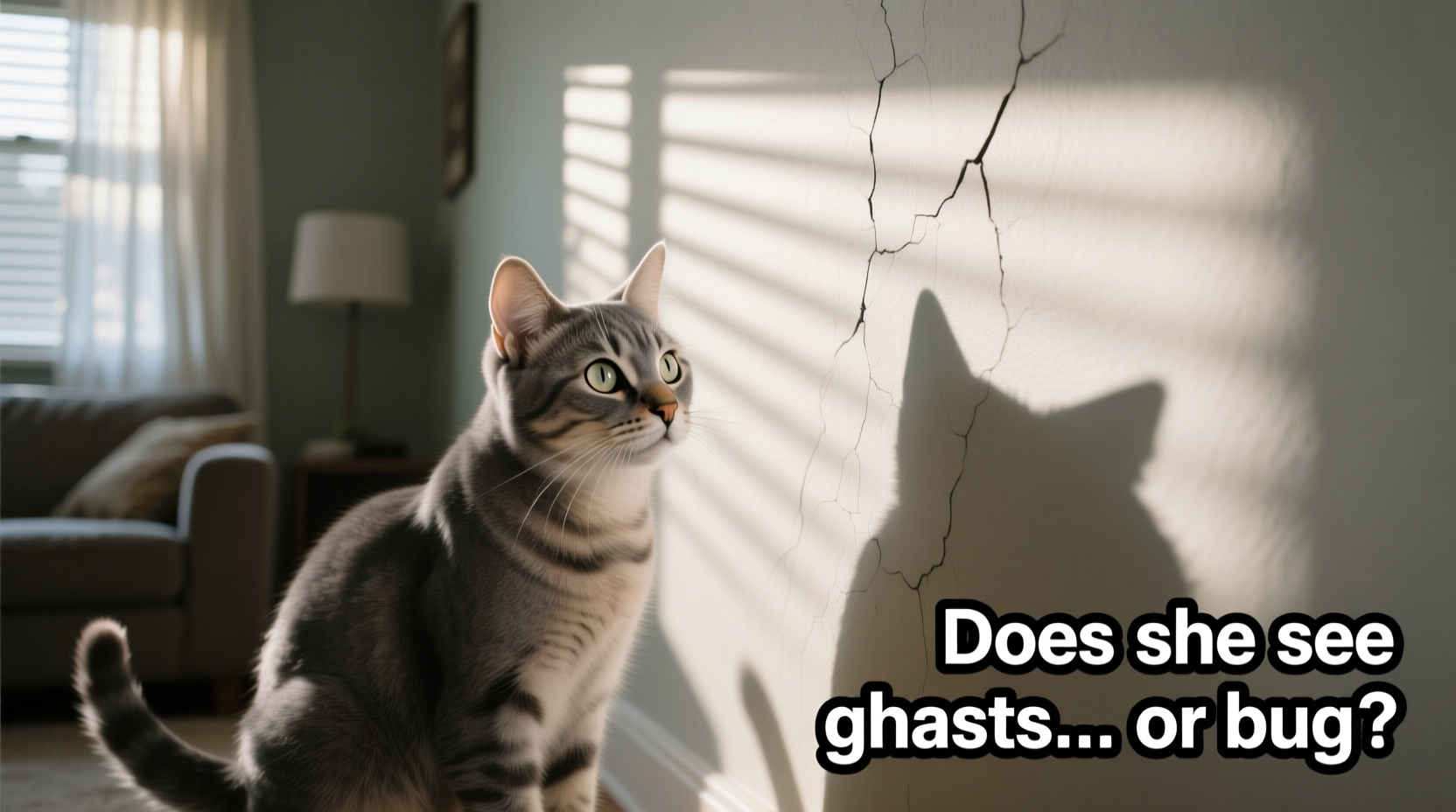
Cats perceive their environment in ways humans simply cannot. Their eyes are adapted for low-light hunting, giving them excellent motion detection and peripheral vision. But this also means they may notice subtle stimuli invisible to us—faint shadows, dust motes drifting in sunlight, or tiny cracks where insects might hide.
A cat's retina contains a high number of rod cells, which detect light and movement, making them hyper-aware of even the smallest shifts in their surroundings. While we might dismiss a flicker as a trick of the light, your cat interprets it as potential prey. This heightened sensitivity explains why a blank wall might appear alive with activity from her perspective.
Additionally, cats have a wider field of view (about 200 degrees compared to our 180) and can detect ultraviolet light, which reveals patterns on surfaces we can't see. Urine trails, residue from cleaning products, or even certain paints may reflect UV light, creating visual cues that intrigue your cat.
Tip: Observe when and where your cat stares. Note lighting conditions, time of day, and nearby sounds to identify possible triggers.Common Behavioral Reasons for Wall Staring
Not every instance of wall gazing is cause for alarm. In fact, most of the time, it falls within normal feline behavior. Here are several plausible explanations rooted in instinct and curiosity:
- Hunting simulation: Even indoor cats retain strong predatory instincts. A moving shadow or speck of dust can trigger a full hunt sequence—stalking, focusing, pouncing—even if nothing tangible exists.
- Boredom or lack of stimulation: Cats left alone for long periods may fixate on walls out of mental underload. Without toys, climbing structures, or interaction, their brains latch onto any available stimulus.
- Response to sounds: High-frequency noises like electrical buzzing, plumbing vibrations, or insect movement inside walls can capture a cat’s attention. Mice, termites, or even HVAC systems may be the unseen source.
- Reflections or light play: Sunlight bouncing off mirrors, glass, or metallic objects can create dancing lights that fascinate cats. These shifting patterns mimic prey-like movements.
In multi-cat households, one cat’s fixation might prompt others to look in the same direction—a form of social alerting. It doesn’t mean they all see the same thing, but rather that they’re responding to body language cues.
Medical Conditions That May Cause Fixation
While occasional staring is normal, persistent or repetitive wall-gazing—especially when accompanied by other symptoms—can indicate neurological or sensory issues. Some medical causes include:
- Epilepsy or partial seizures: Cats can experience focal seizures that don’t result in convulsions. Instead, they may sit frozen, pupils dilated, staring blankly at a spot. Episodes typically last seconds to minutes and may be followed by disorientation.
- Vision problems: Cataracts, retinal detachment, or sudden acquired retinal degeneration (SARD) can cause hallucinations or misinterpretations of visual input. A cat may react to non-existent shapes or lights.
- Cognitive dysfunction syndrome (CDS): Older cats (typically over 10 years) can develop feline dementia. Symptoms include confusion, aimless wandering, vocalization at night, and prolonged staring into space.
- Pain or discomfort: Chronic pain—such as arthritis or dental disease—can lead to altered behavior, including zoning out or appearing “spaced out” while actually coping with internal distress.
“Cats are masters at hiding illness. A change in behavior like frequent staring should never be dismissed as ‘just being weird.’ It could be the only outward sign of a serious condition.” — Dr. Lena Torres, DVM, Feline Neurology Specialist
When to Seek Veterinary Help
Monitor for red flags such as:
- Staring episodes lasting longer than a few minutes
- Twitching, drooling, or falling during episodes
- Loss of balance or coordination
- Sudden aggression or fearfulness
- Changes in appetite, sleep, or litter box habits
If you observe any of these, schedule a vet visit promptly. Diagnostic tests like blood work, MRI scans, or EEGs may be necessary to rule out epilepsy, brain tumors, or metabolic disorders.
Could She Be Seeing Ghosts or Spirits?
The idea that cats see ghosts is deeply embedded in folklore. Ancient Egyptians revered cats as spiritual guardians, and Victorian-era superstitions claimed they could sense spirits due to their “mystical” eyes. Even today, anecdotal reports describe cats reacting to empty corners, hissing at unseen entities, or sleeping beside non-existent companions.
From a scientific standpoint, there’s no evidence that cats perceive supernatural phenomena. However, their acute senses allow them to detect environmental changes we miss—air pressure shifts before storms, electromagnetic fields from appliances, or infrasound vibrations below human hearing range. These stimuli may create sensations interpreted as “eerie” or “unexplained,” fueling ghost theories.
In reality, what feels like a paranormal encounter might simply be your cat responding to a mouse behind the wall, a flickering fluorescent bulb, or the hum of a refrigerator cycling on.
Tip: Before assuming supernatural causes, check for drafts, electrical devices, pests, or reflections that could explain your cat’s focus.Do Cats See Bugs That We Can’t?
This is far more likely than ghost sightings. Cats can detect micro-movements and tiny creatures invisible to the naked human eye. Dust mites, springtails, or even mold spores drifting in sunbeams might appear as moving specks to a cat with sharp vision.
Moreover, insects living inside walls—like silverfish, ants, or crickets—produce faint rustling sounds. Your cat may not see them directly but hears their movement and fixates on the point of origin. This behavior is especially common near baseboards, outlets, or vents.
| Potential Wall Stimuli | Human Perception | Feline Perception |
|---|---|---|
| Dust particles in sunlight | Hardly noticeable | Appears as floating prey-like dots |
| Electrical buzzing | May hear faint noise | Clear, high-pitched sound attracting attention |
| Insects inside walls | No awareness | Distinct scratching or movement detected |
| UV-reflective residues | Invisible | Visible patterns or marks on surface |
| Temperature gradients | Subtle draft | Noticeable air current affecting whiskers |
In one documented case, a cat repeatedly stared at a patch of wall until the owner investigated. Upon removing the baseboard, they discovered a nest of carpenter ants. The cat had been tracking their activity for weeks—long before any visible damage occurred.
Mini Case Study: Bella and the Basement Wall
Maria, a cat owner from Portland, noticed her 7-year-old tabby Bella spending increasing time staring at a corner of the basement wall. At first, Maria assumed boredom. But when Bella began meowing insistently and pawing at the drywall, she called a pest control specialist.
Inspection revealed a small water leak behind the wall, creating a damp environment ideal for termite colonies. The technician confirmed termites were active—and likely producing vibrations Bella could hear. After repairs and treatment, Bella stopped staring entirely.
This example illustrates how a cat’s fixation can serve as an early warning system for household issues we might otherwise overlook.
How to Respond: A Step-by-Step Guide
If your cat frequently stares at walls, take a structured approach to determine the cause and appropriate response:
- Observe and document: Record when, where, and how long the staring occurs. Note any accompanying behaviors (twitching, vocalizing, pawing).
- Eliminate environmental triggers: Turn off electronics, close blinds, clean reflective surfaces, and inspect for pests.
- Enrich the environment: Introduce puzzle feeders, window perches, interactive toys, or scheduled play sessions to reduce idle fixation.
- Consult your veterinarian: If episodes persist or worsen, seek a professional evaluation. Mention frequency, duration, and associated signs.
- Monitor after intervention: Track improvements following changes in routine, environment, or treatment.
Prevention Checklist
Use this checklist to minimize unnecessary wall-staring and support your cat’s well-being:
- ✅ Provide daily interactive play (at least 15–20 minutes)
- ✅ Install window perches or bird feeders outside windows
- ✅ Rotate toys weekly to maintain novelty
- ✅ Use pheromone diffusers (e.g., Feliway) in high-stress areas
- ✅ Schedule annual vet checkups, especially for senior cats
- ✅ Address household pests promptly
- ✅ Avoid sudden changes in routine or environment
FAQ
Is it normal for cats to stare at walls?
Occasional staring is normal, especially if triggered by light, sound, or movement. However, frequent, prolonged, or repetitive fixation—particularly with other odd behaviors—should be evaluated by a vet.
Can cats have hallucinations?
Yes. Medical conditions like seizures, hypertension, or cognitive decline can cause perceptual disturbances. Sudden reactions to empty spaces, chasing invisible objects, or growling at nothing may indicate neurological issues.
Should I stop my cat from staring at the wall?
Interrupting briefly is fine, but avoid startling her. Gently call her name or offer a toy to redirect attention. Focus on identifying and addressing the root cause rather than suppressing the behavior.
Conclusion: Understanding Your Cat’s World
Your cat isn’t broken, possessed, or losing her mind—she’s experiencing the world through senses far more refined than ours. When she stares at the wall, she’s not being strange; she’s being a cat. Whether reacting to microscopic motion, hidden sounds, or instinctual impulses, her behavior reflects a mind finely tuned to survival and exploration.
That said, vigilance matters. What seems quirky today could be a symptom tomorrow. By combining empathy with observation and timely care, you honor both her nature and her health.
💬 Have a story about your cat’s mysterious staring habit? Share your experience in the comments—your insight might help another pet owner understand their feline friend better.








