Cats are enigmatic creatures. Their sudden bursts of energy, quiet contemplation, and seemingly random behaviors often leave owners puzzled. One such behavior—staring intently at a blank wall—can be particularly unsettling. While occasional stillness or focus might seem harmless, persistent wall-staring can raise concerns. Is your cat simply lost in thought, or could this be a sign of an underlying medical or neurological problem? Understanding the reasons behind this behavior is crucial for ensuring your feline’s well-being.
Wall-gazing isn’t always a red flag. Cats have keen senses and may detect movement, sounds, or light changes imperceptible to humans. However, when this behavior becomes frequent, prolonged, or is accompanied by other unusual symptoms, it may point to deeper issues ranging from vision problems to neurological disorders. This article explores the possible explanations, highlights warning signs, and provides actionable guidance for concerned cat owners.
Common Behavioral Reasons for Wall Staring
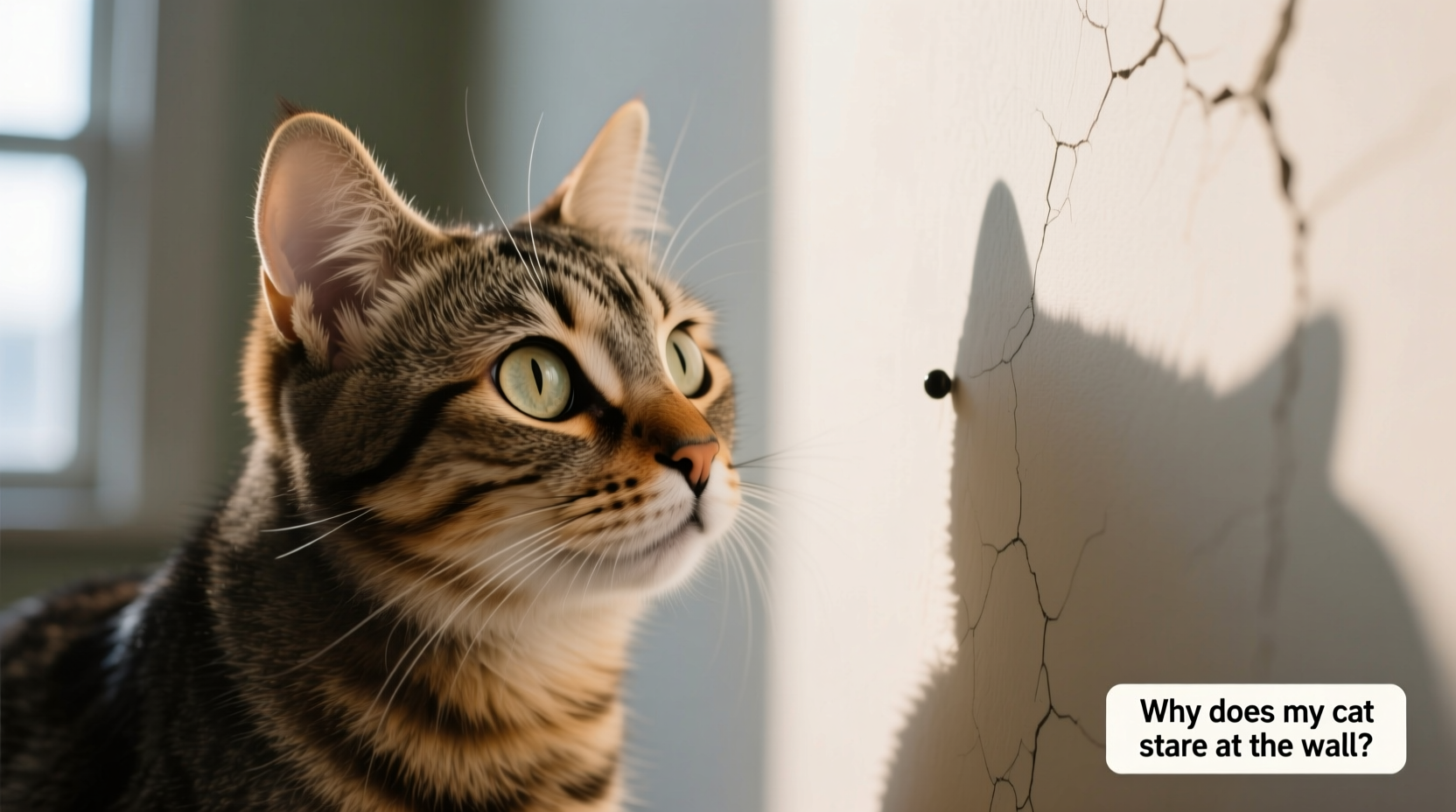
Cats are natural hunters with highly developed sensory systems. What appears to be aimless staring may actually be a response to subtle environmental stimuli. Understanding normal feline behavior helps distinguish between harmless quirks and potential health concerns.
- Movement detection: Even tiny shifts in light, dust particles, or shadows on the wall can capture a cat’s attention. Their eyes are adapted to detect motion, sometimes reacting to things invisible to human eyes.
- Hearing high-frequency sounds: Cats hear frequencies up to 64 kHz—far beyond human range. Pipes, electrical wiring, or rodents inside walls can produce noises that trigger focused listening and staring.
- Dreaming or zoning out: Like humans, cats experience daydreaming or brief dissociative states. A cat may appear “glazed over” while processing internal thoughts or memories.
- Boredom or lack of stimulation: Indoor cats without sufficient mental engagement may develop repetitive behaviors, including fixating on static objects.
When Wall Staring Signals Health Problems
Prolonged or repetitive wall-staring, especially when paired with other symptoms, may indicate medical conditions. These require prompt veterinary evaluation to prevent worsening outcomes.
Vision Impairment or Blindness
Cats with deteriorating vision may appear disoriented and stare into space as they struggle to interpret their surroundings. Cataracts, glaucoma, or retinal detachment can impair sight, leading to vacant gazes. You might also notice bumping into furniture or reluctance to jump.
Epilepsy and Seizure Activity
Focal (partial) seizures in cats often manifest subtly. Instead of convulsions, a cat may freeze, twitch facial muscles, drool, or stare blankly at a wall for several seconds to minutes. These episodes can be mistaken for daydreaming but are neurological in origin.
Cognitive Dysfunction Syndrome (CDS)
Similar to dementia in humans, older cats (typically over 10 years) can develop cognitive decline. Symptoms include confusion, altered sleep cycles, vocalization at night, and prolonged staring at walls. The brain’s ability to process sensory input diminishes, leading to disorientation.
Pain or Discomfort
A cat experiencing chronic pain—such as from arthritis, dental disease, or internal illness—may withdraw and exhibit vacant behavior. Staring into space can be a passive response to discomfort, especially if the cat is avoiding movement or interaction.
“Cats are masters at hiding illness. Subtle behavioral changes like prolonged staring are often the first clue that something is wrong.” — Dr. Lena Reyes, DVM, Feline Neurology Specialist
Red Flags: When to Seek Veterinary Help
Not all staring is dangerous, but certain patterns demand immediate attention. Recognizing these signs early can make a critical difference in diagnosis and treatment.
| Symptom | May Indicate | Action Required |
|---|---|---|
| Staring lasting more than 1–2 minutes | Seizure activity, neurological issue | Schedule vet visit; record video if possible |
| Accompanied by twitching, drooling, or blinking | Focal seizure | Seek emergency care if recurrent |
| Disorientation after episode | Post-ictal phase (after seizure) | Monitor closely; report to vet |
| Changes in appetite, grooming, or litter box use | Pain, illness, or cognitive decline | Comprehensive vet exam needed |
| Nighttime vocalization + staring | Cognitive dysfunction | Behavioral and medical evaluation |
Mini Case Study: Bella, the 12-Year-Old Tabby
Bella’s owner noticed she began spending long periods gazing at the corner of the living room wall each evening. Initially dismissed as aging behavior, the episodes grew longer—up to five minutes—and were followed by confusion and wandering. After recording one episode and sharing it with her veterinarian, Bella was diagnosed with partial seizures. Blood tests ruled out toxins, and an MRI revealed a small lesion affecting her temporal lobe. With anti-seizure medication, the episodes decreased significantly, and Bella regained much of her normal behavior. This case underscores the importance of documentation and timely intervention.
Step-by-Step Guide: What to Do If Your Cat Stares at Walls
If you observe repeated or concerning wall-staring, follow this structured approach to determine the cause and appropriate response.
- Observe and Document: Note the duration, frequency, time of day, and any associated behaviors (twitching, vocalizing, drooling). Use your phone to record a video during an episode.
- Check the Environment: Look for potential triggers—drafts causing curtain movement, flickering lights, or sounds from appliances or pipes. Rule out external stimuli.
- Assess Overall Behavior: Monitor eating, drinking, grooming, litter box habits, and interaction levels. Sudden changes suggest illness.
- Schedule a Veterinary Exam: Share your observations and video with your vet. Request a full physical, neurological assessment, and blood work.
- Follow Diagnostic Recommendations: Depending on initial findings, your vet may recommend advanced imaging (MRI/CT), EEG, or referral to a veterinary neurologist.
- Implement Treatment Plan: Whether managing seizures, pain, or cognitive decline, adhere to prescribed medications and lifestyle adjustments.
- Modify the Environment: Reduce stress, provide mental enrichment, and maintain a consistent routine to support your cat’s well-being.
Prevention and Environmental Enrichment
While not all causes of wall-staring are preventable, enhancing your cat’s environment can reduce stress-related or boredom-driven behaviors.
- Provide daily interactive play sessions using wand toys to simulate hunting.
- Rotate toys weekly to maintain novelty and interest.
- Install window perches or bird feeders outside to stimulate visual engagement.
- Use puzzle feeders to encourage mental activity during meal times.
- Introduce calming pheromone diffusers (e.g., Feliway) in multi-cat or high-stress households.
For senior cats, consider low-sided litter boxes, orthopedic beds, and nightlights to improve navigation and comfort. Cognitive enrichment—like teaching simple tricks or using treat-dispensing toys—can help slow mental decline.
Frequently Asked Questions
Is it normal for cats to stare at nothing?
Occasionally, yes. Cats may react to subtle movements, air currents, or sounds we can't perceive. Brief episodes of stillness are part of normal feline behavior. However, if staring becomes frequent, prolonged, or is paired with other odd behaviors, it warrants investigation.
Can stress cause my cat to stare at the wall?
Indirectly, yes. Chronic stress can lead to compulsive or dissociative behaviors. A stressed cat may retreat mentally, appearing \"zoned out.\" Addressing the source of stress—such as household changes, new pets, or loud noises—often resolves the behavior.
Do cats hallucinate when they stare at walls?
In some cases, yes—particularly during focal seizures or due to cognitive dysfunction. Cats aren't known to hallucinate in the same way humans do under psychological conditions, but neurological disturbances can create perceptual distortions, making them see or hear things that aren’t there.
Conclusion: Trust Your Instincts and Act Early
Your cat’s stare might seem insignificant, but when it deviates from their normal behavior, it could be a silent cry for help. Cats rarely show obvious signs of pain or illness until conditions are advanced. Wall-staring, especially when persistent or combined with other symptoms, should never be ignored. By paying close attention, documenting changes, and seeking professional advice promptly, you give your cat the best chance at a healthy, comfortable life.
💬 Have you noticed your cat staring at walls? Share your experience or questions in the comments—your story could help another pet owner recognize a warning sign early.








