If you’ve ever tried to work from home only to find your cat planted firmly across your laptop keys, you’re not alone. This quirky yet persistent feline behavior has baffled and amused pet owners for years. While it may seem like a calculated act of sabotage, animal behaviorists confirm that cats aren’t trying to ruin your productivity—they’re acting on instinct, emotion, and a desire for connection. Understanding the science behind this behavior transforms frustration into fascination, offering insight into how cats perceive their world and their humans.
The Warmth Factor: A Cozy Spot by Design
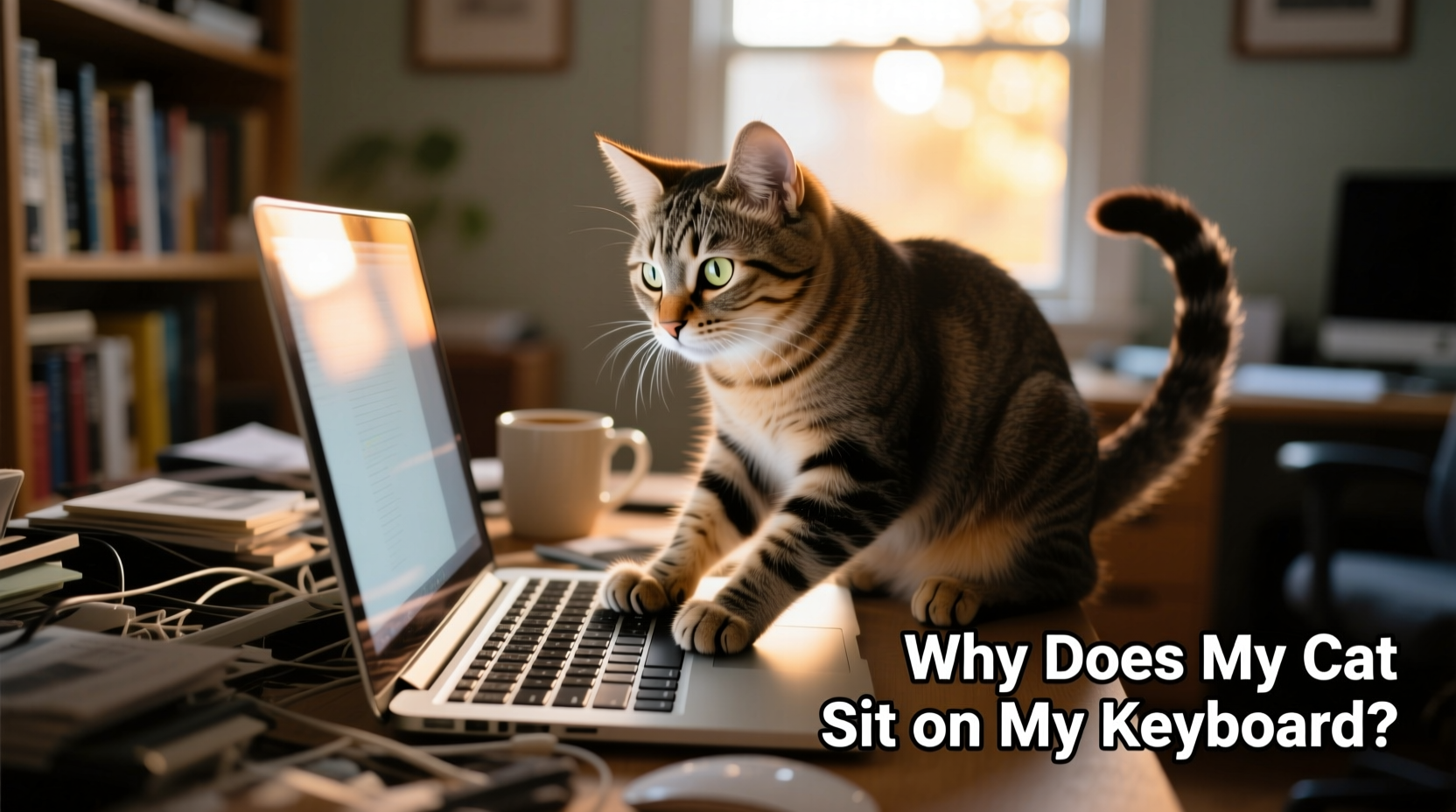
One of the most straightforward explanations for why cats love sitting on keyboards is heat. Laptops emit a steady, gentle warmth from their internal components, particularly around the processor and battery areas. To a cat, which naturally seeks out warm surfaces for resting, a laptop functions like a heated bed. The average body temperature of a cat ranges between 100.5°F and 102.5°F (38°C–39°C), meaning they prefer ambient temperatures warmer than what most humans find comfortable.
This thermal attraction isn't just about comfort—it's evolutionary. In the wild, conserving energy is critical, and lying on warm surfaces reduces the effort needed to maintain body heat. Even domesticated cats retain this preference. When your laptop powers up, it becomes an instant hotspot in your workspace, drawing your cat like a magnet.
Tip: Place a heated cat pad or a sun-warmed blanket near your desk to redirect your cat’s warmth-seeking behavior away from your keyboard.Territorial Instincts: Your Laptop Is Part of Their Domain
Cats are territorial animals. They mark and monitor spaces they consider theirs using scent glands located on their cheeks, paws, and flanks. When your cat sits on your keyboard, they're not just lounging—they're claiming ownership. The laptop, as part of your personal space, becomes a high-value object in their territory simply because it belongs to you.
Dr. Sarah Ellis, co-author of *The Trainable Cat* and feline behavior expert at the University of Lincoln, explains: “Cats don’t distinguish between your belongings and shared household resources. If you spend time with an object, it gains significance in their eyes.” By sitting on your keyboard, your cat asserts presence in a zone where you invest significant attention—making it prime real estate.
“Sitting on your keyboard is a way for cats to say, ‘I’m here, and this space matters because you do.’ It’s less about the device and more about proximity to you.” — Dr. Mikel Delgado, Certified Cat Behavior Consultant
Attention-Seeking Behavior: The Ultimate Interruption
Let’s face it: when your cat steps on the spacebar and types a line of random characters into your document, you notice. That’s exactly the point. Cats are intelligent, observant creatures that quickly learn cause and effect. If every time you’re typing, your cat jumps on the keyboard and you respond—even by gently moving them or saying “no”—they receive attention. And for a social animal that craves interaction, any attention is better than none.
This behavior often intensifies during periods of increased human focus, such as long work sessions or video calls. Your cat interprets your concentration as emotional distance. Sitting on your keyboard forces engagement, breaking your focus and restoring connection. In behavioral terms, this is operant conditioning: the cat repeats the action because it consistently yields a response.
Recognizing Attention Cues in Cats
- Pawing at your arm while you type
- Meowing insistently near your desk
- Bringing toys to your workspace
- Staring intently until acknowledged
These behaviors often precede the keyboard invasion. Addressing them early can prevent escalation.
Scent and Bonding: You Smell Like Home
Your laptop carries your scent. From being stored near you, handled frequently, and placed on your lap or desk, it absorbs traces of your skin cells, sweat, and perfume or detergent. To a cat, whose primary sense is smell, this makes the device a sensory extension of you.
Rubbing against or sitting on objects imbued with your scent is a form of olfactory bonding. Cats deposit their own pheromones through facial rubbing, creating a communal colony scent. When your cat settles on your keyboard, they’re not only absorbing your presence but also blending their identity with yours—a subtle but meaningful social gesture.
This behavior is especially common in households with a single human caregiver. Without other cats to bond with, the human becomes the central figure in the cat’s social structure. Objects associated with that person become emotionally charged.
A Step-by-Step Guide to Managing Keyboard Sitting
While endearing, constant keyboard occupation can disrupt work and even damage devices. Instead of punishing the behavior—which can erode trust—use positive redirection. Follow this timeline to modify the habit without causing stress.
- Observe Patterns (Days 1–3): Note when your cat approaches the keyboard. Is it during long typing sessions? After meals? Before bedtime? Identifying triggers helps anticipate behavior.
- Create Alternatives (Day 4): Place a soft, warm cat bed or blanket next to your desk. Sprinkle it with catnip or use a microwavable heating pad to increase appeal.
- Reinforce Positive Choices (Days 5–7): When your cat uses the alternative spot, reward immediately with treats, praise, or gentle petting. Consistency builds association.
- Use Temporary Barriers (Optional): During critical work periods, place a small box or book upright beside the laptop to block access without scolding.
- Maintain Daily Engagement (Ongoing): Schedule two 10-minute play sessions daily. Use wand toys to simulate hunting. A mentally stimulated cat is less likely to seek attention disruptively.
Do’s and Don’ts of Handling Keyboard Behavior
| Do’s | Don’ts |
|---|---|
| Provide warm, elevated alternatives near your workspace | Yell at or push your cat off aggressively |
| Engage in regular interactive play to reduce demand for attention | Ignore your cat for hours then expect patience |
| Use positive reinforcement when they choose appropriate spots | Use sprays or deterrents that cause fear or discomfort |
| Respect their need for closeness—schedule bonding time | Assume the behavior is “spiteful” or malicious |
Mini Case Study: Remote Worker and Her Persistent Tabby
Lena, a freelance graphic designer in Portland, found her tabby cat, Milo, increasingly disruptive during client calls. Every time she joined a Zoom meeting, Milo would leap onto her keyboard, triggering accidental muting and camera flashes. Initially frustrated, Lena consulted a virtual feline behaviorist who suggested environmental enrichment.
She placed a heated cat cushion to the left of her monitor and began a routine of morning feather toy play. She also started giving Milo a stuffed mouse after each completed work block. Within ten days, Milo’s keyboard visits dropped by 80%. He still occasionally perches nearby—but now he watches from his designated cushion, often falling asleep within sight of her.
“It wasn’t about stopping him,” Lena said. “It was about giving him a better option—and showing him he didn’t have to fight for my attention.”
Frequently Asked Questions
Is my cat trying to stop me from working?
No. Cats don’t understand the concept of “work” or deadlines. Their actions are driven by instinct, comfort, and social needs—not a desire to interfere. What seems like obstruction is usually a bid for interaction or a response to environmental cues like warmth and scent.
Could sitting on the keyboard hurt my cat?
Generally, no—modern laptops dissipate heat efficiently and won’t burn a cat’s paws under normal conditions. However, ensure ventilation isn’t blocked, as overheating can damage both the device and potentially discomfort the cat over prolonged exposure. Avoid letting cats lie on laptops for more than 20–30 minutes at a time.
Will getting a second cat stop this behavior?
Not necessarily. While some cats redirect social needs toward a companion, others remain strongly bonded to their human. Adding a second cat is a major decision that shouldn’t be based solely on managing one behavior. If considering adoption, ensure compatibility and provide ample resources to prevent conflict.
Understanding Builds Better Bonds
The next time your cat commandeers your keyboard, pause before reacting. That small body blocking your screen represents a complex blend of biological need, emotional attachment, and learned communication. Behind the adorable interruption is a creature trying to navigate a world shaped by human routines using ancient instincts and keen observation.
By responding with empathy and structure, you preserve both productivity and the bond you share. Redirecting behavior doesn’t mean rejecting your cat—it means guiding them toward mutual respect. A cat that feels seen and satisfied is less likely to resort to dramatic gestures for attention.
💬 Have a funny or insightful story about your cat on your keyboard? Share it in the comments—your experience might help another cat owner feel less alone!








