Cats are masters of subtle communication. Unlike dogs, who often wear their emotions on their sleeves, cats convey meaning through posture, tail flicks, ear angles, and the way they position their bodies. One of the most common—and seemingly mysterious—behaviors is when a cat curls into a tight circle or tucks its paws neatly beneath its body in what’s known as the “loaf” position. While these postures may appear simply cute or comfortable, they carry deeper significance about a cat’s mood, health, and sense of security. Understanding what these positions mean allows owners to respond appropriately, strengthen bonds, and even catch early signs of discomfort.
The Science Behind the Sit: What Is the Loaf Position?
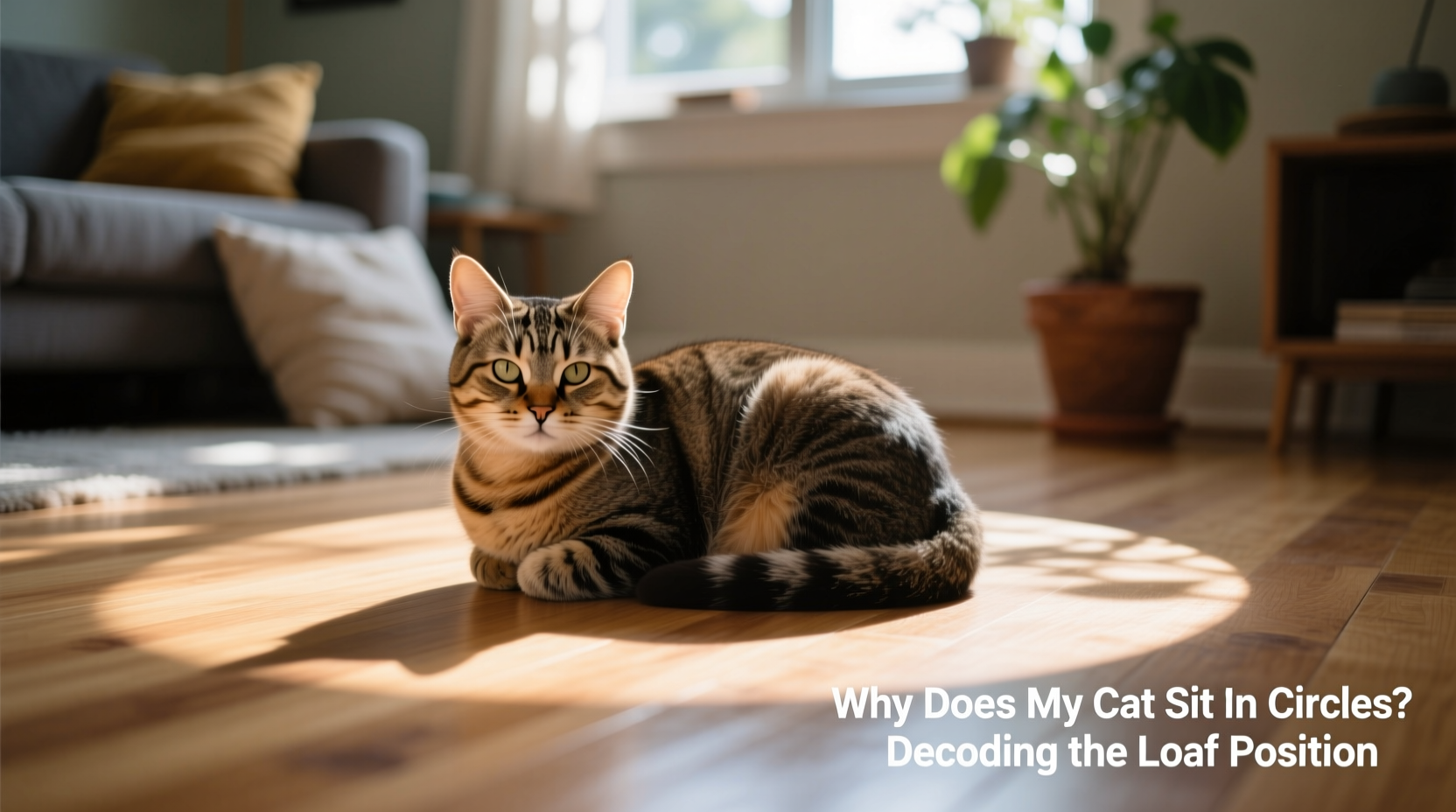
The “cat loaf” refers to when a cat tucks its front paws under its chest, sits upright with a compact body, and resembles a freshly baked loaf of bread. This posture is sometimes called the “biscuit” or “tucked paws” stance. It's distinct from other sitting styles such as the “sphinx” (front legs extended forward) or the “donut” (curled tightly in a full circle).
This position is generally considered a sign of relaxation and contentment. When a cat feels safe enough to restrict mobility by tucking its limbs close, it indicates a low-stress environment. The loaf isn’t just about comfort—it’s a calculated balance between alertness and ease. A loafing cat can spring into action quickly if needed, making it ideal for light naps or casual observation.
Tip: If your cat consistently loafs in open areas like the middle of the living room, it’s a strong sign they feel secure in their territory.Why Cats Curl Into Circles: Instinct, Warmth, and Protection
When a cat forms a complete circle—nose touching tail, body curled tightly—it’s echoing an ancient survival instinct. In the wild, this posture minimizes exposure of vulnerable organs, retains body heat, and reduces the animal’s silhouette to potential predators. Even domesticated cats retain this behavior, especially during sleep.
Heat conservation is a key reason for circular positioning. A cat’s normal body temperature ranges between 100.5°F and 102.5°F (38°C–39.2°C), higher than humans. To maintain this efficiently, especially on cooler surfaces, curling up reduces surface area and traps warmth around the core. This is particularly noticeable in kittens, older cats, or short-haired breeds.
But beyond physiology, the circle also reflects emotional state. A deeply curled cat is likely in a restful, trusting state—especially if the tail covers the nose, a gesture often interpreted as ultimate comfort.
“Cats don’t expose their bellies unless they feel profoundly safe. But even without belly exposure, a tight curl suggests internal calm and environmental confidence.” — Dr. Lena Patel, Feline Behavior Specialist
Decoding Body Language: Loaf vs. Circle vs. Other Postures
Not all seated or resting positions are equal. Each variation sends a different message. Recognizing the nuances helps owners interpret their cat’s needs accurately.
| Posture | Meaning | When You Might See It |
|---|---|---|
| Loaf (paws tucked) | Relaxed, alert, content | During daytime lounging, light napping |
| Tight Circle (tail to nose) | Deep rest, warmth-seeking, security | Night sleeping, cold environments |
| Sphinx (front legs stretched) | Mild alertness, possible joint discomfort | After waking, in warm spots |
| Belly Up (exposed abdomen) | High trust, but not always invitation to touch | In safe spaces, near trusted humans |
| Hunched (arched back, tucked head) | Pain, illness, fear | Avoidance, lethargy, hiding |
The loaf and the circle are generally positive indicators. However, context matters. A cat that *only* sleeps in a tight ball and avoids stretching out may be experiencing discomfort. Similarly, a sudden shift from frequent loafing to constant hunching warrants attention.
When Comfort Hides Concern: Health Clues in Sitting Habits
While loafing and circling are typically benign, changes in frequency, duration, or associated behaviors can signal underlying issues. Arthritis, gastrointestinal pain, respiratory distress, or neurological conditions may alter how a cat positions itself.
For example, a cat with arthritis might avoid the full sphinx pose because extending the front legs causes joint strain. Instead, they may remain in a tighter loaf or curl more than usual to minimize movement. Older cats with dental pain or nausea may tuck their heads closer to their bodies while sitting, appearing more withdrawn.
Likewise, if a cat begins sitting in circles in unusual places—like near radiators, heaters, or directly under sunlight—it could indicate they’re struggling to regulate body temperature, possibly due to hyperthyroidism or anemia.
Red Flags to Watch For
- Sudden reluctance to stretch out after sleeping
- Vocalizing or flinching when assuming or leaving a loaf/circle position
- Reduced grooming, especially on the back or tail area (harder to reach when curled)
- Weight loss or decreased appetite alongside behavioral changes
- Spending excessive time in one position without shifting
Real-Life Insight: Bella’s Story
Bella, a 12-year-old domestic shorthair, had always been a dedicated loafer. Her owner, Maria, would find her perched on the windowsill every morning, paws neatly tucked, watching birds. Over several weeks, Maria noticed Bella was no longer stretching out after naps. Instead, she remained in a tight circle, even during waking hours, and began avoiding the stairs.
Concerned, Maria took Bella to the vet. X-rays revealed early-stage osteoarthritis in her hips. With a tailored plan involving joint supplements, a heated pet bed, and minor home adjustments (ramps to favorite spots), Bella gradually returned to a more relaxed posture. The change wasn’t immediate, but within two months, she resumed her classic loaf—this time on a soft orthopedic pad.
This case illustrates how subtle shifts in sitting behavior can be early warnings. Had Maria dismissed the change as aging, Bella might have endured prolonged discomfort.
Action Plan: How to Support Healthy Sitting Habits
Supporting your cat’s natural postures means creating an environment where comfort and safety go hand in hand. Use the following checklist to optimize their physical and emotional well-being.
Cat Comfort Checklist
- Provide warm resting spots: Heated beds, sunlit areas, or blankets near radiators (supervised).
- Ensure easy access: Ramps or steps to furniture for older or arthritic cats.
- Offer variety: Different textures and shapes of beds to encourage natural stretching and repositioning.
- Maintain a consistent routine: Predictable feeding, play, and quiet times reduce stress and promote relaxation.
- Monitor closely: Note any abrupt changes in posture, mobility, or preferred locations.
- Schedule annual vet checks: Especially for cats over seven years old, to catch silent conditions early.
Additionally, never force a cat out of a curled or loafed position. Respect their need for personal space and quiet. Interrupting deep rest can increase anxiety and erode trust.
Frequently Asked Questions
Is it bad if my cat always sits in a loaf?
No, quite the opposite. Frequent loafing usually indicates a happy, confident cat. As long as they occasionally stretch, groom, and move normally, there’s no cause for concern.
Why does my cat sit in a circle but won’t let me pet them?
Even in a relaxed posture, cats may not want interaction. The circle can be a self-soothing position for rest, not an invitation. Always approach gently and respect body language cues like tail flicking or flattened ears.
Should I worry if my kitten sleeps in tight circles?
Not at all. Kittens naturally curl up tightly to conserve heat and feel secure. As long as they’re active when awake, eating well, and growing, this behavior is perfectly normal.
Final Thoughts: Listening Beyond Words
Cats don’t speak in sentences, but they communicate constantly through motion, stillness, and form. The loaf and the circle are more than aesthetic quirks—they’re expressions of trust, thermoregulation, and instinctual wisdom. By learning to read these signals, owners gain insight into their cat’s inner world.
But understanding is only the first step. True care means responding—adjusting the environment, seeking medical advice when needed, and honoring the quiet dignity of a cat at rest. These small acts of attention build deeper connections and ensure our feline companions live not just safely, but contentedly.
💬 Observe your cat today—what story does their posture tell? Share your observations or questions in the comments to connect with fellow cat lovers and deepen your understanding of feline behavior.








