If you’ve ever placed a small cardboard box on the floor only to return moments later and find your cat curled tightly inside—despite clearly outgrowing the space—you’re not alone. This peculiar yet common feline behavior has baffled pet owners for decades. Cats will squeeze into shipping containers, gift boxes, and even cereal cartons, often with their hind legs dangling over the edge or tails twitching outside. But what drives this compulsion? The answer lies in a combination of biology, psychology, and environmental adaptation that reveals much about how cats perceive safety, comfort, and control.
The Science Behind the Squeeze: Instinct and Survival
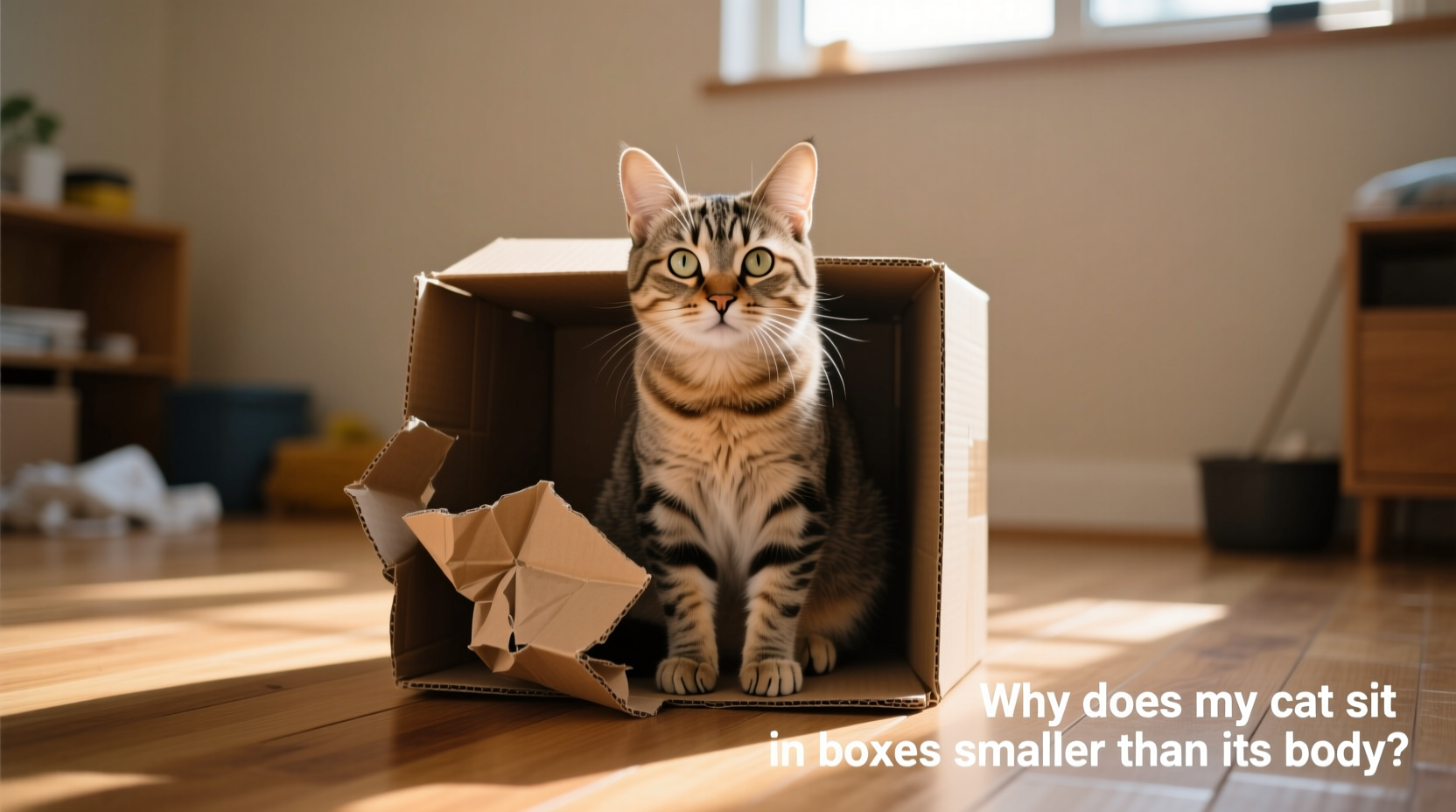
Cats are predators, yes—but they are also prey animals in the wild. Their evolutionary history as both hunter and hunted has shaped behaviors that prioritize concealment and protection. In nature, small, enclosed spaces offer shelter from predators and harsh weather. Even domesticated cats retain these instincts. A box, no matter how small, mimics a den or burrow: a confined space where a cat can observe its surroundings while remaining hidden.
Research supports this idea. A 2016 study conducted at Utrecht University in the Netherlands found that shelter cats given access to cardboard boxes exhibited significantly lower stress levels than those without them. The boxes acted as “security zones,” allowing cats to regulate their anxiety during transitions. While the study didn’t focus on size, it underscores a key point: confinement equals comfort. The snugger the fit, the more secure a cat feels.
“Enclosed spaces provide cats with a sense of control over their environment, which is essential for emotional well-being.” — Dr. Sarah Ellis, Feline Behavior Specialist, University of Lincoln
Thermoregulation: Warmth in Tight Quarters
Cats prefer warmer ambient temperatures than humans—typically between 86°F and 97°F (30°C–36°C). Most homes are kept around 68°F–72°F, which, while comfortable for people, can feel cool to a cat. Cardboard is an excellent insulator, trapping body heat and creating a microclimate within the box. The tighter the space, the less air circulates, helping the cat retain warmth more efficiently.
This explains why cats often choose boxes just large enough to contain them. An oversized container allows too much airflow, reducing thermal efficiency. A smaller box forces the cat into a compact loaf or tuck position, minimizing surface area exposed to cooler air—a natural energy-saving strategy. Kittens and older cats, who struggle more with temperature regulation, are especially prone to this behavior.
Tip: If your home is drafty or cool, provide insulated beds or heated mats alongside boxes to support your cat’s thermoregulation needs.Psychological Security and Environmental Control
Beyond physical comfort, boxes serve as psychological sanctuaries. Cats are territorial animals that thrive on predictability. When their environment changes—new furniture, visitors, loud noises, or other pets—a box becomes a retreat. It offers a vantage point from which they can monitor activity without being directly engaged.
Interestingly, the size of the box doesn’t negate its function as a safe zone. Even if a cat’s body spills over the edges, the act of entering the box signals to their brain that they are “inside” a protected structure. This mental association overrides physical discomfort. In fact, some experts believe that the effort required to squeeze in may enhance the satisfaction—like fitting into a favorite pair of jeans after weight loss.
Additionally, cats use scent marking to claim territory. By rubbing their cheeks (which contain scent glands) against the interior walls of a box, they transform a neutral object into part of their personal domain. Once marked, the box becomes an extension of self—an emotional anchor in an unpredictable world.
Behavioral Enrichment and Play
Boxes aren’t just shelters—they’re toys. The process of investigating, climbing into, and adjusting within a tight space provides mental stimulation. For indoor cats, whose environments may lack novelty, a simple box introduces unpredictability and challenge. The texture of cardboard under paw, the crinkle of folded flaps, and the tactile feedback of pressure against the sides all contribute to sensory enrichment.
Some cats treat small boxes as puzzles. They may enter backward, rotate mid-squeeze, or partially withdraw before settling. This problem-solving aspect activates cognitive pathways linked to hunting and exploration. Even brief interactions improve mood and reduce boredom-related behaviors like over-grooming or nighttime vocalization.
In multi-cat households, boxes can also function as social tools. One cat may claim a box as a personal space, asserting dominance without aggression. Others may wait nearby, respecting the boundary. This subtle hierarchy reduces conflict and promotes coexistence.
Real-Life Example: Luna and the Shoebox
Luna, a 4-year-old domestic shorthair, lived in a bustling urban apartment with two young children. Her owners noticed she increasingly avoided communal areas, especially during playtime. After placing a shoebox near her favorite windowsill, they observed her squeezing inside daily—even though her tail hung halfway out. Over time, Luna became more relaxed, resumed grooming in open areas, and even allowed brief petting sessions. Her vet noted that the box likely gave her a controlled escape route, reducing chronic low-level stress caused by unpredictable movement and noise.
Do’s and Don’ts: Managing Your Cat’s Box Habit
| Do’s | Don’ts |
|---|---|
| Provide multiple boxes in quiet locations | Force your cat out of a box abruptly |
| Use non-toxic tape and remove staples | Use plastic-wrapped or chemically treated boxes |
| Rotate boxes weekly to maintain interest | Place boxes in high-traffic or noisy zones |
| Add soft bedding for extra comfort | Assume larger boxes are always better |
| Observe your cat’s preference for open vs. closed tops | Discourage the behavior out of concern for appearance |
Step-by-Step: Creating the Ideal Feline Hideaway
Not all boxes are equally appealing. Follow this sequence to maximize utility and safety:
- Select the right size: Choose a box slightly smaller than your cat’s stretched length. This encourages curling and enhances warmth retention.
- Modify entry points: Cut one side down to create an open-fronted cave effect, ideal for cats wary of full enclosure.
- Line the interior: Use a removable fleece pad or old towel for comfort. Avoid slippery materials that hinder grip.
- Position strategically: Place the box in a low-traffic area with partial visibility—near a window or beside a sofa works well.
- Introduce gradually: Sprinkle catnip or place treats inside to encourage exploration without pressure.
- Monitor usage: Note how long your cat stays inside and whether they sleep, nap, or simply inspect. Adjust location or size accordingly.
When the Behavior Warrants Attention
While box-sitting is generally harmless, sudden changes in frequency or intensity may signal underlying issues. Excessive hiding, especially in new or unusual containers (e.g., ovens, drawers), could indicate pain, illness, or heightened anxiety. Similarly, if a cat aggressively guards a box or hisses when approached, it may reflect insecurity or fear-based reactivity.
Watch for accompanying signs:
- Reduced appetite or grooming
- Avoidance of human interaction
- Elimination outside the litter box
- Vocalizations from within the box
If these occur, consult a veterinarian or certified feline behaviorist. What appears quirky may be a cry for help.
Frequently Asked Questions
Is it safe for my cat to sit in a box too small for them?
Generally, yes. Cats are flexible and adept at contorting their bodies. As long as they can enter and exit freely and show no signs of distress, the posture is not harmful. However, avoid boxes with sharp edges, loose tape, or toxic inks.
Why does my cat prefer boxes over expensive cat beds?
Many commercial cat beds lack the structural enclosure cats seek. Soft, open-top beds don’t provide the same sense of security as a walled-in space. Additionally, cardboard is cheaper, more breathable, and easier to replace—making it a practical choice from the cat’s perspective.
Can I discourage my cat from using boxes?
You can redirect, but not eliminate, this behavior. Instead of discouraging, enrich alternatives: covered igloo beds, elevated cubbies, or fabric tunnels. The goal isn’t to stop the instinct but to channel it safely.
Expert Insight: The Hidden Logic of Feline Confinement
“The smaller the box, the greater the sense of containment. To a cat, it’s not about physical dimensions—it’s about perceived boundaries. A cramped box isn’t uncomfortable; it’s affirming.” — Dr. Mikel Delgado, PhD, Certified Cat Behavior Consultant
This insight reframes our understanding. Humans equate comfort with spaciousness; cats associate it with limitation. Where we see constraint, they experience calm. Recognizing this difference fosters empathy and better care.
Conclusion: Embrace the Quirk, Support the Need
The sight of a cat wedged into a box barely big enough for a sandwich is undeniably amusing. But behind the humor lies a profound truth: cats seek environments that align with their biological and emotional needs. A too-small box isn’t a joke—it’s a refuge, a heater, a fortress, and a toy all in one.
Rather than questioning the logic, consider how you can support this instinctive behavior. Keep spare boxes on hand. Repurpose deliveries into enrichment tools. Observe your cat��s preferences and adapt accordingly. In doing so, you’re not indulging a whimsy—you’re honoring a species-specific need for safety and autonomy.
💬 What’s the smallest box your cat has claimed? Share your stories, photos, or tips in the comments—your experience might help another cat owner understand their furry enigma a little better.








