If you’ve ever caught your cat burrowing into a pile of freshly folded laundry or napping atop a basket of clean clothes, you’re not alone. This common yet curious behavior has puzzled pet owners for years. Why would a cat be so drawn to something as mundane as laundry? The answer lies deep in feline biology, psychology, and social structure. Cats don’t just “like” the scent of laundry—they use it as a tool for comfort, recognition, and emotional regulation. Understanding this instinctive attraction offers insight into how cats perceive their world and bond with their humans.
The Science Behind Scent: A Cat’s Primary Sense
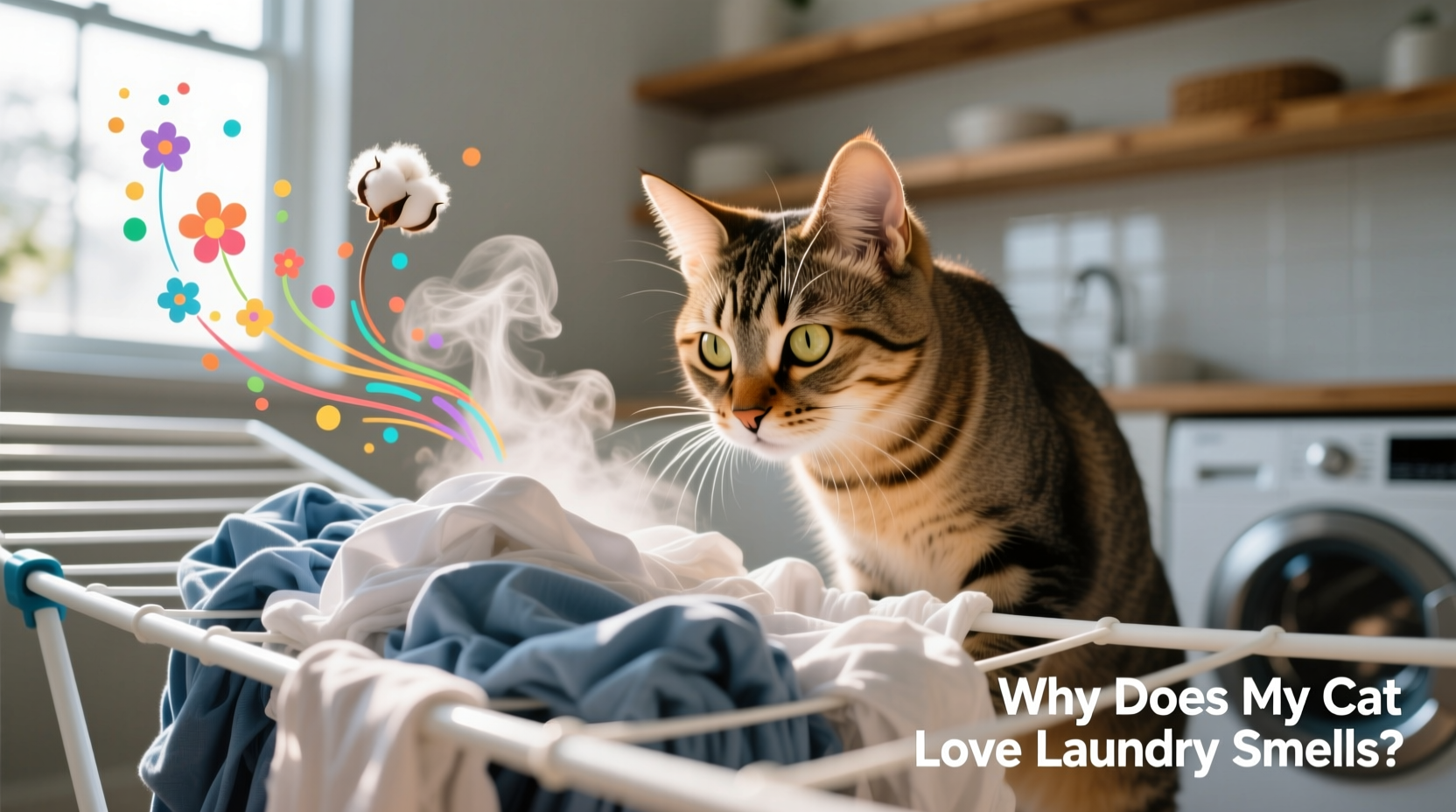
Unlike humans, who rely heavily on vision, cats are olfactory-driven animals. Their sense of smell is up to 14 times more sensitive than ours. With approximately 200 million scent receptors in their nasal cavity (compared to our mere 5 million), cats gather critical information through odor—everything from identifying threats to recognizing kin.
Scent plays a central role in feline communication. Cats mark territory using facial pheromones, scratch posts to release paw pad secretions, and even rub against furniture and people to deposit their unique chemical signature. When your cat investigates your laundry, they aren’t simply enjoying a pleasant aroma—they’re reading a detailed biological message written in scent.
“Cats live in a world dominated by smell. To them, your worn clothes are like a personal diary filled with emotional cues.” — Dr. Lydia Tong, Veterinary Ethologist
Your clothing absorbs your natural body odor, skin cells, sweat, and sebum—all rich sources of individualized scent. For a cat, these odors are deeply familiar and reassuring. They signal safety, belonging, and continuity in an environment that may otherwise feel unpredictable.
Emotional Security and Familiarity
Cats are creatures of habit. Even the most independent felines thrive on routine and environmental stability. Changes such as new household members, moving furniture, or even a different detergent can cause low-level stress. Your scent acts as an anchor during these shifts.
When a cat curls up on a shirt you recently wore, they’re engaging in a self-soothing behavior. The lingering traces of your presence provide emotional comfort, especially when you're absent. This is particularly evident in multi-cat households or homes with anxious pets. A study published in *Applied Animal Behaviour Science* found that cats exposed to owner-scented fabrics exhibited significantly lower stress markers than those without familiar odors.
Tip: If your cat seems anxious when you're away, leave behind a recently worn item of clothing (not washed) to help them feel secure.Why Freshly Washed Clothes Are Especially Appealing
You might assume that once clothes are washed, the human scent disappears—but that’s not entirely true. While detergents remove bacteria and oils, trace molecules remain embedded in fabric fibers. More importantly, the act of washing introduces new sensory stimuli: warmth from the dryer, soft texture from fabric softener, and concentrated residual scent trapped in folds and seams.
Heat amplifies odor molecules, making them more volatile and detectable. That warm towel straight from the dryer isn’t just cozy—it’s a scent amplifier. Combine heat, fluffiness, and a faint echo of your presence, and you have a near-perfect feline comfort station.
Laundry Type vs. Feline Attraction Level
| Type of Laundry | Attraction Level (1–5) | Reason |
|---|---|---|
| Folded jeans (worn) | 3 | Moderate scent retention; stiff texture |
| T-shirt (worn, unwashed) | 5 | High body odor transfer; soft material |
| Towel (dryer-warm) | 5 | Warmth + residual skin cells + fluffiness |
| Socks (dirty) | 4 | Strong odor but often ignored due to shape |
| Washed sheets | 2 | Faint scent unless recently used; large surface area |
The Role of Scent in Social Bonding
Cats form social bonds differently than dogs. Instead of overt displays of affection, they rely on subtle olfactory exchanges. When your cat sniffs and then lies on your laundry, they’re participating in a quiet ritual of connection. By surrounding themselves with your scent, they integrate your identity into their own.
This behavior mimics allogrooming—the mutual grooming seen in bonded cat groups. Since direct grooming between species is limited, scent-sharing becomes a substitute. Your cat may even lick the fabric, transferring saliva that mixes their scent with yours, creating a shared olfactory profile. In feline terms, this is intimacy.
In households with multiple pets, introducing owner-scented items can ease tension. One real-life example involved a rescue cat named Miso who refused to enter the living room after the family adopted a second cat. The owner placed a worn hoodie near Miso’s bed. Within two days, Miso began venturing out more frequently, eventually reclaiming shared spaces. The familiar scent acted as a psychological bridge during a period of social reorganization.
Step-by-Step: How to Use Scent to Support Your Cat’s Wellbeing
Understanding your cat’s reliance on scent opens opportunities to improve their daily life. Follow this sequence to harness scent positively:
- Identify key stress moments: Does your cat hide when guests arrive? Become restless during storms? Note when anxiety appears.
- Collect scent sources: Keep a dedicated T-shirt or blanket that you wear regularly without washing.
- Introduce strategically: Place the item near their bed, carrier, or a new piece of furniture to encourage exploration.
- Rotate gently: Refresh the scent every few days by wearing the item briefly before returning it.
- Avoid overpowering scents: Skip perfumed detergents, fabric sprays, or essential oils, which can irritate cats’ sensitive respiratory systems.
Common Misconceptions About Cats and Laundry
- Myth: Cats like laundry because it’s warm.
Truth: Warmth helps, but scent is the primary driver. A cold sweater with your odor will still attract interest. - Myth: They’re trying to get attention.
Truth: While some behaviors are attention-seeking, laundry attraction is largely autonomous and instinctive. - Myth: Fabric softener makes clothes more appealing.
Truth: Many cats dislike artificial fragrances. Unscented, hypoallergenic products are safer and less disruptive.
Checklist: Creating a Scent-Supportive Environment for Your Cat
- ✅ Keep one unwashed item of clothing accessible to your cat at all times
- ✅ Avoid strong-smelling detergents or dryer sheets
- ✅ Use your scent to calm your cat during vet visits (place a worn sock in the carrier)
- ✅ Rotate scent items weekly to maintain freshness without overstimulation
- ✅ Never punish your cat for lying on laundry—even if inconvenient, it’s a healthy behavior
FAQ
Is it safe for my cat to sleep on dirty laundry?
Generally, yes. As long as the clothes aren’t contaminated with toxic substances (e.g., cleaning chemicals, pesticides), there’s no harm. However, avoid letting cats nest in damp laundry, which can promote mold growth and lead to respiratory issues.
What if my cat only likes certain types of clothes?
This is normal. Preference may depend on fabric type, level of scent saturation, or past associations. Cotton T-shirts and fleece blankets tend to retain odor better than synthetic blends.
Can I replicate my scent with a product?
Some companies sell synthetic pheromone diffusers (like Feliway), which mimic facial pheromones but not personal body odor. These can help reduce stress, but they won’t replace the emotional value of your actual scent.
Conclusion: Respecting the Hidden Language of Smell
Your cat’s fascination with laundry isn’t quirky randomness—it’s a window into their inner world. Every sniff, rub, and nap on your clothes is a deliberate act rooted in survival, emotion, and connection. Rather than shooing them away from the laundry basket, consider it an invitation to appreciate how deeply your presence matters to them.
By honoring their need for familiar scents, you strengthen trust and reduce unseen anxieties. The next time you find your cat wrapped in your hoodie like a furry burrito, remember: they’re not stealing your clothes—they’re holding onto you.
💬 Have a story about your cat’s favorite scent spot? Share your experience and help other cat lovers understand this touching behavior.








