Cats are curious, intelligent animals whose behaviors often leave their owners puzzled—especially when they repeatedly knock over water bowls. If you've found yourself mopping up puddles for the third time today, you're not alone. This common feline habit can stem from a mix of instinct, environmental factors, and emotional needs. While some cats seem to do it purely for entertainment, others may be signaling discomfort or unmet needs. Understanding the root cause is key to addressing the behavior effectively.
Unlike dogs, who tend to drink quickly and move on, cats often interact with their water sources in complex ways. They may paw at the surface, dip their paws in, or deliberately tip the bowl. These actions aren’t random—they’re forms of communication. By examining your cat’s environment, routine, and personality, you can determine whether this is playful mischief, a sign of boredom, or an expression of deeper behavioral instincts.
The Instinct Behind Water Exploration
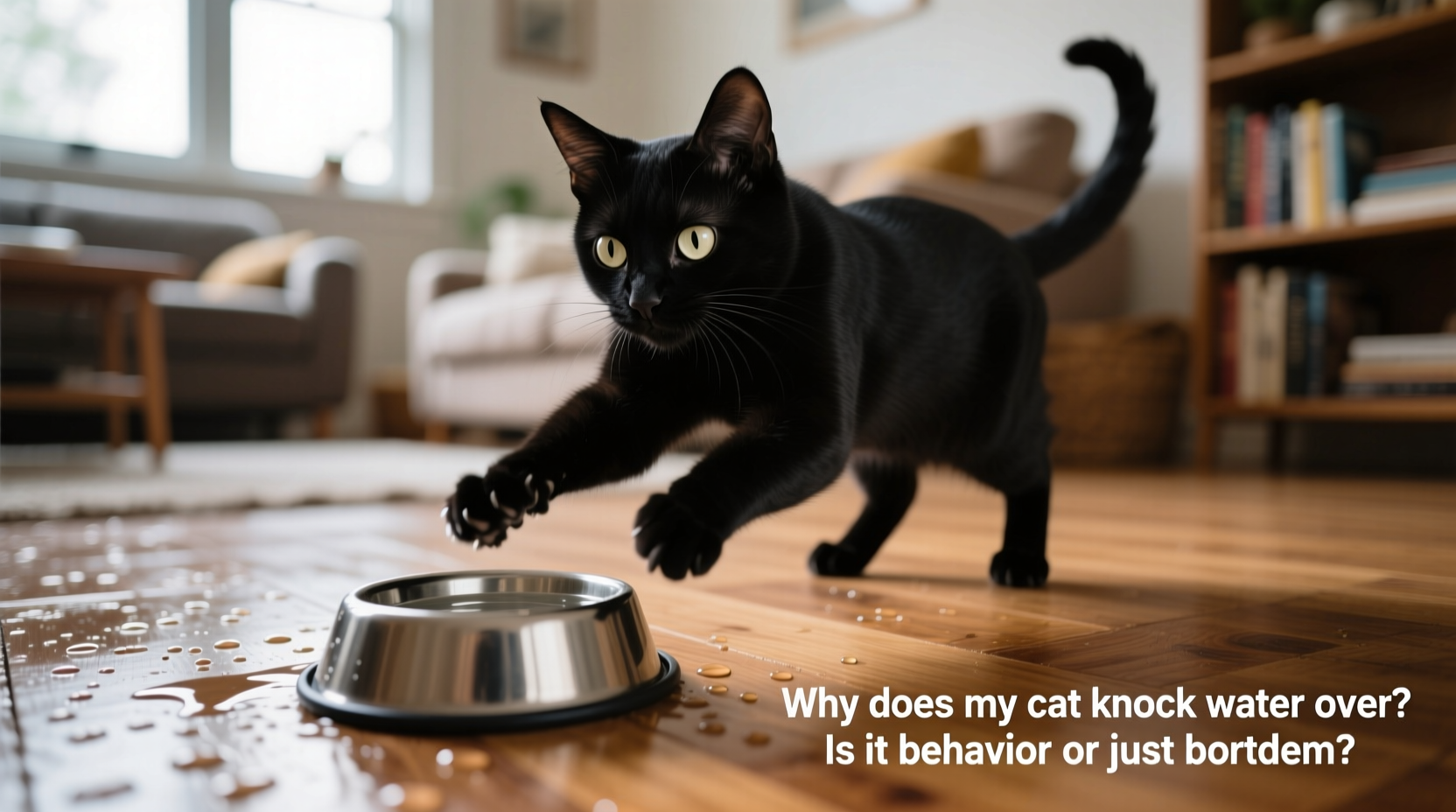
Cats in the wild are naturally cautious about stagnant water. Their ancestors relied on moving water sources like streams, which were less likely to harbor bacteria or parasites. Even domesticated cats retain this preference. When presented with a still bowl of water, many cats will test its freshness by pawing at it or knocking it slightly to create ripples. This mimics flowing water and makes it more appealing to drink.
In addition, cats have highly sensitive whiskers. If their water bowl is too narrow or deep, whisker fatigue can occur—where the whiskers constantly brush against the sides, causing discomfort. To avoid this, cats may prefer to drink from spilled water on the floor, where they can access it without touching the edges. This explains why some cats don’t just knock water over once but repeat the action daily.
“Cats are hardwired to assess water safety through movement and scent. What looks like mischief is often instinctual evaluation.” — Dr. Lena Torres, Feline Behavior Specialist
Boredom and Mental Stimulation Needs
A bored cat is an active cat—one that seeks stimulation wherever it can find it. Knocking things over, especially lightweight objects like plastic water bowls, provides instant sensory feedback: sound, motion, and change in the environment. For a cat left alone for long periods, this becomes a form of self-entertainment.
Indoor cats, in particular, lack the natural stimuli of hunting, climbing, and exploring that outdoor cats experience. Without adequate mental engagement, they invent their own games. Your water bowl may simply be the most accessible toy. The act of knocking it over triggers a rewarding response—the splash, your reaction, and the novelty of a changed environment.
Tip: Rotate interactive toys every few days to maintain novelty and reduce repetitive behaviors.Signs Your Cat Is Acting Out of Boredom
- Knocks over objects frequently, not just water bowls
- Exhibits other attention-seeking behaviors (e.g., meowing excessively, scratching furniture)
- Active primarily during nighttime hours
- Lack of access to climbing structures, puzzle feeders, or window perches
Environmental and Physical Factors
Sometimes, the issue isn't behavioral at all—it's logistical. The type of bowl, its placement, and even the water quality can influence your cat’s interaction with it.
Plastic bowls are particularly problematic. They can develop micro-scratches that trap bacteria, leading to an unpleasant odor cats can detect even if humans cannot. Additionally, static in plastic bowls may repel cats, making them reluctant to drink but curious enough to investigate by pawing.
Location matters too. Cats prefer drinking stations away from food (in the wild, prey and water sources are separate) and in quiet, low-traffic areas. A bowl placed next to a noisy washing machine or in a high-activity hallway may stress your cat, prompting avoidance—or disruptive testing.
| Factor | Problem | Solution |
|---|---|---|
| Bowl Material | Plastic harbors bacteria and odors | Switch to stainless steel, ceramic, or glass |
| Bowl Shape | Narrow bowls cause whisker stress | Use wide, shallow dishes |
| Water Freshness | Stagnant water smells stale | Change water twice daily; consider a fountain |
| Placement | Near food or loud appliances | Relocate to quiet area, separate from food |
Behavioral Triggers and Social Communication
Cats use physical actions to communicate. Knocking over a water bowl might be a way to get your attention—especially if you respond immediately by cleaning up or refilling it. The behavior is reinforced every time you react, teaching your cat that spilling = interaction.
Some cats also engage in territorial marking through displacement. By altering their environment (e.g., spreading water), they assert control. This is more common in multi-cat households where dominance dynamics play out subtly. A subordinate cat might knock over a dominant cat’s water as a passive-aggressive challenge, or vice versa.
In rare cases, neurological or cognitive issues—especially in older cats—can lead to compulsive behaviors. If your cat suddenly starts knocking things over obsessively and shows other signs like disorientation or litter box avoidance, consult a veterinarian to rule out medical causes.
Mini Case Study: Luna the Playful Tabby
Luna, a 3-year-old tabby, began tipping her water bowl every evening around 8 PM. Her owner, Sarah, initially assumed it was boredom. After installing a camera, she noticed Luna only did it when she heard the TV turn on. Further observation revealed that Luna associated the sound with feeding time and wanted attention. By introducing a short play session before dinner and switching to a heavy ceramic bowl near a window perch, the behavior stopped within a week. The solution wasn’t punishment—but redirection and enrichment.
Step-by-Step Guide to Prevent Water Spills
Addressing this behavior requires a structured approach. Follow these steps to identify and resolve the underlying cause:
- Observe the pattern: Note when, where, and how often the bowl is knocked over. Is it always after meals? During certain times of day?
- Upgrade the bowl: Replace lightweight plastic with a heavier ceramic or stainless steel option. Wider rims reduce whisker stress.
- Try a water fountain: Flowing water appeals to natural instincts and reduces the need to “test” still water.
- Relocate the water station: Place it in a quiet, accessible area away from food and noise.
- Increase enrichment: Add puzzle feeders, rotating toys, and vertical spaces like cat shelves.
- Avoid reinforcing the behavior: Don’t react dramatically when the bowl is knocked over. Clean quietly and consistently.
- Consult a professional: If the behavior persists or escalates, seek advice from a certified feline behaviorist.
Checklist: How to Stop Your Cat From Knocking Over Water
- ✅ Replace plastic bowls with ceramic or stainless steel
- ✅ Choose wide, shallow dishes to prevent whisker fatigue
- ✅ Invest in a cat water fountain with adjustable flow
- ✅ Position water bowls in quiet, low-traffic zones
- ✅ Keep water fresh—change it morning and night
- ✅ Provide daily interactive play sessions (10–15 minutes)
- ✅ Introduce puzzle toys or treat-dispensing balls
- ✅ Monitor for signs of stress or anxiety in multi-cat homes
- ✅ Avoid scolding—redirect instead with positive reinforcement
- ✅ Schedule a vet check if behavior changes suddenly
FAQ
Is it normal for cats to play with their water?
Yes, many cats paw at or ripple water before drinking. It’s a natural way to assess freshness and mimic moving water. However, repeated knocking over may indicate dissatisfaction with the bowl or environment.
Should I punish my cat for knocking over water?
No. Punishment creates fear and damages trust. Instead, focus on modifying the environment and providing alternative outlets for energy and curiosity.
Will a heavier bowl solve the problem?
Often, yes. Heavy ceramic or stone-based bowls are harder to tip. Combine weight with non-slip bases for best results. But remember—addressing the root cause (boredom, instinct, stress) is more effective than just changing equipment.
Conclusion
Your cat knocking over water isn’t just a quirky habit—it’s a message. Whether driven by instinct, boredom, or environmental discomfort, this behavior signals a need for adjustment. By observing patterns, improving water access, and enriching your cat’s daily life, you can transform frustration into understanding. Simple changes like switching to a fountain, relocating the bowl, or adding playtime can make a lasting difference.
Every cat is unique, and what works for one may not work for another. The key is patience, consistency, and empathy. With the right approach, you can keep your floors dry and your cat happy, healthy, and mentally stimulated.
💬 Have a cat that loves to flood the kitchen? Share your story or solution in the comments below—your tip might help another frustrated pet parent!








