
Cats are naturally curious, agile, and observant animals. Their behaviors often seem mischievous—especially when they send a mug tumbling from a coffee table or push a photo frame off a bookshelf. While it might feel like your cat is acting out of spite or boredom, there’s usually more going on beneath the surface. Understanding why your cat knocks things over is the first step toward managing the behavior without suppressing their natural instincts.
This seemingly destructive habit is not only common but deeply rooted in feline psychology. From hunting instincts to attention-seeking, cats have multiple motivations for interacting with objects in ways that frustrate their humans. The good news: you can reduce or redirect this behavior through environmental enrichment, strategic prevention, and consistent reinforcement of boundaries.
The Instincts Behind the Knock
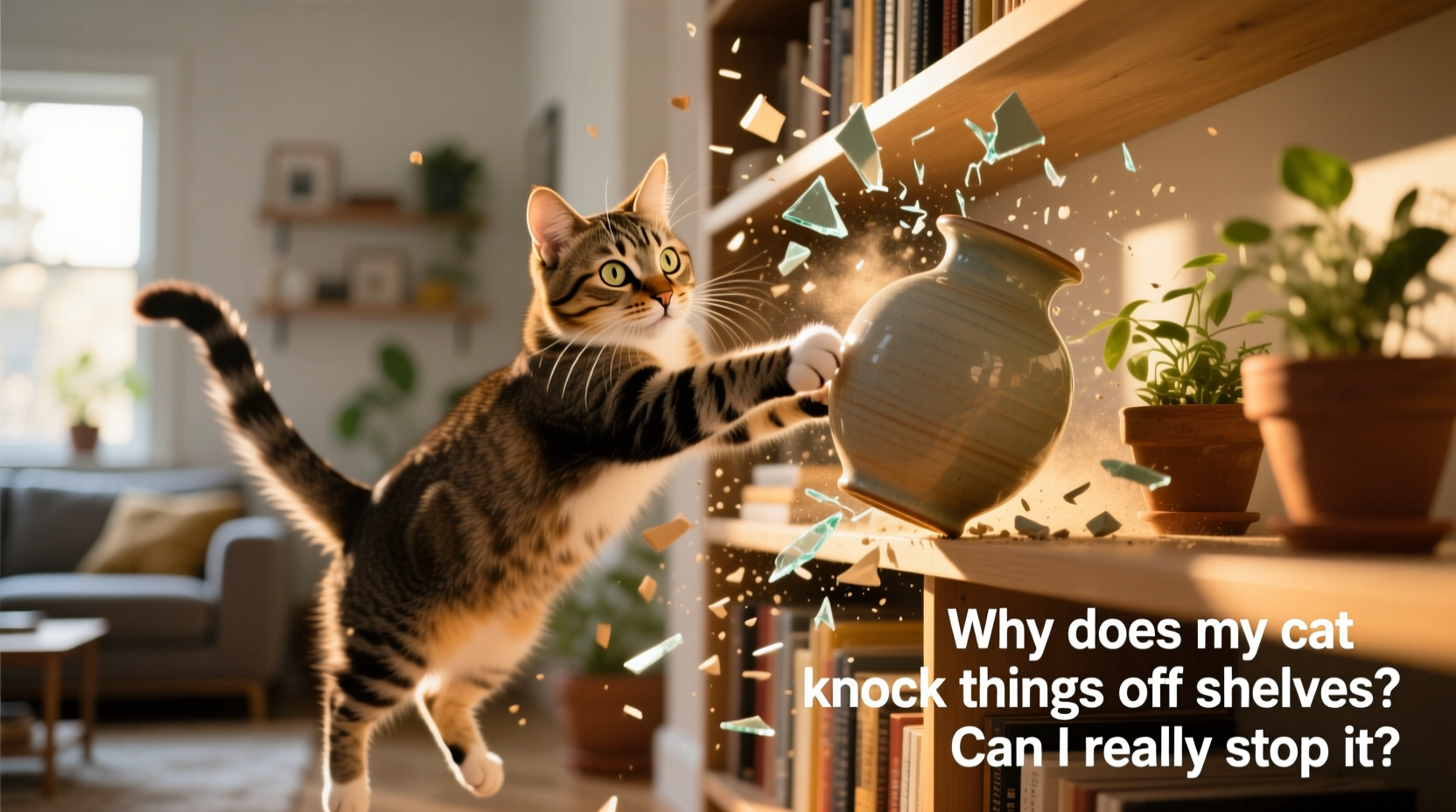
Cats don’t knock things off shelves simply to annoy you. Their actions stem from hardwired survival mechanisms developed over thousands of years. Even well-fed domestic cats retain the predatory drive of their wild ancestors. When a cat bats at an object on a ledge, they’re often simulating the act of capturing prey. A rolling pen or wobbling glass mimics the movement of small animals, triggering their chase-and-pounce reflex.
In addition to hunting simulation, cats use their paws to explore the world. Unlike humans who rely heavily on touch and sight, cats combine tactile feedback with motion to understand objects. Pushing something off a surface provides valuable sensory input: How heavy is it? Does it roll or shatter? What sound does it make? This investigative behavior is especially common in younger cats and kittens, who are still learning about cause and effect.
“Cats are problem solvers by nature. When they interact with objects on shelves, they’re not being destructive—they’re conducting experiments.” — Dr. Sarah Thompson, Feline Behavior Specialist, Cornell Feline Health Center
Attention-Seeking and Communication
Another major reason cats knock things over is to get a reaction. If your cat has learned that knocking over a cup earns them eye contact, verbal response, or even playtime, they’ll repeat the behavior. Even negative reactions—like scolding—can reinforce the action because any attention is better than none.
This becomes a cycle: the cat knocks, you respond, and the cat associates the behavior with engagement. Over time, it becomes a reliable method of initiating interaction, especially if the cat is left alone for long periods or lacks sufficient mental stimulation.
Tip: Never react dramatically when your cat knocks something over—even if it breaks. Stay calm and quietly clean up to avoid reinforcing the behavior.Environmental Triggers and Prevention Strategies
While you can’t eliminate your cat’s natural curiosity, you can modify their environment to minimize damage and redirect their energy into appropriate outlets. The key is to create a space that satisfies their instinctual needs while protecting your belongings.
Secure High-Risk Areas
Start by evaluating which surfaces are most vulnerable. Shelves, side tables, and countertops near windows are prime targets. Remove or secure fragile, valuable, or dangerous items. Use museum putty, non-slip shelf liners, or adhesive strips to anchor decorative objects.
Provide Alternative Stimulation
Cats need regular physical and mental challenges. Without them, they invent their own entertainment—often at your expense. Enrichment tools such as puzzle feeders, treat-dispensing toys, and interactive wands give cats productive ways to use their paws and brains.
- Rotate toys weekly to maintain novelty.
- Use food puzzles during meal times to extend feeding duration.
- Install window perches or bird feeders outside windows to provide visual stimulation.
Step-by-Step Guide to Reducing Shelf-Knocking
Changing your cat’s behavior requires patience and consistency. Follow this timeline to gradually reduce unwanted knocking:
- Week 1: Assess and Secure – Identify high-risk zones and remove tempting objects. Install deterrents like double-sided tape or aluminum foil on edges (cats dislike the texture).
- Week 2: Introduce Alternatives – Place interactive toys near common knocking sites. Encourage play with wand toys to redirect energy.
- Week 3: Reinforce Positive Behavior – Reward your cat with treats or affection when they engage with appropriate toys instead of shelf items.
- Week 4: Monitor and Adjust – Observe patterns. If knocking persists in certain areas, consider blocking access or adding vertical spaces like cat trees.
- Ongoing: Maintain Routine – Continue daily play sessions and rotate enrichment tools to prevent boredom.
Do’s and Don’ts of Managing Destructive Play
| Do | Don’t |
|---|---|
| Provide climbing structures and vertical territory | Punish your cat physically or with loud voices |
| Engage in 10–15 minutes of active play twice daily | Leave breakable items within paw’s reach |
| Use positive reinforcement for desired behaviors | Ignore signs of stress or overstimulation |
| Offer safe alternatives like crinkle balls or kicker toys | Assume the behavior will disappear on its own |
Real Example: How Mia Learned to Leave the Bookshelf Alone
Samantha, a graphic designer in Portland, noticed her tabby cat Mia had developed a habit of pushing pens, mugs, and small plants off her home office shelves. After breaking a favorite ceramic mug, Samantha decided to intervene.
She started by removing all loose items from the desk and installing a low cat tree beside the window. She introduced a rotating set of puzzle toys and began two short play sessions each day using a feather wand. Whenever Mia approached the shelf, Samantha gently redirected her to a toy on the floor.
Within three weeks, the knocking incidents dropped by over 80%. Today, Mia spends her afternoons lounging on her perch watching birds, and the bookshelf remains intact. “I realized she wasn’t being bad—she just needed a better outlet,” Samantha said.
When to Consider Behavioral Support
In most cases, shelf-knocking is a normal expression of feline curiosity. However, excessive or sudden changes in behavior may indicate underlying issues. Signs that warrant a vet or animal behaviorist consultation include:
- Aggression during or after knocking episodes
- Obsessive repetition, even when distracted
- Signs of anxiety, such as over-grooming or hiding
- Destructive behavior focused on specific areas or times
Sometimes, medical conditions like hyperthyroidism or cognitive dysfunction in older cats can manifest as compulsive behaviors. A veterinary checkup helps rule out physiological causes before assuming it’s purely behavioral.
Frequently Asked Questions
Is my cat knocking things over because they’re mad at me?
No, cats don’t act out of revenge or resentment. While they can associate actions with outcomes, they lack the complex emotional framework for grudges. Your cat is more likely responding to boredom, curiosity, or a desire for interaction.
Can I train my cat to stop knocking things over?
You can’t train a cat to suppress their instincts entirely, but you can redirect them. Consistent environmental management, enrichment, and positive reinforcement significantly reduce unwanted behaviors. Avoid punishment-based methods, as they damage trust and increase anxiety.
Are certain breeds more prone to this behavior?
Some breeds, like Bengals, Siamese, and Abyssinians, are more energetic and intelligent, making them more likely to engage in exploratory or manipulative behaviors. However, any cat—regardless of breed—can develop this habit if under-stimulated.
Checklist: Preventing Shelf-Knocking Long-Term
- ✅ Remove breakables from ledges and side tables
- ✅ Install cat shelves or perches in high-traffic areas
- ✅ Rotate toys every 7–10 days to maintain interest
- ✅ Schedule two 10–15 minute play sessions daily
- ✅ Use food puzzles or treat-dispensing toys at mealtimes
- ✅ Apply deterrents (e.g., double-sided tape) on edges if needed
- ✅ Monitor for signs of stress or overstimulation
- ✅ Consult a vet if behavior escalates suddenly
Conclusion: Coexisting with a Curious Cat
Your cat knocking things off shelves isn’t a flaw in their character—it’s a reflection of their intelligence, agility, and instinctual drive. Rather than trying to stop them completely, focus on guiding their energy into acceptable channels. With thoughtful environmental design, consistent interaction, and a little patience, you can protect your belongings while honoring your cat’s natural needs.
Remember, a cat who knocks things over is usually a healthy, engaged animal looking for ways to interact with their world. By meeting them halfway, you build a stronger bond and create a home where both of you can thrive.
💬 Have a story about your cat’s shelf-knocking adventures? Share your experience or tips in the comments—your insight could help another cat owner find peace with their curious companion!








