It’s a familiar scene: your cat curls up on your lap, paws rhythmically pushing against your thigh like tiny dough-makers, purring contentedly. Moments later, without warning, she turns and delivers a sharp nip. You’re left stunned—wasn’t she just showing affection? This paradox of kneading followed by biting is one of the most common yet misunderstood behaviors in domestic cats. Understanding why this happens requires delving into feline psychology, communication signals, and sensory thresholds. Far from being contradictory, these actions are deeply rooted in instinct, emotion, and subtle cues humans often miss.
The Kneading Instinct: A Behavior Rooted in Kittenhood
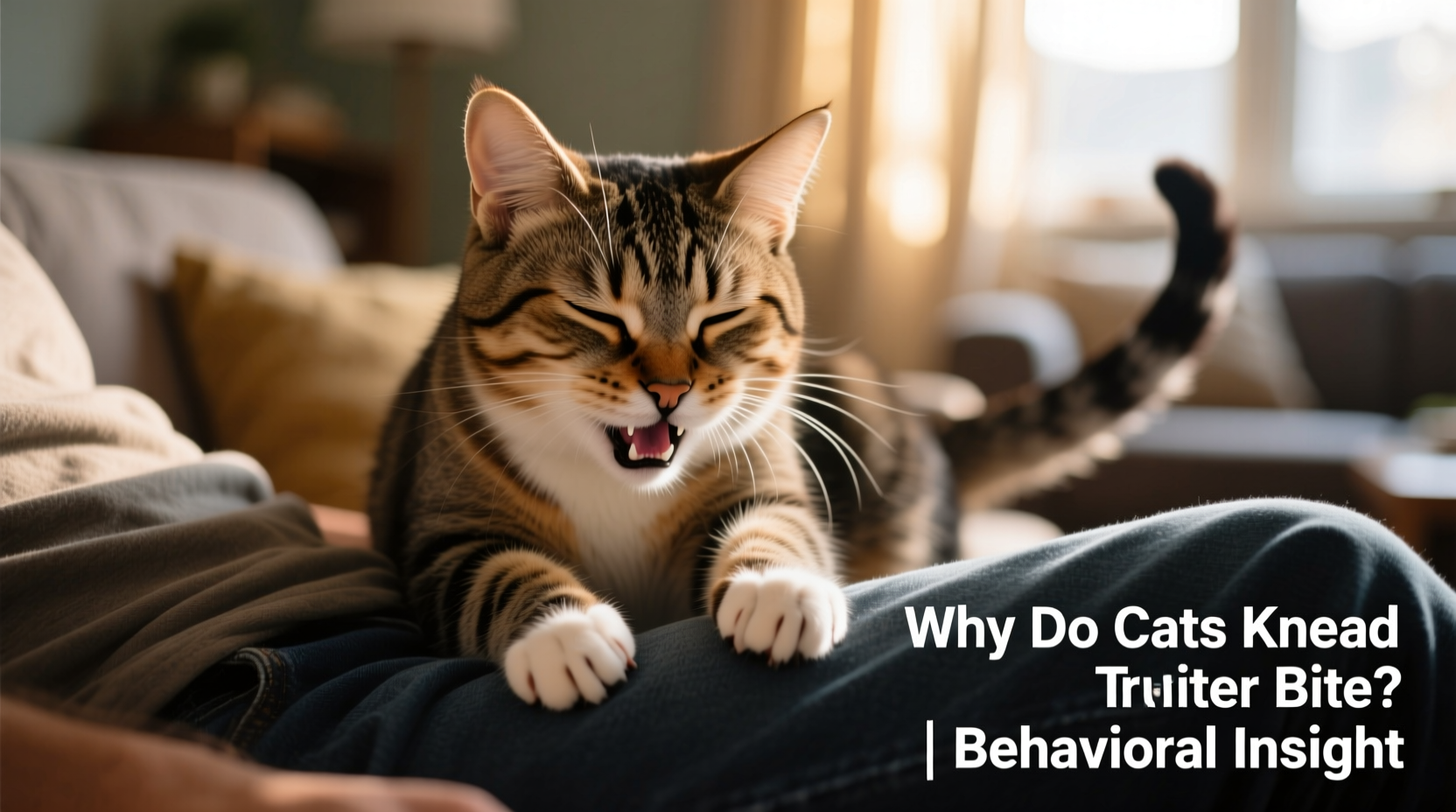
Kneading—also known as “making biscuits”—is a behavior most cats retain from kittenhood. When nursing, kittens press their paws against their mother’s mammary glands to stimulate milk flow. This rhythmic motion becomes associated with comfort, warmth, and nourishment. As adults, cats continue to knead soft surfaces, especially during moments of relaxation or contentment.
When your cat kneads your lap, it’s not just a physical action—it’s an emotional signal. She feels safe, secure, and emotionally bonded to you. The act releases endorphins, creating a calming effect similar to human deep breathing or meditation. In many cases, kneading is accompanied by purring, half-closed eyes, and slow blinks—all signs of trust and well-being.
Tip: If your cat kneads frequently, provide a soft blanket or cushion for her to use—this protects your skin while still allowing her to express natural behavior.From Comfort to Conflict: Why Petting Turns Into Biting
The shift from kneading to biting may seem abrupt, but it’s rarely random. Most often, it’s a response to overstimulation. Cats have highly sensitive nerve endings in their skin, particularly along the back, tail base, and abdomen. While initial petting may be enjoyable, prolonged touching can become overwhelming, even painful.
Unlike dogs, which often seek continuous physical contact, cats operate on a threshold-based system. They enjoy affection—but only up to a point. Once that limit is reached, they may react defensively, even if no threat is present. The bite isn’t aggression in the traditional sense; it’s a communication tool. Your cat is saying, “I’ve had enough,” but since she can’t use words, she uses body language—and sometimes teeth.
“Cats don’t suddenly ‘turn’ aggressive. They signal discomfort long before biting. It’s up to us to learn their language.” — Dr. Sarah Ellis, Feline Behavior Specialist, University of Lincoln
Reading the Warning Signs Before the Bite
Before resorting to biting, cats display subtle behavioral cues that indicate rising stress or overstimulation. Recognizing these early signals can prevent escalation and strengthen your bond. Common pre-bite indicators include:
- Tail flicking or twitching – Especially at the tip, a sign of internal agitation.
- Ears flattening or rotating backward – Indicates discomfort or defensive readiness.
- Skin rippling – Visible along the back, caused by muscle tension under the fur.
- Head turning to watch your hand – A focused stare at the source of touch suggests growing unease.
- Low growling or sudden stillness – Freezing in place can precede a defensive reaction.
Many owners miss these signs because they expect overt aggression. But cats are conflict-averse by nature. They’d rather leave than fight—unless cornered or overstimulated. When escape isn’t possible (e.g., while sitting on your lap), a quick bite becomes a last-resort boundary enforcement.
Do’s and Don’ts of Petting Cats Who Bite
| Do’s | Don’ts |
|---|---|
| Pet briefly and let the cat initiate further contact | Stroke continuously for long periods |
| Focus on head, chin, and neck areas (most cats prefer these) | Pet the belly, base of tail, or back without invitation |
| Watch for body language shifts after each stroke | Ignore tail flicking or ear movement |
| Let the cat walk away after petting—don’t restrain | Hold the cat down to keep petting |
| Use toys or treats to redirect post-petting energy | React with punishment or loud scolding |
A Closer Look: The Sensory Threshold Model
Feline sensitivity varies widely between individuals. Some cats tolerate extended petting sessions; others reach their threshold within seconds. This variability is influenced by genetics, early socialization, and past experiences. A study published in *Applied Animal Behaviour Science* found that cats exposed to gentle handling before eight weeks of age were significantly more tolerant of human touch later in life.
The “sensory threshold” model explains how cumulative stimulation leads to reactivity. Each pet adds to a mental tally. At first, the cat enjoys it. But as the tally increases, so does neurological arousal. Once the threshold is crossed, the brain triggers a defensive reflex—even if the cat likes you.
This helps explain why a cat might bite after five perfect strokes. It’s not personal. It’s physiological. Think of it like a cup filling with water: the first few drops are welcome, but once it overflows, the result is inevitable.
Mini Case Study: Bella the Overstimulated Tabby
Bella, a three-year-old domestic shorthair, was adopted from a shelter at six months old. Her owner, Mark, noticed that while Bella loved sitting on his lap and kneading, she would often bite after just 30 seconds of petting. Confused and discouraged, Mark considered it a behavioral flaw.
After consulting a feline behaviorist, he learned to observe Bella’s micro-expressions. He noticed that her tail would begin flicking subtly after about 20 seconds, followed by skin rippling. By stopping petting at the first sign of tail movement—and offering a treat instead—Mark reduced biting incidents by 90% within two weeks. He also shifted from stroking her back to gentle chin scratches, which Bella clearly preferred.
The key wasn’t changing Bella, but adjusting his own behavior to align with hers. Their bond grew stronger as trust replaced frustration.
Building a Better Petting Routine: A Step-by-Step Guide
If your cat kneads but bites, you can reshape the interaction through consistency and empathy. Follow this timeline to foster safer, more enjoyable bonding:
- Observe baseline behavior (Days 1–3): Sit near your cat without initiating touch. Note when she approaches, where she rubs, and how long she stays. Identify preferred zones (e.g., head, shoulders).
- Initiate brief touches (Days 4–7): Pet only 2–3 times in a preferred area, then stop—even if she seems content. Watch for any shift in posture or tail movement.
- Introduce a “pet-and-stop” cue (Week 2): Say a word like “done” as you withdraw your hand. Pair it with a treat. This teaches predictability.
- Extend duration gradually (Week 3+): Add one stroke per session only if no warning signs appear. Never exceed the cat’s known limit.
- Respect autonomy: Allow your cat to leave at any time. Never chase or restrain. Let her return if she chooses.
This method builds trust by honoring your cat’s boundaries. Over time, many cats actually request more petting as they learn it won’t lead to overload.
Tip: Use a feather toy or wand after petting to redirect residual energy. This prevents redirected aggression and reinforces positive associations.When Biting Isn’t About Overstimulation
While overstimulation is the most common cause, some cats bite during petting due to other factors:
- Pain or medical issues: Arthritis, skin infections, or nerve pain can make touch unbearable. A vet check is essential if biting is new or worsening.
- Play-related biting: Young cats may mistake fingers for prey. Redirect with toys, not hands.
- Redirected aggression: If a cat sees a bird outside mid-petting, she may lash out at the nearest target—usually you.
- Lack of early socialization: Cats not handled gently as kittens may never develop tolerance for prolonged touch.
If your cat bites hard, draws blood, or shows fear-based behaviors (hissing, hiding), consult a veterinary behaviorist. These may indicate deeper anxiety or trauma.
Frequently Asked Questions
Is my cat being aggressive when she bites after kneading?
Not necessarily. Most petting-induced bites are not true aggression but a response to overstimulation. The cat isn’t trying to harm you—she’s communicating discomfort. True aggression involves stalking, growling, and intent to injure, which is rare in household settings.
Can I train my cat to tolerate longer petting sessions?
Yes, but within biological limits. Some cats will never enjoy extended handling. However, most can learn to accept brief, predictable petting through positive reinforcement and gradual desensitization. Respect individual differences.
Why does my cat bite but then lick me afterward?
This combination—bite followed by licking—is a complex social signal. Licking can be an appeasement gesture, an attempt to groom you back into harmony, or a self-soothing behavior. It reflects internal conflict: affection warring with sensory overload.
Conclusion: Bridging the Communication Gap
Your cat’s kneading is a gift—a living echo of kittenhood trust. The biting that sometimes follows isn’t rejection, but a plea for understanding. Cats communicate in whispers: a flick of the tail, a twitch of the ear, a momentary freeze. When we learn to listen, we stop seeing them as unpredictable and start seeing them as partners in a quiet, nuanced dialogue.
Instead of asking, “Why does my cat do this?” try asking, “What is she trying to tell me?” The answer transforms frustration into connection. By respecting her limits, reading her signals, and adjusting our behavior, we create a relationship built on mutual trust—not just tolerance.
💬 Have a cat who kneads and bites? Share your experience and what worked for you. Your story could help another owner understand their feline friend better.








