
Cats are complex creatures. One moment, they're purring contentedly on your lap, kneading you like dough; the next, they twist around and deliver a sharp nip that leaves you startled and confused. This sudden shift from affection to aggression isn't random—it's communication. Understanding why your cat kneads your lap but bites when petted requires insight into feline behavior, sensory thresholds, and emotional expression. Unlike humans, cats don’t use words to say “that’s enough” or “I’m overstimulated.” Instead, they rely on subtle body language—and sometimes not-so-subtle teeth.
This seemingly contradictory behavior—affectionate kneading followed by biting—is one of the most common yet misunderstood patterns in cat ownership. It's not a sign of aggression, spite, or poor socialization. Rather, it reflects natural instincts, sensory sensitivity, and misaligned expectations between human and feline interaction styles. By learning to read your cat’s cues and adjusting your approach, you can foster deeper trust and avoid those surprise love bites.
The Science Behind Kneading: Comfort, Not Just Cuteness
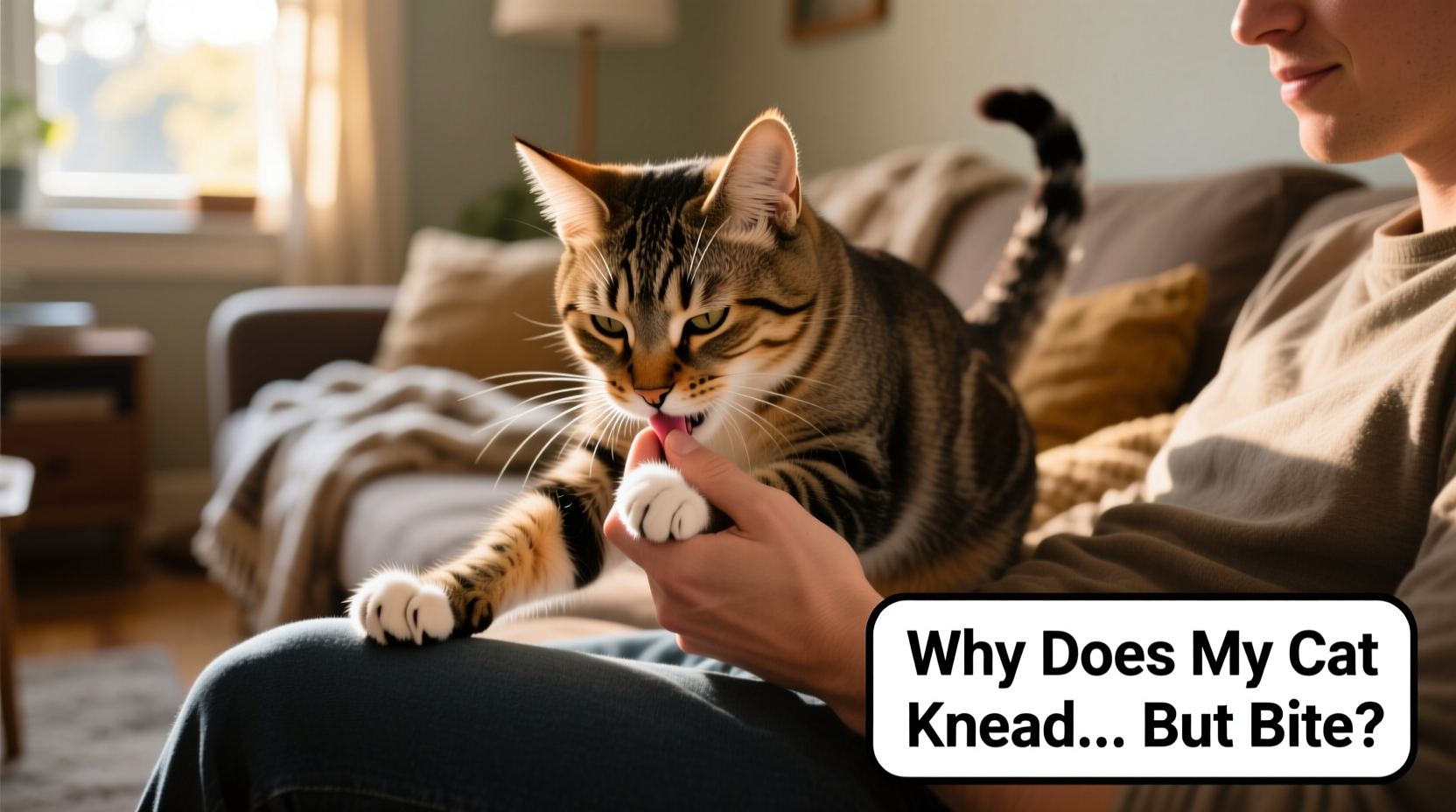
Kneading is a deeply ingrained behavior that begins in kittenhood. When nursing, kittens press their paws rhythmically against their mother’s mammary glands to stimulate milk flow. This motion becomes associated with warmth, nourishment, and security. As adults, cats retain this instinctual behavior, often directing it toward soft surfaces—including laps, blankets, or even your arm.
When your cat kneads your lap, they’re expressing contentment. The act releases endorphins, creating a calming effect similar to human self-soothing behaviors. In many cases, kneading is accompanied by purring, half-closed eyes, and slow blinks—all signs of deep relaxation. Some cats even drool during kneading, a leftover reflex from nursing days.
Tip: If your cat kneads aggressively, gently place a thick blanket or cushion between their paws and your skin to prevent discomfort without discouraging the behavior.However, kneading doesn’t mean your cat wants unlimited physical contact. In fact, the very act of being close—on your lap, with hands moving across their fur—can quickly escalate sensory input beyond their tolerance level.
Why Petting Turns to Biting: The Overstimulation Threshold
The transition from purring to biting often occurs because of overstimulation. Cats have highly sensitive nerve endings in their skin, especially along the back, tail base, and abdomen. While gentle strokes may start as pleasurable, repeated touching—even if done softly—can become irritating or overwhelming.
Unlike dogs, who often enjoy prolonged petting sessions, most cats prefer brief, targeted interactions. What feels like loving attention to you might feel like an invasion of personal space to your cat. Once their tolerance threshold is crossed, they resort to a quick bite—not out of malice, but as a clear boundary signal.
This type of bite is usually referred to as a “petting-induced aggression” response. It’s typically a light nip or “love bite,” not intended to injure, but to communicate: “Stop now.” Unfortunately, by the time the bite happens, earlier warning signs may have been missed.
Common Pre-Bite Body Language Cues
- Twitching or lashing tail
- Ears flattening or rotating backward
- Skin rippling along the back
- Head turning to watch your hand
- Restless shifting or tensing muscles
- Sudden grooming (licking paw or flank)
These signals are your cat’s way of saying they’re reaching their limit. If you continue petting past these warnings, the bite is likely inevitable.
“Cats are masters of subtle communication. The key to preventing love bites isn’t training the cat to tolerate more—it’s learning to recognize when they’ve had enough.” — Dr. Sarah Thompson, Feline Behavior Specialist, American Association of Feline Practitioners
Decoding Mixed Signals: Affection vs. Autonomy
The confusion arises because cats express affection differently than humans expect. They don’t crave constant physical contact. Instead, they value control over when, where, and how interactions happen. A cat that jumps onto your lap and kneads is choosing to be near you—but that doesn’t mean they’ve surrendered full access to their body.
In the wild, sustained handling is rare among adult cats. Most social grooming occurs between bonded individuals and is mutual, not one-sided. When humans pet cats for extended periods, especially in areas they find sensitive, it can mimic dominance or unwanted intrusion.
Additionally, some cats exhibit what’s known as “conflicted behavior”—simultaneously seeking closeness while feeling anxious about losing control. This internal conflict manifests as mixed signals: purring while tail flicks, kneading while ears pin back. To the untrained eye, this looks inconsistent. But to the cat, it’s a real-time negotiation of comfort and boundaries.
Do’s and Don’ts of Petting a Sensitive Cat
| Do’s | Don’ts |
|---|---|
| Pet briefly and stop before signs of irritation appear | Pet continuously for long durations |
| Focus on preferred zones: head, chin, base of ears | Stroke the belly, tail, or lower back unless invited |
| Let the cat initiate and end contact | Force interaction when they walk away |
| Use slow blinks to build trust | Stare directly, which can feel threatening |
| Offer chin scratches instead of full-body rubs | Ignore tail flicks or skin twitching |
Mini Case Study: Luna and the Lap That Turned Hostile
Maria adopted Luna, a two-year-old domestic shorthair, six months ago. At first, Luna would jump onto her lap every evening, purr loudly, and knead her thighs. Maria loved the bonding moment—until Luna started biting her after just a few minutes of petting.
Frustrated and worried she was doing something wrong, Maria consulted a veterinary behaviorist. After observing a session, the specialist noted that Luna’s tail began twitching within 90 seconds of petting, her ears rotated sideways, and her skin rippled—but Maria kept stroking her back, unaware these were red flags.
The solution wasn’t to stop petting altogether, but to adjust timing and technique. Maria learned to limit strokes to the head and neck, pause frequently, and let Luna decide when to leave. Within three weeks, the biting stopped. Luna still kneads Maria’s lap daily—but now, she simply gets up and walks away when done, without a single nip.
Step-by-Step Guide to Prevent Love Bites
Changing this pattern takes observation, patience, and consistency. Follow these steps to reduce or eliminate petting-related bites:
- Observe Your Cat’s Baseline Behavior: Spend a few days watching how your cat behaves when relaxed. Note their normal tail position, ear orientation, and breathing rate so you can detect changes.
- Identify Sensitivity Zones: Test different petting areas. Most cats enjoy head and chin touches. Avoid the lower back and tail base unless your cat clearly solicits it.
- Limit Petting Duration: Start with three to five gentle strokes, then stop. Wait for your cat to return for more. This teaches them that good things happen when they stay calm.
- Watch for Early Warning Signs: Tail flicks, skin rippling, or head turns are not “in the moment” signals—they’re late-stage alerts. Learn to catch them early.
- End on a Positive Note: Always stop petting before the cat shows irritation. Reward calm departures with a treat or verbal praise to reinforce peaceful exits.
- Respect Autonomy: Let your cat choose when to interact. Forcing contact erodes trust and increases defensive behaviors.
FAQ: Common Questions About Kneading and Biting
Is my cat aggressive if they bite when petted?
No—most cats that bite during petting are not aggressive. This is typically overstimulation, not hostility. True aggression involves growling, hissing, flattened ears, and avoidance. Petting-induced bites are short, quick nips meant to stop touch, not inflict harm.
Can I train my cat to tolerate longer petting sessions?
Some cats can gradually increase their tolerance through positive reinforcement and desensitization. However, never force it. Respect your cat’s limits. Pushing beyond their comfort zone can lead to fear-based biting or avoidance.
Why does my cat bite after purring?
Purring doesn’t always mean happiness. Cats also purr when stressed, anxious, or in pain. Combined with tense body language, purring during petting may indicate discomfort. The bite is a final attempt to escape escalating stimulation.
Checklist: Responding to Mixed Feline Signals
- ✅ Learn your cat’s individual petting preferences
- ✅ Stop petting at the first sign of tail movement or skin twitching
- ✅ Focus on head, chin, and behind-the-ears touches
- ✅ Allow your cat to initiate and end contact
- ✅ Avoid hugging or holding your cat tightly
- ✅ Use treats to reward calm disengagement
- ✅ Never punish a bite—it breaks trust and worsens anxiety
Conclusion: Speaking the Same Language
Your cat’s kneading is a heartfelt gesture—a living memory of kittenhood comfort and trust. The bite that sometimes follows isn’t rejection; it’s a plea for understanding. Cats don’t speak in human terms, but they communicate constantly through posture, movement, and timing. When you learn to listen with your eyes, not just your hands, the mixed signals begin to make sense.
Building a harmonious relationship with your cat isn’t about controlling their behavior—it’s about aligning your actions with their needs. Respect their need for autonomy, honor their sensory limits, and cherish the quiet moments of connection. With patience and awareness, you can enjoy the kneading without the bite, and deepen the bond you share.
💬 Have a cat that kneads and bites? Share your experience or tips in the comments below—your story could help another cat owner decode their feline’s signals!








