It’s a familiar scene: you’re relaxing on the couch when your cat leaps into your lap, settles in, and begins rhythmically pushing its paws into your thigh—alternating left and right, like a tiny baker working dough. This behavior, known as “kneading,” is common among domestic cats, yet many owners wonder: why do they do it? Is it a sign of affection? A leftover instinct? Or could it sometimes signal discomfort? Understanding kneading goes beyond curiosity—it offers insight into your cat’s emotional state, early development, and bond with you.
Kneading isn’t random. It’s deeply rooted in biology, psychology, and even evolutionary adaptation. Whether your cat uses bare paws or extends its claws during the process, this rhythmic motion carries layers of meaning that span from kittenhood to adulthood. By exploring the origins, functions, and variations of kneading, you can better interpret your cat’s behavior and strengthen your relationship with them.
The Origins of Kneading: From Kittenhood to Comfort
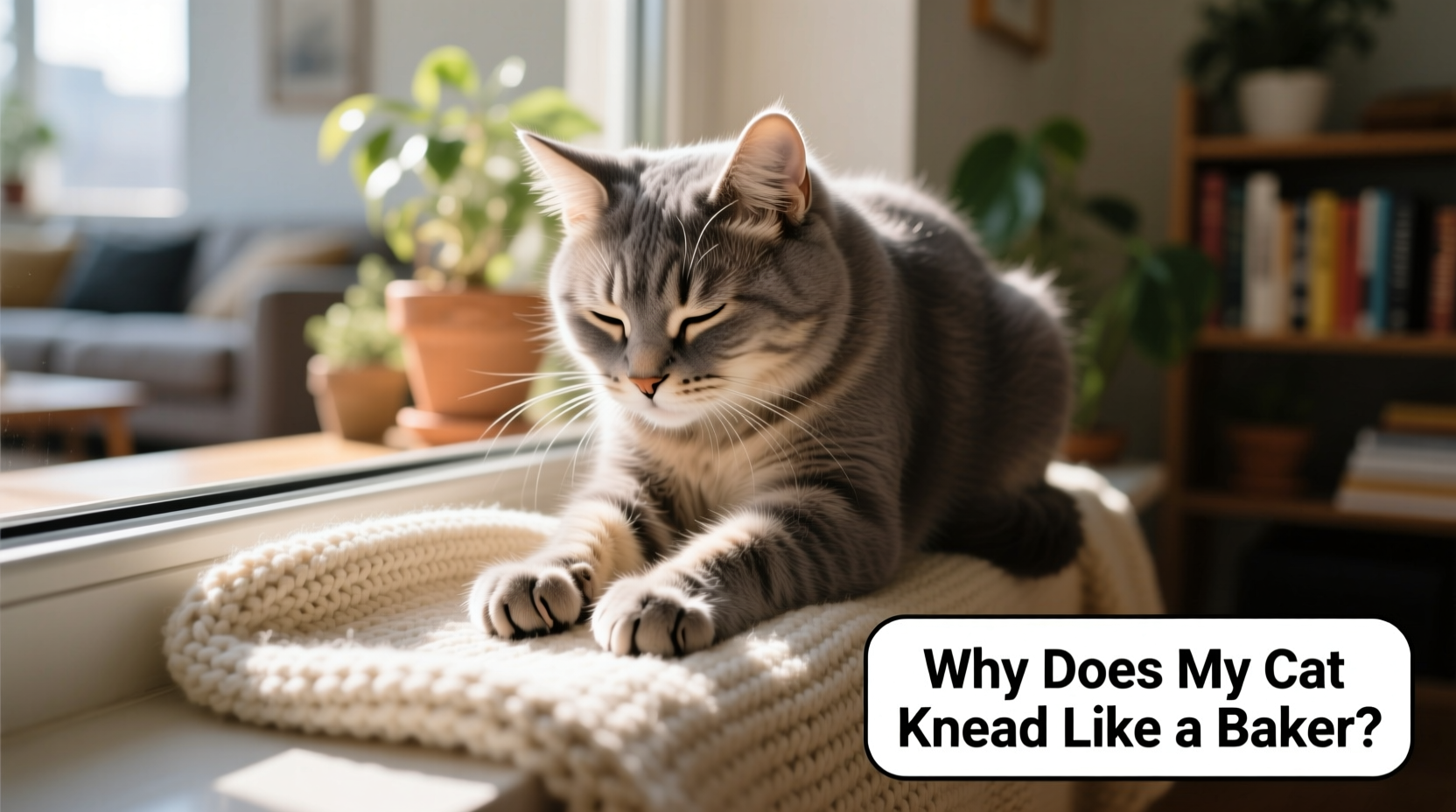
Kneading begins in the earliest days of a cat’s life. Newborn kittens instinctively press their front paws against their mother’s mammary glands to stimulate milk flow. This action, hardwired for survival, ensures nourishment during nursing. The repetitive push-and-release motion increases blood circulation in the mother’s tissue, helping milk let-down. Over time, this physical act becomes associated not just with food, but with warmth, safety, and maternal connection.
As kittens grow and wean, the behavior often persists into adulthood—though its purpose evolves. Adult cats don’t need milk, but they retain the muscle memory and emotional association of kneading with comfort. When your adult cat kneads your lap, blanket, or favorite sweater, it’s likely revisiting that primal sense of security. In many ways, your cat sees you as a parental figure, and kneading becomes a self-soothing ritual reminiscent of infancy.
“Kneading is one of the clearest examples of a kitten behavior that persists into adulthood due to its strong emotional reinforcement.” — Dr. Sarah Ellis, Feline Behavior Scientist, University of Lincoln
What Kneading Communicates: Beyond Instinct
While rooted in survival, adult kneading serves multiple psychological and social functions. It’s not merely a reflex—it’s a form of communication. Here are several key messages your cat may be sending when they start working your arm like pizza dough:
- Contentment: Cats are most likely to knead when they feel safe and relaxed. If your cat purrs while kneading, it’s a strong indicator of deep satisfaction.
- Claiming Territory: Cats have scent glands in the soft pads of their paws. Each push releases pheromones, marking the surface—or person—as part of their trusted environment.
- Bonding: When directed toward humans, kneading often signifies attachment. Your cat is expressing trust by engaging in a vulnerable, infantile behavior in your presence.
- Nesting Instinct: Some cats knead before lying down, as if preparing a soft spot to rest. This harks back to wild ancestors who trampled grass or leaves to create a comfortable sleeping area.
When Kneading Becomes Problematic: Pain, Stress, or Overstimulation
While usually benign, kneading can occasionally reflect underlying issues. Not all instances are positive. For example:
- A cat that suddenly starts kneading excessively may be experiencing anxiety or stress, using the motion as a calming mechanism.
- If kneading is accompanied by vocalization, drooling, or restlessness, it could indicate overstimulation or even mild compulsive behavior.
- In older cats, increased kneading might correlate with cognitive decline or discomfort, especially if paired with disorientation.
Also, some cats extend their claws during kneading, which can be painful for human skin. While not aggressive, this behavior requires management—not punishment. Trimming your cat’s nails regularly and placing a thick blanket over your lap can help reduce discomfort without discouraging the behavior.
Do’s and Don’ts of Managing Kneading Behavior
| Action | Recommended? | Reason |
|---|---|---|
| Allow kneading on soft surfaces | Yes | Encourages natural behavior safely |
| Cut nails every 2–3 weeks | Yes | Prevents scratches and fabric damage |
| Push the cat away during kneading | No | May damage trust and increase anxiety |
| Use deterrent sprays on furniture | No | Can stress the cat; targets symptom, not cause |
| Redirect to a designated kneading pad | Yes | Promotes healthy outlet for behavior |
The Scent Connection: How Cats Mark Their World Through Kneading
One of the less obvious but biologically significant aspects of kneading is territorial marking. Unlike dogs, who rely heavily on urine marking, cats use subtle, scent-based signals to define their space. The interdigital glands—located between the toe pads—secrete unique chemical signatures that are undetectable to humans but clear to other cats.
When your cat kneads your sweater, your leg, or their favorite cushion, they’re leaving an olfactory imprint. This isn’t dominance; it’s inclusion. They’re integrating you into their inner circle. In multi-cat households, you may notice that dominant or more social cats knead more frequently—especially on shared resting spots.
This also explains why some cats knead new objects introduced into the home. A freshly washed blanket, a new piece of furniture, or even a visitor’s coat may trigger kneading as the cat works to “reclaim” the scent profile of their environment.
Step-by-Step: Creating a Positive Kneading Environment
If you want to support your cat’s natural behaviors while protecting yourself and your home, follow this practical sequence:
- Observe triggers: Note when and where your cat tends to knead. Is it after meals? Before naps? On certain fabrics?
- Provide alternatives: Offer a soft, washable blanket or padded mat in their favorite lounging spots.
- Trim claws regularly: Use cat-specific clippers every few weeks to minimize accidental scratches.
- Reinforce gently: When your cat kneads appropriately (e.g., on a blanket), offer quiet praise or a treat to reinforce the location.
- Respect boundaries: If your cat becomes overstimulated and bites or scratches during kneading, calmly end the session without punishment.
Real-Life Example: Luna and the Anxiety Relief Routine
Sarah, a veterinary technician from Portland, noticed her rescue cat Luna began kneading obsessively after moving apartments. The 3-year-old tabby would spend up to 20 minutes at a time pressing her paws into the same corner of the couch, often accompanied by low-pitched meows. Concerned, Sarah consulted a feline behaviorist.
The assessment revealed that the move had disrupted Luna’s sense of security. The kneading was a self-soothing strategy—an attempt to reestablish familiarity through scent and motion. The behaviorist recommended introducing a pheromone diffuser and creating a “safe zone” with Luna’s original bedding. Within three weeks, the excessive kneading decreased significantly, though Luna still kneaded softly each evening on Sarah’s lap—a sign of renewed trust.
This case illustrates how kneading can shift from a comfort behavior to a coping mechanism under stress. Recognizing the difference allows owners to respond with empathy rather than frustration.
Frequently Asked Questions About Cat Kneading
Is kneading a sign of sexual behavior in cats?
No. While unspayed female cats may knead more during heat cycles due to hormonal fluctuations, kneading itself is not inherently sexual. It occurs in neutered males and spayed females equally and is primarily linked to comfort and scent marking.
Why does my cat drool when kneading?
Drooling during kneading is common and usually harmless. It’s often tied to extreme relaxation and nostalgia for nursing. Many cats associate the motion with early feeding experiences, triggering a physiological response that includes saliva production. As long as there are no signs of illness, drooling is a sign of deep contentment.
Should I stop my cat from kneading on furniture?
You shouldn’t punish the behavior, but you can redirect it. Provide acceptable surfaces like plush mats or old blankets. If furniture damage is a concern, cover high-use areas with washable throws or textured covers that discourage clawing. Remember: kneading is natural. The goal is coexistence, not elimination.
Expert Insight: The Emotional Language of Cats
Kneading is just one part of a broader system of nonverbal communication cats use to express emotion. Unlike dogs, who evolved to read human facial expressions, cats communicate through subtle physical cues—tail position, ear angle, pupil dilation, and tactile behaviors like kneading.
“To a cat, touch is language. Kneading isn’t just habit—it’s a declaration of emotional safety. When a cat chooses to do it on you, they’re saying, ‘I am whole here.’” — Dr. Elizabeth Collinge, Author of *The Secret Lives of Cats*
This perspective reframes kneading not as a quirky habit, but as a meaningful gesture. In a world where cats must constantly assess risk and safety, choosing to engage in a vulnerable, rhythmic behavior in your presence is a profound compliment.
Conclusion: Embracing the Purr-fect Gesture
Kneading is more than a funny quirk—it’s a window into your cat’s inner world. Rooted in survival, shaped by emotion, and expressed through scent and touch, this behavior connects your cat to its past and strengthens its bond with you. Whether they’re preparing a nest, marking their territory, or simply reliving the comfort of kittenhood, each push of their paws carries intention.
Instead of viewing kneading as a nuisance, embrace it as a sign of trust. Protect your skin with a light blanket, keep those claws trimmed, and cherish the moments when your cat chooses you as their safe space. After all, being selected as a kneading surface isn’t just about comfort—it’s one of the highest honors in feline society.
💬 Does your cat knead? Share your story or tips in the comments—your experience could help another cat owner understand this loving, doughy ritual.








